

What is event concept development?
Event concept development is the process of transforming a high-level idea into a structured, actionable blueprint that connects your event’s purpose, audience, and experience into one cohesive plan. It is the foundational work that happens before a single venue is booked or invitation designed. Think of it as the strategic compass guiding every decision that follows.
At its core, the process aligns the 5 Ws: Who (your audience), What (the experience you are creating), When (timing and duration), Where (venue and setting), and Why (your goals and intended outcomes). Without this alignment, even the most visually impressive events can feel disjointed and fail to deliver real impact.
A well-developed event concept covers these core elements:
- Purpose and goals: the clear reason the event exists and what success looks like
- Audience profile: who will attend and what they need from the experience
- Emotional outcome: how you want guests to feel during and after the event
- Experience design: the journey attendees move through from arrival to departure
- Brand alignment: how the event reflects the organiser’s identity and values
- Logistical framework: venue, timing, budget parameters, and resource requirements
- Theme direction: the creative expression that will bring the concept to life
How does event concept differ from event theme?
Confusing the event concept with the event theme is one of the most costly planning mistakes a planner can make. The concept is the strategic foundation. The theme is the creative expression that sits on top of it. Treating them as interchangeable often produces events that look beautiful but fail to deliver their business objectives.

The concept defines the emotional outcomes, the purpose, and the decisions that shape the entire planning process. The theme, by contrast, is the visual and sensory “skin” of the event: the décor, colour palette, lighting, music, and atmosphere that guests experience directly.

| Dimension | Event concept | Event theme |
|---|---|---|
| Focus | Strategic purpose and goals | Creative expression and aesthetics |
| Role | Guides all planning decisions | Shapes look, feel, and atmosphere |
| Impact | Determines whether the event succeeds | Determines whether the event is memorable |
| Example | “Inspire our sales team to exceed targets” | “Neon Metropolis: a city of ambition” |
| Developed | First, before any creative work | After the concept is confirmed |
Practical implications of keeping the two distinct:
- Venue selection becomes purposeful rather than purely aesthetic
- Budget allocation follows the concept’s priorities, not trend-driven impulses
- Marketing messaging stays consistent because it reflects a clear strategic idea
- Supplier briefs are tighter and easier to evaluate against a defined goal
- Post-event measurement is possible because success criteria were set at concept stage
A strong concept makes theme choices almost self-selecting. When you know precisely why the event exists and who it serves, the right creative direction becomes far more obvious.
How to develop an effective event concept step by step
The event planning process works best when concept development follows a clear sequence. Skipping steps, particularly jumping to aesthetics before defining purpose, is a common and costly mistake that undermines the entire event.
-
Define SMART event goals. Start with the “Why.” Are you launching a product, motivating a team, raising funds, or celebrating a milestone? Frame your goals as Specific, Measurable, Achievable, Relevant, and Time-bound objectives. This gives every subsequent decision a filter to pass through.
-
Build a detailed audience profile. Identify who will attend, what they care about, and what they need from this experience. Review data from previous events, survey your audience, and examine demographics, interests, and motivations. The concept that works for a corporate leadership summit will be entirely wrong for a charity gala.
-
Research the market and competitive context. Look at what similar events in your sector are doing. Identify gaps, emerging trends, and audience expectations. This research sharpens your concept and helps you find a distinctive angle rather than replicating what already exists.
-
Brainstorm concept ideas. With goals and audience clearly defined, generate a range of overarching ideas. At this stage, quantity matters more than quality. Involve key stakeholders to bring diverse perspectives and avoid isolated decision-making.
-
Select the overarching concept. Evaluate your ideas against your goals, audience profile, and budget reality. Choose the concept that best serves the event’s purpose and creates the emotional outcome you are aiming for. This becomes your single guiding idea.
-
Align the concept with brand identity. Every element of the concept should reflect the organiser’s values, tone, and visual identity. For corporate events especially, brand consistency across concept, theme, and communications builds credibility and reinforces messaging.
-
Choose a complementary theme. Only once the concept is confirmed should you develop the theme. The theme translates the strategic idea into a sensory experience. A wellness summit built on the concept of “renewal” might adopt a theme of “Reset and Recharge,” shaping everything from décor to speaker tone.
-
Test feasibility against budget and logistics. A brilliant concept that cannot be executed within your resources is not a viable concept. Test your idea against realistic cost scenarios, venue availability, staffing capacity, and timeline. Build in contingency at this stage rather than later.
-
Create a concept deck or creative brief. Formalising the concept in a written document prevents scope creep and gives all stakeholders a single source of truth. The deck should include the event purpose, audience profile, emotional outcome, theme direction, key experience moments, and budget parameters.
-
Gather stakeholder input and refine. Share the concept deck with key decision-makers, sponsors, and suppliers. Use their feedback to stress-test assumptions and refine the concept before committing to production.
-
Confirm and lock the concept. Once approved, the concept becomes the reference point for every decision that follows, from catering style to marketing copy. When a new idea arises during planning, the concept tells you whether it belongs.
Pro Tip: Link every supplier brief directly back to the concept deck. When a florist, caterer, or AV technician understands the strategic purpose behind the event, their creative contributions become far more aligned and far less likely to need costly revisions.
Real-world event concept examples that show the process in action
Seeing how the concept shapes real events makes the theory far more concrete. These examples span different event types, each illustrating how a clear strategic idea guided every major decision.
-
Corporate product launch: Concept: “Redefine the possible.” Purpose was to position a technology brand as a category leader. The concept drove a venue choice that felt futuristic (a converted industrial space with dramatic lighting), a speaker programme built around visionary thinking, and a guest experience that included live product demonstrations rather than passive presentations. The theme, “Future Forward,” emerged naturally from the concept.
-
Charity fundraising gala: Concept: “Every seat at this table changes a life.” The purpose was to create an emotional connection between donors and beneficiaries. This concept shaped an intimate dinner format rather than a large-scale event, with storytelling at its centre. Décor was warm and personal rather than grand, and the programme featured real beneficiary stories rather than corporate speeches.
-
Wellness retreat weekend: Concept: “Restore from the inside out.” Designed for professionals experiencing burnout, the concept prioritised silence, nature, and genuine rest. It ruled out networking sessions, loud entertainment, and tight schedules. The personalised experience this concept enabled directly increased attendee satisfaction and repeat bookings.
-
Tech industry summit: Concept: “Where ideas become industries.” Aimed at founders and investors, the concept centred on high-value connection rather than content consumption. This shaped a programme heavy on curated roundtables and light on keynotes, a venue that encouraged informal conversation, and a guest list capped deliberately to preserve exclusivity.
-
Luxury wedding celebration: Concept: “A love story told through place.” The couple’s connection to the Cape Winelands shaped every element, from locally sourced festive meal offerings to wine pairings that reflected the region’s heritage. The concept made every detail feel intentional rather than decorative.
The common thread across all these examples is that the concept answered “Why does this event exist?” before anyone asked “What should it look like?”
Tips to sharpen your event concept for greater impact
Developing a concept is one thing. Keeping it strong under the pressure of real planning is another. These strategies help you protect and refine the concept as the event takes shape.
-
Build in scalable flexibility. Design elements that can be simplified or enhanced without harming the event’s narrative integrity. If the budget shifts or the venue changes, the core experience should remain intact.
-
Use the concept as a budget filter. Every spending decision should connect back to the concept’s goals. Budget alignment prevents isolated purchases that look appealing individually but contribute nothing to the overall experience.
-
Anchor your concept deck early. The creative brief is your most powerful tool against scope creep. Return to it whenever a new idea or request arrives during planning.
-
Incorporate emerging trends purposefully. Trends in immersive experience design, sustainability, and hybrid formats are worth exploring, but only when they serve the concept’s purpose. A trend adopted for its own sake dilutes the concept rather than strengthening it.
-
Test the concept with a sample audience. Before committing to production, share the concept with a small group from your target audience. Their instinctive response tells you whether the idea resonates or needs refinement.
-
Keep personalisation central. A concept built around a specific audience’s needs creates the conditions for genuinely personalised experiences, which consistently drive stronger attendee engagement and perceived event value.
-
Revisit the concept at each planning milestone. As logistics evolve, check that the concept is still intact. If a venue constraint or budget cut has quietly eroded the core idea, address it directly rather than letting the event drift.
Pro Tip: When scope creep threatens the concept, return to the original “Why.” If a proposed addition does not serve the event’s stated purpose and emotional outcome, it does not belong, regardless of how appealing it seems.
Key takeaways
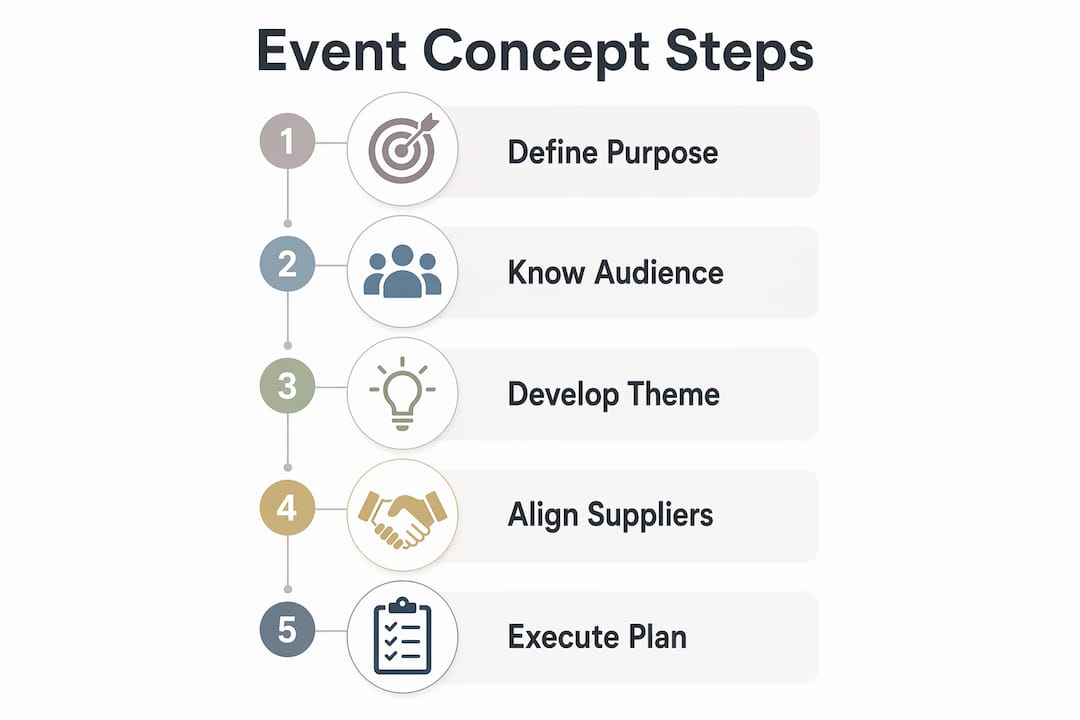
Event concept development is the process of aligning purpose, audience, and experience into a single strategic blueprint that guides every planning decision and protects the event’s integrity from concept to execution.
| Point | Details |
|---|---|
| Concept precedes theme | Define the strategic purpose before any creative or aesthetic decisions are made. |
| The 5 Ws are foundational | Aligning Who, What, When, Where, and Why creates the structure for all planning. |
| A concept deck prevents drift | Formalising the concept early protects against scope creep and misaligned decisions. |
| Flexibility must be designed in | Scalable elements allow the concept to survive budget or venue changes intact. |
| Concept drives budget discipline | Linking every spend to the concept’s goals prevents waste on non-contributing elements. |
Ready to bring your event vision to life with clarity and purpose? Winelandsfunction specialises in bespoke luxury events crafted from a strong concept to a flawless finish. Explore our event management expertise and discover what a truly purposeful event feels like.
Recommended
- Event Planning Step by Step for Elegant Celebrations – Winelands Function – For Every Occasion, Your Celebration
- Your event styling workflow: a planner’s guide – Winelands Function – For Every Occasion, Your Celebration
- What Is Event Design? Complete Guide for 2025 – Winelands Function – For Every Occasion, Your Celebration
- Master the Event Timeline Planning Process for Seamless Events – Winelands Function – For Every Occasion, Your Celebration