
TL;DR:
- Corporate event etiquette includes standards of conduct that influence a company’s professional image and attendee experience. Implementing well-designed protocol, active hosting, and cultural sensitivity ensures smooth operations and lasting impressions. Proper seating, accessibility, and gradual communication are vital for a polished, respectful event.
Corporate event etiquette is defined as the set of conduct standards that governs how hosts, attendees, and organisers behave before, during, and after a professional gathering. These standards do more than prevent awkward moments. They shape how your organisation is perceived, how comfortably guests engage, and whether the event achieves its business objectives. Sources including CETT, ActClassy, and RentForEvent each treat etiquette not as a social nicety but as a core planning discipline. Understanding the role of etiquette in corporate events is the first step to running gatherings that leave a lasting professional impression.
What is the role of etiquette in corporate events?
Event protocol is the formal expression of etiquette at scale. CETT describes protocol as a strategic tool used across presentations, business meetings, and corporate launches to avoid mistakes and project professionalism. Protocol is not ceremonial decoration. It is the structure that tells every person in the room what to expect and how to behave.
When protocol is well designed, it creates order and predictability. Guests know when to arrive, where to sit, who speaks first, and how introductions are made. That clarity removes social anxiety and lets attendees focus on the event’s purpose rather than navigating uncertainty.
The table below maps common protocol elements to their etiquette function.
| Protocol element | Etiquette function |
|---|---|
| Guest seating plan | Signals rank, prevents conflict, and communicates respect |
| Order of speeches | Establishes hierarchy and maintains programme flow |
| Formal introductions | Reduces social errors and honours titles correctly |
| Dress code guidance | Sets shared expectations and prevents discomfort |
| Arrival and departure cues | Keeps timing professional and respects attendees’ schedules |
Pre-briefing event staff on names, titles, pronunciation, and protocol rank reduces social errors during introductions. That single step separates a polished event from an embarrassing one.
Pro Tip: Design your event protocol as an invisible framework. Attendees should feel the order without seeing the machinery behind it. When protocol is visible, it has already failed.
How should hosts and attendees behave at corporate events?
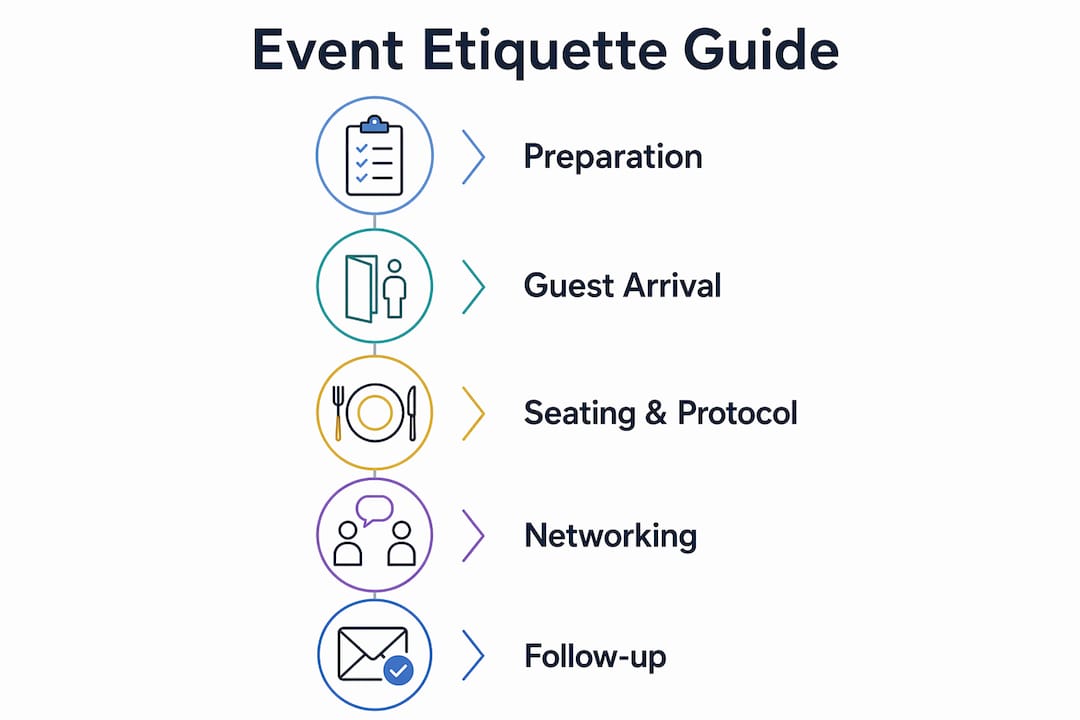
Good business event decorum starts before guests arrive. ActClassy identifies that preparation around purpose, consistent messaging, and active hosting behaviours directly improve guest experience and networking success. Define your event objectives first, then align every detail, from the welcome address to the catering brief, to those goals.
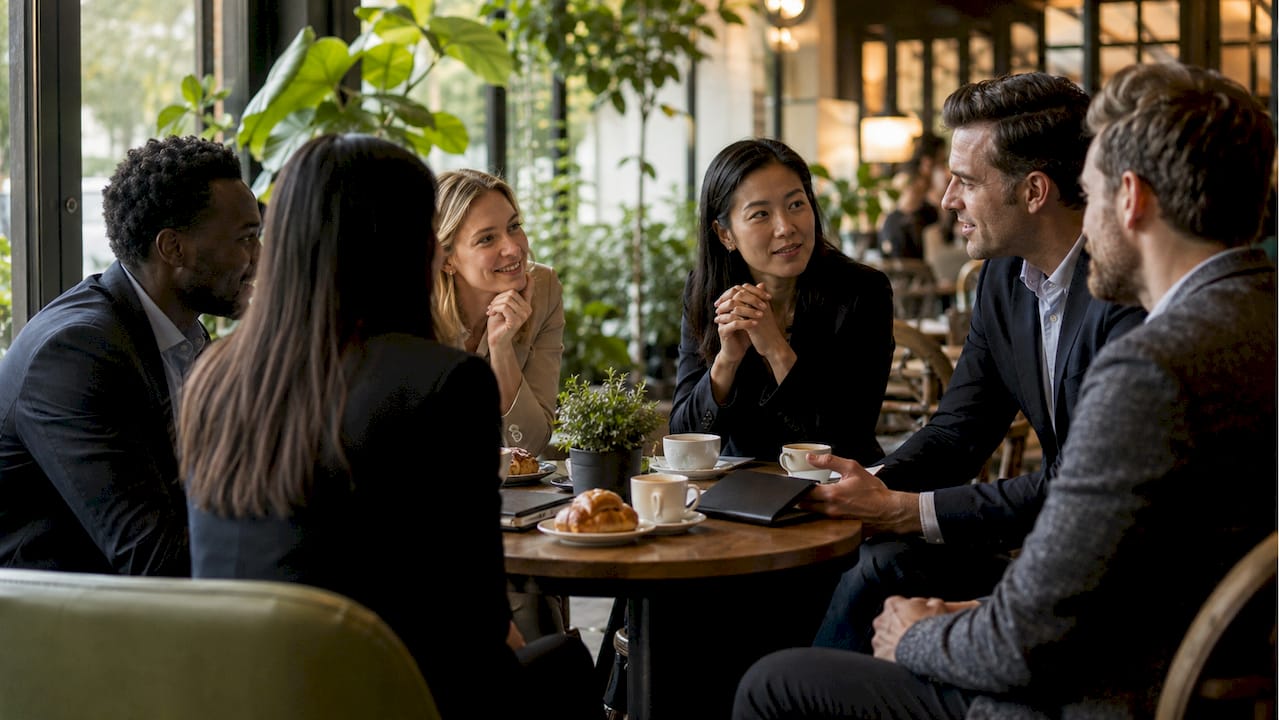
During the event, active hosting is the most underrated etiquette skill. Initiating conversations, guiding dialogue between guests who do not know each other, and practising genuine active listening are the behaviours that make attendees feel valued. A host who stands at the front of the room and waits to be approached has already failed the room.
Networking etiquette in business settings follows a distinct set of rules. RentForEvent’s expert guide identifies the following as the most effective networking etiquette principles for corporate events:
- Enter conversations gracefully by waiting for a natural pause before introducing yourself.
- Exchange contact details professionally and avoid thrusting business cards at people mid-sentence.
- Respect time boundaries. Move on after five to seven minutes unless the conversation is clearly mutual.
- Avoid sales-driven chatter. Build genuine interest in the other person before discussing your own agenda.
- Follow up within 24 hours with a personalised message that references your conversation specifically.
Etiquette Inc. notes that effective etiquette training builds confidence in hosts and staff, reducing anxiety and improving performance. The goal is not to memorise rules but to internalise the mindset of genuine attentiveness.
Pro Tip: Prepare three open-ended conversation starters before any networking event. Questions like “What brought you to this event?” or “What are you working on at the moment?” open dialogue without pressure and signal genuine curiosity.
Does cultural background affect etiquette at corporate events?
Cultural sensitivity is not optional at international corporate gatherings. It is a core competency. Raybourn Group International confirms that local customs regarding meal times, break frequency, and business day length vary significantly across regions, directly affecting guest comfort, attendance, and engagement. An event scheduled without regard for local prayer times, national holidays, or cultural dining norms will lose attendees before the programme begins.
Working with local partners and cultural advisors reduces these barriers. They provide context that no amount of desk research can fully replicate. A local contact in Johannesburg, Tokyo, or São Paulo will flag scheduling conflicts and social expectations that a planner based elsewhere would miss entirely.
Common cultural etiquette considerations for corporate events include:
- Greetings and titles: Some cultures require formal titles throughout an event. Using first names prematurely reads as disrespectful.
- Business card exchange: In Japan and South Korea, cards are presented and received with both hands and treated with visible respect. Pocketing a card immediately is an offence.
- Dietary requirements: Halal, kosher, vegetarian, and vegan needs are non-negotiable. Failing to accommodate them signals that certain guests were not considered.
- Punctuality expectations: Northern European and East Asian business cultures treat late arrivals as a serious breach. Latin American and Middle Eastern contexts allow more flexibility.
- Physical contact: Handshakes, bowing, and cheek kisses carry different meanings. Brief guests on local norms in advance.
Misreading cultural etiquette does not just create discomfort. It damages your organisation’s reputation with the very people you invited to impress. Applying event psychology principles such as comfortable environments and clear communication improves attendee engagement and wellbeing. Cultural attentiveness is the most direct application of that principle.
What are the best practices for seating and accessibility at corporate events?
Seating is one of the most consequential operational etiquette decisions a planner makes. SeatPlan’s corporate event guide reports that approximately 80% of seating work happens in the final 48 hours before an event. That figure reflects the volume of last-minute changes tied to accessibility needs, dietary requirements, and guest cancellations. Planners who treat seating as a static task set themselves up for a chaotic final day.
Managing seating and accessibility with professionalism requires a clear process. The steps below reflect best practice across corporate galas, conferences, and awards evenings.
- Collect requirements early. Send a pre-event form requesting dietary needs, mobility requirements, and any other accessibility considerations at least three weeks in advance.
- Build a flexible seating template. Use a digital seating tool that allows rapid reassignment without rebuilding the entire chart from scratch.
- Designate a seating coordinator. One person should own all changes in the final 48 hours. Distributed responsibility creates gaps.
- Brief front-of-house staff. Every member of the welcome team should know which guests have special requirements and where they are seated.
- Prepare a contingency table. Reserve a small number of seats near accessible routes for late additions or guests whose needs were not captured in advance.
Handling these details with dignity and discretion is itself a form of etiquette. A guest who requires a wheelchair-accessible seat should never have to ask twice or feel conspicuous. Treating operational etiquette as a systems problem rather than an individual checklist is what separates professional event management from reactive scrambling.
Pro Tip: Contact guests with accessibility needs directly, not through a generic form. A brief personal call or email signals that their comfort has been considered individually, not processed as a category.
For further guidance on guest experience management, the Winelandsfunction blog covers etiquette-driven strategies in detail.
Key takeaways
Corporate event etiquette is a strategic discipline that shapes professional image, attendee comfort, and networking outcomes at every stage of an event.
| Point | Details |
|---|---|
| Protocol as strategy | Event protocol creates order and predictability, reducing social errors and projecting professionalism. |
| Active hosting matters | Initiating conversations and practising active listening improves guest experience more than any décor choice. |
| Cultural etiquette is non-negotiable | Adapting schedules, greetings, and dietary provisions to local customs protects your brand’s reputation. |
| Seating requires a system | With 80% of seating changes occurring in the final 48 hours, a flexible process and dedicated coordinator are essential. |
| Etiquette builds confidence | Training staff on context-specific conduct reduces anxiety and raises the quality of every guest interaction. |
Why etiquette is the most underestimated event planning tool
I have planned and attended enough corporate events to know that the ones people remember are rarely the ones with the biggest budgets. They are the ones where every guest felt seen. The welcome was warm, the seating made sense, the programme ran without visible effort, and the conversations felt genuine. That is etiquette doing its job.
The mistake most planners make is treating etiquette as a checklist of rules to hand to staff on the morning of the event. Etiquette is not a briefing document. It is a design philosophy. When you build it into your corporate event preparation from the first planning meeting, it shows up in every detail without anyone having to announce it.
The most common etiquette failure I see is the neglect of transitions. What happens between the welcome and the first session? Between dinner and the awards? Those gaps are where events lose their professional tone. Filling them with clear, courteous communication, whether from a host, a printed programme, or a well-timed announcement, is where etiquette earns its keep.
My advice to any event planner is this: audit your event for moments where a guest might feel uncertain, overlooked, or uncomfortable. Then design a specific etiquette response for each one. That process will do more for your event’s success than any single speaker or centrepiece.
— Coert
How Winelandsfunction applies etiquette to luxury corporate events
Winelandsfunction brings etiquette-led thinking to every stage of luxury corporate event management, from initial concept through to the final guest departure. Based in Cape Town and serving local and international clients, the team coordinates protocol, seating, cultural considerations, and hosting conduct as integrated elements of a single, cohesive plan.
Every event Winelandsfunction produces reflects the principles covered in this guide: clear protocol, attentive hosting, culturally informed planning, and operational precision. For corporate professionals who want their events to leave a lasting professional impression, Winelandsfunction offers the expertise to make that happen. Explore the full range of corporate event planning services and find out how etiquette-driven coordination can raise the standard of your next gathering.
FAQ
What is corporate event etiquette?
Corporate event etiquette is the set of conduct standards governing how hosts, attendees, and organisers behave at professional gatherings. It covers protocol, networking behaviour, cultural sensitivity, and operational details such as seating and accessibility.
Why does event protocol matter for professional image?
Protocol creates order and predictability, helping participants know how to behave while reinforcing the organisation’s professional reputation. Without it, events risk social errors that reflect poorly on the host.
How do you handle cultural etiquette at international corporate events?
Adapt your schedule, greetings, dietary provisions, and communication style to local customs. Raybourn Group International recommends working with local partners to align event logistics with regional expectations.
What are the most important networking etiquette tips for business events?
Enter conversations at a natural pause, respect time boundaries, avoid sales-led chatter, and follow up within 24 hours with a personalised message. RentForEvent’s guide identifies these as the behaviours that build genuine professional relationships.
How far in advance should seating and accessibility needs be collected?
Collect dietary and accessibility requirements at least three weeks before the event. SeatPlan reports that 80% of seating changes occur in the final 48 hours, so early data collection and a flexible seating system are both critical.
Recommended
- Corporate Event Preparation Guide for Elegance and Impact – Winelands Function – For Every Occasion, Your Celebration
- Complete Guide to Corporate Event Planning Success – Winelands Function – For Every Occasion, Your Celebration
- Complete Guide to Why Corporate Events Matter – Winelands Function – For Every Occasion, Your Celebration
- Mastering Corporate Event Workflow for Seamless Success – Winelands Function – For Every Occasion, Your Celebration