
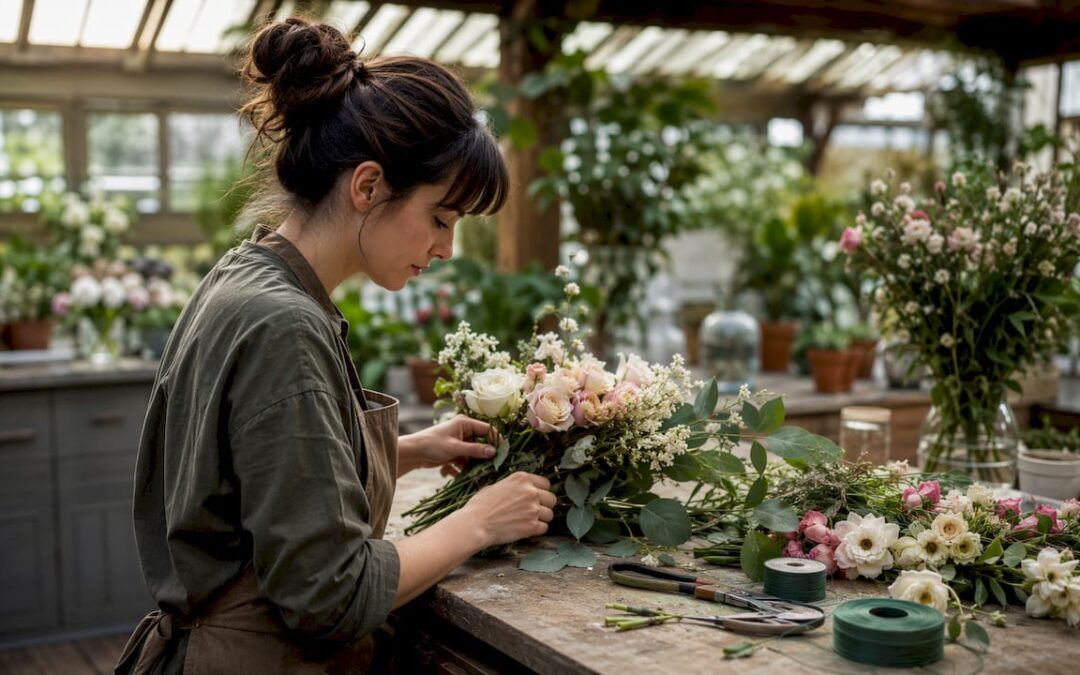
A wedding florist does far more than arrange blooms in a vase. Their role spans bespoke design consultation, expert sourcing, technical installation, and full logistical coordination, all working together to translate your vision into a cohesive floral experience that shapes the entire atmosphere of your day. From the first conversation about your colour palette to the final clean-up after the last guest has left, a professional florist is part designer, part planner, and part structural engineer.
Here is what that role actually involves:
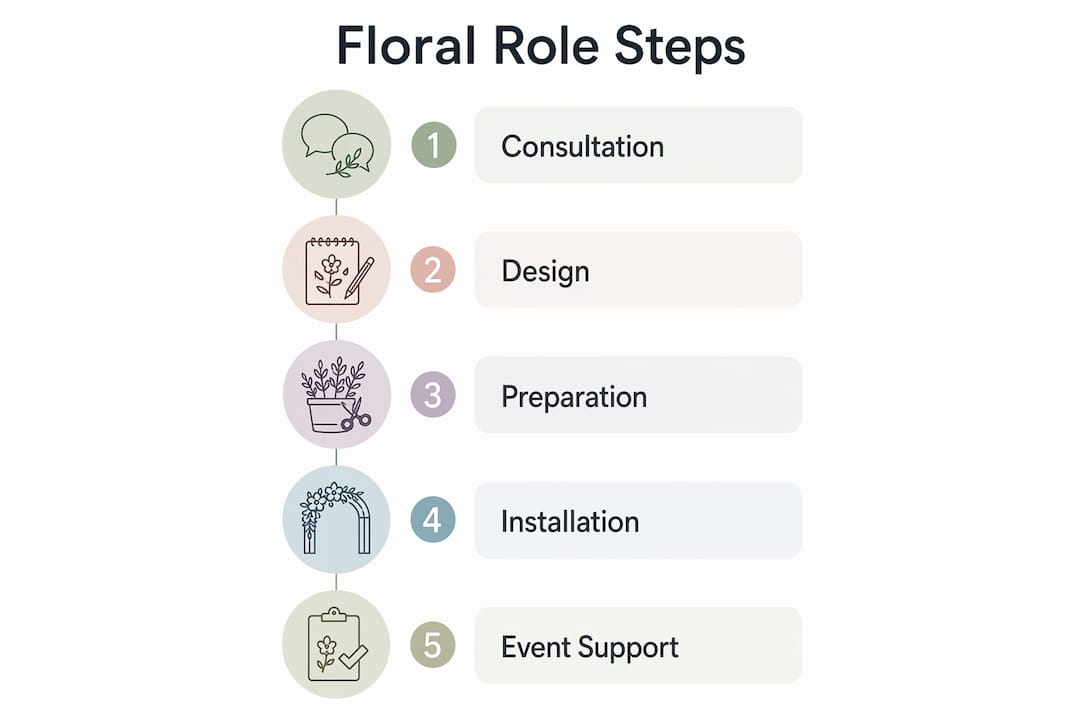
- Client consultation: Understanding your style, venue, season, and vision before a single flower is chosen
- Design planning: Creating a unified floral concept where every piece, from bouquets to ceremony arches, works as one
- Sourcing: Procuring quality, seasonal blooms from trusted growers, with sustainable choices where possible
- Preparation: Conditioning, hydrating, and assembling mechanical supports over several days before your wedding
- Vendor coordination: Liaising with your planner, photographer, and venue on access times, placement, and timing
- Installation and styling: Arriving early on the day to set up, style, and perfect every arrangement
- Post-event clearance: Returning to dismantle installations, collect equipment, and rehome flowers responsibly
Understanding the full scope of a florist’s contribution helps you make a confident, informed decision when planning your wedding.
What are the key duties of a wedding florist?
The florist’s duties span the entire planning and event process, not just the wedding morning. Each responsibility builds on the last, creating a service that is far more layered than most couples anticipate.
- Translating your vision into a design plan: A florist listens carefully during consultation, asking about your venue, colour palette, season, and the feeling you want to create. They then produce visual sketches and reference images so you can picture the finished result with clarity, not guesswork.
- Designing a cohesive floral story: Every piece, from your bridal bouquet and buttonholes to table centrepieces and ceremony installations, is designed to work together. Texture, movement, structure, and how flowers photograph in different light are all considered.
- Sourcing flowers and materials: Florists work with trusted growers and importers, choosing seasonal blooms that align with your vision and values. Seasonality affects both quality and cost, so a skilled florist plans sourcing well in advance.
- Conditioning and preparing flowers: Days before your wedding, flowers are trimmed, hydrated, and carefully conditioned to peak condition. Mechanics, such as chicken wire frames and moss bases, are assembled and tested.
- Coordinating with your wider team: Florists invest considerable time liaising with planners, venues, and photographers to confirm access windows, set-up requirements, and how florals interact with lighting and other design elements.
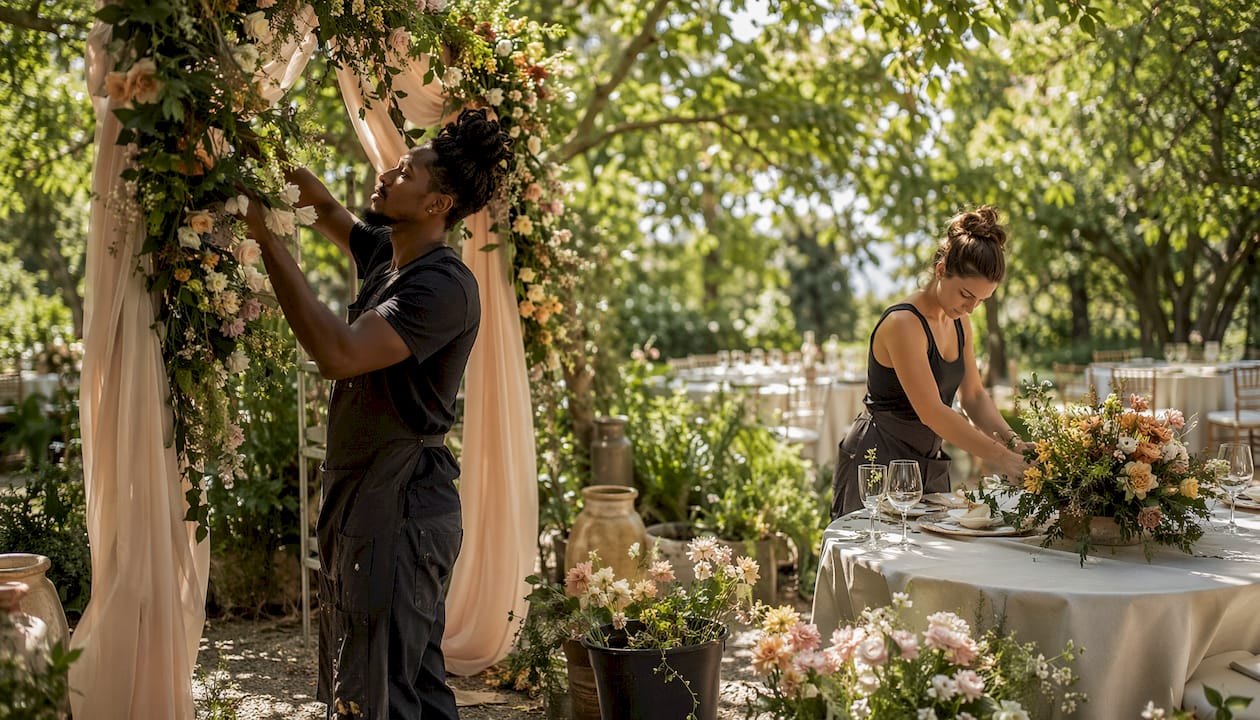
- Delivery and on-the-day installation: On your wedding morning, the florist arrives early, often climbing ladders to hang overhead installations, pinning buttonholes, and making final adjustments so every stem sits perfectly before guests arrive.
- Post-event strike and clearance: Most UK venues require installations to be dismantled and the space left clean, often by the following morning. Your florist handles this entirely, sparing you a very early start after your wedding night.
- Flower rehoming: Many florists bunch remaining blooms for family and friends to take home, or donate them locally, giving your flowers a second life and reducing waste.
- Risk management: A professional anticipates challenges, from a supplier failing to deliver a specific variety to flowers wilting in an unexpectedly warm venue, and resolves them before you ever know there was a problem.
Pro Tip: Ask your florist at the initial consultation who will personally oversee installation on the day and who handles the post-event clearance. Knowing this in advance removes a common source of last-minute anxiety.
Why hiring a professional florist makes a real difference
The importance of wedding florists lies in their blend of artistry and practical risk management, enabling you to enjoy your day with complete confidence that the flowers will survive and shine from ceremony through to the final dance.
DIY arrangements can work beautifully for small, relaxed celebrations. For most weddings, though, the multi-layered nature of floral design, logistics, and on-site problem-solving makes professional expertise genuinely worthwhile. Here is why:
- Polished, balanced design: Years of training produce arrangements with visual harmony that is genuinely difficult to replicate without experience. Colour balance, scale, and the flow from ceremony to reception all require a practised eye.
- Access to quality and unusual blooms: Professional florists build relationships with specialist growers, giving them access to varieties that are rarely available to the general public. That rare garden rose or unusual foliage that perfectly captures your aesthetic may only be reachable through those trade connections.
- Peace of mind on logistics: Professional florists manage flower transport, climate-controlled storage, and the physical demands of large installations, including ladders, rigging, and heavy mechanics. You do not need to think about any of it.
- Vendor cohesion: A florist who communicates proactively with your photographer, planner, and venue coordinator ensures that no element clashes or gets overlooked. The result is an event that feels considered from every angle.
- Time and stress saved: The days leading up to a wedding are intense. Your florist is already working long hours conditioning flowers and preparing mechanics while you focus on everything else. Understanding why flowers cost what they do makes the investment far easier to appreciate.
- Sustainable practices: Responsible florists use reusable mechanics, source locally where possible, and rehome flowers after the event. Composting and donating blooms are both far preferable to landfill.
- Safe handling of complex installations: Large arches, suspended floral chandeliers, and grounded floral meadows require structural planning and the right equipment. A professional team handles this safely, with the skills and insurance to match.
The role of florists in event design extends well beyond decoration. At a luxury level, they shape how guests experience the entire space.
The design principles that professional florists apply
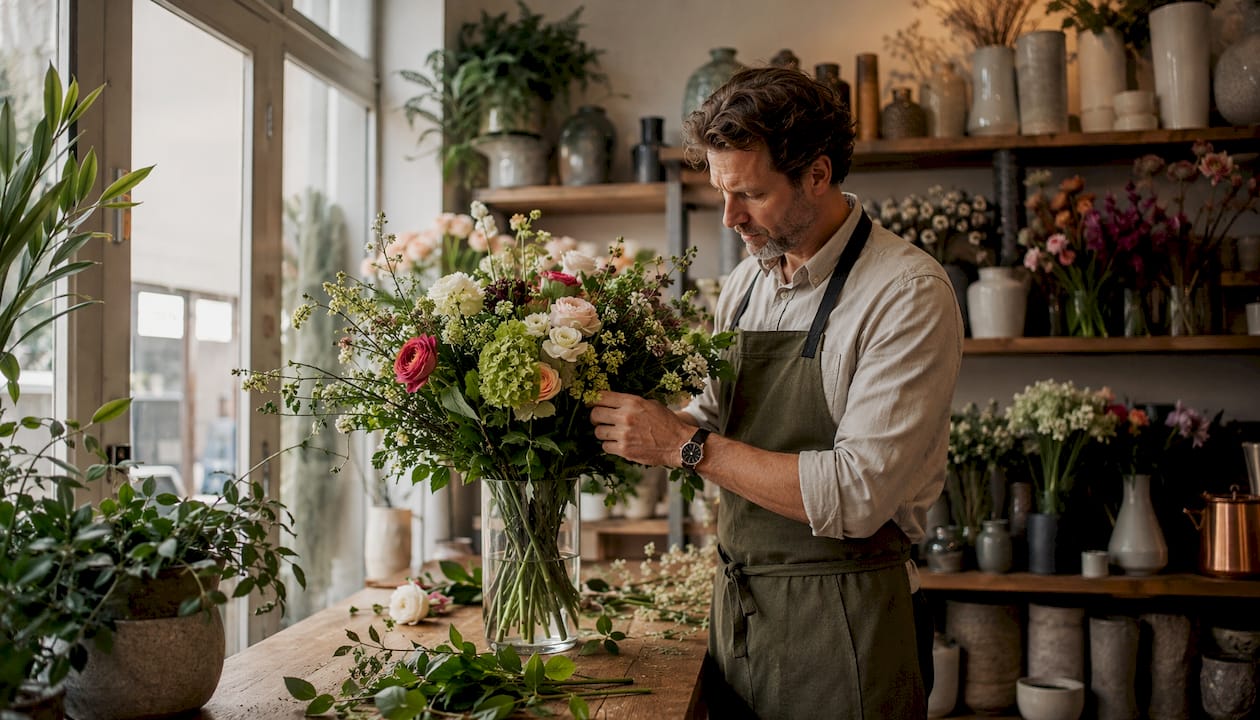
Professional floristry is grounded in formal design theory, much of it taught through UK vocational qualifications. The seven principles of floristry, balance, scale, proportion, dominance, rhythm, contrast, and harmony, underpin every arrangement a trained florist creates, whether it is a hand-tied bouquet or a large-scale ceremony arch.
These principles are not abstract theory. They are the practical framework that stops an arrangement from looking cluttered, flat, or visually unstable.
The 3-5-8 rule in practice
One of the most widely taught composition tools is the 3-5-8 rule: three focal flowers, five textural stems, and eight filler stems, with the overall arrangement height sitting 1.5 to 2 times the height of the container. A standard arrangement built on this rule typically contains 14–16 stems, making it ideal for table centrepieces. The rule scales up reliably for large wedding installations, six focal flowers, ten textural stems, sixteen fillers, without losing the visual logic that makes the composition feel balanced.
This scalability is precisely why the rule is so useful in a wedding context. A florist preparing twenty identical reception centrepieces can apply it consistently across every table without rethinking the composition each time.
Sustainable mechanics over floral foam
Trained florists increasingly use chicken wire and moss rather than floral foam as structural mechanics. Floral foam is a one-use product that does not biodegrade readily, whereas chicken wire and floral frogs can be cleaned and reused across many events. For outdoor weddings, these materials also produce more wind-resistant structures, which matters considerably when an arch is holding hundreds of stems in an exposed garden setting.
Structural engineering for large installations
Overhead floral chandeliers and large ceremony arches require more than a good eye. They demand an understanding of load-bearing capacity, rigging points, and how to build structures that remain safe throughout a long event day. This is a distinct skill set, one that sits at the intersection of floristry and installation art, and it is a key reason why floral design principles at a professional level go well beyond flower selection.
Venue, lighting, and photography alignment
A skilled florist considers wall colours, ambient lighting, and how arrangements will read in photographs taken at different times of day. A tropical arrangement in a Georgian manor can look jarring; the right florist will flag this early and guide you towards choices that complement your venue rather than compete with it. Good event sourcing and supply chain thinking, similar to the planning that goes into festive event catering, applies equally to floral procurement, where timing, seasonality, and supplier relationships determine quality.
Planning your wedding florals with confidence
When you understand the full scope of what a wedding florist does, the investment becomes straightforward to evaluate. You are not paying for flowers alone. You are paying for design expertise, logistical management, years of supplier relationships, and the certainty that your wedding will look exactly as you imagined, without you lifting a finger on the day.

At Winelandsfunction, we coordinate every element of a luxury wedding with the same attention to detail, from floral design integration to full vendor management. Explore our wedding planning services to see how we bring bespoke celebrations to life, or discover our broader event planning approach for couples who want every detail handled with care.
Key takeaways
A professional wedding florist combines design artistry, technical skill, and logistical management to deliver a cohesive floral experience from first consultation through to post-event clearance.
| Point | Details |
|---|---|
| Full-service scope | A florist’s role covers consultation, sourcing, preparation, installation, and post-event clearance, not just flower delivery. |
| Design grounded in principles | The seven principles of floristry and the 3-5-8 rule guide every arrangement, producing balanced, visually harmonious results. |
| Sustainable mechanics | Chicken wire and moss replace floral foam for reusable, environmentally responsible structural support. |
| Arrangement sizing | A standard 3-5-8 arrangement typically contains 14–16 stems, scaling up consistently for large wedding installations. |
| Vendor coordination | Florists liaise with planners, photographers, and venues to align timing, placement, and overall event flow. |
Recommended
- Role of florists in event design for luxury Cape Town – Winelands Function – For Every Occasion, Your Celebration
- Role of Floral Design: Elevating Event Experiences – Winelands Function – For Every Occasion, Your Celebration
- Wedding planner duties and responsibilities explained – Winelands Function – For Every Occasion, Your Celebration
- Why Flowers Are So Expensive for Events – Winelands Function – For Every Occasion, Your Celebration