

TL;DR:
- Event branding involves integrating a brand’s identity into every event touchpoint to create memorable experiences that influence attendee behavior. It relies on a clear purpose, strong visual and sensory design, and consistent digital and physical execution to drive business outcomes and generate organic reach through attendee-led content. Proper planning, flexible identity systems, and early measurement are essential to ensure branding success and ROI.
Event branding is defined as the deliberate integration of a brand’s identity, messaging, and sensory design into every touchpoint of an event to create a unified, memorable experience. It is the industry term for what many planners loosely call “event theming,” but it goes far deeper than décor or logo placement. Research from the Event Marketing Institute shows that 74% of consumers who engage with branded event experiences report a higher likelihood of purchasing from that brand. That single figure explains why event branding is no longer a cosmetic concern. It is a commercial one. The core elements are visual identity, narrative and storytelling, and sensory design. Together they shape how attendees feel, what they remember, and whether they act.
What does event branding explained actually mean in practice?
Event branding is not the same as event marketing. Marketing drives people to attend. Branding shapes what they experience once they arrive. The distinction matters because planners who conflate the two tend to invest heavily in promotion and underinvest in the on-site experience, which is where lasting impressions are made.
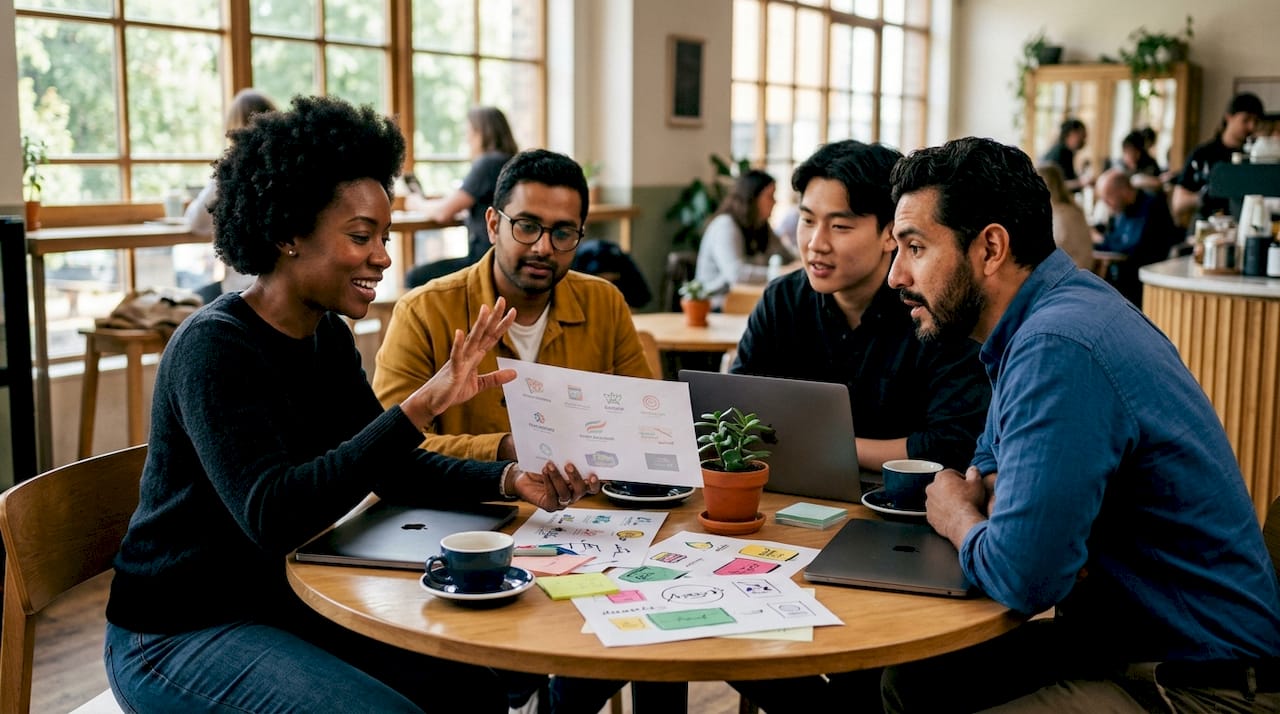
The event branding concepts that work best share a common structure. They begin with a clear brand purpose for the event, a single answer to the question: “What do we want attendees to feel, believe, or do differently after this event?” Every subsequent decision, from the typeface on the welcome signage to the scent diffused in the registration area, flows from that answer.
Visual identity is the most visible layer. It covers logo usage, colour palette, typography, and signage. Tone of voice governs written and spoken communication, from email confirmations to the MC’s script. Sensory design extends the brand into lighting, sound, materials, and even food presentation. Each layer reinforces the others. When one layer contradicts the rest, the experience feels disjointed and the brand message weakens.
Consistency across physical and digital touchpoints is the hardest part to execute. A beautifully branded stage backdrop loses its impact if the event app uses a different colour palette or the social media posts use a mismatched font. Planners who treat digital and physical as separate workstreams almost always produce inconsistent results.
Pro Tip: Build a single one-page brand guide specific to each event. Include approved hex codes, font files, logo versions, and tone-of-voice examples. Share it with every supplier before contracts are signed.
How to plan and implement the event branding process
A structured timeline is the single most reliable tool for maintaining brand quality under pressure. Professional event planners use a reverse-chronology approach starting 12 weeks before the event. Working backwards from the event date forces every decision to be made at the right time rather than in a last-minute rush.
A practical timeline looks like this:
- T-12 weeks. Contract the venue and confirm spatial constraints. Identify which brand elements need to be produced at scale, such as large-format signage or custom furniture.
- T-8 weeks. Issue save-the-dates and launch the event identity publicly. All digital assets, including email headers, social templates, and the event website, must be live and consistent.
- T-6 weeks. Open registration. Branded confirmation emails, landing pages, and attendee communications should all reflect the approved identity.
- T-4 weeks. Finalise all print and production files. Submit to suppliers with written approval sign-off. Never rely on verbal confirmation for branded materials.
- T-2 weeks. Conduct a full asset audit. Check every deliverable against the brand guide. Flag discrepancies and resolve them before load-in.
- Event day. Protect load-in and load-out windows. These are the most common failure points in on-site brand presentation. A delayed supplier during load-in can mean branded elements never reach the floor.
Budgeting follows a fixed and variable cost structure. Fixed costs include environment design, signage production, and branded apparel for staff. Variable costs scale with attendance, covering printed programmes, personalised name badges, and giveaways. When budgets are cut, prioritise video capture above almost everything else. Video content extends the return on investment of your branding effort well beyond the event day itself.
Staff training is a branding decision. Every team member who interacts with attendees is a brand ambassador. Their language, appearance, and behaviour either reinforce or undermine the brand identity you have built.
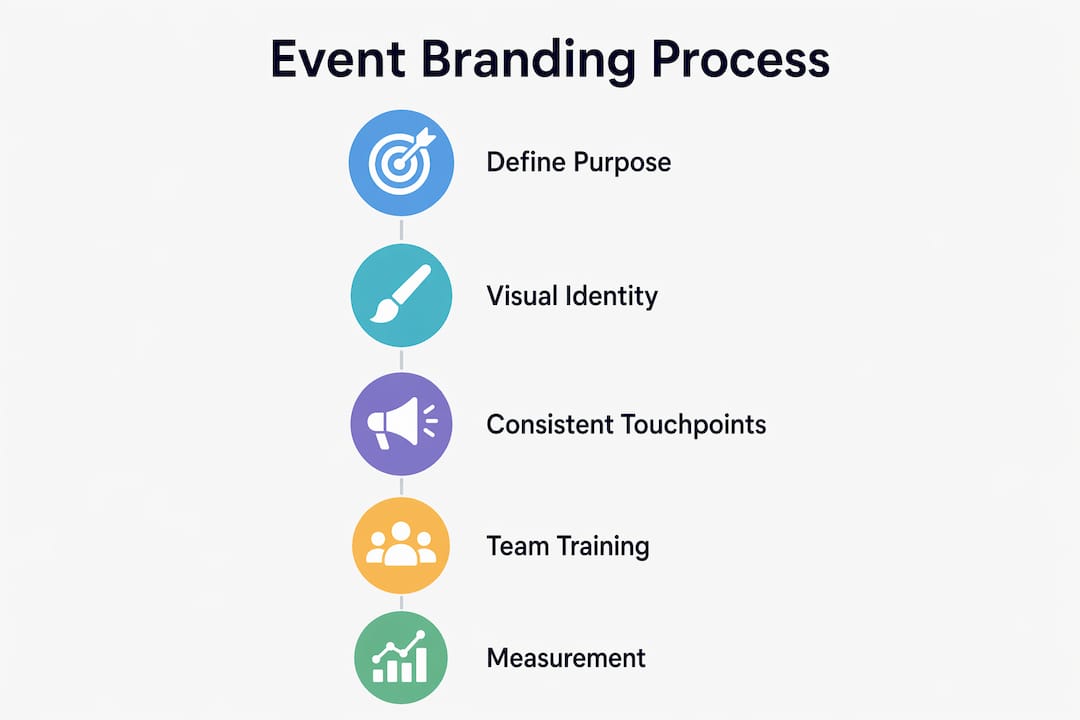
Pro Tip: When scope must be cut, reduce the number of branded touchpoints rather than the quality of each one. Three perfectly executed brand moments outperform ten mediocre ones every time.
What are the best attendee-led event branding ideas?
The most effective event branding ideas in 2026 are attendee-led. Personalised social assets such as “I am attending” LinkedIn cards, speaker announcement graphics, and sponsor co-branded attendee cards generate organic reach that no official company post can match. Attendee and employee social shares on personalised branded content consistently outperform official brand page posts in organic reach. That means your attendees are your most powerful distribution channel.
Practical attendee-led tactics include:
- Pre-event LinkedIn cards. Personalised graphics that attendees share to announce their attendance. Each card carries the event logo, date, and the attendee’s name or photo.
- Speaker announcement graphics. Co-branded assets that speakers share with their own audiences, extending reach to communities the organiser cannot access directly.
- Real-time photo opportunities. Branded photo moments tied to the event hashtag, designed for immediate sharing during the event.
- Day-of session quote cards. Branded graphics featuring key quotes from sessions, distributed in real time for attendees to share while the event is live.
- After-event recap visuals. Summary graphics that recap highlights, tag speakers, and keep the conversation active for days after the event closes.
Tracking downloads, public shares, and estimated impressions per branded asset gives planners a clear picture of which content drives the most organic amplification. That data feeds directly into the next event’s branding brief.
Automated templating tools make consistency achievable without a full design team on standby. When templates are built correctly, a single designer can produce hundreds of personalised assets in the time it would otherwise take to produce ten.
How do you design a flexible event brand identity?
Event logos should be designed as flexible frameworks rather than fixed marks. A well-designed event identity includes a primary logo, a standalone icon, a repeating pattern, and a watermark version. Each application serves a different context, from stage backdrops to digital overlays, without requiring a full redesign each time.
The table below shows how a flexible identity system maps to common event applications:
| Brand element | Primary application | Secondary application |
|---|---|---|
| Primary logo | Stage backdrop, printed programme | Email header, registration page |
| Standalone icon | Name badges, branded merchandise | Social media profile image |
| Repeating pattern | Table linen, environmental graphics | Slide deck backgrounds |
| Watermark version | Video lower thirds, photo overlays | Printed certificates |
| Colour palette | All physical signage | Digital assets and social templates |
Balancing consistency with adaptability is the central challenge of multi-year events. The identity should evolve year on year, reflecting growth and fresh themes, while retaining enough structural continuity that returning attendees recognise it immediately. Colour palettes and typography choices should work across both print and screen, and under the variable lighting conditions found in event venues.
Aligning the event brand with the parent or corporate brand requires a clear hierarchy. The corporate brand sets the boundaries. The event brand operates within them, with its own personality and visual language that feels distinct but never contradictory. This structure protects the corporate brand while giving the event room to create its own identity.
How do you measure the ROI of event branding?
Measurement turns event branding from a creative exercise into a business function. The metrics that matter most are:
- Social shares and impressions. Track how many times branded assets are shared and the estimated reach of those shares. This measures organic amplification.
- Asset downloads. Monitor how many attendees download personalised branded content. High download rates indicate strong engagement with the brand identity.
- Attendance and registration data. Compare registration rates against branding campaign activity to identify which assets drove the most sign-ups.
- Net Promoter Score (NPS). Post-event surveys that ask attendees how likely they are to recommend the event measure brand perception and loyalty directly.
- Sales pipeline impact. For corporate events, track how many attendees move into the sales pipeline within 90 days of the event. This connects branding investment to revenue outcomes.
Video content deserves its own measurement track. A well-produced event film generates impressions, social shares, and sales conversations for months after the event. Earmarking budget for video capture is one of the highest-return decisions a planner can make.
The guest experience is also a measurable output of branding. Surveys that ask attendees specifically about the look, feel, and atmosphere of the event provide qualitative data that complements the quantitative metrics above.
Pro Tip: Set your measurement framework before the event, not after. Decide which metrics matter, build the tracking mechanisms into your registration and social tools, and brief your team on what to capture on the day.
Key takeaways
Effective event branding requires a consistent identity system applied across every touchpoint, from pre-event digital assets to on-site sensory design, measured against clear business outcomes.
| Point | Details |
|---|---|
| Define brand purpose first | Every visual and sensory decision should flow from a single, clear event purpose statement. |
| Use a reverse-chronology timeline | Start planning 12 weeks out and protect load-in windows to avoid on-site brand failures. |
| Prioritise attendee-led content | Personalised shareable assets generate organic reach that official brand posts cannot match. |
| Design for flexibility | Build event identities as systems with icons, patterns, and watermarks to avoid costly redesigns. |
| Measure before and after | Set tracking metrics at the planning stage and use NPS, shares, and pipeline data to evaluate ROI. |
Why most event branding falls flat (and what I have learned from it)
The most common mistake I see is treating logo placement as a complete branding strategy. A logo on a backdrop and a branded lanyard do not constitute event branding. They are two touchpoints in a system that should span every moment from the first email invitation to the post-event follow-up.
The second mistake is underestimating operational constraints. Load-in and load-out windows are where branding plans collapse in practice. A supplier who arrives late, a venue that restricts access, or a print job that is not ready on time can strip an entire layer of the brand experience before a single attendee walks through the door. Protecting those windows is not a logistics detail. It is a brand decision.
What I have found genuinely works is building the brand identity as a system from day one. When you have a flexible framework of icons, patterns, and adaptable marks, production becomes faster and more consistent. You spend less time firefighting and more time refining the experience. The luxury event branding process that Winelandsfunction applies to every event in the Cape Town Winelands reflects exactly this principle: the identity is built to work across every format before a single supplier is briefed.
The shift towards attendee-led content is the most significant change in event branding right now. Planners who build shareable, personalised assets into their branding brief from the start are seeing measurably better reach and engagement than those who rely on post-event content alone. That is not a trend. It is a structural change in how branded events generate value.
— Coert
How Winelandsfunction brings event branding to life
Winelandsfunction specialises in luxury event management for weddings, corporate events, and bespoke celebrations in the Cape Town Winelands. Every event is planned as a cohesive brand experience, from the initial concept through to on-site execution and post-event content capture.
The team at Winelandsfunction manages the full branding process: identity development, supplier coordination, timeline management, and on-site brand delivery. For corporate clients, that includes branded environments, staff presentation, and video capture. For weddings and bespoke celebrations, it means a personalised event identity that reflects the client’s vision at every touchpoint. Contact Winelandsfunction to begin planning an event that attendees will remember long after the day itself.
FAQ
What is event branding?
Event branding is the strategic integration of a brand’s identity, messaging, and sensory design across all event touchpoints to create a unified attendee experience. It covers visual identity, tone of voice, and experiential design.
Why does event branding matter for business outcomes?
Research from the Event Marketing Institute shows that 74% of consumers who engage with branded event experiences report a higher likelihood of purchasing from that brand. Strong event branding directly supports sales and loyalty goals.
How early should event branding planning begin?
Professional planners begin the event branding process 12 weeks before the event, using a reverse-chronology timeline to manage approvals, production, and supplier delivery without compromising quality.
What is the difference between event branding and event marketing?
Event marketing drives attendance. Event branding shapes the experience once attendees arrive. Both are necessary, but they require separate strategies and budgets.
How do you measure event branding success?
Track social shares, asset downloads, estimated impressions, NPS scores, and post-event sales pipeline activity. Set these metrics before the event so tracking mechanisms are in place from day one.
Recommended
- Understanding the Event Planners: Turning Vision into Reality
- Your event styling workflow: a planner’s guide – Winelands Function – For Every Occasion, Your Celebration
- Why Hire Event Planner: Complete Guide for 2025 – Winelands Function – For Every Occasion, Your Celebration
- Event branding concepts that transform any occasion – Winelands Function – For Every Occasion, Your Celebration