

TL;DR:
- A corporate gala is an experience-led event that expresses a company’s identity through thematic design and purpose. Timing, creative vision, and personal guest experiences are essential for creating memorable, brand-building connections. Proper planning ensures coherence, personalized touches, and impactful moments that foster loyalty and strengthen relationships.
A corporate gala is defined as a formal, purpose-driven event that combines structured hospitality, live entertainment, and strategic networking to express and reinforce a company’s identity. Unlike a standard conference dinner or team night out, a gala dinner operates as a statement event with a coherent vision guiding every detail, from the invitation design to the closing programme. Corporate event planners who treat the gala as merely a logistical exercise miss its real power. At its best, a corporate gala is a brand expression that builds loyalty, celebrates people, and creates connections no video call can replicate. This corporate gala explained guide covers what defines one, why it matters, and how to plan it well.
What are the defining characteristics of a corporate gala?
A corporate gala is an experience-led event, not simply a formal dinner. The distinction matters because black-tie dress code establishes a luxury ambiance but does not define a gala. The event’s depth of purpose and experience does.
The typical gala programme spans multiple hours and includes a reception, formal dinner, speeches, entertainment, and recognition moments. Each component must connect to a central creative vision. Without that thread, even a lavish venue feels like a collection of disconnected parts.
The core elements that distinguish a corporate gala from other formal events include:
- Venue selection aligned with the event’s tone, whether a hotel ballroom, museum, historic estate, or purpose-built space
- Customised menus that reflect the occasion and guest profile, not just standard banquet catering
- Live entertainment chosen to complement the programme flow, from string quartets during reception to headline acts after dinner
- Awards or recognition sequences that give the event purpose beyond socialising
- Cohesive design language integrating lighting, florals, table styling, and spatial flow
“Cohesive design language that integrates lighting, florals, table design, and programme flow is the primary differentiator for truly prestigious events. Without it, even generous budgets produce forgettable results.”
Creative cohesion is the element most often underestimated by first-time gala planners. Colour palettes, typographic choices on menus and signage, and even the pacing of speeches all communicate brand values. Guests absorb these signals unconsciously, and they shape the lasting impression of the evening.
Why are corporate galas strategically important for networking and team building?
Gala dinners build trust and rapport through shared meals in ways that virtual meetings cannot replicate. This is not sentiment. Physical presence, eye contact, and the shared experience of a well-crafted evening create psychological bonds that persist long after the event ends.
The strategic value of a corporate gala sits across three areas:
- Client relationships: A gala gives clients a reason to engage outside transactional conversations. The relaxed formality of a dinner setting accelerates trust-building that might take months of meetings to achieve.
- Employee recognition: Celebrating milestones and individual contributions in front of peers is one of the most effective retention tools available. It costs far less than replacing talent.
- Brand loyalty: Guests who feel distinguished as individuals, not just attendees, carry a stronger sense of goodwill toward the brand long after the evening ends.
The role of guest experience in hospitality settings confirms that curated, personal moments generate loyalty that financial incentives alone cannot buy. A gala that makes a client feel genuinely valued is worth more than a year of promotional emails.
Pro Tip: Brief your speakers and award presenters in advance on tone and timing. Unscripted speeches that run long are the single fastest way to lose a room.
The team-building dimension of a gala is often overlooked in planning briefs. When staff from different departments share a table, dress formally, and experience something memorable together, they return to work with a stronger sense of shared identity. That is a measurable cultural outcome, even if it does not appear on a spreadsheet.
What are the essential steps for planning a successful corporate gala?
Planning a corporate gala requires more lead time than most planners initially budget for. High-end technical production requires 8–12 weeks minimum, which is longer than the 4–8 weeks many planners assume. Booking a venue, confirming AV suppliers, and locking in catering all happen in parallel, not in sequence.
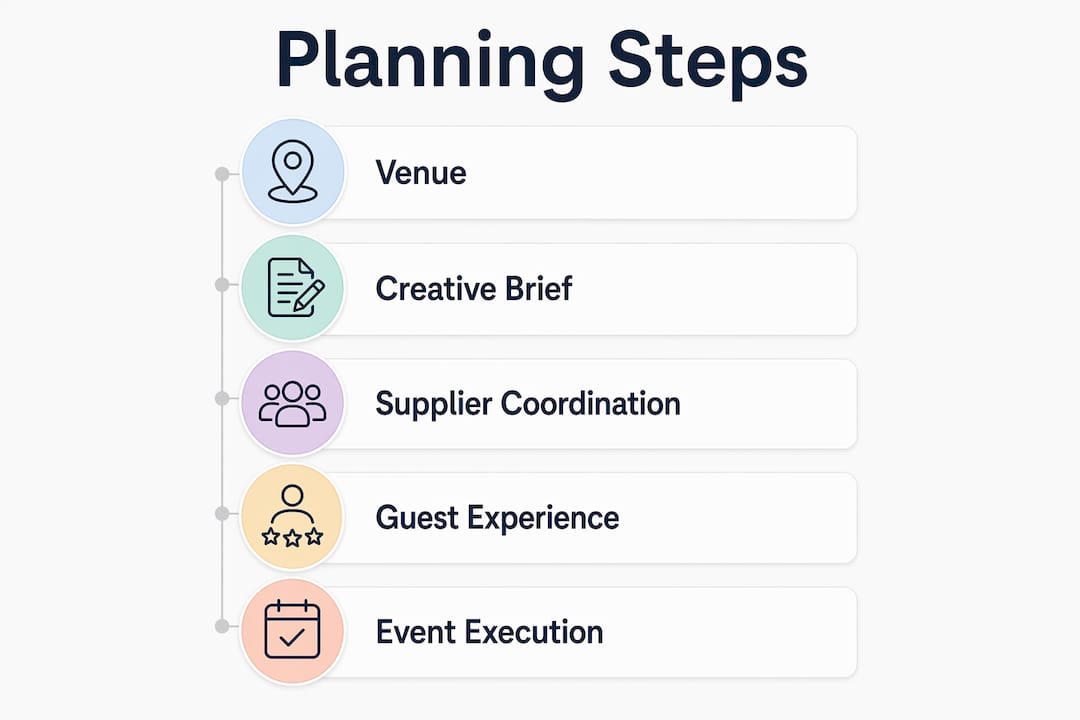
A reliable gala planning workflow follows these critical phases:
- Define the event’s core purpose. Is this a year-end celebration, a product launch, a client appreciation evening, or an awards night? The answer shapes every subsequent decision.
- Set a realistic budget. Gala budgets range from under £1,000 for intimate gatherings to over £50,000 for high-profile industry events. Know your ceiling before approaching venues.
- Select the venue. Match the space to the guest count and the creative vision. A museum suits a heritage brand; a rooftop terrace suits a tech company’s product launch.
- Appoint a creative director or lead planner. This person owns the vision and prevents the event from becoming a committee compromise.
- Coordinate catering, AV, and entertainment together. These three elements must work as a system. A live band that drowns out dinner conversation is a production failure, not a catering one.
- Build the programme timeline. Map every moment from guest arrival to final farewell, including buffer time between segments.
- Confirm all suppliers in writing with clear deliverables, load-in times, and contingency plans.
| Planning phase | Recommended lead time |
|---|---|
| Venue booking | 12–16 weeks before event |
| AV and technical production | 10–12 weeks before event |
| Catering confirmation | 8–10 weeks before event |
| Entertainment booking | 8–12 weeks before event |
| Invitations and guest management | 6–8 weeks before event |
Pro Tip: Treat the creative brief as the first document you write, not the last. Every supplier should receive it before they quote. It prevents costly misalignments later.

The most common pitfall in gala planning is treating creative direction as a finishing touch rather than the foundation. Planners who finalise the venue and catering before establishing the creative vision often end up with a technically correct event that feels generic. The corporate event preparation guide from Winelandsfunction addresses this directly, placing creative vision at the start of the planning sequence.
When is the ideal time to schedule a corporate gala?
Timing a corporate gala correctly affects attendance, vendor availability, and the overall atmosphere of the evening. Peak gala seasons are spring (march through may) and autumn (september through november). These windows offer the best combination of guest availability and venue options.
| Season | Months | Key advantage | Key consideration |
|---|---|---|---|
| Spring | March, April, May | High energy, post-Q1 momentum | Venues book quickly; confirm early |
| Summer | June, July, August | Outdoor options available | Key staff often on leave |
| Autumn | September, October, November | Strong attendance, year-end build-up | Competing with other galas |
| Winter | December, January, February | Festive atmosphere in december | January and February are slow |
Autumn galas benefit from the natural energy of year-end planning cycles. Clients and staff are present, budgets are often still active, and the occasion aligns naturally with annual recognition or milestone celebrations. Spring galas work well for product launches and new financial year celebrations.
Scheduling outside peak seasons does offer one practical advantage: vendor pricing is often lower and availability is higher. A well-executed gala in february can be more memorable than a crowded autumn event where every supplier is stretched thin.
How can you tailor a corporate gala to reflect your brand?
A singular creative vision aligning all visual and programme elements produces a powerful brand expression. The most memorable galas are built around one clear idea, not a collection of nice touches.
Practical ways to personalise a corporate gala include:
- Develop a theme that connects to your brand story. A financial services firm celebrating its centenary might use an Art Deco aesthetic. A technology company might use a “future cities” concept with architectural lighting and projection mapping.
- Personalise the guest journey. Bespoke place cards, curated welcome gifts, and individually addressed invitations signal that each guest was considered, not just counted.
- Use storytelling in the programme. A short film, a live testimonial, or a founder’s address that references specific milestones gives the evening narrative weight.
- Balance formality with comfort. Rigid seating plans and back-to-back speeches exhaust guests. Build in unstructured time for conversation between programme segments.
- Place “wow” moments deliberately. A surprise performance, a dramatic lighting change, or an unexpected reveal works best when it punctuates a natural pause in the programme, not when it interrupts the flow.
The guest experience framework used in high-end hospitality applies directly here. Every touchpoint, from the car park to the coat check to the table setting, communicates how much the host values the guest. Gaps in that chain undermine the overall impression regardless of how impressive the centrepiece is.
Pro Tip: Commission a single mood board before briefing any supplier. One visual reference point prevents the décor, the menu design, and the entertainment from pulling in three different directions.
The corporate event ideas that resonate most with guests share one quality: they feel intentional. Nothing at a great gala looks accidental, because nothing is.
Key takeaways
A corporate gala succeeds when creative direction, precise timing, and personalised guest experience work together as a single, coherent statement of brand identity.
| Point | Details |
|---|---|
| Definition is experience-led | A gala is defined by its depth of purpose and experience, not its dress code. |
| Lead time is longer than expected | Allow 8–12 weeks minimum for technical production; 12–16 weeks for venue booking. |
| Creative vision comes first | Write the creative brief before approaching any supplier or confirming any venue. |
| Timing affects outcomes | Spring and autumn are peak seasons; book early or consider off-peak for better availability. |
| Personalisation drives loyalty | Guests who feel individually valued return stronger goodwill and brand loyalty. |
What I have learned from planning galas that most briefs get wrong
The single most consistent mistake I see in corporate gala planning is treating the creative direction as a budget line rather than a foundation. Planners will spend weeks negotiating catering costs and then hand the décor brief to a supplier with two weeks to go. The result is a technically correct event with no soul.
The galas that guests talk about months later are the ones where every detail pointed in the same direction. The font on the menu matched the tone of the speeches. The lighting shifted at exactly the right moment. The entertainment felt chosen, not hired. That level of coherence does not happen by accident. It requires someone with authority over the entire event to hold the vision from day one.
The other misconception I encounter regularly is that a gala’s success is measured by the quality of the food or the size of the venue. Neither is the primary driver. The psychological impact of feeling distinguished as a guest matters far more than the number of courses. I have attended galas in extraordinary venues where guests left feeling like they had attended a production, not an experience. I have also attended smaller, tighter events where every guest left feeling genuinely seen. The second type generates the loyalty and goodwill that actually moves business forward.
Treat your gala as a brand statement. Every decision you make, from the invitation wording to the farewell moment, either reinforces or dilutes that statement. There is no neutral choice in a well-planned gala.
— Coert
How Winelandsfunction supports corporate gala planning
Winelandsfunction brings together creative direction, supplier coordination, and luxury event management under one roof for corporate clients across Cape Town and the Winelands. The team works from a single creative brief, ensuring that every element of your gala, from venue selection to programme design, reflects your brand with precision.
Whether you are planning an intimate client appreciation dinner or a large-scale industry awards evening, Winelandsfunction manages the full process from concept to execution. The event management process is built around your event’s core purpose, not a standard template. For planners who want a clear picture of what full-service coordination looks like, the corporate event management page outlines exactly how Winelandsfunction structures each engagement.
FAQ
What is a corporate gala?
A corporate gala is a formal, purpose-driven event that combines structured hospitality, entertainment, and networking to express a company’s identity and values. It differs from a standard corporate dinner by its depth of creative vision and programme design.
What defines a corporate gala versus a gala dinner?
The terms are often used interchangeably, but a corporate gala specifically serves business objectives such as client appreciation, employee recognition, or brand positioning. A gala dinner is the format; the corporate gala is the strategic application of that format.
How far in advance should you plan a corporate gala?
Allow at least 12–16 weeks for venue booking and 8–12 weeks for technical production. Underestimating lead time is the most common cause of quality issues in gala execution.
What is the typical budget range for a corporate gala?
Budgets range from under £1,000 for intimate gatherings to over £50,000 for high-profile industry events. The budget should be set before venue selection, not after.
What are the peak seasons for corporate galas?
Spring (march through may) and autumn (september through november) are the peak seasons for corporate galas, offering the best combination of guest availability, venue options, and event atmosphere.
Recommended
- Corporate gala planning workflow: a step-by-step guide – Winelands Function – For Every Occasion, Your Celebration
- What defines a corporate gala: a complete guide – Winelands Function – For Every Occasion, Your Celebration
- What is a gala dinner: your complete planning guide – Winelands Function – For Every Occasion, Your Celebration
- What is a corporate gala? Meaning, format & Cape Town – Winelands Function – For Every Occasion, Your Celebration