
TL;DR:
- A gala dinner is a formal, experience-led event designed to celebrate, fundraise, or recognize achievements. It features curated fine dining, structured entertainment, and a cohesive theme to reinforce a central message. Proper planning focuses on purpose, venue, precise timing, and seamless transitions to create a memorable, purpose-driven evening.
A gala dinner is defined as a formal, experience-led event combining a multi-course seated meal, structured entertainment, and a clear purpose such as celebration, fundraising, or recognition. Unlike a standard dinner party or corporate banquet, a gala dinner is built around a singular message that every element reinforces, from the venue décor to the closing speech. Standard duration runs 3–5 hours, with a curated programme that guides guests through each stage of the evening. Whether you are planning a corporate awards night, a charity fundraiser, or a grand wedding reception, understanding the gala dinner format is the first step to getting it right.
What is a gala dinner and how does it differ from a banquet?
The most common source of confusion when planning a formal event is treating a gala dinner and a banquet as the same thing. They are not. Gala dinners differ from banquets through their exclusivity, luxurious venue décor, curated menus, and structured programmes focused on a specific organisational purpose. A banquet is a large, celebratory meal. A gala dinner is an experience with a narrative arc.
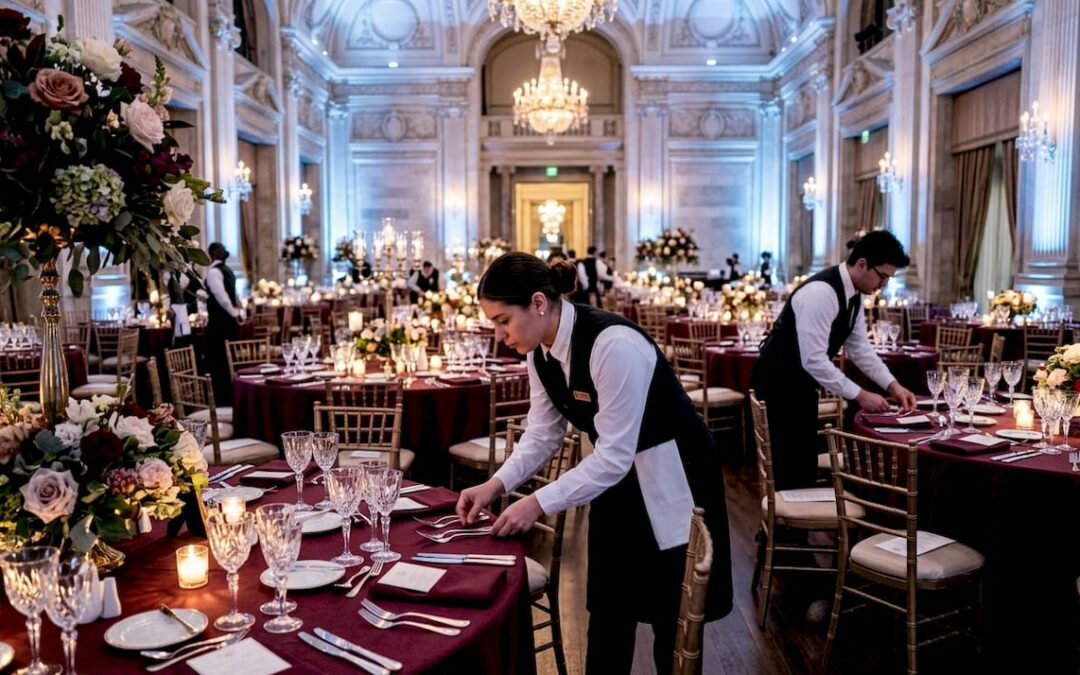
The distinction shows up in every detail. A banquet serves a crowd. A gala dinner serves a purpose. The venue at a gala is chosen for atmosphere and prestige, not simply capacity. The décor, lighting, and table settings are designed to reinforce the event’s theme, whether that is a black-tie awards evening or a charity gala raising funds for a specific cause.
Black-tie or formal dress code is the standard expectation at a gala dinner, and this formality signals to guests that the evening carries weight. Guests arrive knowing they are part of something curated, not just attending a meal. That psychological shift changes how people behave, engage, and remember the event.
| Feature | Gala dinner | Banquet |
|---|---|---|
| Primary purpose | Celebration, fundraising, or recognition | General dining or large-scale celebration |
| Programme structure | Structured: speeches, awards, entertainment | Minimal or no formal programme |
| Dress code | Black-tie or formal | Smart casual to formal |
| Venue décor | Themed, luxurious, curated | Functional, often standard |
| Guest experience | Immersive and experience-led | Social and food-focused |
Pro Tip: If your event has a message to deliver, a cause to champion, or an achievement to honour, it belongs in the gala dinner format, not a banquet.
What are the key components of a gala dinner?
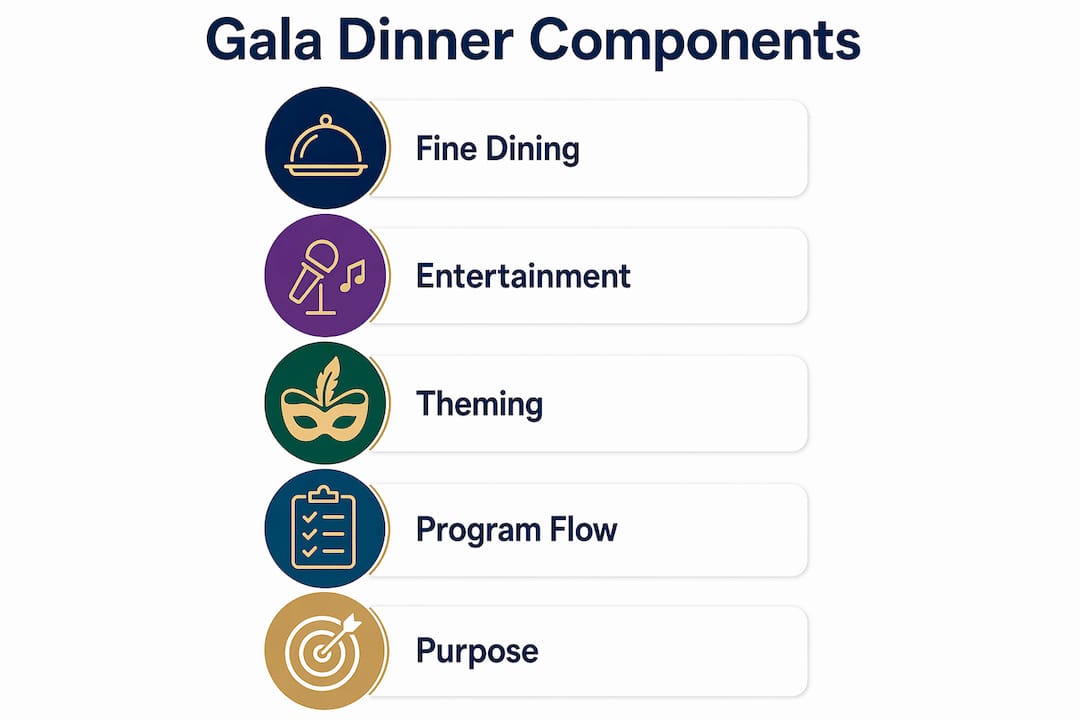
A gala dinner is built from three interlocking components: fine dining, structured entertainment, and purposeful programming. Remove any one of these and the event loses its defining character. Every element, from production to entertainment, reinforces a singular message to create a memorable experience.
Fine dining and beverage service
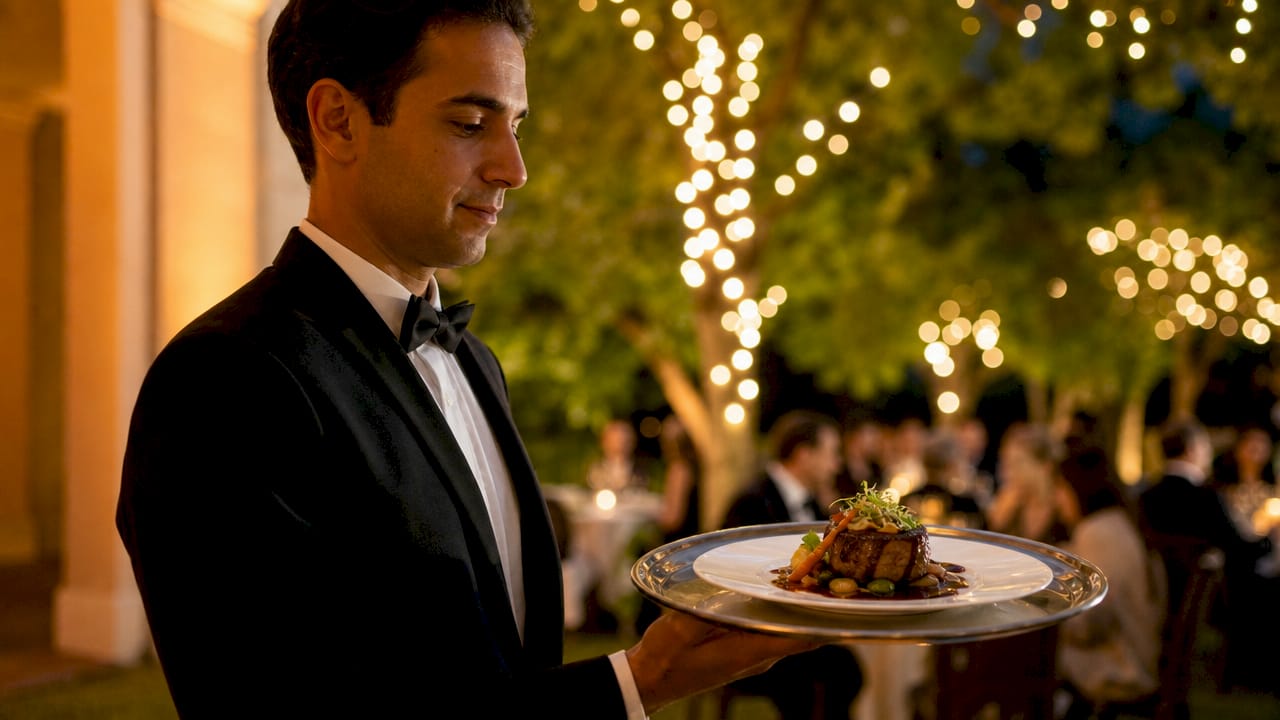
The menu at a gala dinner is never an afterthought. Curated multi-course meals typically include appetisers, entrées, and desserts, accompanied by premium beverages such as wine and champagne. The quality of food and drink sets the tone for the entire evening. Planners who treat catering as a logistics problem rather than a guest experience opportunity consistently produce forgettable events. The role of food in hospitality has evolved significantly, with curated dining now considered central to the overall event experience, not peripheral to it.
Entertainment and programme flow
Entertainment at gala dinners commonly includes live music, dance performances, speeches, celebrity hosts, and auctions. The key is variety within a controlled structure. A live jazz quartet during the reception creates one atmosphere. A keynote speaker after the main course creates another. Each segment serves the event’s central purpose.
The typical event flow runs as follows:
- Formal reception with cocktails and canapés on arrival
- Seated dinner with multi-course plated service
- Entertainment interludes between courses or after the main meal
- Speeches, awards, or auction as the programme centrepiece
- Networking and closing to wind down the evening naturally
Theming and décor
A gala dinner without a coherent theme is just a formal meal. The theme gives the décor, entertainment, and programme a shared language. A Great Gatsby theme calls for gold accents, jazz, and art deco centrepieces. A conservation charity gala might use natural textures, botanical arrangements, and a nature documentary as a backdrop. The theme is not decoration. It is the story the event tells.
Pro Tip: Lock in your theme before booking any supplier. Every vendor decision, from the florist to the AV company, should serve the theme. Changing direction mid-planning creates inconsistency that guests notice.
When and why should you host a gala dinner?
A gala dinner suits any occasion where the goal extends beyond simply gathering people in a room. Gala dinners are used to celebrate milestones, appreciate employees, engage clients, and host awards, often incorporating networking and fundraising within the same evening. The format is flexible enough to serve very different objectives, provided the planning reflects the specific purpose.
Common occasions that call for a gala dinner format include:
- Corporate anniversaries and milestone celebrations, where the company wants to honour its history and motivate its people
- Charity fundraisers, where the gala format creates an atmosphere of generosity and shared purpose, driving auction bids and donations
- Awards nights, where recognition is the centrepiece and the formal setting amplifies the significance of each award
- Client appreciation evenings, where the luxury experience communicates the value the organisation places on its relationships
- Wedding receptions styled as formal galas, where the couple wants an evening of structured elegance rather than an informal party
The purpose of the event should drive every planning decision. A charity gala prioritises emotional storytelling and a compelling auction. A corporate awards night prioritises production quality and a polished programme. A wedding gala prioritises personal touches and guest comfort. Mixing these priorities without a clear hierarchy produces events that feel unfocused. Understanding why corporate events matter helps clarify which format serves which objective.
How to plan a gala dinner that is elegant and memorable
Planning a gala dinner requires aligning every decision with the event’s central purpose. Event experts confirm that every element, from theme to logistics, must serve a singular purpose to create a glamorous and effortless guest experience. The best galas feel inevitable, as though every detail was always going to be exactly as it is.
Follow this planning sequence to keep your event coherent:
- Define the purpose first. Write one sentence that captures what the event exists to do. Every subsequent decision is tested against that sentence.
- Choose the venue to match the purpose. A charity gala raising funds for a conservation cause belongs in a venue with character, not a generic hotel ballroom. The venue is the first signal guests receive about the evening’s tone.
- Build the programme before booking entertainment. Know the shape of the evening before filling it. How long is the reception? When do speeches happen? Where does the auction sit? A step-by-step planning approach prevents the common mistake of booking entertainment that disrupts the programme flow.
- Design the menu around the theme. Work with your caterer to create a menu that reflects the event’s character. A formal black-tie gala calls for classical French cuisine. A contemporary corporate gala might feature a modern tasting menu. Consult a festive meal offerings guide for structured menu ideas suited to formal events.
- Manage timing with precision. The most common failure at gala dinners is a programme that runs long. Speeches overrun. Courses arrive late. Guests lose focus. Build buffer time into every segment and brief all speakers on strict time limits.
Pro Tip: Assign a dedicated programme manager on the night, separate from the event coordinator. One person manages the guest experience. The other manages the clock. This single decision prevents most timing failures.
Common pitfalls to avoid include over-programming the evening, under-briefing speakers, and treating the guest experience as secondary to the logistics. Guests remember how the evening felt, not how efficiently the catering was coordinated.
Key takeaways
A gala dinner is a purpose-driven formal event where fine dining, structured entertainment, and cohesive theming work together to deliver a singular, memorable experience.
| Point | Details |
|---|---|
| Define the purpose first | Every planning decision should serve one clear objective, whether celebration, fundraising, or recognition. |
| Gala dinners differ from banquets | Galas are experience-led with structured programmes; banquets are primarily food-focused gatherings. |
| Fine dining is non-negotiable | A curated multi-course menu with premium beverages is a defining feature of the format. |
| Theme before suppliers | Lock in the event theme before booking any vendor to maintain visual and experiential consistency. |
| Programme management is critical | Assign a dedicated person to manage timing on the night to prevent the most common gala failure. |
What I have learned from planning gala dinners that look effortless
The events that guests describe as “magical” are never the ones with the biggest budgets. They are the ones where someone made a hundred small decisions that all pointed in the same direction. That is the real craft of a gala dinner.
I have seen beautifully decorated rooms fall flat because the programme had no momentum. I have seen modest venues produce extraordinary evenings because the host understood exactly what story they were telling. The difference is always intentionality. When you know why the event exists, every choice becomes easier and every guest feels it, even if they cannot articulate why.
The detail that most planners underestimate is the transition. The moment between the main course and the awards. The pause before the keynote speaker takes the stage. These transitions are where the atmosphere either holds or dissolves. Rehearse them. Brief your team on them. Treat them as seriously as the headline entertainment.
A gala dinner is not a meal with extras. It is a curated experience that happens to include a meal. The planners who understand that distinction consistently produce evenings that people talk about long after the last glass of champagne is cleared.
— Coert
Planning your gala dinner with Winelandsfunction
Winelandsfunction specialises in luxury bespoke events for clients who expect more than a well-run evening. Based in Cape Town, the team coordinates everything from venue selection and menu curation to entertainment programming and on-the-night management.

Whether you are planning a corporate gala, a charity fundraiser, or a formal wedding reception, Winelandsfunction brings the same attention to purpose and detail to every event. The event planning process is structured to take you from initial concept through to a flawlessly executed evening, with every decision aligned to your event’s central goal. For clients who want an experience their guests will remember, Winelandsfunction is the starting point.
FAQ
What is the gala dinner meaning in formal events?
A gala dinner is a formal, experience-led event combining a multi-course meal, structured entertainment, and a clear purpose such as celebration, fundraising, or recognition. It is distinguished from other formal dinners by its curated programme and luxury presentation.
What is the typical dress code for a gala dinner?
Black-tie or formal attire is the standard dress code for a gala dinner. This formality reflects the exclusivity and prestige of the event format.
How long does a gala dinner last?
A gala dinner typically lasts 3–5 hours, covering a formal reception, multi-course dinner, entertainment, speeches or awards, and a closing networking period.
What happens at a gala dinner?
Guests arrive at a formal reception with cocktails, move to a seated multi-course dinner, experience entertainment interludes and speeches, and close with networking. The programme is structured and purposeful throughout.
What is the difference between a gala dinner and a banquet?
A banquet is a large celebratory meal with minimal formal programming. A gala dinner is an experience-led event with a structured programme, themed décor, and a specific organisational purpose such as fundraising or employee recognition.
Recommended
- What is a gala dinner: your complete planning guide – Winelands Function – For Every Occasion, Your Celebration
- Corporate gala explained: what planners need to know – Winelands Function – For Every Occasion, Your Celebration
- Corporate gala planning workflow: a step-by-step guide – Winelands Function – For Every Occasion, Your Celebration
- How to host elegant events: your complete guide – Winelands Function – For Every Occasion, Your Celebration