

TL;DR:
- Effective event theme customisation involves creating a unified narrative across all physical and digital elements to enhance guest experience. Proper planning includes understanding the audience, setting clear goals, sharing mood boards early, and coordinating with vendors on timelines. Common mistakes include confusing decoration with immersive theming and underestimating fabrication time, which can lead to inconsistent themes and budget overruns.
Event theme customisation is the process of building a cohesive visual and experiential narrative that shapes every element of your event, from the entrance arch to the closing playlist. An integrated event theme unifies decor, music, lighting, and attire into a single story that boosts attendee engagement, retention, and social sharing. Knowing how to customise event themes effectively separates a forgettable gathering from an occasion guests talk about for years. This guide covers the foundational steps, digital tools, physical styling decisions, and common pitfalls that determine whether your theme lands or falls flat.
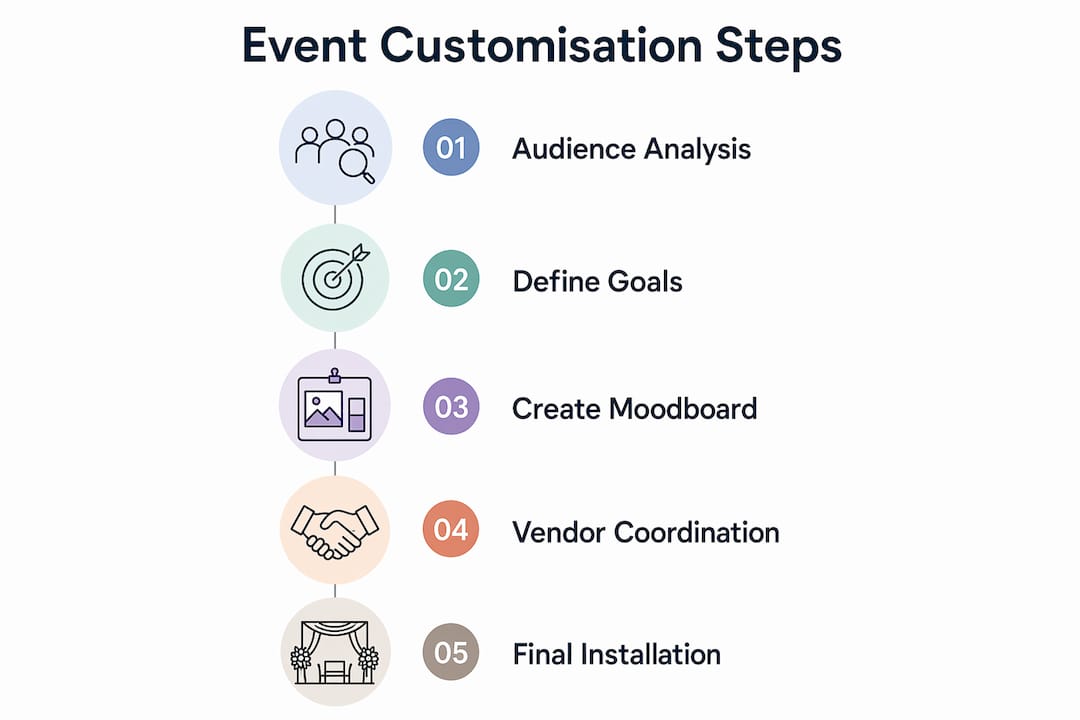
What do you need before customising event themes?
The most common mistake planners make is choosing a theme before understanding their audience. Theme choice must align with specific audience demographics and event objectives, not with whatever trend is circulating on social media. A product launch for a financial services firm demands a different visual language than a 40th birthday celebration, even if both use the same colour palette.
Once you know your audience, define your event goals clearly. Are you building brand recognition, celebrating a milestone, or creating networking opportunities? Each goal shapes which theme elements deserve the most investment. A corporate awards evening, for example, benefits from bold monogrammed signage and a strong stage backdrop far more than elaborate table centrepieces.
With goals in place, build a mood board. Physical event stylists recommend creating mood boards 3–6 months in advance to align vendors and maintain theme cohesion. A mood board collects colour swatches, fabric samples, floral references, and lighting photographs into one visual document that every supplier can work from.
Planning essentials at a glance:
| Planning element | Why it matters |
|---|---|
| Audience analysis | Ensures the theme resonates with the people attending |
| Event goal statement | Guides budget allocation across theme elements |
| Mood board | Gives vendors a shared visual reference |
| Budget breakdown | Prevents overspend on custom fabrication |
| Venue assessment | Confirms which installations are physically possible |
Pro Tip: Share your mood board with every vendor at the first briefing, not just your decorator. Your florist, AV technician, and caterer all make decisions that affect theme cohesion.
How do you customise digital event themes on popular platforms?
Digital event platforms give organisers direct control over the visual identity of their online or hybrid events. Platforms like Airmeet allow colour scheme and call-to-action accent changes both before the event and during a live session, though advanced customisation options are typically reserved for paid tiers.
The process on most platforms follows a similar sequence:
- Navigate to your event’s branding or appearance settings.
- Upload your logo in the recommended file format (usually PNG with a transparent background).
- Select your primary and secondary colours using hex codes to match your brand palette precisely.
- Choose a light or dark mode base to suit your event’s tone.
- Preview the result on both desktop and mobile before publishing.
- Save and share a test link with a colleague to confirm readability across devices.
Platforms like Luma extend this further, offering over 40 preset themes alongside custom colour schemes, emoji shapes, confetti types, and animated effects. That breadth of choice means even a small team can produce a polished, personalised event page without a graphic designer.
Previewing theme changes on desktop and mobile before launch is the single most overlooked step in digital theming. Colour contrast that looks elegant on a large monitor can become unreadable on a phone screen. Always test on at least two device types.
Common digital theming limitations to watch for:
- Free plan tiers on most platforms restrict logo uploads or limit colour choices to preset palettes.
- Custom fonts are rarely available without a developer integration.
- Animated effects may not display correctly in all browsers, particularly on older devices.
- Some platforms lock branding settings 24 hours before the event goes live.
Pro Tip: Use your brand’s exact hex codes rather than selecting colours by eye. A slight mismatch between your event page and your printed materials undermines the cohesion you are working to create.
How do you personalise physical event themes through decor and styling?
Physical theming is where the conceptual becomes tangible, and the entryway is the most critical touchpoint for setting the tone of the entire experience. Guests form their first impression within seconds of arrival, so the entrance installation must communicate the theme immediately and completely. Bespoke entryway fabrication often requires multi-day setup, which means scheduling site access well before the event date.
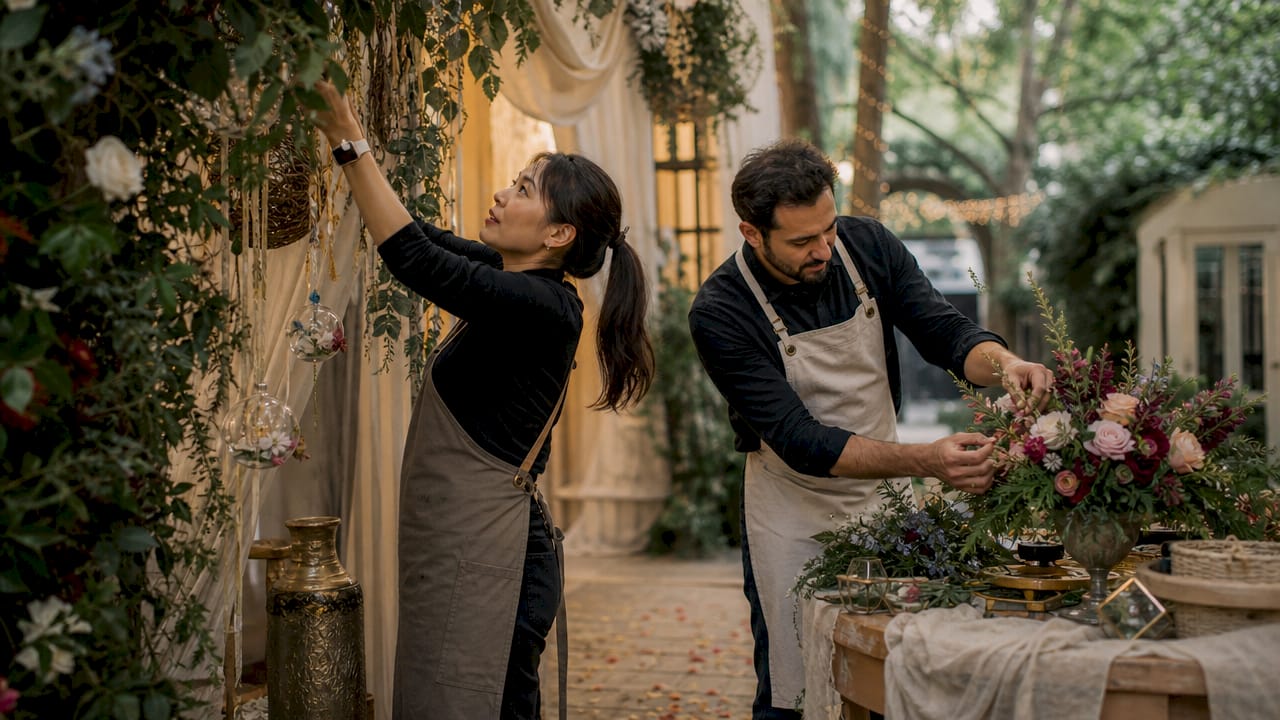
Coordinating your physical elements requires a clear chain of communication. Visual mood boards are the primary tool for translating an abstract concept into accurate vendor execution. Send the same mood board to your florist, your AV team, your linen supplier, and your signage printer. When every supplier works from the same visual reference, the risk of mismatched elements drops significantly. The role of floral design in reinforcing a theme is particularly strong, as flowers carry colour, texture, and scale simultaneously.
Physical elements to customise for a fully immersive experience:
- Centrepieces: Height, material, and colour should echo the mood board palette.
- Backdrops: Printed, floral, or structural backdrops anchor the main photography zone and reinforce the theme visually.
- Monograms and signage: Custom lettering adds personalisation and works as a wayfinding tool.
- Linen and tableware: Fabric texture and crockery style communicate formality level instantly.
- Lighting: Coloured washes, gobos, and uplighting tie the room’s colour palette together after dark.
Lighting and decor must be coordinated deliberately. Disjointed planning between your decorator and your AV team produces mismatched event zones that break the immersive atmosphere you have built everywhere else.
Installation timeline for bespoke physical theming:
| Phase | Timing before event |
|---|---|
| Mood board finalised | 3–6 months |
| Vendor briefs issued | 2–3 months |
| Custom fabrication ordered | 6–8 weeks |
| Site access for large installations | 2–3 days |
| Final dressing and lighting rig | Day before |
Pro Tip: Book a venue walkthrough with your decorator and AV technician together, not separately. Decisions made in the same room save hours of back-and-forth emails and prevent costly last-minute changes.
What are the most common mistakes when customising event themes?
The most damaging error in event theming is confusing decoration with immersive theming. Successful themes require narrative integration across every vendor and every touchpoint, not just attractive centrepieces. A room full of beautiful objects that do not tell a consistent story reads as expensive but incoherent.
Mixing multiple themes is the second most frequent problem. Planners often add elements from a second theme because they like the look, without considering whether it fits the narrative. A Great Gatsby evening with a tropical floral wall is a common example. Each element is attractive individually, but together they confuse the guest experience.
Common mistakes and how to avoid them:
| Mistake | Solution |
|---|---|
| Decorating instead of theming | Define a narrative first; every element must serve that story |
| Poor vendor communication | Share the mood board with all suppliers at the first briefing |
| Mixing incompatible themes | Commit to one visual language and edit out anything that does not fit |
| Underestimating fabrication time | Order custom pieces at least 6–8 weeks in advance |
| Ignoring mobile preview for digital themes | Test on at least two device types before publishing |
Budget overruns in physical theming almost always trace back to underestimated fabrication timelines. Large-scale custom decor requires multi-day installations that must be scheduled well before guest arrival. Planners who leave fabrication decisions until six weeks out frequently pay premium rush fees or accept lower-quality alternatives.
Pro Tip: Build a 15 per cent contingency into your theming budget from the start. Custom fabrication quotes rarely account for every variable, and last-minute additions are the norm rather than the exception.
For corporate event theming specifically, the narrative must align with the company’s brand values, not just its colour palette. A technology firm that themes its annual conference around nature and sustainability sends a deliberate message. A financial institution that uses the same theme without that brand context creates confusion.
Key takeaways
Effective event theme customisation requires a defined narrative, a shared mood board, and coordinated vendor communication across every physical and digital touchpoint.
| Point | Details |
|---|---|
| Start with audience and goals | Theme choice must align with who is attending and what the event needs to achieve. |
| Use mood boards early | Share a visual reference with all vendors 3–6 months before the event. |
| Coordinate lighting and decor together | Disjointed AV and decor planning breaks theme cohesion across event zones. |
| Test digital themes on multiple devices | Colour contrast and readability vary significantly between desktop and mobile screens. |
| Budget for fabrication lead times | Order custom pieces at least 6–8 weeks out to avoid rush fees and quality compromises. |
What I have learned from years of watching themes succeed and fail
The events that stay with guests longest are never the ones with the biggest budgets. They are the ones where every detail, from the scent at the entrance to the font on the menu card, points in the same direction. I have watched planners spend significant sums on elaborate centrepieces while neglecting the entryway, the lighting rig, and the transition music. Guests remember the first thirty seconds and the last thirty seconds of an event. Everything in between is context.
The advice I give most often is this: write your theme down as a single sentence before you spend a penny. “An intimate Provençal harvest dinner celebrating ten years of partnership” is a brief that every vendor can work from. “Rustic but elegant with some floral touches” is not. The more specific your narrative, the easier every subsequent decision becomes, because you have a clear filter for what belongs and what does not.
Technology has made digital theming genuinely accessible. Platforms that offer custom event branding have removed the need for a design agency at the digital end of your event. Use that advantage, but do not let it distract from the physical experience. The room is still where the memory is made.
The planners I respect most treat theming as storytelling, not styling. They ask what they want guests to feel, not what they want guests to see. That shift in question produces events that are genuinely immersive rather than merely photogenic.
— Coert
Winelandsfunction: bespoke event theming in Cape Town
Winelandsfunction specialises in building events where every element serves a single, deliberate narrative. From the initial concept brief through to the final installation, the team manages vendor coordination, mood board development, and on-the-day execution so that nothing falls through the gaps.
Whether you are planning a luxury wedding, a corporate launch, or a bespoke private celebration, the bespoke party planning process at Winelandsfunction is built around your specific audience and goals. For clients who want full end-to-end support, the event management services page outlines exactly how the team works from conception to completion. Get in touch to begin building a theme that your guests will not forget.
FAQ
What is event theme customisation?
Event theme customisation is the process of designing a cohesive visual and experiential concept that unifies all event elements, including decor, lighting, music, and signage, into a single narrative. It goes beyond decoration to create an immersive atmosphere.
How early should I start planning a custom event theme?
Physical event stylists recommend finalising your mood board 3–6 months before the event. Custom fabrication orders should be placed at least 6–8 weeks out to avoid rush fees and quality issues.
Can I customise event themes on digital platforms without design skills?
Platforms like Luma offer over 40 preset themes with colour, font, and effect options that require no design experience. Most platforms also include a preview function to test changes before publishing.
What is the difference between decorating and theming?
Decorating adds attractive elements to a space, while theming builds a narrative that every element serves. Successful theming requires all vendors, including florists, AV teams, and caterers, to work from the same brief.
How do I avoid budget overruns when customising event themes?
Build a 15 per cent contingency into your theming budget from the outset and order all custom fabrication well in advance. Last-minute additions and rush production fees are the most common causes of overspend.
Recommended
- How to customise event experiences: your 2026 guide – Winelands Function – For Every Occasion, Your Celebration
- Your event styling workflow: a planner’s guide – Winelands Function – For Every Occasion, Your Celebration
- Why personalised events matter: the 2026 planner’s guide – Winelands Function – For Every Occasion, Your Celebration
- Personalised event planning workflow: your 2026 guide – Winelands Function – For Every Occasion, Your Celebration