

TL;DR:
- An event concierge manages the operational logistics and on-the-day execution of events, ensuring smooth coordination between suppliers, venues, and guests.
- They differ from event planners by focusing on execution rather than creative vision, and their services can be hired for full planning or event-day support only.
An event concierge is a professional dedicated to managing the coordination, logistics, and on-the-day execution of an event, acting as the single operational point of contact for all suppliers, venues, and guests. The role of event concierge is distinct from that of an event planner. Where a planner shapes the creative vision and budget, a concierge delivers it on the ground. 66% of event planners outsource at least part of their event management, with coordination as one of the fastest growing demand areas. That figure reflects a clear shift: hosts want expert operational support without surrendering creative control.
What are the key responsibilities of an event concierge?
An event concierge owns the operational layer of any event. Their work sits between the planning stage and the guest experience, making sure every moving part arrives on time and in the right order.
The core responsibilities cover five distinct areas:
- Timeline and schedule coordination. The concierge builds a master run sheet that aligns the venue, suppliers, entertainment, and catering to the minute. A wedding reception with six vendors and a 200-person guest list cannot run on goodwill alone.
- Supplier liaison. The concierge acts as the single communication point for every external party. Florists, caterers, AV technicians, and transport providers all receive one set of instructions from one accountable person.
- Logistics management. Concierge services handle venue sourcing, licensing, catering, entertainment, guest transport, and overall logistics throughout the event lifecycle. That breadth means nothing falls through the gaps between departments.
- On-site coordination. During the event itself, the concierge oversees setup, monitors timings, and resolves problems before guests notice them. A delayed catering delivery or a missing microphone stand becomes their problem, not yours.
- Guest flow management. For corporate launches or large weddings, the concierge directs arrivals, manages seating, and coordinates the movement of guests between spaces.
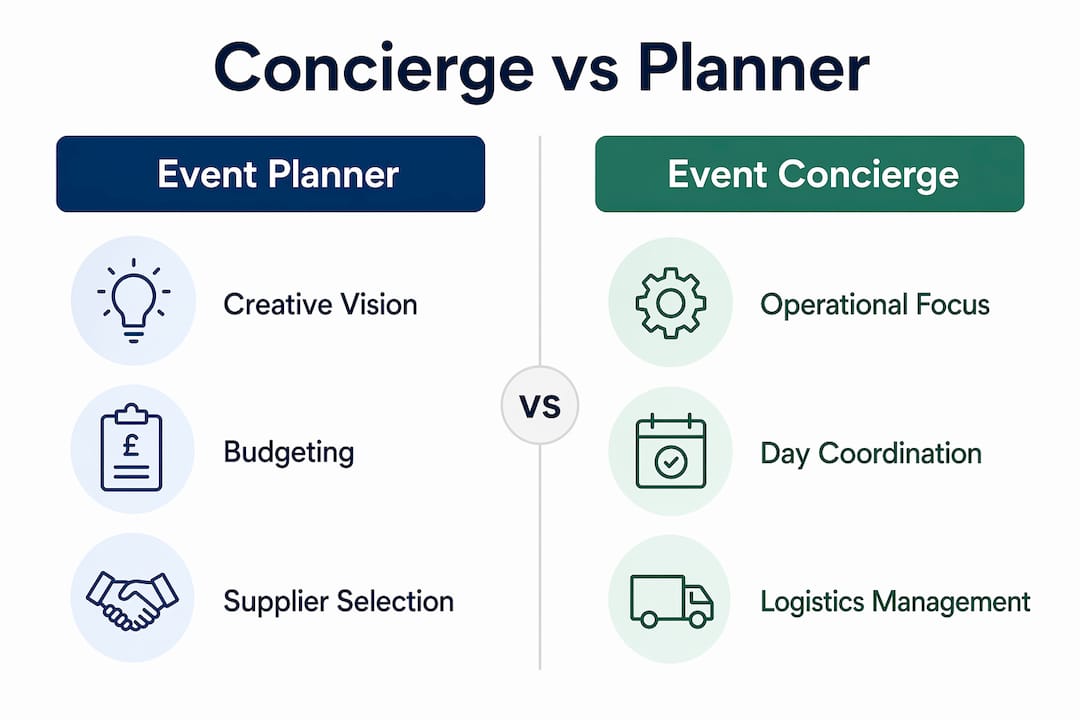
These responsibilities differ fundamentally from the creative and strategic work of event planners. A planner decides what the event looks, feels, and sounds like. A concierge makes sure that vision actually happens on the day.
Pro Tip: Brief your concierge with a full supplier contact list at least two weeks before the event. That window gives them time to confirm every detail and flag conflicts before they become crises.

How does an event concierge differ from an event planner?
Event management and event concierge are frequently confused, but they serve different functions. Understanding the distinction helps you hire the right support at the right stage.
An event planner focuses on creative vision, budgeting, supplier selection, and overall project management from concept to completion. They decide the theme, negotiate contracts, and build the programme. An event concierge focuses on execution. They take the plan and make it work operationally, managing the schedule, the suppliers, and the logistics on the day.
| Area | Event planner | Event concierge |
|---|---|---|
| Primary focus | Creative vision and budget | Operational execution and logistics |
| Engagement period | Full planning cycle | Partial or event-day only |
| Supplier role | Selects and contracts suppliers | Manages and coordinates suppliers |
| Guest interaction | Minimal on the day | Direct, on-site point of contact |
| Creative control | Holds creative authority | Delivers the host’s vision |
The practical value of this distinction is flexibility. Clients can engage a concierge for full coordination or for event-day support only, paying for the level of service they actually need. This counters the common assumption that professional event support requires an all-or-nothing agency contract.
You might plan your own wedding from start to finish and still hire a concierge for the day itself. That single decision protects months of preparation from being undone by a scheduling error or a miscommunication between vendors.
Pro Tip: If you have already planned your event but feel uncertain about the day itself, an event-day concierge is the most cost-effective form of professional support available.
Why use an event concierge? Key benefits for hosts
Corporate concierge services have evolved from a luxury into an essential operational tool that boosts productivity and reduces distractions. That shift applies equally to weddings and private celebrations. The host who spends their wedding morning chasing a florist is not present for their own event.
The benefits of hiring an event concierge fall into four clear categories:
- Productivity and focus. Concierge services remove administration burdens, allowing hosts and their teams to concentrate on guests, networking, and the purpose of the event itself. A corporate launch where the CEO is managing logistics is a corporate launch that has already lost its focus.
- Risk reduction. Hiring concierge providers helps businesses avoid costly mistakes and ensures premium client experiences that reflect positively on brand reputation. A missed supplier confirmation or an incorrect setup can cost far more than the concierge fee.
- Stress reduction for hosts. When one person owns the operational detail, the host is freed to be present. This matters as much at a 30-person dinner as at a 300-person gala.
- Consistent quality. A concierge brings professional oversight that maintains quality across every touchpoint. Guests experience the event as polished and considered, not improvised.
The importance of event concierge services is most visible when things go wrong. A supplier arrives late, a room layout needs changing at the last minute, or a guest has an accessibility requirement that was not communicated. The concierge absorbs that pressure and resolves it without disrupting the event’s atmosphere.
How to integrate an event concierge into your planning process
Effective integration starts with a clear scope conversation before any contract is signed. Define whether you need full coordination from the planning stage or support from the event day only. That decision shapes the fee, the timeline, and the working relationship.
Follow these steps to get the most from your concierge engagement:
- Define the scope in writing. Specify which suppliers the concierge will manage, what decisions they can make independently, and what requires your approval. Ambiguity on day one becomes conflict on event day.
- Share your creative vision clearly. The concierge delivers your vision, not their own. Provide mood boards, a written brief, and a priority list so they understand what matters most to you.
- Appoint them as the operational contact for all suppliers. Once the concierge is in place, direct all supplier queries to them. Splitting communication between yourself and a concierge creates conflicting instructions.
- Agree on response time expectations. Professional concierge services, such as those operating to the standard where event requests receive a response within 24 business hours, set a clear benchmark for client communication. Hold your concierge to a similar standard.
- Negotiate the fee based on scope and event scale. A concierge for a 50-person corporate dinner requires less resource than one managing a 400-person wedding. Fee structures should reflect that difference.
- Ask about additional services. Many concierge providers also offer venue finding, supplier sourcing, and guest experience enhancement alongside their core coordination role. Bundling these can reduce overall cost and improve consistency.
Pro Tip: Request a pre-event walkthrough with your concierge at the venue. Walking the space together surfaces logistical issues that no amount of email correspondence will reveal.
Key takeaways
The role of event concierge is the operational backbone of any well-executed event, providing the coordination, supplier management, and on-site oversight that allows hosts to focus entirely on their guests.
| Point | Details |
|---|---|
| Concierge vs. planner | A planner shapes creative vision; a concierge delivers it operationally on the day. |
| Flexible engagement | You can hire a concierge for event-day support only, without committing to full planning services. |
| Risk and quality | Professional concierge oversight reduces costly operational errors and maintains consistent guest experience. |
| Productivity gain | Removing logistical distractions allows hosts and teams to focus on the event’s core purpose. |
| Integration approach | Define scope, share your vision clearly, and appoint the concierge as the single supplier contact. |
The concierge role has changed. Most hosts have not caught up yet
I have watched the event industry shift considerably over the past decade. The concierge role used to be associated with five-star hotels and high-budget corporate accounts. That association has become outdated, and hosts who still think of concierge support as a luxury are leaving a practical tool on the table.
The most common mistake I see is hosts who plan meticulously for months and then try to manage the day themselves. They arrive at their own wedding or corporate launch carrying a clipboard and a phone full of supplier numbers. The event suffers for it. Not because the planning was poor, but because execution is a different skill set entirely.
The second misconception is that concierge services require a full-service contract. They do not. The flexibility of concierge engagement is one of its most underused advantages. A host who has planned everything themselves can still bring in a concierge for the final 48 hours and the event day. That targeted support often delivers the highest return for the lowest cost.
What I find most telling is the role of customer service in hospitality more broadly. The events that guests remember are the ones where nothing felt effortful. That effortlessness is not accidental. It is the result of someone working very hard behind the scenes to make it look that way. That person is the concierge.
— Coert
How Winelandsfunction brings concierge expertise to your event
Winelandsfunction specialises in luxury event planning and coordination for weddings, corporate functions, and bespoke celebrations in Cape Town and the surrounding Winelands. The team integrates concierge-level operational support directly into every engagement, acting as the central point of contact for venues, suppliers, and guests throughout the event lifecycle.
Whether you are planning an intimate celebration or a large-scale corporate launch, Winelandsfunction offers event planning step by step resources and full concierge coordination to match your event’s scale and ambition. For those seeking a higher level of personalisation, the luxury bespoke events portfolio showcases what expert coordination and attention to detail can produce. Reach out to the Winelandsfunction team to discuss the level of support that fits your event.
FAQ
What does an event concierge do?
An event concierge manages the operational coordination of an event, including supplier liaison, timeline management, logistics, and on-site execution. They act as the single point of contact for all operational matters, allowing the host to focus on guests.
How is an event concierge different from an event planner?
An event planner focuses on creative vision, budgeting, and overall project management. An event concierge focuses on executing the plan operationally, managing suppliers and logistics on the day.
Can I hire an event concierge for one day only?
Yes. Concierge services offer flexible engagement, and clients can pay for event-day support only rather than committing to a full planning contract.
Why use an event concierge for a corporate function?
A concierge removes logistical distractions and prevents costly operational errors, allowing your team and leadership to focus on the event’s business purpose and guest relationships.
What events benefit most from concierge support?
Weddings, corporate launches, gala dinners, and any event with multiple suppliers or a complex guest programme benefit most from dedicated concierge coordination.
Recommended
- How to Elevate Guest Experience for Luxury Events Easily – Winelands Function – For Every Occasion, Your Celebration
- VIP event essentials: the planner’s complete guide – Winelands Function – For Every Occasion, Your Celebration
- High End Event Coordination Steps for Exceptional Results – Winelands Function – For Every Occasion, Your Celebration
- The role of event management companies in luxury celebrations – Winelands Function – For Every Occasion, Your Celebration