

TL;DR:
- Experiential event marketing creates immersive brand experiences that engage attendees actively. Success metrics now focus on engagement, user-generated content, and emotional connection, not just attendance. Effective strategies rely on narrative, sensory design, and delivering genuine value to foster loyalty and impactful brand interactions.
Experiential event marketing is defined as the practice of creating immersive, interactive experiences that turn attendees into active participants rather than passive observers. Where traditional marketing tells people about a brand, experiential marketing shows them. The discipline, also known in the industry as “live marketing” or “engagement marketing,” sits at the intersection of event production and brand strategy. Success metrics have shifted from attendance numbers and impressions to active brand advocacy and user-generated content, a change that reflects how audiences now expect to feel something at an event, not merely witness it.
What is experiential event marketing and how does it differ from traditional events?
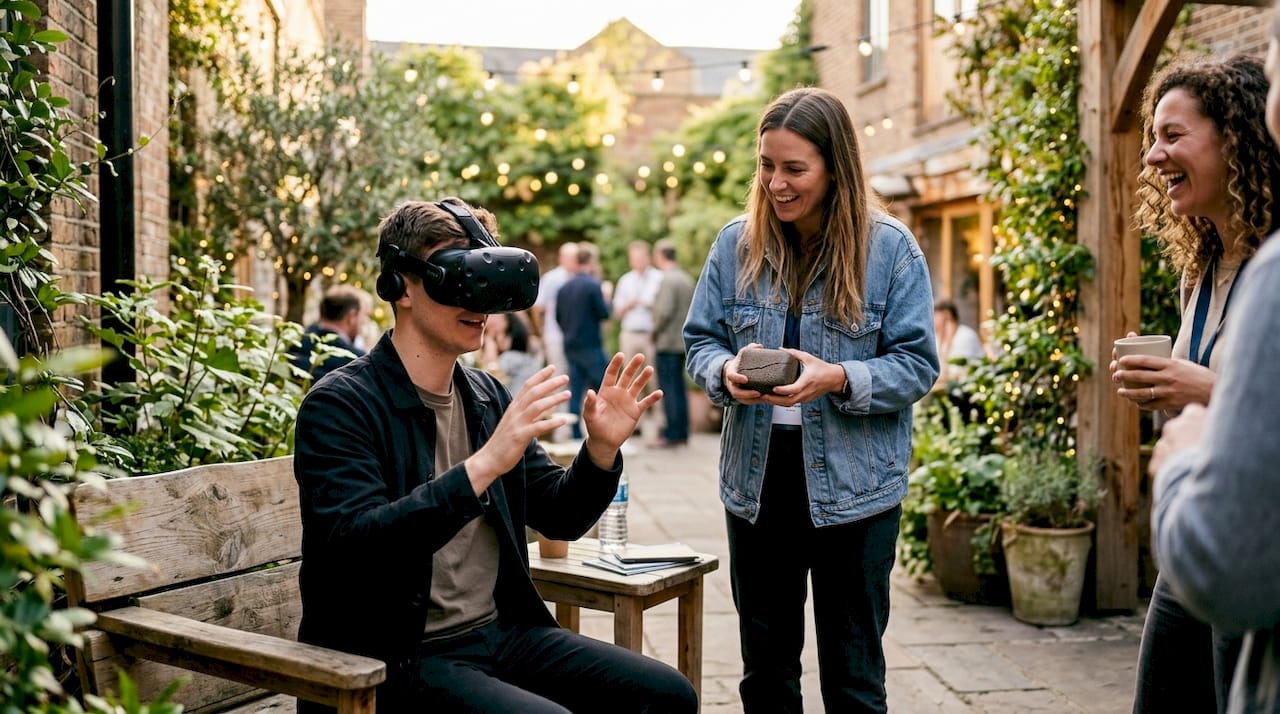
Experiential marketing is distinct from traditional event marketing in one fundamental way: attendees are participants, not recipients. A traditional product launch puts a speaker on a stage and an audience in seats. An experiential activation puts the audience inside the story.
The table below captures the core contrasts between the two approaches.
| Dimension | Traditional event marketing | Experiential event marketing |
|---|---|---|
| Attendee role | Passive observer | Active participant |
| Primary goal | Brand awareness and reach | Emotional connection and advocacy |
| Key success metrics | Impressions, badge scans, headcount | User-generated content, behavioural data, brand affinity |
| Typical format | Conferences, product launches, trade stands | Pop-ups, immersive workshops, brand activations, hybrid experiences |
| Measurement focus | Reach and volume | Depth and engagement quality |
The practical implication is significant. A brand that measures success by badge scans will design a very different event from one that measures success by how many guest post about it, return for a follow-up, or convert to customers. Experiential strategies demand a different brief, a different budget allocation, and a different creative team.
Formats range widely from physical to hybrid to fully digital immersive experiences, including Augmented Reality activations used in both B2C and B2B contexts. That breadth means the approach is not reserved for consumer brands with large budgets. A professional services firm can run an intimate experiential workshop for 40 clients just as effectively as a consumer brand runs a multi-stage outdoor activation for thousands.
What are the key components of an effective experiential event strategy?
Effective experiential events are built on narrative, not novelty. Planning moves away from agenda-driven formats to sensory-rich, narrative-guided journeys that embed brand messages emotionally and behaviourally. The distinction matters because a visually impressive installation with no story behind it produces photographs, not loyalty.
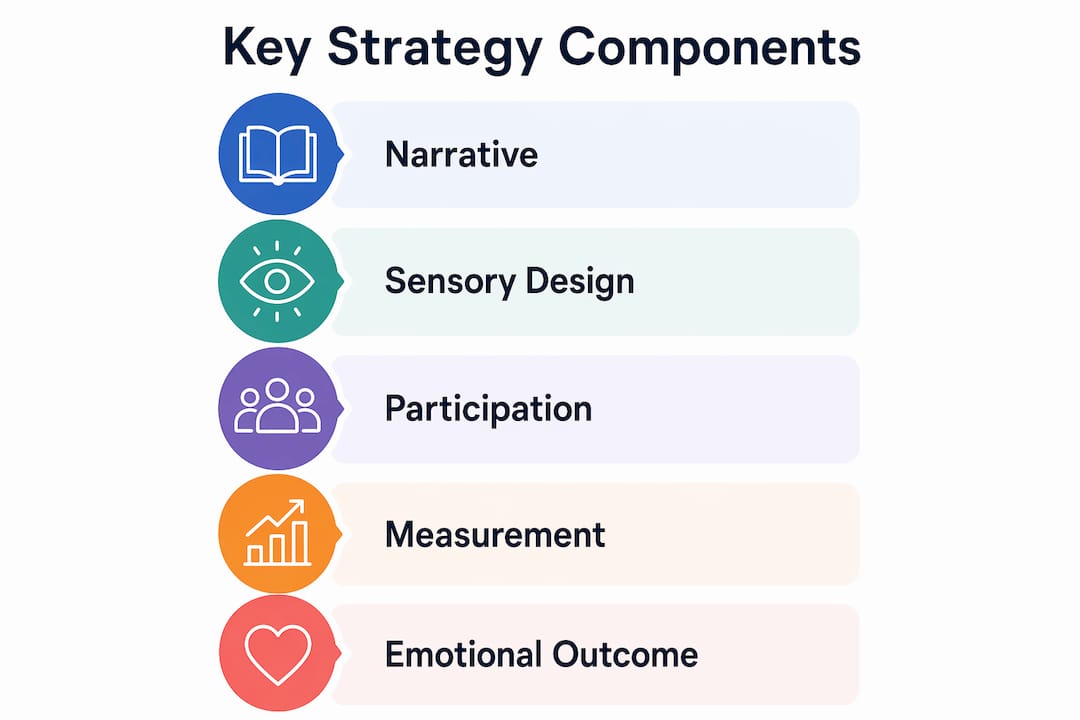
The core components of a well-designed experiential event include:
- Narrative framework. Every touchpoint, from the invitation to the exit, should carry a consistent story. Guests should feel they are moving through a world the brand has built for them.
- Sensory design. Sight, sound, scent, and texture all contribute to emotional memory. A wine estate event that uses the smell of oak barrels and the sound of a live string quartet creates a sensory imprint that a PowerPoint presentation cannot replicate.
- Active participation mechanics. Product demonstrations, hands-on workshops, live cooking stations, and personalised consultations give guests something to do. Doing creates memory far more reliably than watching.
- Aspirational attendee value. Events must provide intrinsic value by focusing on serving rather than selling, including exclusive networking and peer connections. Guests should leave with something they could not have obtained elsewhere.
- VIP and personalisation layers. Tiered experiences, personalised welcome moments, and bespoke touches signal to guests that they are seen as individuals, not an audience segment.
Successful experiential marketing is less about scale or technology and more about a narrative-driven, immersive journey design focused on emotional and behavioural targets. A small, perfectly designed dinner for 20 decision-makers can outperform a flashy activation for 2,000 if the story is right and the value is real.
Pro Tip: Before commissioning any visual or production element, write a one-sentence emotional outcome statement. “Guests will leave feeling X.” If the production element does not serve that sentence, cut it.
What formats and applications does experiential event marketing take in practice?
Experiential campaigns can range from intimate gatherings of a few hundred people to large-scale multi-stage outdoor activations, depending on organisational goals. That scalability is one of the format’s greatest commercial advantages. You do not need a global budget to run an experience that drives genuine brand affinity.
Across industries, the most effective formats include:
- Pop-up brand activations. Temporary, location-specific installations that create urgency and exclusivity. A luxury skincare brand that opens a three-day sensory spa in a Cape Town courtyard generates more social content and word-of-mouth than a six-month billboard campaign.
- Immersive workshops and masterclasses. Particularly effective in B2B contexts, where teaching a skill positions the brand as an authority rather than a vendor. A financial services firm running a private investment strategy workshop for clients is practising experiential marketing.
- Hybrid and digital activations. Physical events extended through live-streamed content, AR features, and digital participation tools reach audiences beyond the room. Guest experience in hospitality increasingly incorporates digital layers that allow remote guests to feel present.
- Conference and trade show activations. Rather than a standard exhibition stand, brands create interactive zones where visitors complete a challenge, receive a personalised result, or co-create something with the brand team.
- Retail and hospitality experiences. Restaurants, hotels, and wine estates use experiential design to turn a meal or a stay into a brand story. The sensory elements that define guest experience in hospitality are the same principles that drive experiential marketing effectiveness.
The common thread across all formats is that the guest does something. Participation is the mechanism that converts a marketing moment into a memory.
How do you measure success and avoid common pitfalls in experiential marketing?
Measurement is where most experiential programmes fall short. The instinct to count heads and report reach is understandable, but it misses the point entirely.
User-generated content and emotional engagement are the leading KPIs in 2026, replacing traditional metrics like impressions and badge scans. This shift reflects a broader understanding that depth of engagement predicts commercial outcomes far better than volume of exposure.
A practical measurement framework for experiential events should include:
- Social content volume and sentiment. Track how many guests post, what they say, and whether the sentiment aligns with your brand positioning. Unprompted posts carry more credibility than incentivised ones.
- Behavioural data during the event. Which zones did guests spend the most time in? Which activations generated the longest dwell time? Heat-mapping and RFID tracking provide this data at scale.
- Post-event brand affinity surveys. A short, three-question survey sent within 24 hours captures emotional recall while it is still fresh. Ask guests how the event made them feel about the brand, not just whether they enjoyed it.
- Conversion tracking. Link event attendance to downstream commercial behaviour. Did attendees convert at a higher rate than non-attendees in the following 90 days? This connects the experiential investment to revenue.
- Earned media and press coverage. A well-designed activation generates coverage beyond the guest list. Track mentions, shares, and editorial pick-up as a multiplier of the original investment.
Adding superficial visual elements without intentional narrative structure undermines brand impact. The most common pitfall is prioritising the photograph over the feeling. An installation that looks extraordinary in a press release but leaves guests confused about what the brand stands for has failed, regardless of how many images it generates.
Pro Tip: Set your measurement framework before you set your production budget. If you cannot define what “success” looks like in behavioural terms, you are not ready to spend on production.
Key takeaways
Experiential event marketing succeeds when narrative, sensory design, and measurable behavioural outcomes replace passive attendance as the foundation of every event brief.
| Point | Details |
|---|---|
| Participation over observation | Effective experiential events turn guests into active participants, not passive recipients of brand messages. |
| Narrative drives impact | Every sensory and production element must serve a clear emotional outcome, not the other way around. |
| Depth metrics replace reach metrics | User-generated content, behavioural data, and brand affinity surveys outperform headcount and impressions as success measures. |
| Scalability is real | Experiential formats work from intimate 20-person workshops to multi-stage outdoor activations across B2B and B2C contexts. |
| Serve before you sell | Events that provide genuine attendee value, through exclusive access, skills, or connections, generate loyalty that promotional stunts cannot. |
Why I think most experiential events miss the point entirely
After years of working in luxury event planning, the pattern I see most often is brands spending heavily on production and almost nothing on story. They build a beautiful room and then wonder why guests leave without a clear sense of what the brand stands for.
The most memorable events I have been involved with were not the most expensive. They were the most intentional. One intimate corporate dinner on a wine estate in the Cape Winelands generated more post-event commercial activity than a trade show activation that cost ten times as much. The difference was that the dinner had a clear narrative arc, a host who understood the brand’s values, and a guest list curated for genuine peer connection.
Experiential events cut through digital saturation by shifting from telling to showing, and that is still the most underused insight in the industry. Brands that understand this stop asking “how do we make this look impressive?” and start asking “how do we make guests feel something specific?” That question produces better briefs, better events, and better commercial results.
The future of experiential marketing belongs to planners and brands willing to prioritise immersive guest engagement over spectacle. Gimmicks age. Genuine experiences compound.
— Coert
How Winelandsfunction brings experiential marketing to life
Winelandsfunction specialises in designing luxury events where every detail serves a deliberate brand story, from intimate corporate gatherings in the Cape Winelands to grand product launches and bespoke celebrations.
The team at Winelandsfunction approaches each brief by defining the emotional outcome first and building the production around it. Whether you are planning a corporate activation, a private client experience, or a large-scale brand event, the process begins with understanding what you want guests to feel and remember. Winelandsfunction’s luxury event management expertise covers concept development, sensory design, supplier coordination, and on-the-day execution. For planners and business owners ready to move beyond conventional events, bespoke event coordination is available for enquiry through the Winelandsfunction website.
FAQ
What is experiential event marketing in simple terms?
Experiential event marketing is the practice of creating interactive, immersive brand experiences where attendees participate actively rather than observe passively. The goal is emotional connection and brand advocacy, not just awareness.
How does experiential marketing differ from traditional event marketing?
Traditional event marketing focuses on reach and attendance. Experiential marketing focuses on depth of engagement, measuring success through user-generated content, behavioural data, and post-event brand affinity rather than headcount.
What are the most effective formats for experiential events?
Pop-up brand activations, immersive workshops, hybrid digital experiences, and personalised hospitality events are among the most effective formats, and they scale from intimate gatherings to large multi-stage outdoor activations depending on budget and goals.
How do you measure the success of an experiential event?
The strongest indicators are unprompted social content, dwell time in activation zones, post-event brand affinity surveys, and conversion rates among attendees in the 90 days following the event.
Can small businesses use experiential event marketing effectively?
Yes. Experiential marketing is defined by intentional design and genuine attendee value, not by scale or budget. A well-crafted workshop for 30 clients can deliver stronger commercial outcomes than a large-scale activation with no clear narrative.
Recommended
- Experiential marketing in events: a 2026 guide – Winelands Function – For Every Occasion, Your Celebration
- Experiential marketing events: elevate brand engagement – Winelands Function – For Every Occasion, Your Celebration
- Experiential Event Explained: Immersive Luxury Experiences – Winelands Function – For Every Occasion, Your Celebration
- What is guest experience design? A guide for luxury events 2026 – Winelands Function – For Every Occasion, Your Celebration