
TL;DR:
- A gala dinner is a formal event combining a structured program, meal, and entertainment around a clear purpose. The event’s success depends on careful planning of elements like venue, timing, dress code, and narrative flow. Prioritizing story and transitions makes a memorable experience, supported by professional event coordination.
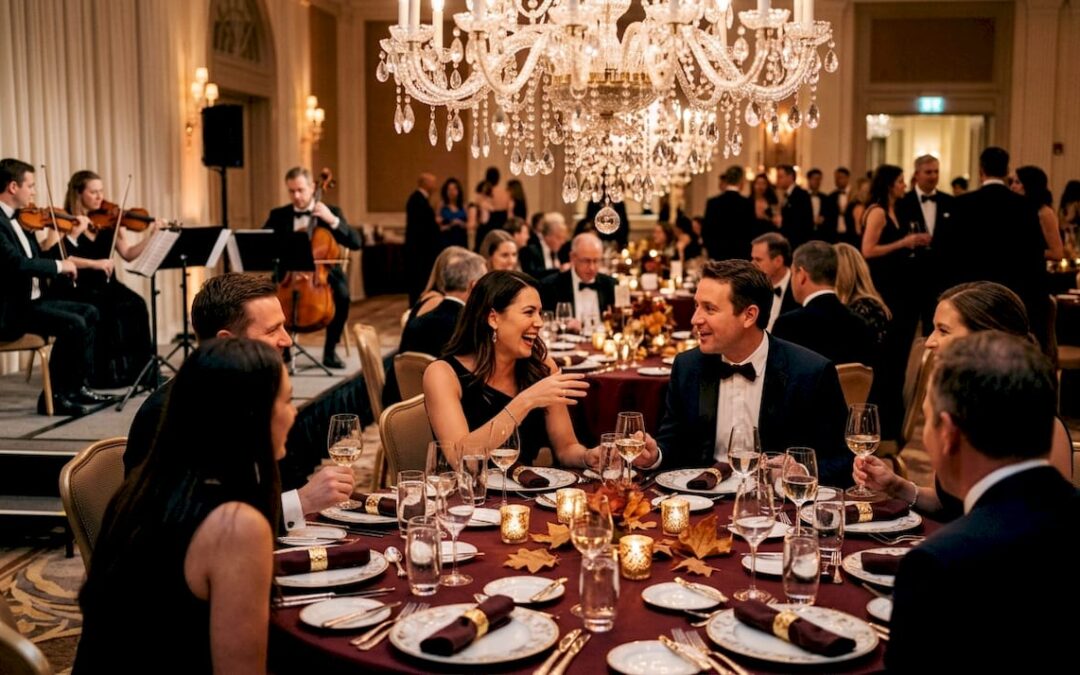
A gala dinner is a formal evening event built around a structured programme, a multi-course seated meal, entertainment, and a defined dress code, all organised around one clear purpose. Unlike a standard black-tie dinner, a gala combines ceremony, celebration, and often fundraising or recognition into a single, carefully choreographed experience. The format is well established across corporate, charity, and social contexts, making it one of the most versatile tools in formal event planning. Whether you are organising your first gala or attending one for the first time, understanding the gala dinner meaning from the outset saves time, money, and avoidable mistakes.
What is a gala dinner and what does it include?
A gala dinner is defined as a formal, ticketed event that combines a seated multi-course meal with a structured programme of speeches, entertainment, and purposeful activities. The word “gala” derives from the Old French word for festivity, and the format has evolved into a recognised standard in luxury event planning worldwide. Winelandsfunction plans events of this type regularly across Cape Town and the wider Winelands region, and the structure rarely deviates from a few core components.
Every gala dinner includes four foundational elements. First, a reception period where guests arrive, socialise, and enjoy welcome drinks. Second, a formal seated dinner with multiple courses. Third, a programme of activities such as speeches, awards, or auctions. Fourth, entertainment or dancing to close the evening. These four elements are what separate a gala from a dinner party or a corporate banquet.
The gala dinner purpose varies by context. Corporate galas typically celebrate milestones, reward staff, or build stakeholder relationships. Charity galas raise funds and awareness. Social galas mark significant personal or community achievements. The purpose shapes every decision that follows, from venue choice to table centrepieces.
What to expect at a gala: format, timing, and activities
A gala dinner typically lasts between 3 to 5 hours, with corporate galas running 3–4 hours and charity or social galas extending to 4–5 hours or more to accommodate additional programming. That duration is not accidental. Each segment serves a distinct function, and the pacing determines whether guests feel engaged or restless.
A well-run gala follows this sequence:
- Cocktail reception (45–60 minutes). Guests arrive, collect name badges, and mingle over drinks and canapés. The cocktail hour sets the tone with signature drinks, soft lighting, and hors d’oeuvres to build anticipation before the seated dinner begins.
- Seated dinner (90–120 minutes). Guests move to the dining room for a multi-course meal. This is typically three to five courses, with wine pairings at formal events.
- Programme activities (30–60 minutes). Speeches, award presentations, live auctions, or charity appeals are woven into or around the dinner courses. Timing these correctly prevents the evening from stalling.
- Entertainment and dancing (60–90 minutes). A live band, DJ, or headline act closes the formal portion and transitions the evening into a social celebration.
The key difference between a corporate gala, a charity gala, and a social gala lies in the weight given to each segment. Corporate events prioritise speeches and brand messaging. Charity galas place the auction or appeal at the centre. Social galas weight entertainment and atmosphere above all else.
Pro Tip: Research the event’s cause and goals before attending. Pre-event knowledge gives you genuine conversational substance and makes networking far more productive than arriving cold.
What is gala dinner etiquette and what should you wear?
Dress code is the single most visible signal of a gala’s formality level, and getting it wrong is the most common mistake first-time attendees make. Dress codes in 2026 follow four clear tiers: White Tie, Black Tie, Creative Formal, and Smart Casual.
- White Tie is the most formal. Men wear tailcoats, white waistcoats, and white bow ties. Women wear full-length gowns. This is rare outside state banquets and the most prestigious charity balls.
- Black Tie is the standard for most galas. Men wear a dinner jacket with a black bow tie. Women wear a floor-length or cocktail-length gown.
- Creative Formal allows personalised, elevated styles within a formal framework. Think bold colour, statement accessories, or fashion-forward cuts, provided the overall look remains unmistakably formal.
- Smart Casual is uncommon for evening galas and typically signals a less formal corporate or social event rather than a true gala dinner.
Beyond attire, gala dinner etiquette covers behaviour throughout the evening. Punctuality is non-negotiable. Arriving late carries a maximum grace period of 10 minutes under rare circumstances. Disrupting a seated dinner or a speech mid-flow is considered a serious breach of conduct.
At the table, correct dining etiquette requires using the outermost utensils first, placing your napkin on your lap immediately upon sitting, pacing your meal to match your tablemates, and keeping conversation pleasant and inclusive. Avoid dominating the table with a single topic or speaking across multiple tables.
Pro Tip: Silence your phone before entering the dining room. Notifications during a speech or award presentation are noticed by everyone around you and reflect poorly on the guest responsible.
Why are gala dinners organised? Purpose and significance
A gala dinner is a strategic event tool that aligns every element, from invitations to entertainment, with one clear goal. Treating it as merely a glamorous dinner misses the point entirely. Organisers use galas because the format creates a high-impact environment that a standard meeting, reception, or awards ceremony cannot replicate.
The most common purposes behind a gala dinner include:
- Fundraising. Charity galas use the combination of goodwill, entertainment, and live auctions to generate donations in a single evening that would take months through other channels.
- Recognition and awards. Industry galas celebrate achievement publicly, which reinforces culture and motivates future performance in ways that private acknowledgement cannot.
- Brand elevation. Corporate galas position a company as a sophisticated, generous host. The impression guests carry away shapes perceptions of the brand long after the evening ends.
- Stakeholder engagement. A well-executed gala builds loyalty among clients, donors, and partners by giving them an experience worth remembering.
Thematic design is what ties these purposes together. Every touchpoint, including the invitation design, table décor, menu, and entertainment, should reflect the event’s central narrative. When the theme is consistent, the gala feels intentional rather than assembled. Experts at UPLARN describe this as purposeful storytelling in event design, where glamour and clear messaging reinforce each other rather than compete.
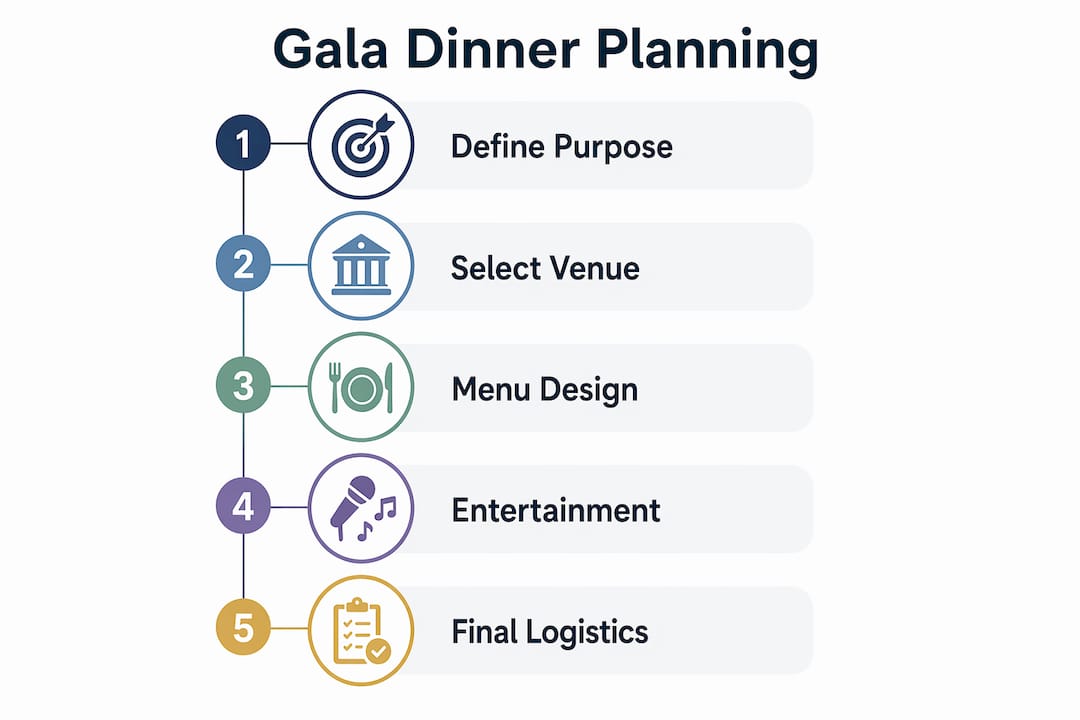
How to organise a gala dinner: key planning elements
Planning a successful gala dinner requires coordinating multiple workstreams simultaneously, and the quality of each one affects the guest experience directly. The table below outlines the core planning elements and what each demands.
| Planning element | What it requires |
|---|---|
| Venue selection | A space that fits the guest count, supports the theme, and has the technical infrastructure for lighting, sound, and catering |
| Menu design | A multi-course menu that balances dietary requirements, reflects the event’s tone, and is executed to a consistent standard across all tables |
| Entertainment | Acts or performances timed precisely within the programme to maintain energy without overrunning speeches or service |
| Guest experience | Smooth check-in and coat-check services that create a calm, welcoming first impression from the moment guests arrive |
| Programme pacing | A detailed run-of-show document that every supplier, speaker, and performer has confirmed in advance |

Venue choice sets the ceiling for everything else. A venue with poor acoustics undermines speeches. A venue without a dedicated coat-check area creates congestion at arrival. These are not minor details. They are the difference between a gala that flows and one that frustrates.
Menu design deserves equal attention. Food quality in hospitality events directly shapes how guests remember the evening. A technically flawless programme is undermined by mediocre food. Work with your caterer to design a menu that can be plated and served consistently across every table, not just the top table.
Event planner Jodi Raphael notes that every element must feel effortless to guests, even though the planning behind it is anything but. That gap between perceived ease and actual complexity is where professional event coordination earns its value. You can read more about the elements of elegant events to understand how these components connect in practice.
Pro Tip: Build a 15-minute buffer into your run-of-show between the cocktail reception and the call to dinner. Guests rarely move to their seats on time, and a rushed transition creates unnecessary tension for both staff and guests.
Key takeaways
A gala dinner succeeds when every element, from dress code to dessert, serves the event’s single defined purpose.
| Point | Details |
|---|---|
| Define the purpose first | Every planning decision flows from whether the gala is fundraising, celebrating, or building brand relationships. |
| Respect the dress code tiers | White Tie, Black Tie, and Creative Formal each carry specific expectations that guests and organisers must communicate clearly. |
| Plan for timing precisely | Corporate galas run 3–4 hours; charity galas run 4–5 hours. Build a detailed run-of-show with buffer time built in. |
| Treat check-in as a priority | The arrival experience sets the tone for the entire evening and must be calm, efficient, and welcoming. |
| Design thematically | Every touchpoint from invitation to entertainment should reflect the event’s central narrative for maximum impact. |
What I have learned from planning galas that most guides miss
Most articles about gala dinners focus on logistics. Very few talk about narrative. After working on formal events across Cape Town and the Winelands, the single biggest difference I have observed between a gala that guests remember and one they politely forget is whether the evening tells a story.
The cocktail hour is not a waiting room. It is the opening chapter. The lighting, the music, the signature drink, the way staff greet guests at the door — all of it communicates what kind of evening this will be before a single speech is delivered. First-time planners almost always underinvest in this stage because it feels informal. That is a mistake. The cocktail hour is where the emotional temperature of the room is set, and it is very difficult to recover a flat atmosphere once guests are seated.
The second thing most guides miss is the transition between dinner and entertainment. This is where galas lose momentum. The band starts while guests are still finishing dessert. The auction runs long and the DJ fills dead air. These transitions need to be choreographed as carefully as the speeches themselves. A guest experience specialist will tell you that the moments between segments are where guests form their lasting impressions, not during the headline act.
My honest advice to anyone planning their first gala: stop thinking about it as a dinner with extras. Think of it as a live production that happens to include a meal. Every cue, every transition, every lighting change is a directorial decision. When you approach it that way, the planning becomes clearer and the result becomes far more memorable.
— Coert
Planning a gala dinner with professional support
Organising a gala dinner at the standard guests expect from a formal event is a significant undertaking. The coordination required across venue, catering, entertainment, and guest logistics demands experience that most first-time organisers simply do not have yet.
Winelandsfunction specialises in luxury event coordination across Cape Town and the Winelands, managing every element of formal events from conception through to the final curtain. The team handles venue sourcing, supplier management, programme design, and on-the-night coordination so that you can be present as a host rather than a logistics manager. For planners who want a structured approach from the outset, the event planning coordinator service provides dedicated expertise at every stage. Reach out to Winelandsfunction to discuss your event and receive tailored guidance for your specific occasion.
FAQ
What is the difference between a gala dinner and a black-tie event?
A black-tie event refers specifically to a dress code. A gala dinner is a full event format that includes a structured programme, multi-course meal, and defined purpose, which may or may not require black-tie attire.
How long does a gala dinner typically last?
A gala dinner lasts between 3 to 5 hours. Corporate galas typically run 3–4 hours, while charity and social galas often extend to 4–5 hours to accommodate auctions, appeals, or extended entertainment.
What should I wear to a gala dinner?
Check the invitation for the stated dress code. Black Tie is the standard for most galas, requiring a dinner jacket for men and a formal gown for women. White Tie is more formal; Creative Formal allows elevated personal style within a formal framework.
What activities typically happen at a gala?
A gala dinner usually includes a cocktail reception, a multi-course seated dinner, speeches or award presentations, and a closing entertainment segment such as a live band or DJ.
How do I start planning a gala dinner?
Define the event’s purpose before anything else. Whether the goal is fundraising, recognition, or brand building, that purpose determines the venue, programme, budget allocation, and guest experience strategy.
Recommended
- Corporate gala planning workflow: a step-by-step guide – Winelands Function – For Every Occasion, Your Celebration
- What defines a corporate gala: a complete guide – Winelands Function – For Every Occasion, Your Celebration
- What is a corporate gala? Meaning, format & Cape Town – Winelands Function – For Every Occasion, Your Celebration
- How to host elegant events: your complete guide – Winelands Function – For Every Occasion, Your Celebration