
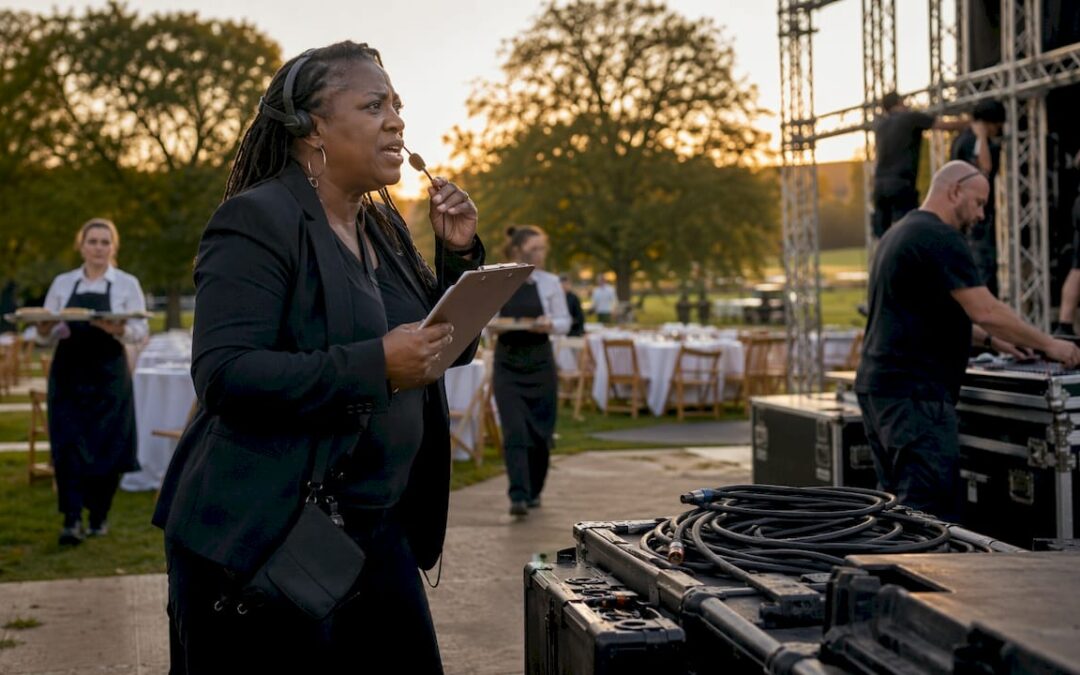
Event suppliers are the external professionals who make your event possible. They deliver the goods, services, and technical expertise that no single organiser can produce alone, from audiovisual rigs and catering operations to security teams and staging structures. Without a well-chosen, well-managed supplier network, even the most meticulously planned event falls short of its potential.
The key roles of event suppliers span every phase of production:
- Provision of specialist equipment and services not held in-house by the organiser
- Technical delivery across AV, lighting, staging, and production
- Logistical support covering load-in, setup, and breakdown
- Safety compliance through risk assessments, method statements, and qualified personnel
- On-site coordination during live event hours
- Attendee experience shaped by catering quality, entertainment, and décor
- Risk mitigation through insurance, accreditations, and documented competence
As Shonali Devereaux, CEO of the Meetings Industry Association, puts it: no single organisation can deliver a complex, high-quality event alone, making the supplier ecosystem a fundamental pillar of event strategy. That reality defines how you should approach every supplier engagement.
Table of Contents
- What types of event suppliers do UK planners typically work with?
- What do event suppliers actually do on the ground?
- How does supplier relationship management improve your events?
- What are the real benefits of managing suppliers well?
- Best practices for managing event suppliers successfully
- UK safety and legal responsibilities when working with event suppliers
- How Winelandsfunction brings supplier expertise to your event
- Key takeaways
What types of event suppliers do UK planners typically work with?
The supplier landscape for UK events is broad, and the categories you engage will shift depending on event scale, format, and audience. A corporate product launch in London draws on a very different mix than a wedding in the Cotswolds or a festival in the Peak District.
Core supplier categories for most UK events:
- Venue providers — licensed spaces, country estates, conference centres, and outdoor sites
- AV and production companies — sound systems, lighting rigs, LED screens, and live streaming
- Caterers — full-service hospitality, street food operators, licensed bar providers
- Staging and structures — temporary stages, rigging, marquees, and tiered seating
- Security and crowd management — SIA-licensed door staff, traffic marshals, and ushers
- Décor and floral designers — set dressing, centrepieces, and branded installations
- Entertainment — performers, MCs, musicians, and specialist acts
- Registration and event technology — ticketing platforms, badge printing, and guest management apps
- Logistics and transport — freight, equipment haulage, and shuttle services
- Sanitation and waste — portable facilities, refuse collection, and recycling contractors
- Photography and videography — event documentation and post-production
- Medical and first aid — qualified paramedics and first aid stations
For luxury or bespoke events, you will often engage highly specialised suppliers: pyrotechnics operators, bespoke fabricators, or sommelier services. Understanding how to choose event vendors for each category is one of the most consequential decisions you make in the planning process.
Many venues offer in-house services covering security, basic AV, and catering. Always clarify what is included before sourcing externally, as using preferred in-house suppliers can simplify coordination and reduce the number of contracts you manage.

What do event suppliers actually do on the ground?
The responsibilities of event suppliers go well beyond simply turning up with equipment. Each supplier carries a defined set of deliverables, and understanding those expectations before you sign a contract prevents the majority of on-site disputes.
Typical supplier responsibilities include:
- Equipment provision and installation to agreed specifications and timelines
- Staffing their own operation with qualified, briefed personnel
- Producing risk assessments and method statements before site access
- Complying with your event’s health and safety requirements and venue rules
- Coordinating with other contractors on shared access, power, and space
- Briefing their own teams on site rules, emergency procedures, and load-in schedules
- Maintaining their equipment to a safe and functional standard throughout the event
- Restoring the site to its original condition during breakdown
Supplier contract terms must explicitly cover delivery timing, scope, pricing, liability caps, insurance, subcontracting, and compliance with venue rules. Vague contracts leave the event company bearing liability for supplier failures. A contract that specifies “PA system” is not sufficient; one that details the exact equipment model, channel count, engineer hours, and cabling is.
Supplier competence documentation matters just as much as the contract itself. Before any contractor accesses your site, you should hold copies of their public liability insurance certificate, employer’s liability certificate, risk assessments, and relevant accreditations such as electrical certification or food hygiene ratings.
How does supplier relationship management improve your events?
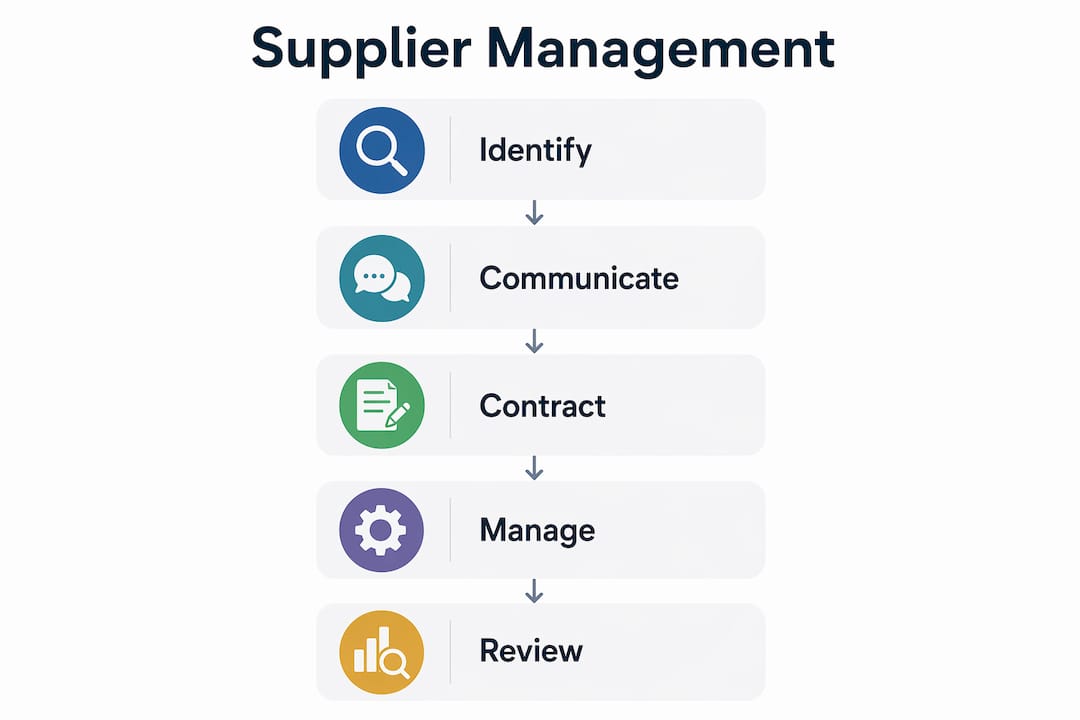
Supplier relationship management (SRM) is the practice of actively managing and nurturing your partnerships with suppliers across the full event lifecycle, not just during delivery. It covers the initial selection process, ongoing communication, performance evaluation, and issue resolution. Done well, it transforms your supplier network from a collection of contracts into a collaborative team.
Core SRM activities for event planners:
- Regular communication between planning milestones, not only when problems arise
- Involving key suppliers in planning decisions such as timelines, logistics, and site layouts
- Segmenting suppliers by value and complexity to allocate your attention appropriately
- Joint problem-solving when scope changes or unforeseen issues emerge
- Post-event debriefs to capture what worked and what needs adjustment
- Using event management tools to track supplier status, documentation, and deadlines
Most supplier relationship breakdowns stem not from technical mismatch but from miscommunication. Honest, human dialogue creates space for flexibility and creative solutions that rigid, transactional exchanges simply cannot produce. A supplier who understands your event’s objectives can anticipate needs, flag risks early, and adapt when plans shift.
Segmenting your suppliers is a practical starting point. A high-value staging contractor warrants senior-level communication and frequent check-ins. A lower-complexity supplier, such as a portable toilet provider, needs clear written instructions and a single point of contact. Applying the same level of management to every supplier wastes time and dilutes attention where it matters most.
What are the real benefits of managing suppliers well?
Effective supplier management produces measurable improvements across every dimension of event delivery. The benefits are not abstract; they show up in your budget, your on-site experience, and your reputation.
Tangible benefits of strong supplier management:
- Higher production quality when suppliers are fully briefed and aligned with your vision
- Budget adherence through thorough due diligence, competitive quoting, and timely contract negotiation
- Flexibility for last-minute changes when suppliers trust you and prioritise your events
- Reduced administrative burden as established relationships remove the need to verify everything from scratch each time
- Better attendee satisfaction when all suppliers are working toward the same experience goal
- Priority booking during peak periods, which is particularly valuable for in-demand AV and staging companies
- Improved safety outcomes when suppliers submit documentation on time and coordinate effectively
Maintaining long-term relationships with trusted suppliers provides priority booking, better prices, and crucial flexibility for last-minute changes. A supplier who has worked with you across multiple events knows your standards without being told. That familiarity pays dividends when the unexpected happens, which it always does.
The cost benefits compound over time. Suppliers who value the relationship are more likely to hold pricing, absorb minor scope changes without additional charges, and offer honest advice about what is and is not feasible within your budget. For planners managing event cost optimisation, those conversations are worth more than any single round of competitive quoting.
Best practices for managing event suppliers successfully
Getting supplier management right requires discipline from the very start of the procurement process. The planners who consistently deliver exceptional events treat supplier management as a core professional skill, not an administrative afterthought.
Practical steps that make the difference:
- Start procurement early. For major events, source key suppliers six to twelve months in advance. For smaller events, three to six months is the minimum for critical services like staging, sound, and security.
- Use multiple sourcing methods. Peer recommendations, industry directories such as those maintained by the Production Services Association, and trade shows like the Event Production Show in London all surface suppliers that online searches miss.
- Get at least two or three quotes for each major service, comparing not just price but scope, exclusions, cancellation terms, and relevant experience.
- Review portfolios and past work for evidence of events at a comparable scale and format to yours.
- Verify insurance and accreditations before engaging. Public liability insurance of at least £5 million is standard for UK event suppliers, alongside employer’s liability and relevant trade certifications.
- Draft clear, detailed contracts covering scope, dates, pricing including VAT, cancellation terms, insurance requirements, and health and safety obligations.
- Hold a supplier briefing two to four weeks before the event, bringing all key contractors together to surface conflicts before they become on-site problems.
- Assign a single point of contact for all suppliers during load-in and the live event, typically a production manager or site manager.
- Conduct post-event debriefs with each key supplier. A ten-minute call after the event strengthens the relationship and improves performance next time.
- Pay on time. Late payment damages trust and makes suppliers less willing to prioritise your future events.
Pro Tip: Catering suppliers planning festive or seasonal menus benefit from early briefings on guest dietary requirements. Reviewing festive meal offerings with your caterer well in advance avoids last-minute substitutions that compromise the guest experience.
Build long-term relationships with the suppliers who consistently deliver. Treat them as partners, not commodities. The suppliers who know your events, your standards, and your team are among the most valuable assets you have.
UK safety and legal responsibilities when working with event suppliers
UK law places the responsibility for overall event safety squarely with the organiser. Under UK health and safety regulations, you are responsible for ensuring that all people setting up, breaking down, and attending your event are not exposed to risks to their health and safety, as far as is reasonably practicable. That duty does not transfer to your suppliers simply because you have contracted them.
Key legal and compliance obligations for UK event organisers:
- Coordinate and review all contractor risk assessments as part of a safe, phased programme of work
- Confirm supplier competence for their specific technical scope before awarding work
- Ensure co-operation between all contractors on site, particularly where their activities overlap
- Collect and verify documentation before site access: public liability insurance, employer’s liability, risk assessments, method statements, and relevant accreditations
- Brief all contractors on site-specific risks, emergency procedures, and your event’s health and safety requirements
- Monitor compliance throughout build-up, the live event, and breakdown, not only during public hours
- Review your health and safety arrangements after each event and update them accordingly
Suppliers must supply risk assessments and safe work method statements as part of due diligence. Late or missing documentation is a red flag and can result in denied site access under UK protocols. If a supplier cannot produce these documents promptly, that is a strong indicator of poor planning.
Insurance requirements deserve particular attention. Your suppliers should carry public liability insurance of at least £5 million, employer’s liability insurance if they have employees, and professional indemnity cover where they are providing design or technical advice. Check expiry dates, not just coverage amounts.

Contractual terms must address liability caps, cancellation rights, subcontracting controls, and compliance with venue rules. Vague contracts can result in the event company bearing liability for supplier failures. If your supplier’s standard terms allow them to subcontract freely without your approval, push back. The quality and accountability of performance can drop significantly when key work is passed down the chain without your knowledge.
Power management is a frequent source of on-site conflict. Contracts should detail total power load requirements and specify that suppliers bring clearly labelled distribution boards. Suppliers drawing more power than agreed and tripping circuits during setup is one of the most common and preventable disruptions in live event production.
How Winelandsfunction brings supplier expertise to your event
Planning a luxury event means navigating a complex web of supplier relationships, contracts, and compliance requirements, all while keeping the guest experience at the centre of every decision. That is precisely where professional event management earns its place.

Winelandsfunction brings deep expertise in luxury event management to every project, coordinating the full supplier ecosystem on your behalf. From sourcing and vetting bespoke caterers and AV specialists to managing contracts, briefings, and on-site logistics, the team handles the complexity so you can focus on the experience. Whether you are planning a corporate launch, a wedding, or a bespoke celebration, Winelandsfunction’s curated network of trusted suppliers means you gain access to partners who already understand the standards required for extraordinary events. Get in touch with Winelandsfunction to discuss your event and take the first step towards a flawlessly delivered occasion.
Key takeaways
Reliable suppliers, managed through clear contracts and ongoing communication, are the foundation of every successful event.
| Point | Details |
|---|---|
| Suppliers are indispensable | No single organiser can deliver a complex event alone; the supplier ecosystem is fundamental to quality and safety. |
| Documentation protects you | Collect public liability insurance (minimum £5 million), risk assessments, and accreditations before any supplier accesses your site. |
| SRM reduces risk and cost | Long-term supplier relationships deliver priority booking, better pricing, and flexibility for last-minute changes. |
| Contracts must be specific | Vague supplier terms leave the event company bearing liability for failures; detail scope, timing, liability caps, and insurance in writing. |
| Winelandsfunction coordinates it all | Winelandsfunction manages the full supplier network for luxury events, from vetting and contracts to on-site delivery. |
Recommended
- Corporate hospitality best practices: your expert UK guide – Winelands Function – For Every Occasion, Your Celebration
- Complete Guide to the Role of Event Planners – Winelands Function – For Every Occasion, Your Celebration
- How to choose event vendors: a practical guide – Winelands Function – For Every Occasion, Your Celebration
- Complete Guide to Why Use Event Designers – Winelands Function – For Every Occasion, Your Celebration