
Most british companies invest heavily in corporate events, yet only about 35 percent achieve the full impact they hope for. Getting event planning right matters because these gatherings shape brand perceptions, build professional relationships, and influence business outcomes. This article reveals exactly what sets effective corporate event planning apart and shows how a strategic approach unlocks greater results for organisations.
Table of Contents
- Defining Corporate Event Planning and Its Purpose
- Corporate Event Types and Key Distinctions
- Core Elements and Planning Processes Involved
- Essential Roles and Responsibilities Explained
- Budgeting, Risks, and Common Pitfalls
- Best Practices for Successful Corporate Events
Key Takeaways
| Point | Details |
|---|---|
| Importance of Strategic Planning | Corporate event planning is essential for aligning events with organisational goals, enhancing brand perception and stakeholder engagement. |
| Core Elements of Planning | Successful corporate events require meticulous attention to aspects such as budgeting, logistics, and marketing strategies. |
| Understanding Event Types | Different types of corporate events serve distinct purposes, and selection should align with the specific objectives of the organisation. |
| Risk Management | Effective budgeting and risk assessment are critical to navigate potential financial pitfalls in corporate event planning. |
Defining Corporate Event Planning and Its Purpose
Corporate event planning is a strategic discipline that transforms organisational objectives into compelling live experiences. According to vaia, it represents a specialised approach to event management focused specifically on designing, coordinating, and executing professional gatherings that serve business goals.
At its core, corporate event planning involves meticulously crafting experiences that align with an organisation’s strategic vision. This comprehensive process encompasses multiple critical elements, including:
- Budget management and financial allocation
- Timeline development and scheduling
- Venue selection and logistics
- Vendor relationship and coordination
- Marketing and communication strategy
- Content creation and programme design
The primary purpose of corporate event planning extends far beyond mere logistical execution. As research from ijarsct highlights, successful events can significantly enhance brand perception, facilitate meaningful professional connections, and create memorable experiences that drive organisational objectives. Whether launching a product, conducting team training, or celebrating corporate milestones, each event represents a strategic opportunity to communicate organisational values and engage stakeholders.
Understanding the nuanced art of corporate event planning requires recognising it as more than a technical exercise. It is a sophisticated blend of creative vision, strategic thinking, and precise operational management. For those seeking deeper insights into crafting exceptional corporate gatherings, our complete guide to corporate event planning success provides comprehensive strategies and expert recommendations.
Corporate Event Types and Key Distinctions
Corporate events represent strategic platforms for businesses to achieve diverse organisational objectives. According to vaia, these gatherings encompass multiple formats designed to serve specific purposes, each with unique characteristics and strategic implications.
The primary corporate event types include:
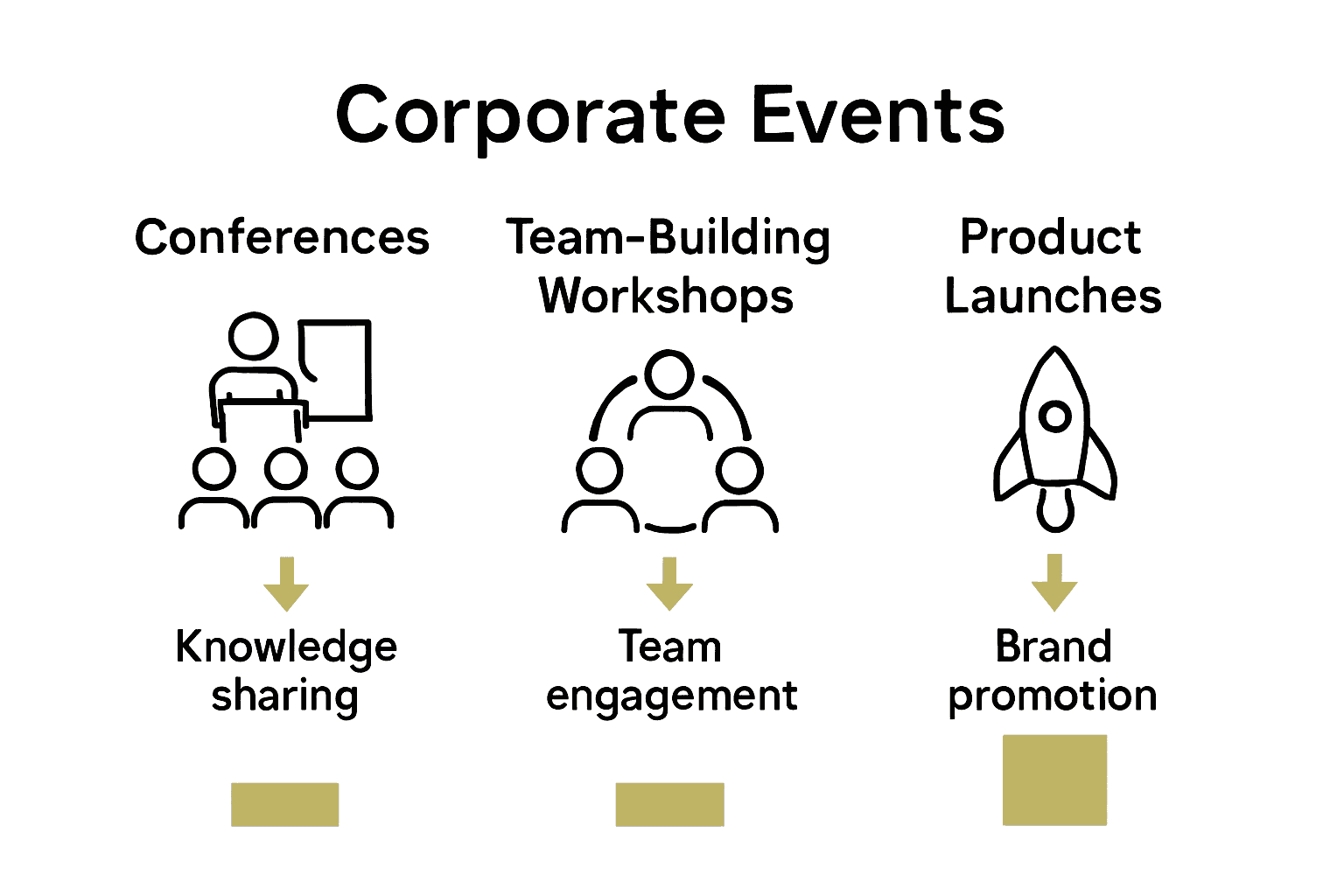
- Conferences: Large-scale knowledge sharing and networking platforms
- Seminars: Focused professional development and educational sessions
- Product Launches: Promotional events introducing new offerings
- Team Building Activities: Internal engagement and skill development workshops
- Trade Shows: Industry networking and brand visibility opportunities
- Board Meetings: Strategic decision-making and corporate governance sessions
As outlined by en, these events can range from massive conventions accommodating hundreds of participants to intimate gatherings like executive retreats or holiday celebrations. The key distinction lies not just in scale, but in the strategic intent behind each event type. Whether hosting a global conference or a small team workshop, organisations carefully design these experiences to communicate values, foster connections, and drive specific business outcomes.
Understanding these nuanced event types is crucial for effective corporate communication. Businesses must align their event selection with precise objectives, target audience expectations, and desired outcomes. For professionals seeking deeper insights into crafting impactful corporate gatherings, our guide to corporate event types and their benefits provides comprehensive strategies and expert recommendations.
Core Elements and Planning Processes Involved
Corporate event planning demands a systematic and strategic approach that transforms conceptual ideas into memorable experiences. According to vaia, successful event management involves a comprehensive set of planning techniques that ensure precise coordination and execution.
The core elements of corporate event planning typically encompass:
- Purpose Definition: Establishing clear event objectives
- Budget Management: Financial planning and resource allocation
- Timeline Development: Creating detailed scheduling and milestones
- Venue Selection: Identifying appropriate event locations
- Vendor Coordination: Managing external service providers
- Marketing Strategy: Promoting the event and managing communications
- Content Creation: Designing engaging event programmes
As outlined by addevent, the planning process is not linear but an intricate dance of strategic decision-making. Each element interconnects, requiring meticulous attention to ensure the event aligns perfectly with organisational goals. Professional event planners must balance creative vision with operational precision, transforming complex logistical challenges into seamless, impactful experiences.

Navigating these planning processes requires exceptional organisational skills, industry knowledge, and strategic thinking. Professionals seeking to master the nuanced art of corporate event planning can benefit from our guide to event design principles, which offers deep insights into creating truly exceptional corporate gatherings.
Essential Roles and Responsibilities Explained
Corporate event planners serve as the critical architects of professional gatherings, transforming complex organisational visions into seamless, impactful experiences. According to ortusclub, these professionals bring essential expertise in logistics, vendor management, and creative design, ensuring events consistently meet strategic objectives.
The primary roles and responsibilities of corporate event planners encompass:
- Strategic Consultation: Collaborating with organisational leadership to understand event goals
- Logistical Coordination: Managing venue selection, scheduling, and technical requirements
- Vendor Management: Negotiating, selecting, and overseeing external service providers
- Budget Control: Developing and maintaining financial frameworks
- Marketing Integration: Developing communication strategies and promotional materials
- Risk Management: Identifying and mitigating potential event challenges
- Post-Event Analysis: Evaluating event success and gathering stakeholder feedback
As highlighted by vaia, successful event planners must possess a sophisticated blend of skills including exceptional organizational abilities, nuanced communication techniques, advanced problem-solving capabilities, and remarkable multitasking prowess. These competencies enable them to navigate the complex landscape of corporate event management, transforming potential chaos into meticulously choreographed professional experiences.
Professionals seeking to excel in this dynamic field must continually evolve their skill set and strategic approach. For those looking to deepen their understanding of event design principles and professional execution, our guide to event design principles offers comprehensive insights into mastering the art of corporate event planning.
Budgeting, Risks, and Common Pitfalls
Corporate event budgeting represents a complex financial balancing act that demands meticulous planning and strategic foresight. According to addevent, proper budgeting is fundamental to mitigating financial risks and avoiding potential economic miscalculations during event planning.
Common financial risks and potential pitfalls in corporate event planning include:
- Budget Underestimation: Failing to account for unexpected expenses
- Vendor Cost Overruns: Inadequate contract negotiations and price management
- Insufficient Contingency Funds: Lacking financial flexibility for emergency scenarios
- Inappropriate Cost Allocation: Misaligning spending with event objectives
- Hidden Expense Tracking: Overlooking peripheral costs and supplementary charges
- Inflexible Financial Frameworks: Creating rigid budgets without room for adaptation
- Incomplete Risk Assessment: Neglecting potential financial disruptions
As highlighted by vaia, effective budget management requires comprehensive resource allocation strategies that balance fiscal responsibility with event quality. Professional event planners must develop sophisticated financial models that anticipate potential challenges, create multiple contingency scenarios, and maintain financial transparency throughout the planning process.
Navigating the intricate landscape of corporate event financial management demands exceptional strategic thinking and detailed analytical skills. Professionals seeking to enhance their budgeting expertise can benefit from our guide to event design principles, which provides comprehensive insights into creating financially sound and strategically aligned corporate events.
Best Practices for Successful Corporate Events
Corporate event success hinges on strategic planning and nuanced understanding of organisational objectives. According to ortusclub, corporate events fundamentally serve multiple critical goals, including networking, brand promotion, employee engagement, professional development, and client appreciation.
Key best practices for creating exceptional corporate events include:
- Clear Strategic Alignment: Ensuring event objectives directly connect with organisational goals
- Comprehensive Stakeholder Engagement: Involving key participants throughout planning
- Innovative Experience Design: Creating memorable and meaningful attendee interactions
- Technological Integration: Leveraging digital platforms and hybrid event capabilities
- Measurable Outcome Tracking: Establishing precise metrics for event success
- Flexible Planning Frameworks: Developing adaptable event strategies
- Inclusive Communication Approaches: Designing experiences that resonate with diverse audiences
As highlighted by vaia, contemporary corporate event trends increasingly emphasize virtual and hybrid formats, sustainability considerations, and personalised attendee experiences. Professional event planners must remain agile, continuously adapting their methodologies to meet evolving technological and experiential expectations.
Mastering these best practices requires ongoing learning and strategic flexibility. Professionals seeking comprehensive insights can explore our guide to essential corporate event elements, which provides in-depth strategies for creating impactful and memorable corporate gatherings.
Elevate Your Corporate Events with Expert Planning and Flawless Execution
Corporate event planning demands more than just organising logistics it calls for a strategic vision that aligns every detail with your business goals. As highlighted, challenges such as budget management, vendor coordination, and creating memorable experiences require expertise and precision. If navigating these complexities feels overwhelming or you aim to craft truly exceptional events that resonate with your audience Winelands Function offers tailored solutions to handle every aspect with sophistication and care.
Discover how our luxury event planning services can transform your corporate gatherings into powerful platforms for connection and success. Visit our luxury event planning page to explore how we blend creativity with operational excellence. Ready to bring your next corporate event vision to life with unmatched attention to detail and personalised service Contact us today at Winelands Function and take the first step towards an unforgettable experience.
Frequently Asked Questions
What is corporate event planning?
Corporate event planning is a strategic discipline focused on designing, coordinating, and executing professional gatherings that serve the specific goals of a business or organisation.
What are the key elements involved in corporate event planning?
Key elements of corporate event planning include purpose definition, budget management, timeline development, venue selection, vendor coordination, marketing strategy, and content creation.
What types of corporate events are commonly organised?
Common types of corporate events include conferences, seminars, product launches, team building activities, trade shows, and board meetings, each serving different strategic purposes.
What are some best practices for successful corporate events?
Best practices for successful corporate events include ensuring clear strategic alignment with organisational goals, engaging stakeholders, incorporating innovative experience design, and establishing measurable outcome tracking.
Recommended
- Complete Guide to Why Corporate Events Matter – Winelands Function – For Every Occasion, Your Celebration
- Complete Guide to Corporate Event Planning Success – Winelands Function – For Every Occasion, Your Celebration
- 7 Essential Elements for Successful Corporate Events – Winelands Function – For Every Occasion, Your Celebration
- Understanding What is Full-Service Event Planning – Winelands Function – For Every Occasion, Your Celebration