

Planning a wedding can easily overwhelm even the most organised couples. The average wedding in the UK now costs over £18,000 which surprises many newly engaged pairs. Yet the real challenge is not just the cost but knowing exactly where to begin so both your vision and budget stay intact from day one.
Table of Contents
- Step 1: Define Your Wedding Vision And Budget
- Step 2: Compile A Guest List And Choose The Date
- Step 3: Research And Book The Venue
- Step 4: Hire Key Vendors And Plan Your Attire
- Step 5: Finalise Details And Send Invitations
- Step 6: Review And Confirm All Arrangements
Quick Summary
| Key Point | Explanation |
|---|---|
| 1. Define your vision and budget | Clearly outline your ideal wedding and what you can spend, setting a solid foundation for all decisions. |
| 2. Create a thoughtful guest list | Collaborate with your partner to identify essential guests while keeping budget constraints in mind. |
| 3. Research and choose your venue | Select a venue that aligns with your vision, budget, and guest capacity to set the tone for your celebration. |
| 4. Hire key vendors carefully | Prioritise securing reliable vendors who align with your wedding style and ensure you sign detailed contracts. |
| 5. Finalise details and send invitations | Prepare and send invites that reflect your style while confirming final arrangements for a seamless guest experience. |
Step 1: Define Your Wedding Vision and Budget
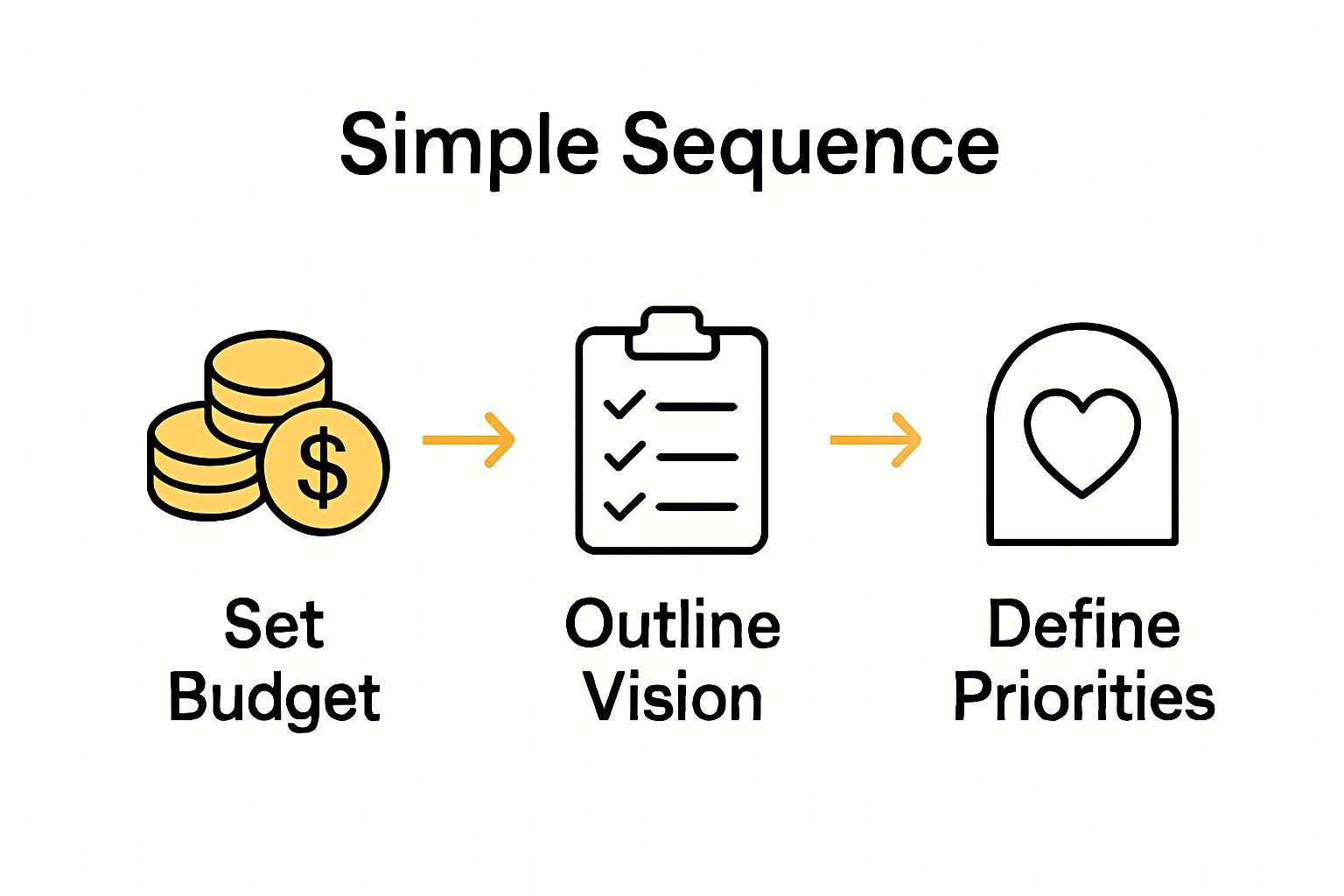
Beginning your step by step wedding planning journey starts with crystallising your dream celebration and understanding your financial landscape. This foundational stage determines everything that follows, transforming abstract ideas into a concrete roadmap for your special day.
Your wedding vision represents more than aesthetics – it encapsulates the emotional essence of your partnership. Consider what truly matters to you both: Are you dreaming of an intimate vineyard ceremony or a grand metropolitan celebration? Do you envision a traditional white wedding or a uniquely personalised experience? Take time to discuss shared values, individual preferences, and the atmosphere you want to create.
Budget planning demands realistic yet thoughtful strategy. Start by having an open, honest conversation about financial resources. Determine your total wedding budget by assessing contributions from both families and your personal savings. Most couples allocate their budget across key categories:
- Venue and catering
- Attire and accessories
- Photography and videography
- Music and entertainment
- Decorations and flowers
- Wedding rings
- Officiant fees
Professional financial planners recommend dedicating approximately 50% of your budget to the venue and catering, with remaining funds distributed strategically across other elements. Explore our comprehensive wedding planning guide for deeper insights into budget allocation.
Remember that flexibility is key. Unexpected expenses will emerge, so build a contingency fund of 10-15% into your initial budget. Tracking expenses through spreadsheets or dedicated wedding planning apps can help maintain financial discipline and prevent overspending.
Below is a summary table outlining typical wedding budget allocations by category to support your financial planning decisions.
| Budget Category | Typical Allocation (%) | Description |
|---|---|---|
| Venue and Catering | 50 | Includes site hire, meals, drinks, and associated service charges. |
| Attire and Accessories | 10 | Covers wedding dress, suit, shoes, and relevant accessories. |
| Photography and Videography | 10 | Professional documentation of the day with photos and video. |
| Music and Entertainment | 8 | Live bands, DJs, and other guest entertainment. |
| Decorations and Flowers | 8 | Floral arrangements, décor, and table centrepieces. |
| Wedding Rings | 5 | Purchase of the bride’s and groom’s rings. |
| Officiant Fees | 2 | Charges for the celebrant or registrar conducting the ceremony. |
| Contingency Fund | 7 | Reserve for unforeseen expenses and last-minute changes. |
Successful completion of this step means having a clear, mutually agreed vision and a realistic budget that reflects your priorities. When both partners feel excited and aligned about the wedding’s direction, you have successfully navigated the first crucial stage of your wedding planning journey.
Step 2: Compile a Guest List and Choose the Date
With your wedding vision and budget established, the next critical step in your step by step wedding planning journey involves creating your guest list and selecting the perfect date. This stage requires strategic thinking, diplomatic negotiation, and careful consideration of multiple factors that will shape your entire celebration.
Guest list compilation demands thoughtful collaboration between you and your partner. Begin by independently listing individuals you each consider essential – immediate family, closest friends, and critical work or social connections. Compare these lists and negotiate inclusivity while maintaining your budget constraints. Remember that every additional guest increases your overall wedding expenses, impacting catering, venue selection, and logistical arrangements.
Consider categorising potential guests into primary tiers:
- Absolute Must-Invites (Immediate Family)
- Close Friends and Extended Family
- Work Colleagues and Acquaintances
- Optional Social Connections
Date selection intertwines intimately with your guest list strategy. Multiple considerations influence your choice: seasonal availability, venue accessibility, family schedules, and potential travel requirements for out-of-town guests. Discover more about selecting the perfect wedding date in our comprehensive planning guide.
Practical advice suggests choosing 3-4 potential dates as backups. Check significant family members’ availability, consider potential weather conditions, and investigate local event calendars to avoid conflicts with major regional events or holidays. Peak wedding seasons typically increase venue and vendor costs, so consider off-peak months for potential savings.
Verification of successful completion involves having a preliminary guest list with approximate numbers and a tentative date range. You should feel confident about your selections, knowing they align with your initial vision, budget, and logistical capabilities.
Communication transparency with key guests about potential dates can help refine your planning and ensure maximum attendance for your special celebration.
Step 3: Research and Book the Venue
Your venue selection represents the cornerstone of your wedding experience, transforming your step by step wedding planning from conceptual design to tangible reality. This pivotal stage demands meticulous research, creative exploration, and strategic decision making that will set the tone for your entire celebration.
Wedding venues are more than physical spaces – they are the canvas upon which your matrimonial memories will be painted. Begin by revisiting your initial wedding vision and budget, using these as guiding principles for venue selection. Consider fundamental factors such as guest capacity, location accessibility, architectural style, and potential seasonal variations that might impact your chosen date.
Your venue research should encompass multiple evaluation criteria:
- Venue capacity and layout
- Catering and accommodation options
- Aesthetic alignment with your wedding vision
- Rental costs and included amenities
- Logistical convenience for guests
- Backup indoor/outdoor options
Schedule site visits to potential venues, allowing sufficient time to experience the space firsthand. Prepare a comprehensive list of questions addressing technical requirements, restrictions, and potential additional costs. Learn more about navigating the venue selection process with our expert insights.
Professional wedding planners recommend scheduling venue visits during similar times and seasons to your anticipated wedding date. This approach allows you to accurately assess lighting, potential weather challenges, and overall ambiance. Request detailed contracts, understanding precisely what services and amenities are included in your venue package.
Successful venue selection means finding a location that harmonises with your vision, accommodates your guest list comfortably, and remains within your predetermined budget. When you feel a genuine emotional connection to the space and can visualise your celebration unfolding seamlessly, you have identified your perfect wedding venue. Trust your instincts while maintaining a pragmatic approach to this critical planning milestone.
Step 4: Hire Key Vendors and Plan Your Attire
As your step by step wedding planning progresses, selecting the right vendors and finalising attire becomes a crucial phase that transforms your wedding vision into tangible reality. This stage requires strategic decision making, creative collaboration, and careful consideration of both aesthetic and practical elements.
Vendor selection represents the operational backbone of your wedding celebration. Begin by prioritising vendors who will have the most significant impact on your day: wedding photographer, videographer, catering service, music entertainment, and floral designer. Research professionals with portfolios that align closely with your wedding style and vision. Personal recommendations, online reviews, and professional portfolios will be your primary research tools.
Key vendor selection criteria include:
- Professional experience and specialisation
- Portfolio quality and style consistency
- Client testimonials and references
- Pricing and package flexibility
- Personality compatibility and communication skills
- Availability on your chosen wedding date
Attire planning requires equally thoughtful consideration. Bridal and groom attire should not only reflect personal style but also complement the wedding’s overall aesthetic and venue. Schedule multiple dress and suit fittings, allowing ample time for alterations and potential adjustments. Check out our detailed guide on wedding day preparation to ensure you look and feel exceptional.
Budget allocation for vendors typically ranges between 45-50% of your total wedding expenses. Request detailed contracts from each vendor, understanding exactly what services are included. Negotiate package terms, clarify payment schedules, and secure written agreements that protect both parties’ interests.
Successful completion of this step means having confirmed key vendors who understand your vision, signed comprehensive contracts, and selected attire that makes you feel confident and beautiful. When you can visualise these professionals bringing your wedding day to life and feel excited about your chosen outfits, you have successfully navigated this critical planning milestone.

Step 5: Finalise Details and Send Invitations
With your step by step wedding planning approaching its critical communication phase, finalising details and preparing invitations transforms your wedding from a personal vision into a shared anticipation for your guests. This stage demands precision, creativity, and strategic coordination across multiple wedding elements.
Wedding invitations serve as the first tangible representation of your celebration’s style and tone. Design and content must reflect the event’s overall aesthetic while providing clear, comprehensive information. Select invitation designs that harmonise with your wedding theme, considering paper quality, typography, and visual elements that communicate your unique partnership.
Critical invitation components include:
- Precise wedding date and time
- Exact venue location
- Dress code specifications
- RSVP instructions and deadline
- Reception details
- Accommodation recommendations
Learn more about managing wedding logistics and communication to ensure seamless guest experience. Professional wedding planners recommend sending invitations approximately 8 weeks before your wedding date, allowing guests sufficient time for travel arrangements and response planning.
Simultaneously, finalise intricate wedding details with your selected vendors. Confirm precise timeline sequences, menu selections, musical playlists, and specific logistical requirements. Create a comprehensive wedding day schedule that outlines each component’s timing, sharing this document with key vendors to ensure synchronised execution.
Digital tools and spreadsheets can help track guest responses, dietary requirements, and potential accommodation needs. Develop a systematic approach to managing RSVPs, following up personally with guests who haven’t responded as your wedding date approaches. Maintain flexibility and patience during this potentially stressful planning phase.
Successful completion means having dispatched beautifully crafted invitations, received initial guest responses, and established a clear operational blueprint for your wedding day. When you feel confident about your communication strategy and can visualise your guests’ excitement, you have masterfully navigated this crucial wedding planning milestone.
Step 6: Review and Confirm All Arrangements
As your step by step wedding planning journey approaches its final stages, comprehensive review and confirmation of all arrangements becomes paramount. This meticulous process transforms your carefully crafted plans into a seamless, executable wedding day strategy that minimises potential last-minute complications.
Wedding planning requires a systematic approach to verification, treating each detail with equal importance. Begin by creating a comprehensive master document that consolidates all vendor contracts, venue specifications, guest lists, and logistical arrangements. Digital spreadsheets or specialised wedding planning applications can help centralise this critical information, ensuring nothing falls through the administrative cracks.
Critical elements to verify include:
- Vendor final payments and contract details
- Precise wedding day timeline
- Transportation arrangements
- Accommodation confirmations
- Backup plans for potential logistical challenges
- Emergency contact information
Explore our detailed guide on mastering event logistics to ensure comprehensive preparation. Schedule a final consultation with each key vendor approximately two weeks before your wedding date. During these meetings, confirm exact timelines, specific requirements, and address any potential outstanding questions or concerns.
Pay special attention to intricate details that can significantly impact your wedding day experience.
Here is a checklist table to help you verify all critical arrangements in the final review stage of your wedding planning.
| Task | Responsible Party | Status/Notes |
|---|---|---|
| Confirm final vendor payments | Couple / Financial Lead | |
| Verify wedding day timeline | Planner / Couple | |
| Arrange guest and wedding party transport | Planner / Trusted Friend | |
| Confirm accommodation bookings | Couple / Guest Liaison | |
| Prepare contingency and emergency plans | Planner / Couple | |
| Finalise attire fittings and accessories | Bride & Groom | |
| Prepare emergency kit | Maid of Honour/Best Man | |
| Distribute key contact information | Planner / Wedding Party |
Delegate specific verification responsibilities to your wedding party or a trusted family member. This collaborative approach not only distributes the administrative workload but also provides an additional layer of quality control. Maintain open communication channels and approach final preparations with a balanced combination of excitement and methodical precision.
Successful completion means having a thoroughly reviewed, meticulously documented wedding plan with all critical elements confirmed and potential contingencies addressed. When you can confidently articulate every aspect of your wedding day and feel a sense of calm preparedness, you have masterfully navigated this crucial planning milestone.
Transform Your Wedding Dream into Reality with Winelands Function
You have explored each crucial step in planning a wedding, from refining your vision and budget to finalising guest lists and securing key vendors. Perhaps you now feel the excitement but also the pressure of managing every detail with care. Many couples find themselves overwhelmed by time constraints, budget limitations and the challenge of turning personal ideas into flawless execution. If you want your celebration to truly reflect your unique partnership yet need expert guidance to avoid costly mistakes, you do not have to face the process alone.

Let a luxury event specialist turn your step by step plan into a breathtaking reality. Experience meticulous coordination, elegant design and complete peace of mind from start to finish. Explore our expertise, proven processes and client successes at Winelands Function. Take the first step towards a sophisticated, unforgettable wedding—connect with our team of experts today to secure your date and transform your vision into an extraordinary event.
Frequently Asked Questions
What is the first step in wedding planning?
Begin by defining your wedding vision and budget, discussing your preferences with your partner to create a clear roadmap for your special day.
How should I create my wedding guest list?
Start by individually listing essential guests, then compare and negotiate inclusivity while considering your budget and the venue capacity.
What factors should I consider when choosing a wedding venue?
Key factors include guest capacity, location accessibility, architectural style, catering options, and alignment with your wedding vision.
What should I keep in mind when hiring wedding vendors?
Prioritise vendors who align with your vision, checking their experience, portfolio quality, client testimonials, and ensuring they’re available on your chosen date.
Recommended
- Wedding Planning Step by Step: Your Complete Guide – Winelands Function – For Every Occasion, Your Celebration
- How to Manage Wedding Logistics: A Step-by-Step Guide – Winelands Function – For Every Occasion, Your Celebration
- 8 Essential Wedding Planning Tips for 2025 Success – Winelands Function – For Every Occasion, Your Celebration
- How to Plan Luxury Wedding: Achieve Your Dream Celebration – Winelands Function – For Every Occasion, Your Celebration