
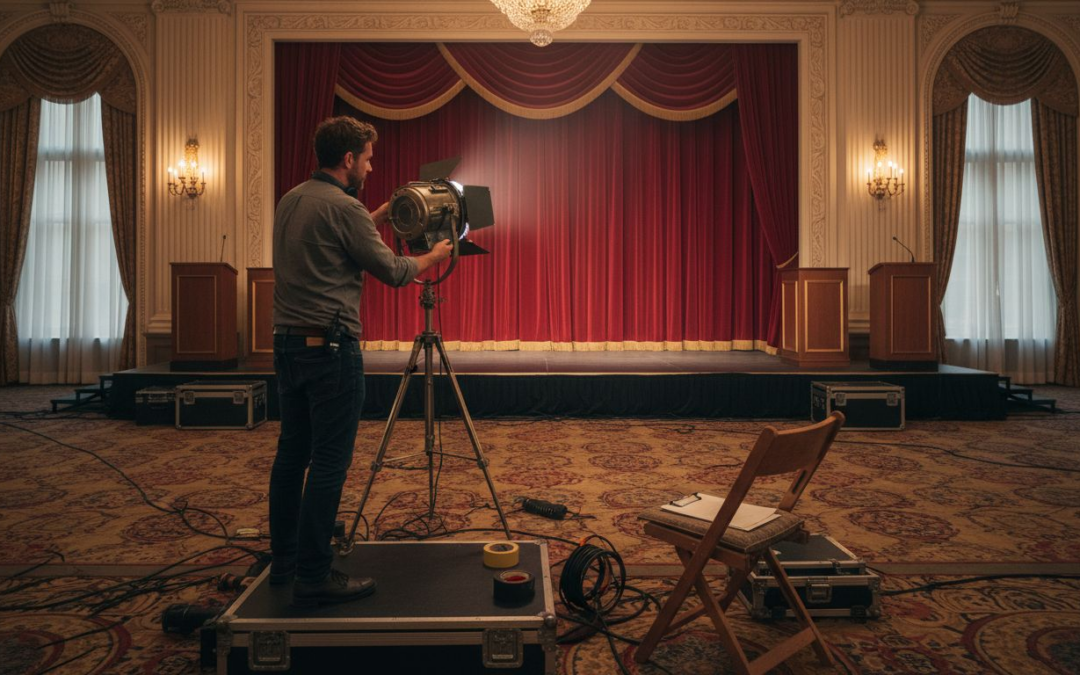
Redefining luxury events in Cape Town starts with understanding how a truly immersive stage event design can transform any celebration into a sophisticated, unforgettable experience. For planners working with affluent clients, the challenge lies in moving beyond conventional event decor to craft environments rich in narrative and emotional depth. By embracing stage event design as a social narrative that generates economic, cultural, and social value, you unlock powerful new ways to connect guests, enhance brand impact, and set your high-end events apart.
Table of Contents
- Defining Stage Event Design And Its Purpose
- Key Styles And Concepts For Luxury Events
- Essential Creative Elements And Technologies
- Technical Planning, Safety, And Logistics
- Common Pitfalls And How To Avoid Them
- Elevating Events: Trends Impacting 2026
Key Takeaways
| Point | Details |
|---|---|
| Holistic Storytelling | Stage event design requires treating every element as part of a unified narrative to engage audiences effectively. |
| Luxury Event Trends | Focus on creating authentic, personalised experiences that align with brand values to resonate with discerning audiences. |
| Technological Integration | Employ advanced technologies to enhance interactivity and connection, transforming event spaces into dynamic storytelling platforms. |
| Proactive Risk Management | Anticipate potential challenges through meticulous planning and simulation rehearsals to ensure seamless event execution. |
Defining Stage Event Design and Its Purpose
Stage event design represents a sophisticated art form of creating immersive, transformative experiences that transcend traditional event planning. At its core, this discipline goes far beyond mere spatial arrangement and logistics, focusing instead on crafting narratives that resonate deeply with audiences. Stage event design is about generating meaningful social interactions and generating powerful emotional connections.
Events are fundamentally designed as carefully crafted social narratives that generate economic, cultural, and social value. The primary purpose of stage event design includes:
- Creating memorable sensory experiences
- Facilitating emotional engagement
- Translating organisational objectives into visual and interactive storytelling
- Generating meaningful audience connections
- Producing immersive environments that communicate complex messages
Professional stage event designers understand that their work is not simply about decorating a space, but about orchestrating complex human experiences. They carefully consider psychological, cultural, and aesthetic elements to transform physical environments into dynamic storytelling platforms.
Stage event design transforms spaces from passive backgrounds into active, living narratives that engage, inspire, and provoke meaningful interactions.
Experiential Design Principles emerge as critical components in this sophisticated discipline. Designers must balance technical expertise with creative vision, understanding how spatial arrangements, lighting, sound, and interactive elements combine to create cohesive, impactful experiences.
Pro tip: Always approach stage event design as a holistic storytelling opportunity, where every visual and sensory element contributes to a unified narrative experience.
Key Styles and Concepts for Luxury Events
Luxury event design has evolved into a sophisticated art form that transcends traditional event planning, focusing on crafting memorable brand-aligned experiences that reflect exceptional exclusivity. These events are meticulously curated to evoke powerful emotional responses and create unique, personalised interactions that resonate deeply with discerning audiences.
Key styles and conceptual approaches in luxury event design include:
- Quiet Luxury: Emphasising understated elegance over ostentatious displays
- Intimate Experiences: Creating smaller, more exclusive gatherings
- Personalised Storytelling: Developing unique narratives tailored to specific audiences
- Immersive Sensory Design: Engaging multiple sensory experiences
- Brand-Aligned Atmospheres: Ensuring perfect coherence with organisational identity
The contemporary luxury event landscape prioritises authenticity and meaningful connection. Professional designers carefully orchestrate every element—from venue selection to entertainment—to generate a cohesive and transformative experience that goes far beyond traditional event management.
The following table presents how various luxury event styles influence audience perception and brand value:
| Style Concept | Audience Impact | Brand Value Enhancement |
|---|---|---|
| Quiet Luxury | Fosters sense of exclusivity | Projects refined sophistication |
| Intimate Experiences | Builds trust and connection | Emphasises tailored engagement |
| Immersive Sensory Design | Creates lasting emotional memory | Differentiates brand experience |
| Personalised Storytelling | Increases relevance for guests | Strengthens brand loyalty |
Luxury events are not about extravagance, but about creating profound, emotionally resonant moments that leave lasting impressions.
Understanding the psychological nuances of Experiential Design becomes critical. Designers must masterfully balance technical precision with creative storytelling, transforming physical spaces into dynamic platforms that communicate complex emotions and brand narratives.
Pro tip: Approach luxury event design as a holistic narrative experience, where every sensory element is intentionally curated to create an unforgettable emotional journey.
Essential Creative Elements and Technologies
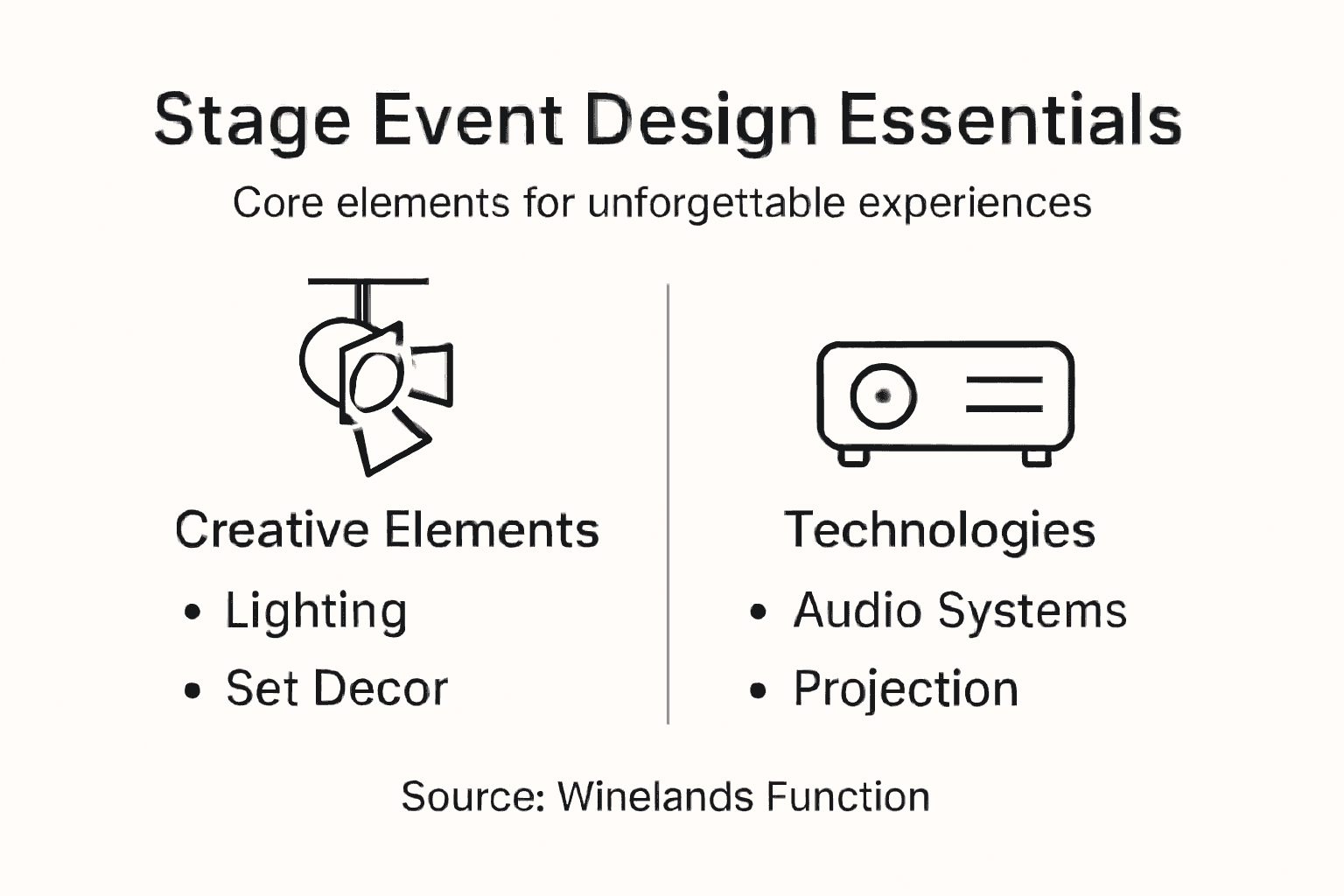
Stage event design has evolved into a sophisticated discipline that integrates cutting-edge creative technologies to transform physical spaces into dynamic storytelling platforms. Modern designers leverage an intricate blend of artistic vision and technological innovation to create immersive, multisensory experiences that captivate and engage audiences.
Key creative elements and technological components include:
- Dynamic Lighting Systems: Programmable colour palettes and emotional expression
- Multimedia Projection Mapping: Transforming surfaces into interactive canvases
- Augmented Reality (AR) Interfaces: Creating layered, interactive experiences
- Sophisticated Sound Design: Crafting precise acoustic environments
- Advanced Set Construction: Modular and adaptable staging technologies
Technological integration goes beyond mere aesthetic enhancement. Professional designers carefully orchestrate each element to create a cohesive narrative language that communicates complex emotional and conceptual messages through visual and sensory experiences.
Technology in stage design is not about spectacle, but about creating meaningful connections between space, performance, and audience.
Immersive Technologies represent the frontier of event design, allowing unprecedented levels of audience interaction and personalisation. Designers now have tools that can dynamically respond to audience engagement, creating living, breathing event environments that evolve in real-time.
Pro tip: Invest in versatile technological infrastructure that allows for creative adaptation and ensures your event design remains flexible and responsive to audience dynamics.
Technical Planning, Safety, and Logistics
Professional stage event design requires meticulous logistical planning and comprehensive safety management that goes far beyond simple technical arrangements. This complex process involves strategic coordination of multiple interdependent elements to ensure seamless, safe, and extraordinary event experiences.
Key technical planning and safety considerations include:
- Production Scheduling: Detailed timelines from rehearsal to load-out
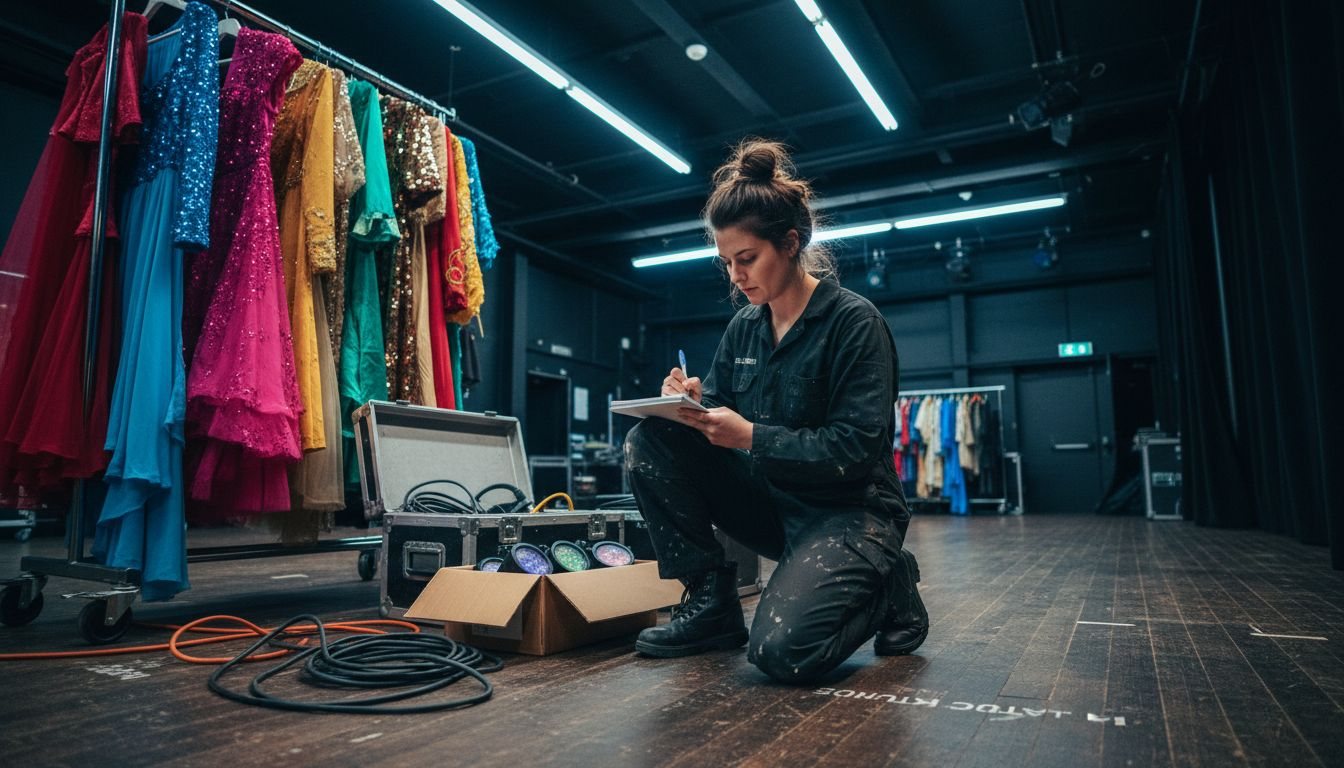
- Equipment Management: Precise inventory and technical requirements
- Safety Compliance: Comprehensive risk assessment and mitigation strategies
- Personnel Coordination: Clear definition of roles and responsibilities
- Modular Set Design: Flexible configurations ensuring smooth transitions
Successful technical planning demands a holistic approach that anticipates potential challenges and creates robust contingency frameworks. Professional stage managers must develop intricate networks of communication and coordination, ensuring that every technical element functions with precision and reliability.
Technical planning is the invisible architecture that transforms creative vision into flawless live experiences.
Risk Management represents a critical aspect of stage event design, requiring designers to balance creative ambition with stringent safety protocols. This involves detailed spatial analysis, load-bearing calculations, emergency preparedness, and continuous real-time monitoring of potential technical and environmental risks.
Pro tip: Always develop a comprehensive technical rider that documents every detailed specification, creating a clear communication blueprint for all production team members.
Common Pitfalls and How to Avoid Them
Stage event design requires strategic foresight to navigate potential design challenges and performance risks. Professional designers must anticipate and proactively address common obstacles that can derail even the most meticulously planned events.
Critical pitfalls to watch for include:
- Sightline Obstructions: Creating visual barriers that compromise audience experience
- Acoustic Deficiencies: Neglecting sound quality and distribution
- Visual Complexity: Overcomplicating design elements
- Lighting Inadequacies: Poor illumination strategies
- Safety Oversights: Insufficient risk management protocols
- Transition Inefficiencies: Disrupting event flow with clumsy stage changes
Successful event design demands a holistic approach that balances creative vision with technical precision. Designers must develop comprehensive strategies that anticipate potential challenges and create robust contingency frameworks.
Design excellence emerges from understanding potential failures before they occur.
Collaborative Problem-Solving becomes crucial in mitigating design risks. This requires open communication between designers, technical teams, and stakeholders, ensuring that every potential limitation is identified and addressed before the event.
Pro tip: Conduct comprehensive pre-event technical rehearsals that simulate worst-case scenarios, allowing your team to develop adaptive strategies and contingency plans.
Elevating Events: Trends Impacting 2026
The event industry is experiencing a profound transformation, with emerging trends highlighting human connection as the fundamental driver of meaningful experiences. Despite technological advancements, 2026 will emphasise authentic, personalised interactions that transcend digital interfaces and create genuine emotional resonance.
Key trends shaping the event landscape include:
- Resilient Event Design: Adaptable frameworks responding to geopolitical uncertainties
- Hyper-Personalisation: Tailored experiences reflecting individual preferences
- Sustainable Strategies: Environmentally conscious event planning
- Flexible Space Utilisation: Dynamic venue configurations
- Technology-Enhanced Engagement: Seamless digital-physical integration
- Trust-Driven Experiences: Prioritising authenticity and meaningful connections
Professional event designers must now balance technological innovation with deeply human-centric approaches. This requires sophisticated understanding of audience psychology, technological capabilities, and emotional design principles that transform events from mere gatherings into transformative experiences.
Below is a summary of emerging event design trends and their significance for 2026:
| Trend | Main Benefit | Implementation Focus |
|---|---|---|
| Resilient Event Design | Flexibility during uncertainty | Adaptive systems and layouts |
| Hyper-Personalisation | Matches unique attendee needs | Data-driven experience design |
| Sustainable Strategies | Reduces environmental impact | Eco-friendly materials |
| Technology-Enhanced Engagement | Deepened audience interaction | Seamless tech integration |
| Trust-Driven Experiences | Greater authenticity and loyalty | Transparent operations |
The most powerful events are not about what happens, but how participants feel.
Experiential Intelligence emerges as a critical competency, requiring designers to anticipate and craft experiences that resonate on emotional and intellectual levels. This demands a holistic approach that considers technological capabilities, human desires, and contextual complexities.
Pro tip: Develop flexible event designs that can dynamically adapt to changing audience expectations and unexpected circumstances.
Elevate Your Event with Expert Stage Design and Luxury Planning
Crafting unforgettable stage experiences requires mastery of immersive storytelling, seamless technical planning, and emotional connection as highlighted in “Stage Event Design Shaping Unforgettable Experiences.” If you seek to bring your vision to life with precision and sophistication Winelands Function specialises in curating exquisite events in Cape Town that balance creative narrative with flawless execution. Our expertise ensures your event radiates exclusivity and resonates deeply through personalised storytelling immersive sensory design and meticulous logistical coordination.
Experience the transformation where every lighting cue multimedia element and sound detail purposefully supports a cohesive and refined atmosphere. Partner with Winelands Function to avoid common pitfalls such as obstructed sightlines or compromised acoustics and benefit from adaptive event designs that respond dynamically to your guests’ needs. Start planning your next luxury wedding bespoke celebration or corporate launch by visiting Winelands Function today.
Discover the art of stage event design elevated by expert luxury event management at Winelands Function. Contact us now to begin crafting an extraordinary event journey that captivates and connects. Visit our homepage to explore our services and begin your transformative experience: Winelands Function.
Frequently Asked Questions
What is stage event design?
Stage event design is the art of creating immersive experiences that engage audiences beyond traditional event planning. It focuses on crafting narratives and emotional connections, transforming spaces into dynamic storytelling platforms.
How do experiential design principles influence event success?
Experiential design principles help to create memorable sensory experiences, facilitate audience engagement, and ensure a cohesive narrative throughout the event, all of which significantly enhance overall event impact.
What technologies are commonly used in stage event design?
Common technologies include dynamic lighting systems, multimedia projection mapping, augmented reality interfaces, sophisticated sound design, and advanced set construction, all aimed at creating immersive and interactive experiences for attendees.
What are some common pitfalls in stage event design and how can they be avoided?
Common pitfalls include sightline obstructions, acoustic deficiencies, and poor lighting strategies. These can be avoided through careful planning, thorough rehearsals, and collaborative problem-solving among the design and technical teams.
Recommended
- Why Event Design Matters for Luxury Celebrations – Winelands Function – For Every Occasion, Your Celebration
- Complete Guide to the Role of Event Design – Winelands Function – For Every Occasion, Your Celebration
- Understanding the Event Design Workflow for Stunning Events – Winelands Function – For Every Occasion, Your Celebration
- 7 Essential Event Design Tips for Memorable Experiences – Winelands Function – For Every Occasion, Your Celebration
- Understanding the Austin Event Planning Checklist | Trinity Concierge