
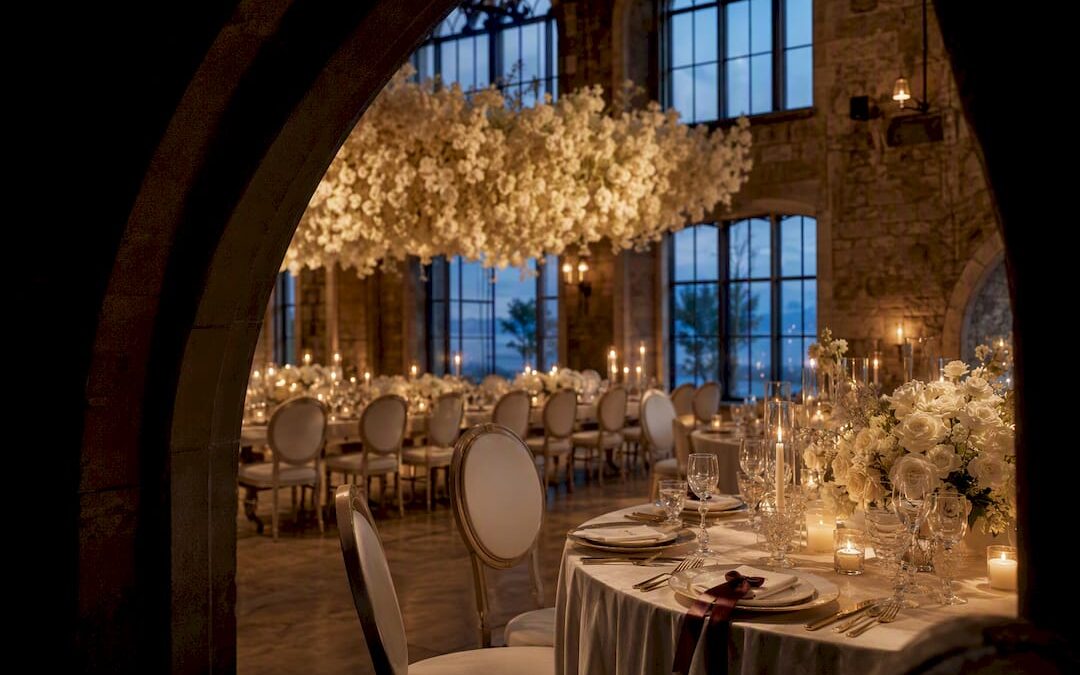
A luxury wedding theme is a single, deliberate aesthetic carried consistently across every touchpoint of the day, from stationery to lighting to service. It is not a bigger budget; it is a sharper point of view. Three directions cover most discerning couples: classic quiet luxury, modern minimal luxe, and experiential maximalism. The sections ahead give you profiles, styling rules, venue pairings, timelines, and budgets to turn any of them into a coherent day.
TL;DR:
- Coherence, restraint, and service quality are more important than total spending, with a clear point of view defining genuine luxury.
- Pairing themes with appropriate venues, such as historic estates for quiet luxury or coastal sites for celestial romance, enhances perceived elegance.
- Budgeting should prioritize lighting, food, and vendor coordination, with 12 to 18 months needed for planning due to vendor lead times.
- Maintaining a simple color palette and focusing on one hero moment ensures a cohesive and memorable wedding, avoiding cluttered decor.
- High-end vendors require detailed briefings and early booking, with a focus on vendor collaboration and venue architecture for flawless execution.
Table of Contents
- What makes a theme a “luxury wedding theme”?
- Top luxury wedding themes to shortlist
- Turning your theme into a coherent luxury experience
- Matching your theme to the right venue
- Budget priorities and realistic timelines
- Attire, guest experience, and entertainment
- The expertise behind these recommendations
- Making the theme unmistakably yours
- Sourcing and briefing high-end vendors
- Common challenges in planning a luxury wedding
- Why restraint beats maximalism
- Bring your luxury wedding theme to life with expert execution
- Sources
What makes a theme a “luxury wedding theme”?
Search for luxury wedding themes and you will find hundreds of mood boards, but very few explanations of what separates an expensive wedding from a genuinely luxurious one. The distinction matters, because couples frequently overspend on decor while underspending on the things guests actually notice.
Luxury in this context is defined by coherence, restraint, service, and pacing, not by the total on the invoice. A wedding planning resource from Bliss & Bone makes this point directly: a larger budget does not guarantee the luxury feel if the day lacks a clear point of view. You can spend a fortune on florals and still leave guests standing in a badly lit marquee wondering when dinner starts. You can also spend far less and produce something that feels flawless, because every choice, from the font on the invitation to the tempo of the toasts, was made in service of one idea.
That is the standard we use throughout this guide, and it is the standard worth adopting for your own planning. A theme is “luxury” when it is intentional and consistent, not simply expensive.
Top luxury wedding themes to shortlist
These ten themes represent the strongest, most requested directions in high-end wedding design today. Pick two or three that resonate, then use the styling section below to develop your shortlist into something specific to you.
1. Quiet luxury (old money)
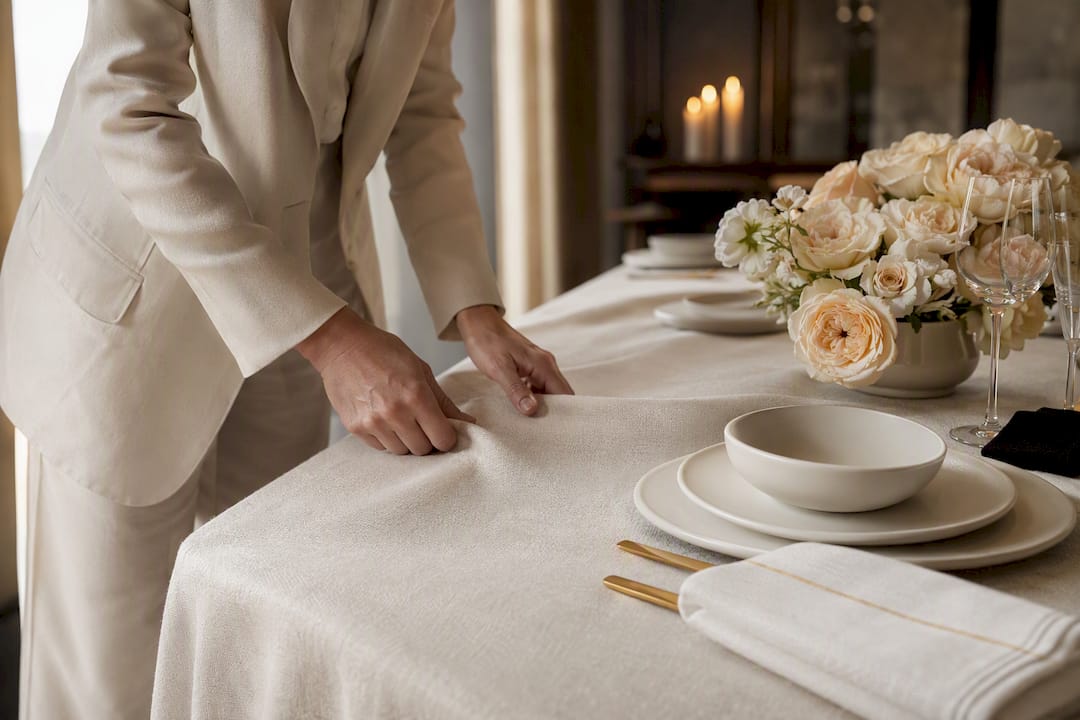
Quiet luxury reads expensive because of material quality, not visible detail. Tonal ivory and champagne palettes, heavyweight linen, hand-tied florals in single varieties, and staff who anticipate needs rather than announce themselves define the aesthetic, according to Plan A Wedding’s guide to quiet luxury styling. Signature touch: monogrammed linen napkins in a barely-there thread colour, changed between courses.
2. Modern minimal luxe
This is architecture-led luxury: clean lines, negative space, and one dramatic gesture (a suspended floral cloud, a sculptural bar) against an otherwise restrained backdrop. Signature touch: a single oversized floral installation in one variety, left to stand alone against bare stone or glass.
3. Italian Renaissance
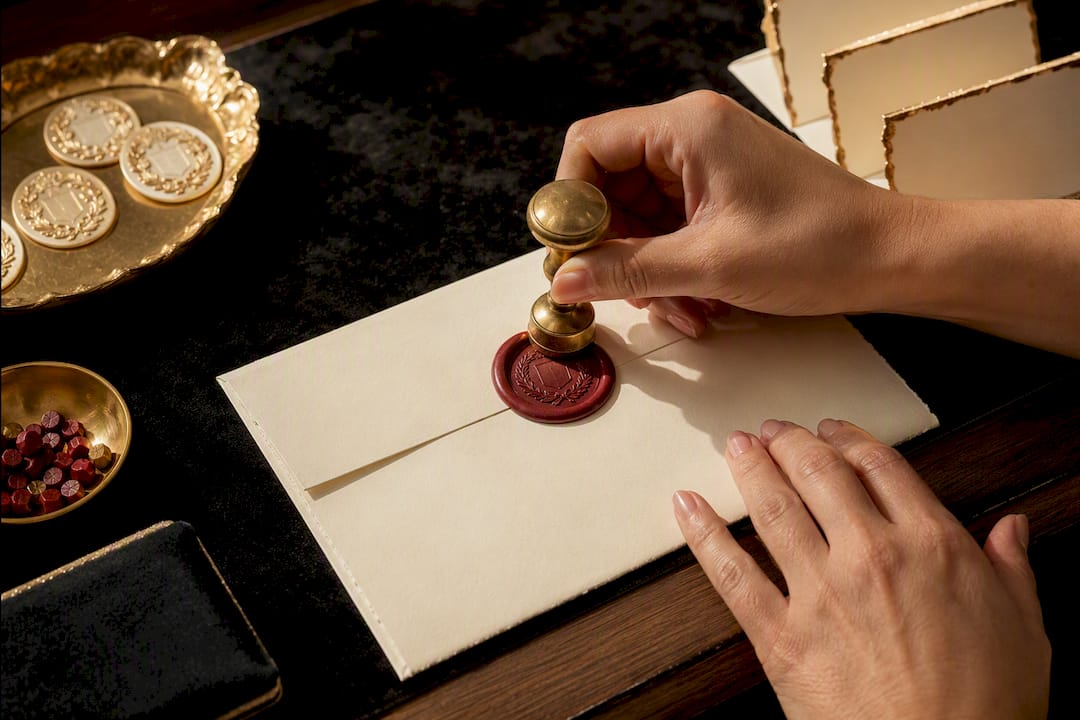
Velvet, gilt, candelabra, and heraldic motifs recreate a 16th-century Florentine court. It reads luxurious because so few weddings attempt it convincingly, and the artisan skill required (hand-gilded place cards, tapestry backdrops) is visibly rare. Signature touch: wax-sealed invitations with a custom family crest.
4. Garden grandeur
Overflowing, layered planting that looks as though it grew that way naturally, built from hundreds of stems disguised as effortless abundance. Signature touch: a floral-draped ceremony arch that continues, unbroken, into the reception centrepieces.
5. Art Deco / Old Hollywood
Black, gold, and emerald palettes, geometric linework, and glamour borrowed from 1920s supper clubs. Signature touch: a live jazz trio positioned where guests arrive, setting tone before they even reach the reception.
6. Celestial romance
Deep indigo and midnight palettes, constellation projections, and candlelight replace daylight florals with atmosphere. Signature touch: a starlit dance floor ceiling, built from thousands of pinpoint lights rather than a single chandelier.
7. Baroque maximalism
Ornate gilt frames, dramatic florals in jewel tones, and couture-level tablescapes push opulence deliberately, borrowing the aristocratic drama seen in a monochromatic wedding of aristocratic grandeur staged at Villa Erba. Signature touch: mismatched antique gilt chairs, unified only by their frame finish.
8. Refined naturale
An elevated take on rustic romance: raw wood, unlacquered brass, and loose, textural florals in muted tones, all executed at a premium level of finish. Signature touch: hand-thrown ceramic tableware, no two pieces identical.
9. Vintage glamour
Art Nouveau curves, heirloom lace, and a colour story pulled from 1970s couture (dusty rose, bronze, cream) create a bridal look with real period specificity. Signature touch: a vintage-inspired veil or headpiece sourced from a specialist atelier rather than a standard bridal boutique.
10. Monochrome couture
A single colour family, executed in every material from linen to blooms to lighting gels, produces an almost editorial cohesion that photographs unlike anything else on this list. Signature touch: white-on-white florals in varied textures (ranunculus, orchid, anemone) so the palette never feels flat.
Shortlist two or three of these before moving on. The next section shows you how to execute your choice so it reads as genuinely luxurious, rather than simply themed.
Turning your theme into a coherent luxury experience
Choosing a theme is the easy part. Executing it consistently, so a guest feels the same aesthetic in the invitation, the ceremony, and the after-party, is where most weddings lose the thread. Here is how to keep it tight.
Colour and material discipline. Limit your palette to three tones maximum, with one dominant and two supporting. Every material choice, from napkin weave to chair finish, should sit within that palette or in a neutral that doesn’t compete. Mixing metals (gold cutlery with silver charger plates) is the single fastest way to make a luxury tablescape look accidental rather than intentional.
Floral strategy. Recommended blooms for elevated, sculptural installations include phalaenopsis orchids, garden roses, wisteria, anthurium, and peonies, according to The Knot’s guide to glamorous wedding ideas. The trick is restraint in variety, not volume: three flower types repeated at scale read far more luxurious than eight different blooms scattered across the same table.
Lighting and spatial dressing. Lighting does more to signal luxury than almost any other line item. Chandeliers, ceiling draping, and pin-spotting on centrepieces and cake tables draw the eye exactly where you want it and hide whatever a venue can’t fix. Guest experience research consistently finds that lighting and service flow shape perceived luxury more than decorative extras do.
Tableware, linen, and scent. These are the details guests touch and smell, which makes them disproportionately memorable. A signature scent diffused subtly through the reception space, paired with tactile linen (heavyweight cotton or silk blends), builds an ambient impression long after the florals fade from memory.
Three mistakes undo good theme work more often than any single bad decision:
- Overcrowding the tablescape with competing focal points instead of one clear hero
- Ignoring venue architecture and layering decor on top of it rather than working with it
- Letting the stationery suite drift from the reception palette, breaking the story before guests even arrive
Pro Tip: Photograph your mood board in black and white before you commit. If the layered textures and focal points still read clearly without colour, your styling has genuine depth. If it collapses into a grey blur, you have too many competing elements.
Matching your theme to the right venue
The venue is not a backdrop for your theme; it is half of it. Designing for a room’s existing architecture, rather than layering decor on top of it, reduces waste and increases the perceived luxury of the finished space, a principle borne out in guidance on Italian Renaissance wedding styling, where heritage architecture does much of the visual work before a single flower is placed.
Some pairings work better than others:
- Ballrooms and museum atriums suit Art Deco, baroque maximalism, and monochrome couture, where high ceilings support dramatic lighting and scale.
- Historic estates and villas are the natural home for Italian Renaissance and quiet luxury, where existing architectural detail replaces the need for heavy dressing.
- Vineyard and garden settings favour garden grandeur and refined naturale, letting the landscape do most of the styling work.
- Beachfront and open-air venues suit celestial romance and modern minimal luxe, where negative space and sky become part of the design.
Whichever venue you choose, walk the space with your planner before booking and check rigging points for suspended florals or lighting, power capacity for staging and sound, and delivery access for large installations. Sightlines matter as much as style: a ceremony arch that blocks half your guests’ view undoes weeks of design work in a single moment. Confirm the layout protects sightlines through the ceremony, cocktail hour, and dinner service, and that furniture flow doesn’t force staff to cross guest paths during key moments.
Budget priorities and realistic timelines
Luxury weddings need more lead time than couples expect, largely because the vendors capable of this level of execution book out well in advance. A practical planning guide from Lucia Penman Events recommends 12 to 18 months for a luxury wedding, with venue selection made early because it shapes almost every decision that follows. Nine months is achievable if you’re flexible on date and willing to move quickly on vendor bookings, but it leaves little room for custom stationery or bespoke garment work.
Budget reality check: Venue and catering typically consume 50 to 60% of a luxury wedding budget, with design and florals taking 20 to 30%, and photography and entertainment the remaining 10 to 15%. Renaissance-themed weddings, with their specialist artisans and longer production timelines, can add roughly 15 to 30% to a comparable contemporary wedding budget.
Where you spend matters more than how much you spend. A few line items consistently deliver the highest return on perceived luxury:
- Lighting design, because it transforms a space more dramatically per pound than almost any other single investment
- Food and service quality, because guests remember a beautifully paced, well-served meal long after they’ve forgotten the centrepieces
- Vendor coordination, because a poorly timed day undoes even flawless individual elements
When you need to push budget further, prioritise the venue’s architectural fit with your theme, invest in one hero lighting or floral moment rather than spreading spend evenly, and never compromise on staffing ratios for service, since a slow course change or a delayed toast is far more visible to guests than a slightly smaller centrepiece.
Attire, guest experience, and entertainment
Your bridal silhouette should echo your theme, not fight it. Quiet luxury calls for a silk slip or bias-cut gown in unadorned fabric; Renaissance and baroque themes support a structured ball gown with visible embellishment; modern minimal luxe suits a tailored, architectural silhouette or a couture jumpsuit. Grooms and partners should follow the same logic: tailored tuxedos for Art Deco glamour, softer unstructured suiting for garden grandeur.
Communicate your guest dress code clearly and early, ideally on the invitation itself rather than left to a wedding website page guests may skip. A vague “black tie optional” note creates anxiety and mismatched outfits; a specific note (“black tie, jewel tones encouraged”) gives guests confidence and reinforces your palette before they arrive.
Entertainment should support the theme’s tempo, not compete with the room’s atmosphere:
- Solo strings or a harpist for quiet luxury and celestial romance ceremonies
- A jazz ensemble or swing trio for Art Deco and vintage glamour receptions
- Curated, choreographed performances (a single dramatic reveal, a live culinary moment) as the hero entertainment gesture for maximalist themes
Pacing matters as much as the choices themselves. Guests notice a delayed first course or a rushed toast far more than a missing decorative flourish, which is exactly why service flow deserves as much planning attention as the aesthetics.
The expertise behind these recommendations
Winelands Function has built its reputation coordinating luxury weddings, destination celebrations, and bespoke events across Cape Town and the Western Cape, working directly with the venues, artisans, and vendor networks referenced throughout this guide.
Luxury is a market tier, not a guarantee of quality. What actually creates the feeling guests remember is a clear point of view, discipline in editing the details, and a vendor team capable of executing that vision without compromise.
That principle shapes every portfolio piece Winelands Function has produced, from vineyard ceremonies built around a single hero floral installation to villa weddings styled entirely within a three-colour palette. The luxury Winelands wedding ideas collection shows how these themes translate into real settings, with attention to venue architecture, lighting design, and the service choreography that separates a good day from a flawless one.
Making the theme unmistakably yours
A theme name only takes you so far. The weddings that feel most luxurious are the ones where guests recognise the couple in every detail, not just an aesthetic pulled from a mood board.
Start with objects that already carry meaning: a grandmother’s lace reworked into a veil trim, a family crest quietly gilded onto place cards, a signature cocktail named after where you met. These personal threads work best woven into a theme’s existing structure rather than bolted on awkwardly. A quiet luxury wedding might carry a heritage motif through monogrammed linen; a modern minimal luxe day might personalise through a bespoke scent diffused at the entrance, chosen because it matches a memory rather than a trend.
Colour choices can also carry personal weight without breaking cohesion. If your theme calls for a tonal ivory palette, a single accent (your grandmother’s sapphire blue, say) can appear once, deliberately, in the bridal bouquet ribbon or the groom’s boutonnière, rather than scattered inconsistently across the day.
The goal is specificity, not novelty. Anyone can add a “unique touch.” Far fewer couples manage to make an entire aesthetic feel inevitable, as though no other theme could possibly have suited them. That takes editing, not addition, and it is where a planner’s outside perspective tends to tend to add the most value, because you are too close to your own story to see which details actually need airtime.
Sourcing and briefing high-end vendors
Luxury vendors work differently from standard wedding suppliers, and knowing that in advance saves weeks of frustration. The best florists, lighting designers, and couture ateliers for this tier of event often book 12 months or more ahead, and many don’t advertise widely, because reputation and referral carry more weight than a portfolio website.
Start by requesting full event portfolios, not just highlight reels. A vendor capable of restraint (a single hero floral moment rather than an over-decorated table) is more valuable for coherent theming than one who defaults to maximalism regardless of brief. Ask specifically how they’ve handled venues similar to yours, since a vendor skilled in ballroom lighting may not translate well to an outdoor vineyard setting.
Briefing matters as much as selection. Give vendors your palette, your reference images, and your non-negotiables in writing before the first meeting, so quotes reflect your actual vision rather than a generic package. For catering and reception menus, look at vendors who specialise in elevated, seasonal experiences; resources like Wild Foodz’s festive meal offerings for event planners are worth reviewing for signature culinary moments that lift a menu beyond standard banquet fare.
Finally, ask every vendor how they coordinate with others on the day. A florist who has never worked alongside your chosen lighting designer introduces risk; a vendor team with existing working relationships tends to execute far more smoothly.
Common challenges in planning a luxury wedding
Most luxury wedding stress comes from a handful of predictable problems, and each has a reliable fix.
Vendor availability clashing with your date. The best luxury vendors book out fast. Solve this by locking your venue and top three vendor priorities (photographer, florist, planner) before finalising every other detail.
Theme drift over a long planning period. Eighteen months gives plenty of time for a clear vision to blur under too many Pinterest boards. Revisit your original three-colour palette and hero element regularly, and be willing to say no to additions that don’t serve them.
Budget creep on “small” additions. Individually reasonable extras (a welcome sign, a favour, an extra floral arrangement) compound quickly. Set a contingency of roughly 10% and track additions against it from month one, not month eleven.
Guest experience getting lost in the visuals. It’s easy to over-invest in what photographs well and under-invest in pacing, service, and comfort. Prioritise lighting, food quality, and smooth transitions between segments of the day; these are what guests actually remember.
Managing multiple specialist vendors on one timeline. The more bespoke your theme, the more moving parts need coordinating on the day itself. This is precisely the problem a dedicated planner exists to solve, rather than leaving coordination to whichever vendor shouts loudest on the morning.
Why restraint beats maximalism
Choose one hero moment and build the rest of your day to support it. It’s tempting to chase every idea from every mood board, but the most memorable weddings tend to have a single unforgettable gesture, a floral cloud, a lighting reveal, a live culinary moment, rather than a dozen competing ones fighting for attention.
Before adding anything to your plan, run it through three questions: does it reinforce your hero moment, does it fit within your three-colour palette, and would removing it actually be noticed by a guest? If the answer to any of these is no, cut it.
Restraint photographs better, paces better, and ages better in memory than maximalism ever does. The couples who nail this tend to look back at their photos years later and see themselves, not a trend they chased.
— Coert
Bring your luxury wedding theme to life with expert execution
Winelands Function exists for exactly the moment you’ve reached in this guide: you have a theme, a palette, and a hero moment in mind, and now you need it executed without a single detail slipping through the cracks. That’s the gap between a beautiful mood board and a flawless day, and it’s where full-service planning earns its place in your budget.
Our services cover the ground this article has walked through, from vendor curation and venue sourcing to on-the-day orchestration and budget stewardship, so your lighting designer, florist, and caterer are working from one brief rather than three different interpretations of your vision. For destination and Winelands celebrations specifically, we manage the added logistics of travel, accommodation, and multi-day itineraries that come with hosting guests away from home. If you’re ready to turn a shortlist of themes into a confirmed date, explore our wedding planning services and get in touch to check availability for your preferred season.
Sources
For deeper detail on the sources behind this guide, see Bliss & Bone’s luxury wedding planning resource, The Knot’s glamorous wedding ideas, and Kiss Me Italy’s Renaissance wedding theme guide. For local inspiration, browse luxury Winelands wedding ideas or our step-by-step vineyard wedding guide.
- How to plan a luxury wedding — Bliss & Bone
- 24 Extraordinarily Glamorous Ideas for a Luxury Wedding — The Knot
- Italian Renaissance wedding theme — Kiss Me Italy
- How to Plan a Luxury Wedding (No Costly Mistakes) — Event Brothers Co