

For most winter weddings, a candle-forward cluster or a low white-floral arrangement anchored in evergreen delivers the best balance of seasonal elegance and cost control. Tall floral towers and lantern arrangements come next, offering more drama at a higher price and longer assembly time. Whichever route you choose, the goal is the same: warmth and texture over tinsel and red-and-gold cliché.
TL;DR:
- Formal arrangements like floral towers and tall centerpieces are costly and difficult to execute without professional help, especially for heights above 28 inches.
- Weather conditions dictate the choice of materials outdoors, with wind and cold shortening the lifespan of fresh flowers and making flameless candles or hardy stems necessary.
- Sustainable options such as dried elements, local evergreen foliage, and rented vessels simplify eco-friendly winter styling and reduce waste.
- A strong color palette avoiding traditional Christmas reds and golds, favoring muted tones paired with metallic accents, enhances winter elegance without cliché.
- Proper height and placement of centerpieces on different table types are crucial, with guidelines favoring low arrangements below 14 inches or tall pieces above 28 inches to facilitate conversation.
Table of Contents
- Winter wedding centrepieces: eight styles worth building your tablescape around
- Which flowers and foliage actually work in winter
- Colour palettes that read as winter, not holiday
- Getting height and placement right by table type
- Choosing vessels, props, and materials
- Three DIY winter centrepieces: materials, steps, and realistic costs
- When to build, store, and refresh your centrepieces
- Winelands Function design tips and professional checklist
- Twelve ready-made pairings to brief your florist
- Bringing scent and sensory detail into a winter table
- Indoor versus outdoor winter weddings: how weather changes your centrepiece choices
- Sustainable and eco-friendly winter centrepiece choices
- How Winelands Function delivers luxury winter centrepieces for you
- A planner’s take on getting winter tables right
- Sources
Winter wedding centrepieces: eight styles worth building your tablescape around
Every winter reception needs a signature look, and the strongest ones borrow from the season’s own palette rather than borrowing from Christmas card imagery. Here are eight approaches that work across venue types, from wine estate long tables to ballroom rounds.
- Candle-forward cluster. Groups of pillar and taper candles at three heights, often in odd numbers of five or seven, create ambient light without blocking sightlines. Best for round and long tables alike; DIY cost typically runs a moderate amount per table, professional styling typically costs more per table. Execution tip: keep the tallest tapers off-centre so guests can still see across the table.
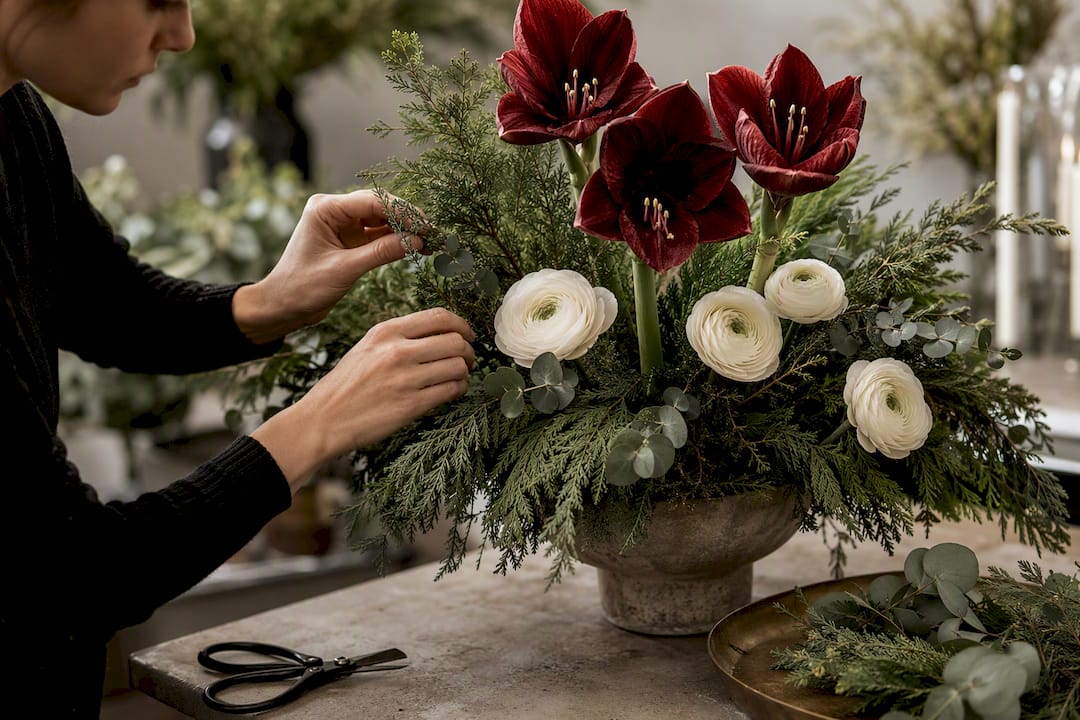
- Low floral and evergreen base. Ranunculus, amaryllis, or garden roses nestled into a bed of cedar or eucalyptus stays under the sightline entirely. Ideal for intimate rounds where conversation matters more than height. Tip: build the greenery base first, then insert flowers in odd numbers for natural rhythm.
- Lantern clumps. Two or three mismatched lanterns with pillar candles inside, softened with trailing foliage. Suits rustic barns, wine cellars, and outdoor marquees where wind protection matters. Tip: use flameless candles for any lantern near fabric or an open flap.
- Snow-globe cloche. A glass cloche over a miniature scene of pinecones, preserved amaranthus, and a single bloom. Works beautifully on cocktail tables or as an accent piece among taller arrangements. Tip: reserve this for indoor tables, since condensation forms fast in cold outdoor air.
- Tall floral tower. Amaryllis, anemones, and trailing eucalyptus rising from a slim glass or mercury vase. Reserved for long banquet tables or grand ballroom rounds with high ceilings; hire cost sits at the top of the range given the stem volume and structural rigging required.
- Greenery runner. A continuous bed of cedar, olive branch, and preserved eucalyptus along a long table, punctuated with votives and fruit. Suits family-style dinners and wine estate tables where the runner itself becomes the centrepiece.
- Dried and pampas boho arrangement. Pampas grass, dried lunaria, and preserved foliage in a stoneware or brass vessel. A strong budget-friendly wedding centrepiece option since dried elements need no water and survive transport without wilting.
- Fruit and foliage accent. Clementines, pomegranates, or quince tucked among greenery and brass candlesticks. A cost-effective, non-floral prop that adds colour and scent without a single stem.
Which flowers and foliage actually work in winter
Winter florals need to earn their place on the table twice over, once for looks and once for endurance. Sturdy, long-lasting stems such as carnations, ranunculus, and amaryllis hold their shape far longer than delicate summer blooms, while evergreen foliage adds structure, scent, and longevity that most flowers on their own cannot match.
Anemones bring dark, jewel-toned centres that photograph beautifully against pale linen, and paperwhites contribute a genuine fragrance many couples miss when they default to scentless roses. For evergreen and berry accents, cedar, eucalyptus, olive branch, and viburnum berries all hold up in cold rooms and outdoor marquees alike.
- Ranunculus and garden roses for soft, romantic texture.
- Amaryllis and anemones for bold colour and dramatic form.
- Cedar, eucalyptus, and pine for structure, scent, and cost efficiency.
- Preserved amaranthus, dried lunaria, and pampas grass as fresh-stem stretchers.
Mixing preserved elements with fresh stems is one of the smarter budget-friendly wedding centrepiece moves available, since it stretches arrangement life and trims floral costs without sacrificing an organic, seasonal look.
Order fresh stems through your florist three to four weeks ahead, since amaryllis and ranunculus both have limited winter growing windows and wholesalers sell out fast in December and January.
Pro Tip: Build your greenery structure first and add flowers afterwards in odd numbers, three, five, or seven. It reads as deliberate rather than accidental, and it is far easier to balance than starting with the flowers and packing greenery around them.
Colour palettes that read as winter, not holiday
The fastest way to avoid a Christmas-party look is to drop red and gold entirely and lean into muted, earthy tones lifted by a single metallic accent. Designers increasingly favour palettes that skip the classic holiday combination in favour of sage, dusty rose, and deep navy, each paired with one restrained metal rather than several competing finishes.
- Sage and cream with brushed brass, for a soft, garden-in-winter feel.
- Dusty rose and copper, warm and romantic under candlelight.
- Deep navy and silver, dramatic and formal for evening receptions.
- Ivory and eucalyptus green with pewter accents, understated and photograph-friendly.
- Terracotta and burgundy with warm gold, rich without tipping into festive cliché.
Metallic choices matter more than couples expect once candles enter the room. Warm metals like copper and brass reflect candlelight into a golden glow, while cooler silvers can look flat or even slightly cold in the same light. Velvet runners and warm metallics add textural warmth that winter linens often lack on their own, and they photograph exceptionally well once the sun goes down.
For photographic cohesion, do repeat one accent colour across centrepieces, linens, and stationery. Do not mix warm and cool metallics on the same table. Do test your palette under candlelight before the wedding, since a colour that looks elegant in daylight can shift entirely once the flames are lit.
Getting height and placement right by table type
Get the height wrong and even the most beautiful arrangement becomes an obstacle. The hospitality industry’s long-standing rule of thumb is straightforward: for a standard 60-inch round table, centrepieces should sit either below roughly 14 inches or above roughly 28 inches, so guests can either see straight over the top or comfortably around the sides. Anything caught in between blocks eye contact and conversation across the table.
| Table type | Recommended height | Placement notes |
|---|---|---|
| 60-inch round | Below 14 in or above 28 in | Keep low arrangements centred; tall pieces need a slim base so knees and place settings stay clear |
| Long banquet | Mix of low runners and occasional tall accents | Alternate low and tall every second or third setting to break up the length without blocking sightlines |
| Sweetheart table | Low to medium, under 14 inches | This table faces the room, so height should frame the couple, not obscure them |
| Cocktail table | Tall and narrow, above 24 in | No seated sightline to protect, so height reads as dramatic rather than obstructive |
Alternating tall and low arrangements across a reception room does more than break monotony. It gives photographers varied depth in wide shots and stops every table from looking identical in a way that flattens the room visually. A long table benefits especially from this rhythm: a slim tower every third setting, with a greenery runner and low candles filling the space between.
Choosing vessels, props, and materials
The vessel you choose sets the mood of the whole table before a single stem goes in. Mercury glass throws a soft, antique shimmer that suits candlelit evening receptions, while brass and stoneware read warmer and more rustic, better suited to wine estate long tables and barn venues. Glass cloches add a sense of preciousness to small accent pieces, ideal for cocktail tables or place-card displays.
- Mercury glass vases and votives for a vintage glow under candlelight.
- Brass and copper containers for warmth on rustic or wine estate tables.
- Stoneware and ceramic vessels for texture on relaxed, garden-style settings.
- Glass cloches for miniature winter scenes on smaller tables.
- Birch slices, pinecones, and dried citrus as inexpensive, reusable table props.
- Crystal accents and taper holders for formal ballroom settings.
Renting vessels almost always beats buying when you need volume. A florist or event hire company can supply 20 matching mercury glass vases for a fraction of what buying them outright would cost, and you avoid storing or reselling them afterwards. Buying makes more sense for small, personal touches, birch slices or a handful of brass candlesticks you might reuse at home. For genuine budget-friendly wedding table decorations, mix one or two hired statement vessels per table with cheaper, repeatable props like pinecones and citrus to stretch the budget further without the table looking sparse.
Three DIY winter centrepieces: materials, steps, and realistic costs
Building your own centrepieces is entirely achievable for couples comfortable with a weekend of assembly work. Here are three reliable builds, ranked from simplest to most involved.
- Candle cluster on a mirror base. Materials: five or seven pillar candles in varying heights, a round mirror tile, sprigs of cedar, floral tape. Steps: lay the mirror tile, arrange candles in a loose triangle at three heights, tuck cedar sprigs between the bases to hide the mirror edge. A cluster of seven candles at three heights gives strong visual mass on a 60-inch round table without ever rising above eye level. Cost: roughly $25 to $40 per table. Time: 15 minutes per table once materials are prepped.
- Low floral and greenery bowl. Materials: a shallow bowl or compote, floral tape, ranunculus, amaryllis, eucalyptus, chicken wire or a tape grid. Steps: press a tape grid across the vessel opening to hold stems without florist foam, insert greenery first to build a base, then add flowers in odd-numbered groupings, checking that no single stem rises more than 1.5 to 2 times the vessel’s height to keep the design balanced. Cost: $35 to $65 per table depending on flower choice. Time: 25 to 35 minutes per table.
- Lantern and foliage trio. Materials: two or three mismatched lanterns, flameless pillar candles, trailing eucalyptus, dried orange slices. Steps: arrange lanterns at varying heights, place candles inside, drape eucalyptus loosely across the bases, tuck in dried orange slices for colour. Cost: $40 to $60 per table including lantern hire. Time: 20 minutes per table.
Across all three builds, the wider cost gap between DIY and professional styling sits at roughly $55 to $190 per table, with fresh flowers as the single biggest cost driver in either direction. If your guest count runs past 15 tables, or your design calls for tall floral towers, call a professional florist. The structural rigging and stem volume needed for height above 28 inches is difficult to execute consistently without training, and a lopsided tower is far more noticeable than a slightly uneven low arrangement.
When to build, store, and refresh your centrepieces
Timing separates a fresh-looking table from a wilted one, and winter weather actually works in your favour here. Candle clusters, lantern arrangements, and dried or pampas designs can all be built 24 to 48 hours ahead with no loss of quality, since none of them rely on hydrated stems. Fresh floral arrangements are the exception: they’re best finished close to the time of the event, such as the night before or the morning of., conditioned in water overnight so blooms stay firm through the reception.
- Store fresh arrangements in a cool room, ideally 10 to 15°C, away from direct heating vents.
- Transport vessels upright in shallow boxes with non-slip liners to stop tipping.
- Refresh wilting petals or drooping stems with a light water mist an hour before guests arrive.
- Recheck every candle wick and flame guard on the morning of the wedding, especially near table linen and floral foliage.
Pro Tip: If you’re building fresh floral centrepieces yourself, condition the stems in a bucket of cool water overnight rather than directly in the final vessel. It gives you one last chance to spot and remove any wilting stems before they go on display.
Winelands Function design tips and professional checklist
Luxury winter tablescapes rest on details that are easy to overlook under deadline pressure: candle safety near fabric, back-up stems for last-minute wilting, and lighting that actually matches the room once the sun sets. Coert has built a working checklist for exactly these moments, refined across dozens of Cape Town winter weddings.
- Confirm vendor delivery windows against your venue’s load-in schedule, not just the wedding date.
- Run a lighting rehearsal the evening before, since candlelight always reads differently than it did during the daytime site visit.
- Keep a contingency stock of extra candles, spare stems, and flameless alternatives on hand for any table near an open flap or draughty entrance.
- Match metallic finishes across centrepieces, signage, and place settings so nothing looks like an afterthought.
Winter weddings reward the couples who plan their lighting and their florals as one decision rather than two separate ones. The candlelight is doing half the work of the flowers, and if you get that balance right, the room feels considered rather than staged.
For finishing touches, brushed brass candle groupings paired with sage and cream florals suit wine estate settings, while navy and silver formal arrangements are ideal for ballroom receptions, each tailored to how the venue’s own lighting behaves after dark.
Twelve ready-made pairings to brief your florist
A complete scheme is easier to hand off than a list of separate decisions. Each pairing below names a palette, vessel, flower, and finishing prop together.
- Sage and cream, stoneware bowl, ranunculus, pinecone accents (wine estate long tables).
- Dusty rose and copper, brass vase, amaryllis, dried citrus (hotel ballroom rounds).
- Deep navy and silver, mercury glass, anemones, crystal votives (formal evening reception).
- Ivory and eucalyptus green, glass cylinder, paperwhites, birch slices (country house marquee).
- Terracotta and burgundy, ceramic urn, garden roses, pomegranate (autumnal-leaning winter venue).
- Sage and brass, lantern trio, cedar sprigs, dried orange (rustic barn setting).
- Cream and pewter, cloche display, preserved amaranthus, pinecones (cocktail tables).
- Navy and gold, tall glass tower, amaryllis, trailing eucalyptus (grand ballroom centrepiece).
- Dusty rose and silver, compote bowl, anemones, viburnum berries (intimate sweetheart table).
- Sage and copper, mercury votives, olive branch, candle cluster (winery cellar dinner).
- Ivory and brass, stoneware vase, garden roses, dried lunaria (garden-style reception).
- Burgundy and gold, brass candlesticks, ranunculus, pampas grass (bohemian winter theme).
Bringing scent and sensory detail into a winter table
Sight dominates most centrepiece planning, but scent shapes how guests remember a winter reception long after the photographs fade. Evergreens like cedar and pine carry a natural fragrance that most summer flowers simply cannot replicate, adding an ambient warmth that guests notice within seconds of sitting down.
Paperwhites and hyacinths bring genuine floral scent to the table if you want something softer than resinous greenery. Citrus, cinnamon-dusted pinecones, or a scattering of dried orange slices work as low-cost sensory props that also double as visual texture. Even unscented candles contribute here, since the flicker and gentle warmth of candlelight change the temperature of a room in a way that guests register physically, not just visually.
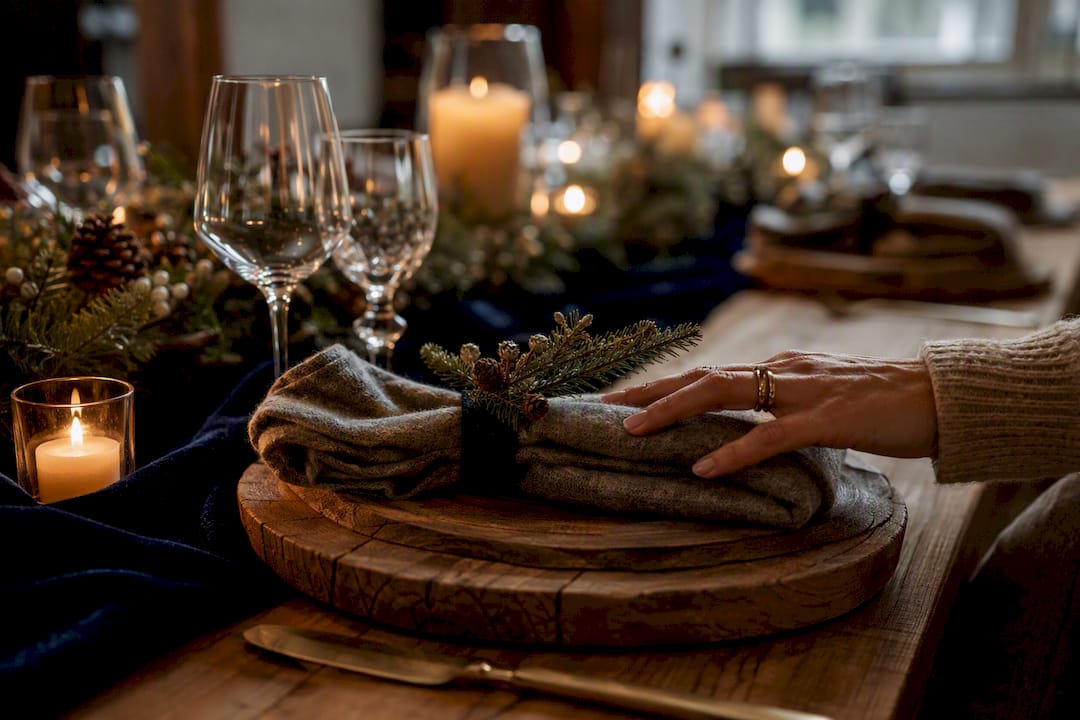
Texture matters just as much as scent for a winter table. Velvet table runners, wool napkins, and rough-hewn wooden chargers all invite guests to touch the table, not just look at it, and that tactile layer is part of what separates a considered winter reception from a summer scheme with candles added on. Sound plays a quieter role too: a string quartet or acoustic set works with a candlelit room far better than amplified music, letting the visual calm of the tablescape carry through to the atmosphere overall.
Indoor versus outdoor winter weddings: how weather changes your centrepiece choices
Weather dictates far more of your centrepiece decision than most couples expect at the planning stage. Indoor winter weddings give you full control: stable temperatures, no wind, and no risk of rain damaging delicate blooms or extinguishing candles. This is where tall floral towers, open flame candles, and delicate dried arrangements can all work without a contingency plan.
Outdoor winter weddings change the calculation considerably. Wind is the biggest threat to any open-flame centrepiece, so lanterns with enclosed glass or flameless candles become the safer choice over exposed tapers. Cold temperatures also shorten the working life of fresh flowers once they’re out of water, so an outdoor cocktail hour or ceremony display needs hardier stems, amaryllis and evergreen foliage hold up far better in cold air than anemones or ranunculus. Condensation is another factor outdoor couples rarely anticipate. Glass cloches and mercury glass vessels can fog or frost in cold, damp air, which makes them better suited to marquees with some heating than to fully open-air settings.
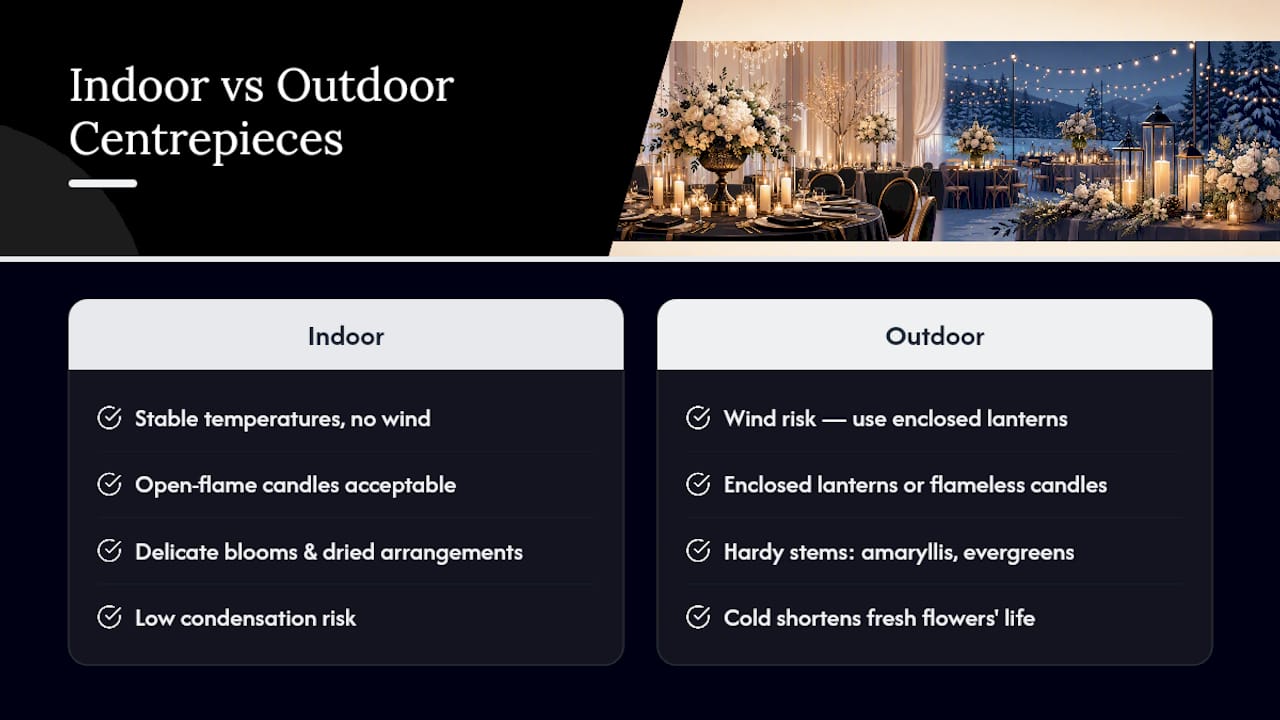
If your venue spans both, a ceremony outdoors and a reception indoors, plan for two slightly different centrepiece specifications rather than forcing one design to survive both environments. A hardy evergreen and lantern scheme for the ceremony space, followed by a more delicate floral display once guests move indoors, gives you the best of both without compromising either.
Sustainable and eco-friendly winter centrepiece choices
Winter actually makes sustainable styling easier than most seasons, since evergreen foliage, dried elements, and reusable vessels are already central to the aesthetic rather than an afterthought. Choosing locally sourced cedar, pine, and eucalyptus over imported summer blooms cuts transport emissions and supports the same longevity and scent benefits covered earlier in flower selection.
Dried and preserved elements, pampas grass, dried lunaria, preserved amaranthus, are inherently more sustainable than fresh-cut flowers because they last well beyond the wedding day. Many couples repurpose them afterwards as home décor rather than discarding them within a week. Renting vessels instead of buying disposable ones reduces waste significantly, and returning mercury glass, brass, or stoneware containers to a hire company after the event keeps them in circulation for future weddings rather than in landfill.
Beeswax or soy candles burn cleaner than standard paraffin options, a small swap with a genuine environmental benefit given how many candles a single reception can use. Fruit props like pomegranate, quince, or clementine compost easily afterwards, unlike foam-based floral mechanics. If you want centrepieces that feel both luxurious and considered, building around what already grows locally in winter, rather than flying in blooms from warmer climates, is usually the simplest way to achieve it.
How Winelands Function delivers luxury winter centrepieces for you
If the sourcing windows, height calculations, and candle safety checks above sound like more than you want to manage alongside everything else a wedding demands, that is precisely the gap a full-service planner closes. Winelands Function handles florist sourcing, vessel hire, on-the-day setup, and lighting rehearsals as part of a coordinated styling service, so nothing arrives at the venue without having already been tested under the room’s actual candlelight.

Our wedding planning service covers the full arc from palette selection through to setup and breakdown on the day, and our bespoke celebration styling extends into vendor coordination for florists, hire companies, and lighting technicians working together rather than separately. When you enquire, expect a conversation about your venue, guest count, and preferred palette before any quote, since a wine estate long table and a ballroom round need genuinely different execution plans. The clear next step is simple: get in touch to arrange a consultation and see what a coordinated, worry-free winter tablescape looks like for your own wedding date.
A planner’s take on getting winter tables right
Winter weddings ask couples to balance ambition against logistics more than any other season does. Candlelight is forgiving, cold weather is not, and the couples who get the best results are usually the ones who pick two or three strong ideas and execute them properly, rather than chasing every Pinterest board at once. That focus, more than budget, tends to separate a table that photographs beautifully from one that simply looks busy. If you want a second opinion on your own plans, a short consultation with Winelands Function usually clarifies more than another week of scrolling ever will.
— Coert
Sources
For deeper technique guidance, see the tape-grid arranging method and proportion rules for floral height. For venue-adjacent planning, seasonal menu pairing ideas and choosing wines for entertaining both complement a winter tablescape brief well.
- Winter flower arrangements that brighten interiors
- Winter wedding centrepieces: 35 ideas, height rules and DIY cost breakdowns
- How to make a beautiful winter flower arrangement
- How to recreate Ina Garten’s winter flower arrangements