
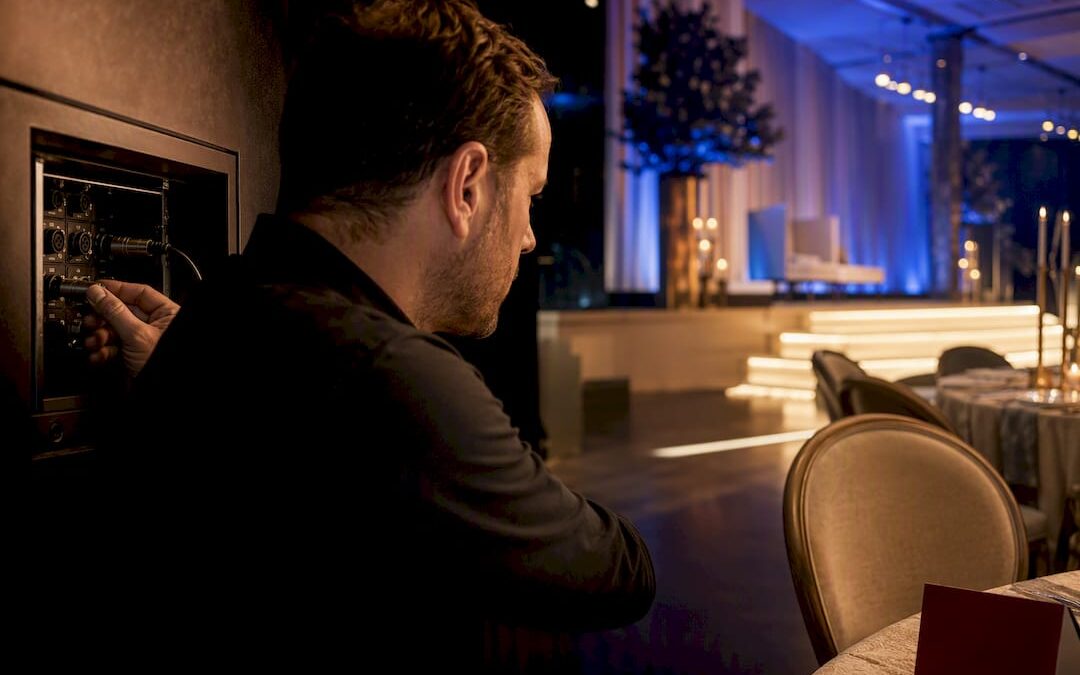
An event producer is the person who turns a creative concept into a live, functioning show, holding responsibility for the budget, the technical teams, and every cue that has to land on time. Their remit runs from the first production meeting through rehearsals to load-out. Where a plan exists on paper, a producer makes it happen in the room.
TL;DR:
- A producer is responsible for managing the entire event flow, including budgeting, technical cues, and contingency plans, to ensure smooth execution.
- Building and updating the run of show, including backup plans for each cue, is critical, especially since real-time problem-solving often involves adjusting timing discreetly.
- Differentiating between roles is key, with the producer focusing on creative and technical oversight, while the technical director executes the approved plan.
- Experience in coordinating complex cues under pressure is essential, as on-the-day adjustments are what truly define a producer’s value.
- Clients should prioritize who is calling the show during execution, since a well-designed concept without active show management risks unpredictable failures.
Table of Contents
- What does an event producer actually do?
- Producer, planner, or technical director: who do you actually need?
- What happens on the day: run of show and show-calling
- Building a career: skills and how to become an event producer
- How production choices shape the guest experience at luxury events
- What the conventional advice on this topic misses
- Ready to bring in production support for your event?
- Sources
What does an event producer actually do?
The producer’s job sits at the intersection of money, timing, and technical delivery. They shape and protect the production budget, deciding where funds go toward staging versus lighting versus staffing, and they own the consequences when a line item runs over.
They also build and manage the run of show, a detailed timeline that lists every cue, transition, and contingency from doors-open to closing remarks. Stage managers, AV technicians, and clients all work from this single document during the event.
Core responsibilities typically include:
- Budget oversight: allocating spend across venue, technical hire, staffing, and contingency, then tracking it against actuals.
- Programming: building the run of show and keeping it updated as elements change during rehearsals.
- Technical coordination: briefing lighting, sound, video, and staging crews so every department understands its cues.
- Vendor and venue liaison: negotiating technical riders, confirming load-in windows, and agreeing setup schedules with venue operations.
- Risk and contingency planning: preparing backup plans for equipment failure, running late, or a speaker dropping out.
Event production, at its core, is the technical and creative process of turning an idea into a live experience, knitting lighting, sound, video, and staging into one coherent moment for the audience.
Pro Tip: Ask any prospective producer to walk you through a run of show from a past event. If they can explain not just the timings but the backup plan for each major cue, you’re looking at someone who has actually called a show under pressure, not just planned one on paper.
Producer, planner, or technical director: who do you actually need?
Job titles in events overlap constantly, and that confusion costs clients time and money. An event planner handles strategic planning and guest logistics: the guest list, invitations, seating charts, and the overall event concept. An event producer takes that concept and makes it work technically and creatively, deciding how the show actually flows and runs.
A technical director sits one level down from the producer, executing the technical plan the producer has approved rather than setting the creative direction. Think of the producer as deciding what the audience should feel at a given moment, and the technical director as deciding which fixture, fader, or feed delivers it.
On larger productions, an event director or executive producer may oversee multiple producers across several stages or simultaneous programme streams. For a single wedding or a mid-sized corporate launch, one person often combines producer and technical director duties, which is worth clarifying before you sign a contract. Reading through planner duties in detail makes the planner/producer split easier to spot when you’re comparing quotes.
- Planner: guest experience, logistics, vendor selection
- Producer: creative realisation, technical delivery, show flow
- Technical director: execution of the approved technical plan
What happens on the day: run of show and show-calling
A run of show typically lists start times, cue numbers, who triggers each cue, and a backup option if the primary plan fails. Rehearsals exist to refine those timings, not just to check that microphones work, and a good producer will run a segment two or three times if the pacing feels off.
Real-time problems are where the role earns its fee. A keynote speaker running four minutes long, a video file that won’t play, a performer stuck in traffic. Producers absorb these moments and adjust the schedule discreetly, coordinating in real time with stage managers, AV technicians, and front-of-house staff so the disruption stays invisible to guests.
A typical sequence looks like this:
- Load-in: crews arrive, staging and technical equipment go up against a fixed schedule.
- Technical rehearsal: lighting, sound, and video cues are tested and timed.
- Dress rehearsal: the full run of show is walked through, often with stand-ins for key moments.
- Show: the producer calls cues live, adjusting timing as needed.
- Strike: equipment comes down and the venue is returned to its original state.
The essential role of the producer in event flow is precisely this balance between staging genuine “wow” moments and maintaining meticulous, almost obsessive attention to the small details that keep a show on schedule. It’s a demanding split of attention, and it’s exactly why experienced producers are worth the investment on anything with live cues.
Building a career: skills and how to become an event producer
Producers need project management skills to keep a multi-vendor timeline on track, technical literacy across AV and lighting systems, and the creative judgement to know when a moment needs more drama or less clutter. Communication under pressure matters as much as any technical qualification, because a producer who can’t calmly redirect a nervous stage manager mid-show will struggle regardless of how good their spreadsheets are.
Career paths vary considerably. Some producers start as production assistants or stage managers and work up through technical roles; others move sideways from event planning once they’ve built enough hands-on production experience. Formal degrees are not universally required; technical training, a strong portfolio, and a track record of shows delivered on time tend to matter more to hiring clients.
Practical steps that accelerate progression:
- Volunteer on local productions to get hands-on time with lighting and sound desks.
- Take short courses in AV or lighting operation to build technical fluency.
- Document every show you work on, building a reel that shows range, not just one event type.
- Network with venue technical staff and vendors, since referrals drive most freelance producer work.
How production choices shape the guest experience at luxury events
Production decisions are felt, not seen, at a well-run wedding or corporate launch. Guests notice when a toast lands at the right moment or when lighting shifts to match the mood, not the cue sheet behind it. Winelands Function’s approach to event production in Cape Town treats technical delivery and creative styling as one discipline, coordinating lighting, sound, and staging so a client’s brand or personal story comes through cleanly on the day, without visible seams.
What the conventional advice on this topic misses
Most guidance on event roles treats the producer/planner split as academic, a definitions exercise for people writing job descriptions. It isn’t. The real cost of confusing the two shows up mid-event, when a client discovers their planner never actually built a run of show, or when nobody owns the decision to cut a segment that’s running long.
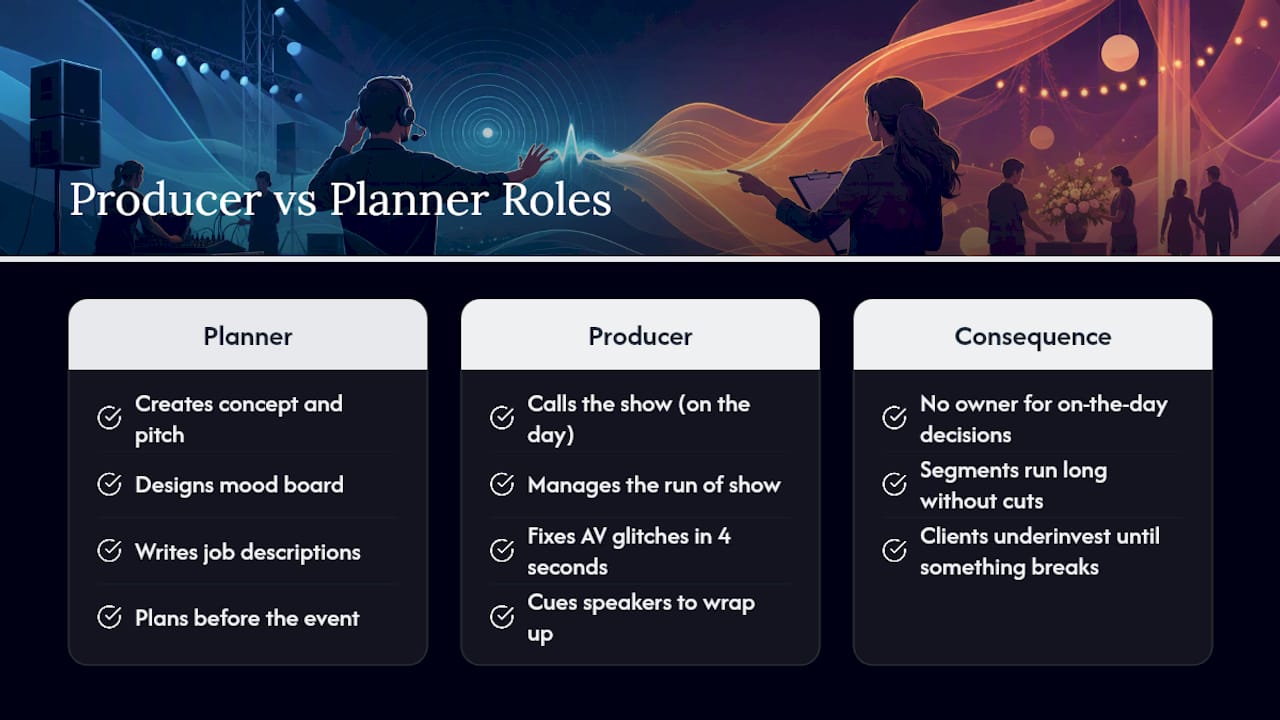
The research is consistent on one point: a producer’s value is clearest in the moments nobody sees, the AV glitch fixed in four seconds, the speaker gently cued to wrap up. That’s a hard thing to sell before the event, which is probably why so many clients underinvest in production until something goes wrong on the day.
If you’re commissioning an event, prioritise asking who is calling the show, not just who is planning it. A beautifully designed concept with no one managing the run of show on the day is a gamble, not a guarantee, no matter how good the mood board looked in the pitch meeting.
— Coert
Ready to bring in production support for your event?
Our service is suited for clients who want one team accountable for both the creative vision and the technical execution, rather than juggling separate planners and technical crews. Our production coordination covers budget oversight, run of show development, and on-the-day show-calling, backed by a single point of contact who answers for every cue, transition, and vendor on site.

That means fewer handoffs, fewer gaps between “who decided this” and “who’s fixing it,” and a team experienced in coordinating lighting, sound, and staging for weddings and corporate launches. Explore our full event management services to see how production coordination fits alongside styling, venue liaison, and timeline oversight, then get in touch to discuss your event date and scope.
Sources
- What does a live event producer do? — LASSO
- What is event production? — Vectorworks newsroom
- Event production explained — Cvent blog