
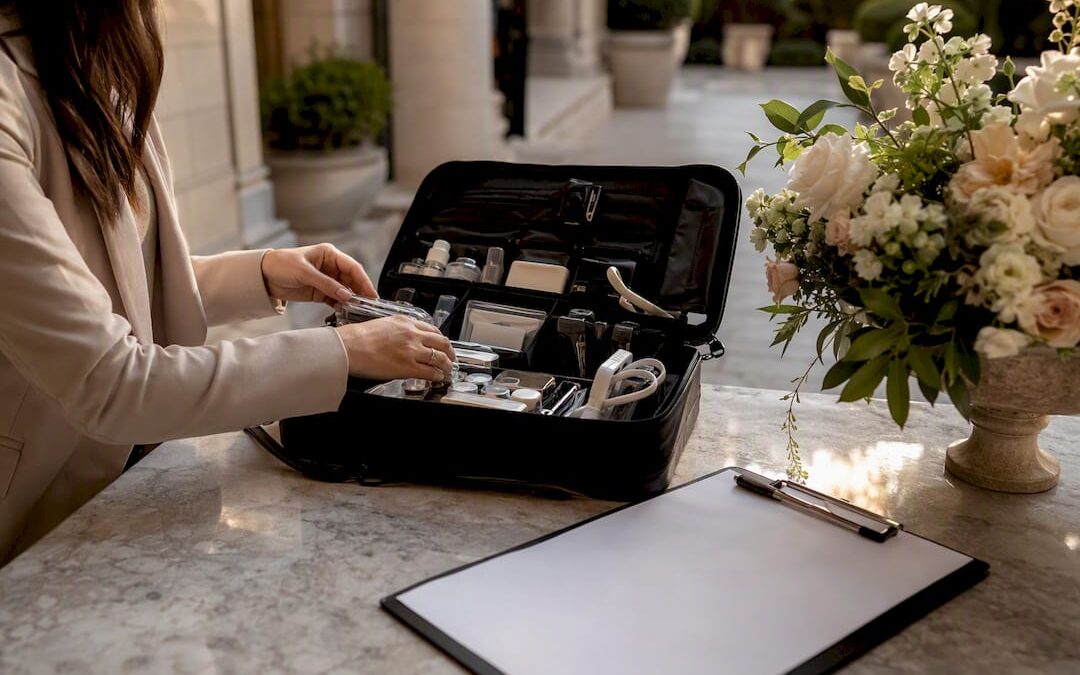
Plan the timeline, delegate the logistics, and protect time to simply be together: those three moves decide whether your wedding day feels joyful or frantic. In the next 72 hours, print your finalised timeline and hand it to your bridal party, then assign one person to carry the emergency kit. Everything else in this guide builds on that foundation, with a full checklist and hour-by-hour template to match.
TL;DR:
- Confirm vendor arrival times, load-in access, and contact information two to three days before the wedding, storing details in one shared note.
- Delegate specific roles such as ring keeper, license carrier, and gift collector to trusted individuals with clear instructions and limited decision-making authority.
- Build buffer time into every stage of the schedule, especially during transitions and vendor handoffs, to accommodate delays without affecting the main timeline.
- Pack an emergency kit with essentials like pain relievers, safety pins, and touch-up makeup, staged in one clear, labeled location for quick access.
- Designate a professional coordinator to manage logistics, vendor communication, and emergency responses, freeing the couple to enjoy their day without stress.
Table of Contents
- Practical day-of checklist: what to do and who handles it
- What does a sample day-of timeline look like?
- Getting-ready morning: practical steps for a calm start
- Delegation and roles: who does what on the day
- Emergency kit essentials and where to store them
- Photography and portraits: timing that preserves presence
- Handling hiccups: buffer strategy and common last-minute fixes
- Staying present: short rituals and emotional tips for the couple
- Planner-approved day-of workflow
- Transportation and travel logistics on the wedding day
- How to coordinate with the wedding party and important guests
- Dressing and grooming final checks
- What actually matters on a wedding day, and what doesn’t
- Let Winelands Function run your day so you don’t have to
- Sources
Practical day-of checklist: what to do and who handles it
A calm wedding day is built on decisions made days before, not choices made in panic on the morning itself. Most day-of problems get solved by finalising details ahead of time: confirm vendor arrival windows in writing, pack the emergency kit, prepare tip envelopes, and print enough timeline copies for everyone who needs one.
Start with vendor confirmations. Call or message each supplier two to three days out to confirm arrival time, phone number, and load-in access. Save these numbers in one shared note, not scattered across two phones that will both be switched off by mid-afternoon.
Delegation is where most couples fall short. You need specific people assigned to specific jobs, not a vague hope that “someone will sort it.”
- Ring keeper: holds both rings until the ceremony, hands them to the officiant or best man on cue.
- Marriage licence keeper: carries the signed licence and knows exactly where it needs to go afterwards.
- Vendor payout handler: distributes final balances and tips so you never touch cash on the day.
- Gift and card collector: gathers gifts and cards at the reception and moves them somewhere secure before the send-off.
- Photo wrangler: rounds up family members for portraits so the photographer isn’t hunting for Uncle Pete.
On the morning itself, keep the essentials simple:
- Eat a proper breakfast before hair and makeup begins.
- Drink water steadily, not just coffee.
- Charge your phone overnight and hand it off once photos start.
- Stage rings, licence, timeline copies, tip envelopes, and the emergency kit in one labelled tote, handed to your day-of lead first thing.
Our guide on how to coordinate wedding vendors covers vendor contact lists in more depth if you want a template to build from.
What does a sample day-of timeline look like?
An hour-by-hour timeline gives everyone, from your photographer to your florist, the same map to work from. Planners typically recommend starting the ceremony around 15 minutes after the time printed on your invitations, which absorbs the natural lag of guests finding seats.
Here’s a template built around a 4:00pm ceremony:
- 9:00am to 11:00am: Hair and makeup begins, timed to the size of the group.
- 11:30am: Photographer arrives to shoot details (dress, rings, invitations) and candid getting-ready moments.
- 12:30pm to 1:00pm: Couple is fully dressed; first look happens here if you’re doing one.
- 1:00pm to 2:30pm: Wedding party and family portraits.
- 3:30pm: Guests begin arriving; wedding party goes into hiding.
- 4:00pm to 4:30pm: Ceremony.
- 4:30pm to 5:30pm: Cocktail hour, doubling as remaining family portrait time if needed.
- 5:30pm: Reception entrance and first dance.
- 6:00pm to 7:30pm: Dinner service.
- 7:30pm to 8:00pm: Toasts and speeches.
- 8:00pm onwards: Open dancing, cake cutting, send-off.
If your ceremony starts later in the evening, shift the entire block back and compress the gap between ceremony and reception so guests aren’t left standing around during a long cocktail hour. Multi-venue weddings need an extra 45 to 60 minutes built in purely for travel and vehicle loading, on top of normal buffer.
Plated dinner service generally runs for a typical duration for a three-course meal; a buffet moves faster but needs more staff to avoid queuing. Cocktail hour rarely needs to exceed 60 minutes; anything longer and guests start drifting. Build buffer time between every major block, because a photographer running 10 minutes behind should never cascade into a ceremony starting late.
Getting-ready morning: practical steps for a calm start
The single biggest failure point on a wedding morning isn’t a delayed vendor. It’s couples and their wedding party skipping lunch, then running on caffeine and adrenaline by 3pm. Book a proper breakfast before hair and makeup starts, and schedule a light lunch delivery for the getting-ready room, not an assumption that someone will grab something.
Hair and makeup timing depends entirely on group size. Budget 60 to 90 minutes per person as a working guide, then add a 30 minute buffer at the end for the bride herself, who is usually last.
- Post a printed timeline on the wall of the getting-ready room before anyone arrives.
- Hand a copy to your maid of honour, your mother, and your planner.
- Pack the emergency kit the night before, not the morning of.
- Prepare tip envelopes, labelled by vendor, the night before.
- Print maps or directions for anyone unfamiliar with the venue.
Pro Tip: A printed timeline taped to a mirror stops the same three questions (“what time is the photographer coming?”) from being asked eleven times before 10am.
Doing the packing and printing the night before means your morning starts with breakfast and music, not a scramble through drawers looking for bobby pins.
Delegation and roles: who does what on the day
You cannot manage logistics and be present at the same time. Delegating isn’t about trust, it’s about making sure nobody asks you a question on your wedding day that a coordinator or a well-briefed friend could answer instead.
Give each delegate a simple one-sheet: their specific times, their responsibilities, the phone number of the vendor they might need to contact, and clear limits on what they’re allowed to decide without checking with you.
- Day-of coordinator or designated lead: owns the master timeline and fields all vendor questions.
- Ring keeper: confirmed above, briefed to double-check both rings before the ceremony line-up.
- Marriage licence keeper: knows the post-ceremony handling process cold.
- Photo wrangler: works from a printed family shot list, not memory.
- Gift and card collector: knows exactly where gifts get stored securely after the reception.
Give delegates a short script for common hiccups. If a vendor calls running late, the line is simple: “Thank you for letting us know, we’ll adjust and see you at [new time].” Nobody needs to escalate that to you.
Emergency kit essentials and where to store them
Every wedding produces at least one small crisis, a popped button, a hem that’s caught, a blister that needs taping. The kit that solves it needs to exist before the crisis does, and it needs one clear owner.
Build the kit around items that solve 90% of on-the-day problems: pain relievers, stain remover, safety pins, fashion tape, a mini sewing kit, phone chargers, snacks, breath mints, blotting papers, and touch-up makeup.
- Pain relievers and antacids
- Stain remover pen or wipes
- Safety pins, fashion tape, mini sewing kit
- Phone chargers (both cable types, just in case)
- Snacks that don’t stain fabric
- Breath mints and blotting papers
- Touch-up lipstick, powder, and hairspray
Assign the maid of honour or your coordinator as sole kit carrier, and stage it in one obvious, labelled spot, not spread across three handbags. Weddings that skip this step tend to lose ten or fifteen minutes to a search that a labelled tote would have avoided entirely.
Photography and portraits: timing that preserves presence
Photography timing is the difference between a day that feels rushed and one where you actually get to enjoy your own cocktail hour. Photographers generally like to arrive 30 to 120 minutes before you’re dressed, giving them time to capture dress details, invitation flat-lays, and candid getting-ready shots before the main event begins.
Aim to be fully dressed around 30 minutes after your photographer arrives. That window gives them the shots they need without you standing frozen in a gown for an hour.
- A first look gives you a private, unhurried moment together and clears most portraits before the ceremony, protecting your cocktail hour.
- A traditional aisle reveal keeps that first-sight moment public, but pushes more portrait time into the gap after the ceremony.
- Keep family portrait lists short and specific, and hand them to your photo wrangler in advance.
- A dedicated photo wrangler cuts photographer downtime dramatically, since nobody’s wasting fifteen minutes finding “Uncle Pete for the family shot.”
Whichever route you choose, the goal is the same: protect enough of cocktail hour that you actually get to speak to your guests.
Handling hiccups: buffer strategy and common last-minute fixes
Delays happen on almost every wedding day. What separates a smooth day from a stressful one is whether you’ve built in room to absorb them. Experienced coordinators add 15 to 30 minutes of buffer to every major transition and vendor handoff, which quietly protects your ceremony start time even when your hairdresser runs late.
Set triage rules in advance: your coordinator or day-of lead decides what gets shortened, never you, mid-crisis, in your dress.
- Shorten cocktail hour or drop one toast before you ever delay the ceremony itself.
- Store a spare umbrella and a small runner kit for lost items with your coordinator.
- Communicate any changes to guests through your coordinator or MC, not a group text from you.
Pro Tip: Decide your cut-first list before the day starts. Knowing that the second toast is expendable removes the panic of deciding it on the spot.
Staying present: short rituals and emotional tips for the couple
The best day-of advice has nothing to do with logistics. It’s about building in small, protected moments just for the two of you, because the timeline will run itself if you’ve delegated properly, but nobody else can protect your presence for you.
Try a two-minute breathing exercise together before the ceremony, and agree on a short no-phones window during portraits so you’re actually looking at each other, not your notifications. A five-minute walk alone together, a note exchanged before the ceremony, or a private toast delivered quietly by a runner mid-reception can matter more than any styling detail you agonised over for months.

Protecting these small moments matters more than getting every floral detail perfect. Nobody remembers a slightly different ribbon colour; everyone remembers whether the couple looked genuinely happy.
Planner-approved day-of workflow
Winelands Function builds every wedding around one principle: the couple should never be the ones managing logistics on their own day. That means a single run sheet, distributed to every vendor and every key person in the bridal party, so nobody is guessing.
A condensed run sheet you can copy for your own coordinator:
- Vendor arrival times and mobile numbers, listed in one document.
- Named owner for rings, licence, gifts, and the emergency kit.
- Buffer built into every transition, not just the big ones.
- A single decision-maker for on-the-day changes, briefed in advance.
- One shared operations group text, limited to on-duty vendors and coordinators, keeping logistics questions off the couple’s phone entirely.
Hand this sheet to whoever is running your day, whether that’s a hired planner or your most organised bridesmaid.
Transportation and travel logistics on the wedding day
Transport failures rank among the most common causes of a delayed ceremony, largely because couples underestimate loading time and traffic variability. Book vehicles with confirmed arrival windows, not vague “afternoon” bookings, and get the driver’s mobile number into your operations group text.
Build travel time generously if your ceremony and reception sit at different venues. Fifteen minutes of driving on a map rarely accounts for guests boarding, luggage, or a bridal party squeezing into a car without crushing a dress. Add at least 20 minutes beyond your GPS estimate for any multi-venue transition.
Assign someone, ideally not you, to confirm that every vehicle has actually left on schedule. A quick message (“car’s left, on schedule”) to your coordinator removes one more thing from your mental checklist.
If you’re using a shuttle for guests, confirm pickup points and timing with the venue coordinator ahead of time, and print a simple schedule for the driver rather than relying on verbal instructions given once, days earlier. Parking at both venues deserves a quick check too: know where your bridal party and close family should park so nobody’s circling a full car park during photos.
For destination or multi-stop weddings, our destination wedding checklist walks through the month-by-month logistics of coordinating transport across multiple locations.
How to coordinate with the wedding party and important guests
Your bridal party and immediate family need the same clarity you’d give a vendor: specific times, specific responsibilities, and one point of contact for questions. Vague requests like “just be ready by the afternoon” guarantee someone shows up late or unprepared.
Send a written schedule to your full bridal party at least a week before the wedding, covering arrival times, what to bring, and who to contact with questions. Keep that contact person as your coordinator or maid of honour, never yourself.
For important guests, particularly parents and grandparents who may need extra coordination around mobility, seating, or timing, brief them separately and clearly. A short call or note explaining exactly where to be and when prevents confusion that otherwise reaches you mid-ceremony prep.
Group family members for portraits into a written shot list, handed to your photo wrangler rather than announced verbally on the day. This single step prevents the most common cocktail-hour delay: a photographer standing around calling names nobody responds to.
Keep a single group text for your wedding party covering logistics, separate from any personal or celebratory messaging, so operational updates don’t get buried under excited commentary.
Dressing and grooming final checks
Build in a genuine buffer between “fully dressed” and “photos begin”, because this is where small fixes surface: a zip that sticks, a boutonnière that needs repinning, a hem that needs a quick press.
Run through a short mental checklist before anyone leaves the getting-ready room: jewellery on, shoes on, undergarments settled correctly under the dress, buttons and zips fully fastened, and any accessories (veil, cufflinks, pocket squares) actually in place rather than sitting in a bag. Assign one person, often the maid of honour or best man, to do a final visual check on the couple before they’re seen by anyone else.
Grooming touch-ups matter more than people expect by late afternoon. Pack blotting papers and a small mirror for quick checks before the ceremony and again before formal portraits, since three hours of talking, hugging, and crying will undo the morning’s careful work. Keep the emergency kit’s touch-up items accessible during this window rather than packed away with the rest of the kit.

Check that everyone in the wedding party, not just the couple, has done a final look check: crooked ties, smudged lipstick, and untucked shirts photograph far more visibly than they feel in the moment.
What actually matters on a wedding day, and what doesn’t
Most day-of advice focuses on preventing disaster: what if it rains, what if the caterer is late, what if a button pops. That’s useful, but it misses the bigger issue. The couples who describe their wedding as genuinely joyful afterwards aren’t the ones who avoided every hiccup. They’re the ones who never noticed the hiccups because someone else was handling them.
Conventional wedding planning content treats the timeline as the end product. It isn’t. The timeline is scaffolding, built specifically so you can ignore it. If you’re checking your watch during your own reception, the delegation plan has failed, not the schedule.
The advice worth prioritising first isn’t the emergency kit or the shot list, useful as they are. It’s deciding, in advance, who is allowed to make decisions without you. Every other piece of preparation exists to support that one choice. Get that right, and a missing button or a fifteen-minute delay becomes a footnote instead of a crisis.
— Coert
Let Winelands Function run your day so you don’t have to
Winelands Function exists precisely for the moment this article has been building towards: the point where a couple decides they’d rather be guests at their own wedding than the people managing it. Full on-the-day management means one experienced coordinator holds the timeline, fields every vendor call, and handles the small emergencies before you ever hear about them.

Three concrete advantages come from bringing in a dedicated planner rather than assigning the job to a well-meaning friend: a coordinator has already run dozens of these timelines and knows where delays typically originate, they carry direct vendor relationships that speed up problem-solving, and they give your bridal party permission to actually enjoy the day instead of working it. If you’ve read this far wondering whether your delegation plan is solid enough, that instinct is worth listening to.
Visit our wedding planning services page to see how full and day-of coordination works in Cape Town and the Western Cape, and get in touch to check availability for your date.
Sources
- Wedding emergency kit essentials | Minted
- Best wedding day timeline templates and examples | Brides
- The ultimate wedding day checklist | MySeatPlan