
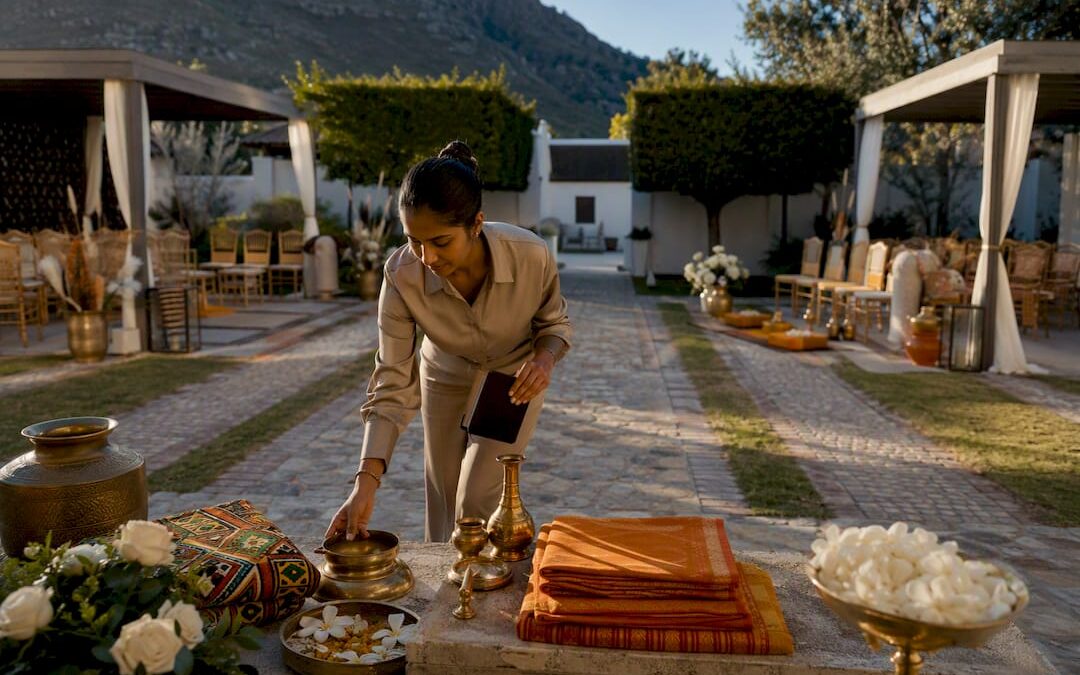
A truly authentic African Indian wedding comes from selective, lineage-rooted fusion, not from stacking every tradition either culture offers. The strongest celebrations choose a handful of meaningful rituals, coordinate attire and menus around them, and let family elders lead. This guide walks through real examples, the rituals worth including, and how a planner turns those choices into a working timetable.
TL;DR:
- Focus on one or two meaningful rituals rooted in your family lineage, rather than attempting every tradition from both cultures, to keep the wedding authentic and manageable.
- Coordinate attire and décor around a shared color palette, using neutrals and accent colors from each tradition, and plan outfit changes around ritual breaks instead of squeezing them into the reception.
- Build a flexible timeline with buffers between ceremonies to allow outfit changes, travel, and elders’ participation, supported by a vendor team familiar with multicultural wedding needs.
- Prioritize selecting a single non-negotiable ritual with input from both families before booking venues or vendors, ensuring those customs receive proper emphasis and respect.
- Incorporate local vendors and sourcing traditional textiles to give the wedding texture and authenticity, avoiding the pitfalls of shipping in outside elements that lack cultural significance.
Table of Contents
- Real African Indian wedding examples worth studying
- Which African and Indian wedding rituals to include
- Coordinating attire, textiles and colour across two traditions
- Menu and playlist strategies that keep every guest engaged
- A practical timeline and vendor checklist
- How Winelands Function approaches an African Indian wedding
- Why selective fusion beats the “everything” wedding
- Planning an African Indian wedding with expert help
- Sources
- FAQ
Real African Indian wedding examples worth studying
Nothing teaches fusion better than seeing it done well. A handful of recent weddings show how couples have blended African and Indian marriage customs without one tradition overshadowing the other.
One widely covered Indian-Nigerian wedding in Jaisalmer built its celebration around a festival atmosphere, choosing music and staging that let Afrobeats and Rajasthani percussion share the same stage rather than compete for it. The couple kept their ritual choices narrow and let each moment breathe.
A separate feature on an eclectic Indian-African wedding showed how menus were built to narrate both family histories, pairing regional Indian dishes with West African staples rather than blending them into something neither guest list recognised.
A third example, a multicultural celebration in Kenya, wove Swahili coastal culture into an Indian ceremony through textiles and local ingredients sourced from Kenyan suppliers rather than shipped in from abroad.
What links all three:
- Each couple chose one or two anchor rituals tied to their own family lineage, not a generic “African” or “Indian” checklist.
- Outfit changes were planned around ceremony breaks, not squeezed into the reception.
- Local vendors supplied textiles, spices, or ritual items, which gave the day texture that a remote supplier simply cannot replicate.
The takeaway for your own planning: pick the rituals that belong to your families specifically, and build outward from there.
Which African and Indian wedding rituals to include
Marriage customs across Africa vary enormously by country and ethnic group, but shared threads include family-led introductions, bridewealth exchanges, libation to ancestors, and heavy use of textiles and music. Indian traditions carry their own well-known markers. Here’s a quick primer on the rituals couples ask about most:
- Libation: a pouring ceremony honouring ancestors, often opening a traditional ceremony.
- Lobola or roora: bridewealth negotiations between families, central to many Southern African unions.
- Kola nut ceremony: a West African welcome ritual symbolising respect and blessing.
- Igba nkwu: the Igbo wine carrying ceremony, where the bride identifies her groom in a crowd.
- Haldi: a turmeric paste applied to the couple for purification and good fortune.
- Mehndi: henna application, usually an evening of music and celebration for the bride’s side.
- Baraat: the groom’s ceremonial procession, often on horseback or with drummers.
- Pheras: the seven vows taken around a sacred fire during the Hindu wedding ceremony.
The rule that keeps a fusion wedding from becoming a costume exercise is simple: start from lineage. Choose the one or two rituals meaningful to your own families, rather than attempting every popular custom from either side. Give those chosen rituals to your elders to lead. Contemporary coverage of African wedding customs is consistent on this point: rituals draw their meaning from family involvement, and an outside officiant standing in for a grandmother or uncle empties the moment of its weight.
When sequencing, build in buffers of reasonable length between distinct ceremonies for outfit changes, travel between venues, and simple breathing room for elders.
Pro Tip: Ask each set of parents to name their one non-negotiable ritual before you plan anything else. That single conversation usually resolves more disagreements than months of back-and-forth over the full guest list.
Coordinating attire, textiles and colour across two traditions
Coordinating attire across two dress traditions is where fusion weddings either sing or clash. The fix is a shared colour anchor rather than two separate colour stories running side by side.
- Anchor the palette in one or two neutrals (ivory, sand, deep gold), then layer in one accent colour drawn from each tradition, such as kente-inspired reds alongside jewel-toned saree fabrics.
- Coordinate family blocks in aso-ebi or matching fabric rather than mandating identical outfits across both families.
- Plan lehenga or saree changes around ritual breaks, not mid-reception, so hair and make-up teams aren’t rushing between looks.
- Brief jewellery handlers early. Gold sets, bangles, and gele or headwrap structures often need separate transport and storage from the rest of wardrobe.
Décor should follow the same logic as attire: pick two or three motifs from each tradition and repeat them consistently, rather than scattering isolated symbols across the venue.
Menu and playlist strategies that keep every guest engaged
Menus and music are where guests feel a fusion wedding most directly, and the operational choices matter as much as the creative ones.
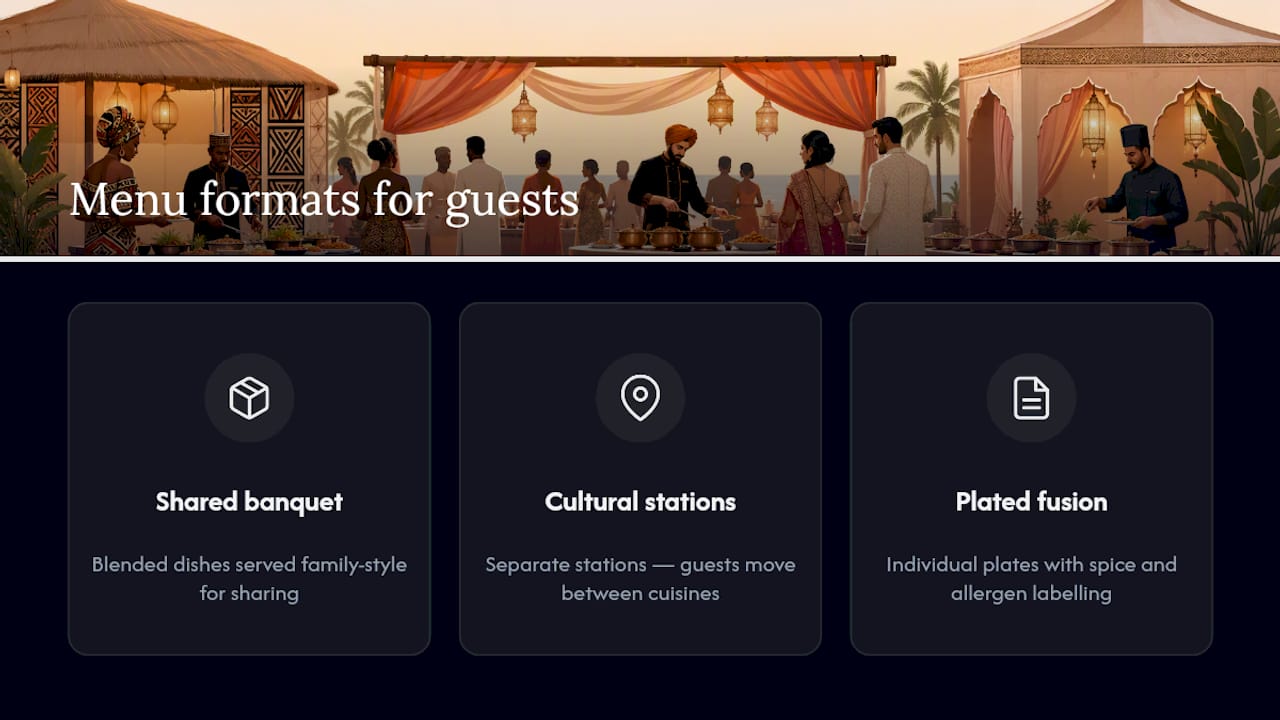
For food, three formats work reliably: a shared banquet blending dishes from both cuisines, separate cultural stations guests can move between, or a plated fusion menu with clear dietary labelling for spice level and allergens. A festive catering resource for event planners is worth reviewing when briefing caterers on seasonal menu options.
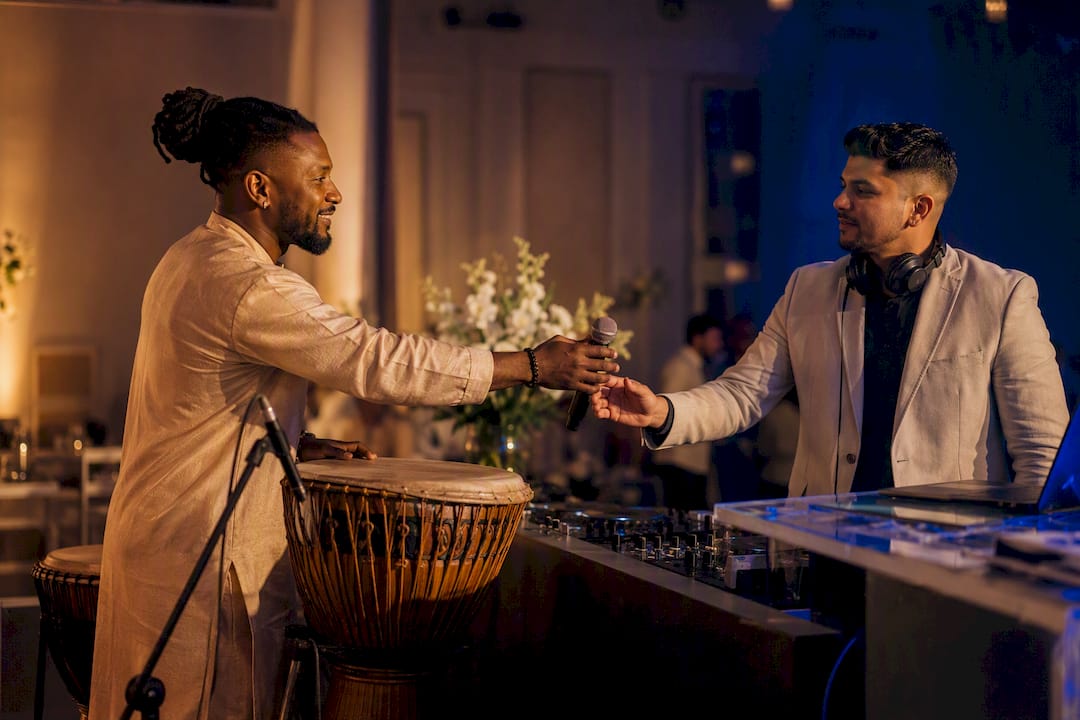
For music, lead with ceremony-specific pieces, move into a hybrid cocktail-hour playlist, then alternate live percussion with DJ sets through the reception. Balancing high-energy Afrobeats and bhangra sets against quieter moments keeps older guests comfortable and prevents any single tradition from dominating the room. Brief your caterer and sound team together so stage handovers don’t collide with course service.
A practical timeline and vendor checklist
A multi-ceremony weekend runs smoothly when the timeline has built-in slack rather than back-to-back bookings.
- Day one evening: mehndi or haldi, kept intimate and family-led.
- Day two morning: baraat or knocking ceremony, with a 45-minute buffer before the main ceremony.
- Day two ceremony: pheras or the chosen African rite, led by elders, followed by a break for outfit changes.
- Day two evening: reception, alternating cultural music sets with dinner service.
Vendor checklist: a cultural liaison who understands both families’ expectations, a bilingual officiant or MC, a caterer briefed on both cuisines, a photographer experienced with fast outfit turnarounds, a wardrobe team, and transport logistics between venues. Send guests programme cards explaining each ritual, plus simple signage on dress code and timing, so nobody feels lost between ceremonies. Our own wedding planning checklist is a useful starting template to adapt.
How Winelands Function approaches an African Indian wedding
A multicultural booking often begins with a cultural consultation, mapping which rituals each family wants honoured before a single supplier is contacted. From there, the workflow moves through supplier sourcing (textiles, henna artists, ritual items), styling that carries the chosen palette across both ceremonies, and a rehearsal that walks elders through their roles before the day itself.
Practical problems to solve include tracking down bilingual officiants, sourcing traditional fabrics through vetted local suppliers, and building outfit-change windows into a single coherent schedule. If you’re weighing whether to bring in specialist African wedding planners, this is the kind of groundwork they should already be doing.
Why selective fusion beats the “everything” wedding
Most advice on multicultural weddings defaults to addition: add a baraat, add a mehndi night, add a libation, add a fusion menu, and call it a celebration. That approach usually produces a long day and a thin one. Guests sit through rituals nobody in either family asked for, and the ceremonies that actually mattered to your grandmother or your dadi get buried in the schedule.
The research on genuinely memorable fusion weddings points the other way. The couples whose weddings get written about years later chose one or two rituals with real weight and gave them room to breathe. That’s a harder discipline than it sounds. It means telling a well-meaning relative that their favourite custom isn’t making the cut this time.
What should come first, before venue or vendor bookings, is a direct conversation with both sets of parents about which single ritual is non-negotiable for them. Everything else, the menu, the playlist, the outfit changes, is logistics you can solve later. The rituals are the part you cannot retrofit once the day is booked.
— Coert
Planning an African Indian wedding with expert help
Handling the layer of an African Indian wedding that most couples underestimate involves reconciling two families’ expectations into a single coherent day, without either tradition feeling like an afterthought. It means cultural consultation from the first meeting, sourcing traditional textiles and ritual items locally, and coordination from the initial family conversation through to the last outfit change on the day.

Bespoke packages often start with an initial consultation to map out which rituals matter most to the families before any venue or supplier gets booked. If you’re planning a wedding that blends African and Indian traditions in Cape Town or the Western Cape, get in touch through our wedding planning services page to arrange that first conversation.
Sources
- Marriage customs in Africa — Wikipedia
- This Indian–Nigerian couple brought music-festival energy to their wedding — Condé Nast Traveller India
- How African roots met Indian traditions at this couple’s eclectic wedding — Vogue India
FAQ
What happens at a traditional African wedding?
Ceremonies vary by country and ethnic group, but common elements include family-led introductions, bridewealth negotiations, libation poured to honour ancestors, and celebrations built around textiles, drumming, and dance.
Is black appropriate to wear to an Indian wedding?
Black is traditionally avoided at Indian weddings, particularly for the bride’s side, as it’s associated with mourning in many Indian communities; jewel tones, gold, and red are safer, festive choices for guests.
Can you combine a traditional African ceremony with an Indian ceremony on the same day?
Yes, many couples run both on one day with careful buffers between rituals, though a two-day format gives elders and outfit changes more breathing room and tends to reduce scheduling strain.
What happens when someone marries a foreign national?
Cross-border marriages involve additional legal steps, including documentation for both nationalities and sometimes historical family or immigration considerations that shaped earlier marriage regulations; couples should confirm requirements with both countries’ relevant authorities well ahead of the date.
Do we need a planner to manage two sets of cultural rituals?
You don’t strictly need one, but a planner experienced in multicultural wedding coordination significantly reduces the risk of scheduling clashes and helps make sure rituals stay in the hands of family elders rather than outside vendors.