
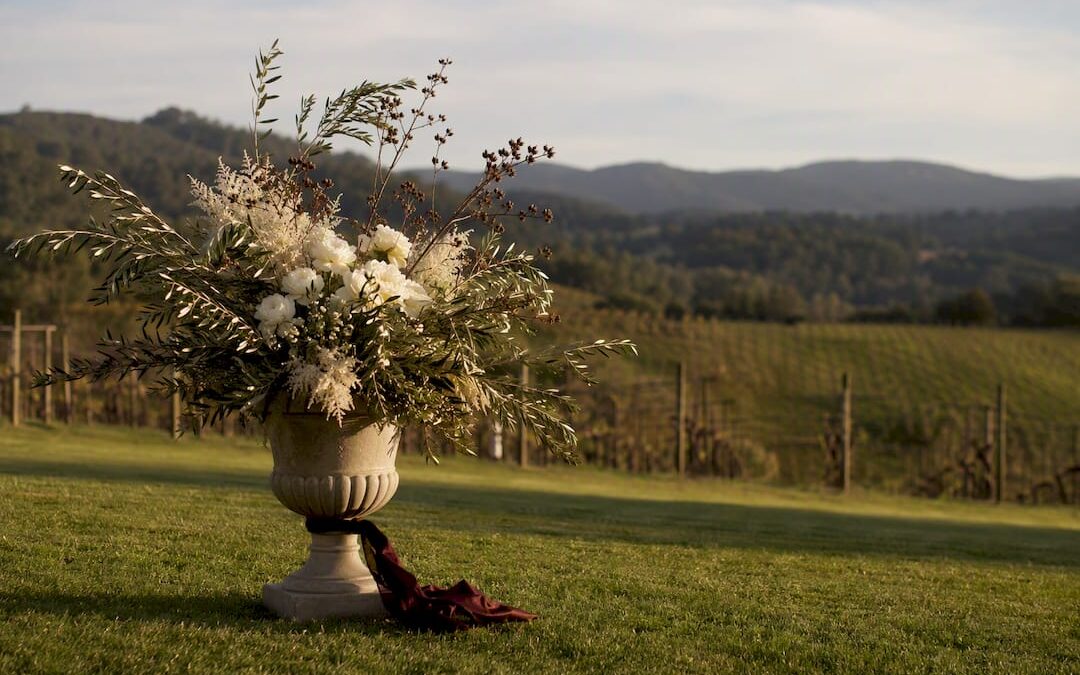
Country wedding ideas work best when they pair natural textures with genuine restraint: think barns, vineyards and farmland dressed in a handful of well-chosen focal pieces rather than dozens of small props. This guide covers venues, florals, tablescapes, lighting, food, attire and the practical planning details that keep a rural celebration comfortable, photogenic and unmistakably elegant, all filtered through Winelandsfunction’s luxury-aware styling approach.
TL;DR:
- Choosing a venue with sheltered outdoor options, sufficient power, and nearby accommodations is crucial for comfort and logistics at rural weddings.
- Using earth-toned florals, wildflowers, and minimal impactful arrangements creates a natural vibe while controlling costs and clutter.
- Limiting decor to a few signature props and layering tablescapes carefully enhances rustic charm without overwhelming the setting.
- Proper lighting with string lights, lanterns, and candles, combined with weather contingency plans, elevates the ambiance and ensures guest comfort.
- Prioritizing practical logistics, such as traffic flow, weather plans, and transportation, prevents common rural wedding pitfalls and enhances the overall experience.
Table of Contents
- Country wedding ideas start with the right venue
- Flowers, florals and foliage that suit a country setting
- Decorations and finishing touches that avoid clutter
- Lighting, ambience and outdoor comfort
- Food, drink and entertainment for a country wedding
- Attire, music and small styling details
- Practical planning notes for weather, timeline and comfort
- Stylists’ perspective: turning rustic into luxury
- Photography styles and tips for capturing the rustic theme
- Transport and parking at rural venues
- Invitations and stationery that set the tone early
- Bridal party roles suited to a country wedding
- Why restraint beats abundance in country styling
- Plan your country wedding with Winelandsfunction
- Sources
- FAQ
Country wedding ideas start with the right venue
Choosing where to hold your country wedding shapes everything that follows, from the florals you’ll need to the shoes your guests should wear. Barns bring exposed beams and weatherproof cover, which suits couples who want rustic charm without gambling on the sky. Working farms offer wide-open fields and genuine agricultural character, though you’ll want to check the terrain for heels and wheelchairs alike. Vineyard settings deliver rolling rows of vines as a built-in backdrop, often paired with existing event infrastructure. Country gardens and private estates split the difference, giving you manicured lawns alongside wilder edges.
Before booking anywhere, walk the site with a short checklist in hand:
- Confirm power supply matches your catering and lighting needs, not just what the venue assumes you’ll use
- Check restroom facilities, especially guest numbers versus available cubicles
- Ask about nearby accommodation for out-of-town guests
- Test vehicle access for suppliers, caterers and delivery vans
- Identify indoor shelter for a sudden downpour
The best rural venues balance atmosphere against logistics. A field that photographs beautifully but has no shelter within a five-minute walk is a liability, not a feature.
Flowers, florals and foliage that suit a country setting
A country wedding leans on raw materials and earth-toned palettes, and florals are where that identity shows fastest. Wildflower mixes with trailing greenery read as effortless, while a foliage-led palette in olive and eucalyptus tones keeps costs down without looking sparse. Blush and cream pairings soften a barn’s dark timber, and warm neutrals suit vineyard light beautifully.
For impact, choose one or two hero moments rather than florals everywhere:
- A floral chandelier or hanging installation above the top table
- An arch framing the ceremony backdrop
- Mason jars or galvanised buckets scattered along tables for texture without expense
- Potted plants borrowed or rented, which can be repositioned after the day
Pro Tip: Ask your venue what’s already growing on site. Farms and vineyards often have seasonal blooms or olive branches you can cut for free, cutting your florist bill significantly.
Decorations and finishing touches that avoid clutter
Rustic props are only effective in moderation. Wood slices, whisky barrels, vintage mirrors and bunting all work, but scattering all four across one reception tends to look busy rather than curated.
- Pick your signature props first. Choose three or four elements, such as wood slice place settings, a barrel as a drinks station, and bunting along the aisle, then repeat them consistently.
- Build tablescapes with layering, not clutter. Runners in linen or hessian, low candles, and seasonal produce woven through the centrepiece read as considered rather than thrown together.
- Add unexpected texture to centrepieces. Designers now tuck pomegranates, figs and artichokes among blooms for a farm-to-table look that feels current rather than dated.
- Apply the editing rule everywhere. If a detail doesn’t reinforce one of your three or four signature elements, leave it out. Simple decorations executed well outperform an overloaded theme every time.
Signage deserves the same discipline: one well-lettered welcome board says more than five mismatched chalkboards.
Lighting, ambience and outdoor comfort
Lighting does more work at a country wedding than almost any other element, because rural venues rarely come with dramatic architecture to lean on. String lights strung between beams or trees create instant atmosphere, while lanterns along pathways guide guests safely after dark. Edison bulbs suit exposed-timber barns, and clustered candles at low table height add warmth without competing with centrepieces.
Comfort measures matter just as much:
- Blankets draped over chair backs for evening chill
- Patio heaters positioned away from marquee walls
- Subflooring or matting over wet or uneven ground
- Shade structures for daytime ceremonies
- Citronella candles or insect deterrents for summer evenings
Always confirm the venue’s fire policy before booking candles or sparklers, and check electrical capacity can handle lighting plus catering equipment simultaneously.
Pro Tip: Test your lighting plan in the actual space at the time of day your reception will run. A barn that looks golden at 4pm can feel cavernous and dim by 8pm without enough fixtures.
Food, drink and entertainment for a country wedding
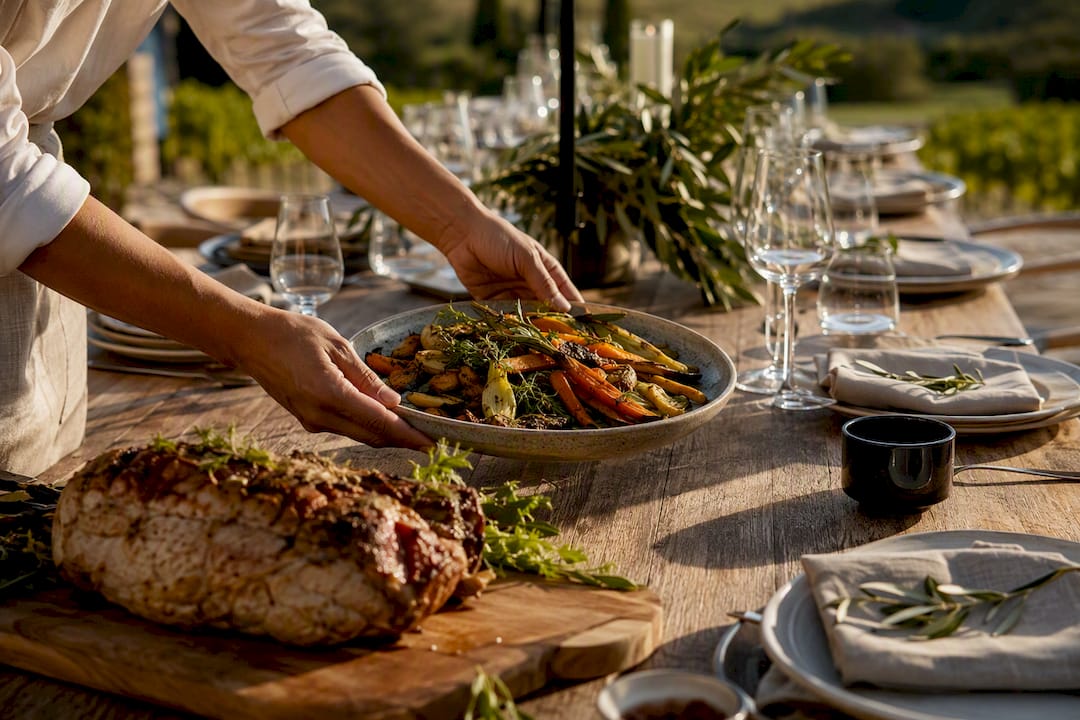
Farm-to-table dining suits the setting naturally, whether that’s a family-style dinner served on shared platters or a hog roast carved in front of guests. Both formats reduce the need for a large service team, which matters at venues with limited kitchen access.
Signature cocktails served in mason jars or copper mugs extend the theme to the bar without extra cost. For entertainment, folk or bluegrass bands and stripped-back acoustic sets suit barns and gardens acoustically better than a full electronic setup. Lawn games occupy guests during golden hour, and a bonfire extends the evening once formal dining ends.
A few logistics points matter more in rural settings than urban ones:
- Confirm supplier vehicle access well before the day, particularly for catering vans
- Check food-safety provisions, including refrigeration and handwashing, at venues without a commercial kitchen
- Ask caterers for seasonal menu ideas suited to farm-to-table service styles
Attire, music and small styling details
Country bridal attire works best when it feels authentic rather than costume-like. Lace gowns in ivory or blush pair naturally with earthy accessories, and many brides now choose boots for aisle and dance floor alike. Grooms suit linen or tweed depending on season, often finished with suspenders or a simple waistcoat rather than a full formal suit.
Bridesmaids and groomsmen achieve cohesion through colour rather than matching fabric, letting each outfit vary slightly while staying within one palette. For music, acoustic guitar or a solo violinist suits ceremony entrances, while a folk or country-leaning first dance song keeps the mood warm without tipping into theme-park territory.
Practical planning notes for weather, timeline and comfort
Country weddings depend on planning that treats the outdoors as a variable, not a guarantee. Weather contingency plans should cover rain, wind and temperature drops, and every supplier’s access route and electrical supply deserves testing well ahead of the day.
- Time your ceremony for golden hour. Photographers generally recommend scheduling outdoor ceremonies to land within the hour before sunset for the best light.
- Build in a buffer before dinner. Rural venues often need extra time for guest transfers between ceremony and reception spaces.
- Cover the guest comfort basics. Transport arrangements, clear signage, adequate toilets, heating or cooling, and a basic first-aid kit prevent the most common day-of problems.
Stylists’ perspective: turning rustic into luxury
Professional styling teams treat restraint as the single biggest lever between a rustic wedding that looks homemade and one that reads as luxury. Invest in a few high-quality focal pieces, whether that’s one striking floral installation or a beautifully set top table, rather than spreading budget across dozens of small decorative touches.
Farm-to-table florals extend this thinking into the tablescape itself:
- Combine seasonal produce with a small number of premium blooms for centrepieces that feel curated
- Layer linens in two or three tones rather than one flat colour
- Keep the palette controlled across ceremony, reception and signage so every space reads as one event
Coert has guided through this exact tension between rustic charm and polished execution, and the pattern holds: couples who edit their decor list down get compliments on “how elegant it felt,” while those who add everything get compliments on “how much there was.”
Photography styles and tips for capturing the rustic theme
Natural light does most of the work in country wedding photography, which is why timing matters as much as location. Golden hour portraits against vineyard rows or open farmland produce the warm, soft tones associated with rustic wedding galleries, while overcast days actually suit barn interiors better by avoiding harsh shadows through open doors.
Documentary-style coverage tends to suit rural venues more than heavily posed formal photography, because it captures genuine details: worn barn doors, mismatched jars, guests seated on hay bales. Wide shots that include the landscape earn their place here too. A single aerial or wide-angle frame showing the full vineyard or farm setting often becomes the image couples return to years later, more than any close-up.
For the reception, plan photography around your lighting choices rather than against them. String lights and candlelight photograph beautifully once the sun has fully set, but the transitional hour between daylight and full dark can leave images looking flat. Briefing your photographer on when lanterns and string lights switch on lets them plan for that shift rather than fight it. Detail shots, wood grain, floral texture, hand-lettered signage, reward a photographer who arrives early enough to shoot the venue before guests arrive.
Transport and parking at rural venues
Rural venues rarely offer the parking infrastructure of a city hotel, so transport planning needs to start earlier than for an urban wedding. Confirm how many vehicles the site can accommodate on-site, and where overflow parking will go if guest numbers run high. Farms and vineyards often have adjacent fields suitable for overflow, but only if the ground has been checked for drainage after rain.
Shuttle services solve two problems at once: they reduce the parking footprint and prevent guests from driving unfamiliar country roads after dark. Coordinate pickup points at a central hotel or town location, with clear timing communicated on your invitation suite or a separate transport card.
Signage matters more here than at any conventional venue. Rural roads are poorly signposted by nature, and guests relying on GPS alone can lose signal on the approach to a farm or vineyard. Place directional signs at the final few turns, and share a written description of the route alongside any digital map link.
Invitations and stationery that set the tone early
Stationery is often the first tactile signal of your wedding’s style, which makes it worth treating as more than an administrative task. Kraft paper, linen textures and twine detailing all read as country without tipping into cliché, particularly when paired with restrained typography rather than heavily decorative fonts.
Botanical illustrations, pressed-flower motifs or a simple line drawing of the venue give guests a preview of the setting itself. Wax seals in a muted colour add tactile weight to an invitation without overwhelming it, and they photograph well for save-the-date announcements. Save-the-dates and invitations should share a consistent palette with your day-of signage and menu cards, so the aesthetic feels intentional rather than assembled from separate decisions.
Practical information deserves as much design attention as the pretty parts. Rural venues often need extra detail, parking instructions, what to wear underfoot, whether the ceremony is outdoors, so guests arrive prepared rather than surprised.
Bridal party roles suited to a country wedding
Bridal party coordination at a rural venue carries a few extra responsibilities beyond the usual duties. Because rural venues often lack full-time on-site staff, someone in the bridal party benefits from being assigned as a point of contact for early supplier arrivals, particularly if the couple is getting ready off-site.
Bridesmaids and groomsmen can take on practical roles that suit the setting: guiding elderly guests across uneven ground, directing parking overflow, or keeping an eye on outdoor decor if wind picks up during the ceremony. These small assignments matter more here than at a hotel ballroom, where staff typically handle them.
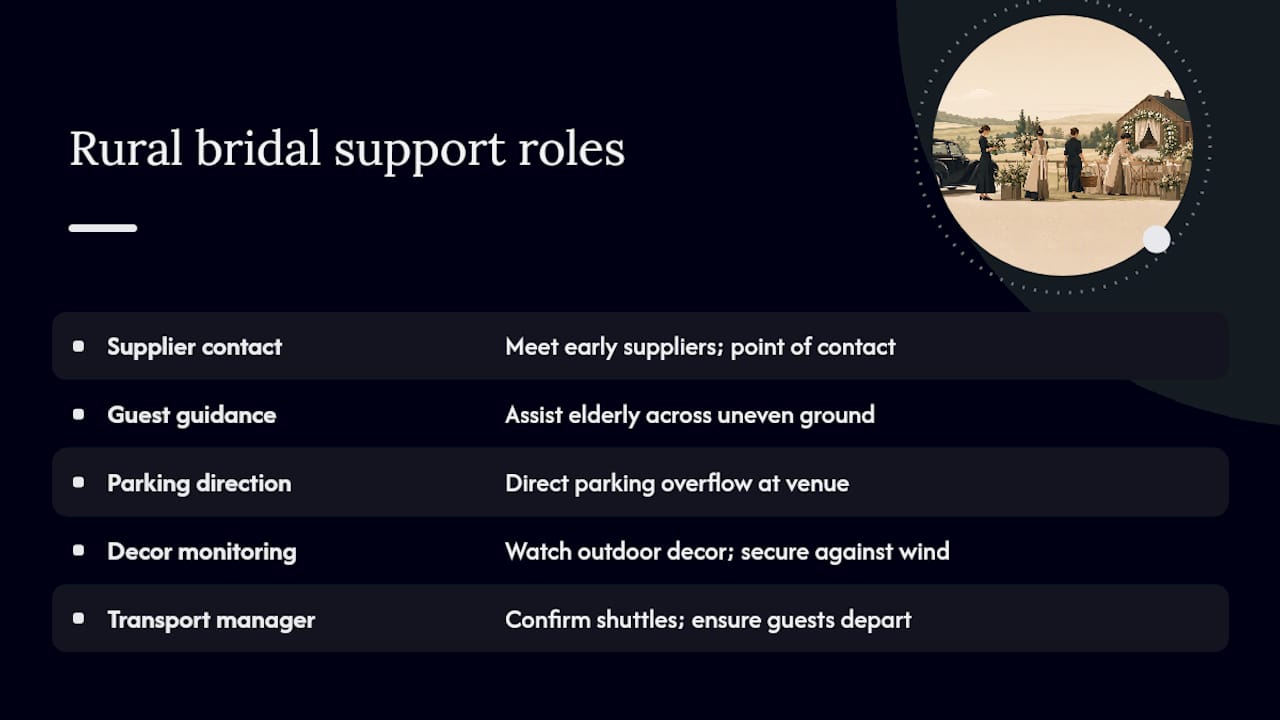
Timing rehearsals matters too. A country ceremony often involves a longer walk to the altar across grass or gravel, so a full walkthrough the day before, in the actual footwear guests will wear, catches problems a standard rehearsal misses. Assigning one bridesmaid or groomsman to manage transport timing on the day, confirming shuttles have departed, checking guests haven’t been left behind at a hotel, removes one more variable from the couple’s hands.
Why restraint beats abundance in country styling
The biggest misconception in country wedding planning is that more rustic touches equal more charm. They don’t. The Knot’s Real Weddings Study found 15% of couples described their theme as rustic, and the ones whose weddings photograph as elegant rather than homespun almost always did less, not more.
Conventional advice tends to push couples toward Pinterest boards packed with props: bunting, mason jars, chalkboards, hay bales, all at once. That approach produces visual noise. What actually elevates a rustic wedding is choosing a handful of quality elements, whether that’s one floral installation, a considered lighting plan, or a farm-to-table menu, and executing them with real attention.
If you take one thing from this guide, prioritise your venue walkthrough and your editing discipline before anything else. Get the practical logistics right, then choose three or four signature details and repeat them consistently. Everything else is decoration in the least useful sense of the word.
— Coert
Plan your country wedding with Winelandsfunction
Experienced event planners give country wedding couples something a Pinterest board can’t: a team that has already solved the logistics problems, electrical capacity, supplier access, weather contingencies, that trip up rural celebrations planned alone. Such services typically cover bespoke styling, supplier coordination and full on-the-day management, so the farm-to-table menu, the floral installation and the lighting plan all arrive on the same afternoon without you managing three separate contractors.

If you’re weighing up a barn, farm or vineyard setting, explore our bespoke and luxury celebration planning services to see how a dedicated planner structures a country wedding from first venue visit to final send-off. Get in touch to check availability for your date and talk through your styling brief.
FAQ
What is the 30-minute rule for weddings?
Many planners recommend building a buffer into your timeline between major segments, such as ceremony to photos or photos to reception, since rural venues often need extra transfer time that a tight schedule doesn’t allow for.
What are country wedding trends for 2026?
Farm-to-table dining, floral installations over scattered small props, and creative lighting design are defining modern country weddings, moving the style beyond basic rustic decor into more considered, elevated territory.
What is a good country song for a wedding?
Acoustic or folk-leaning tracks tend to suit both ceremony entrances and first dances at country weddings, since they match the natural, unpolished setting better than heavily produced pop arrangements.
What colours suit a country wedding?
Earth-toned palettes work best, think olive and eucalyptus greens, blush and cream, or warm neutrals, since these tones complement raw natural materials like timber, stone and vines rather than competing with them.
How do I stop a rustic wedding looking cluttered?
Choose three or four signature decorative elements and repeat them consistently across the venue rather than adding new props at every table, a discipline stylists consistently point to as the difference between DIY clutter and curated elegance.