
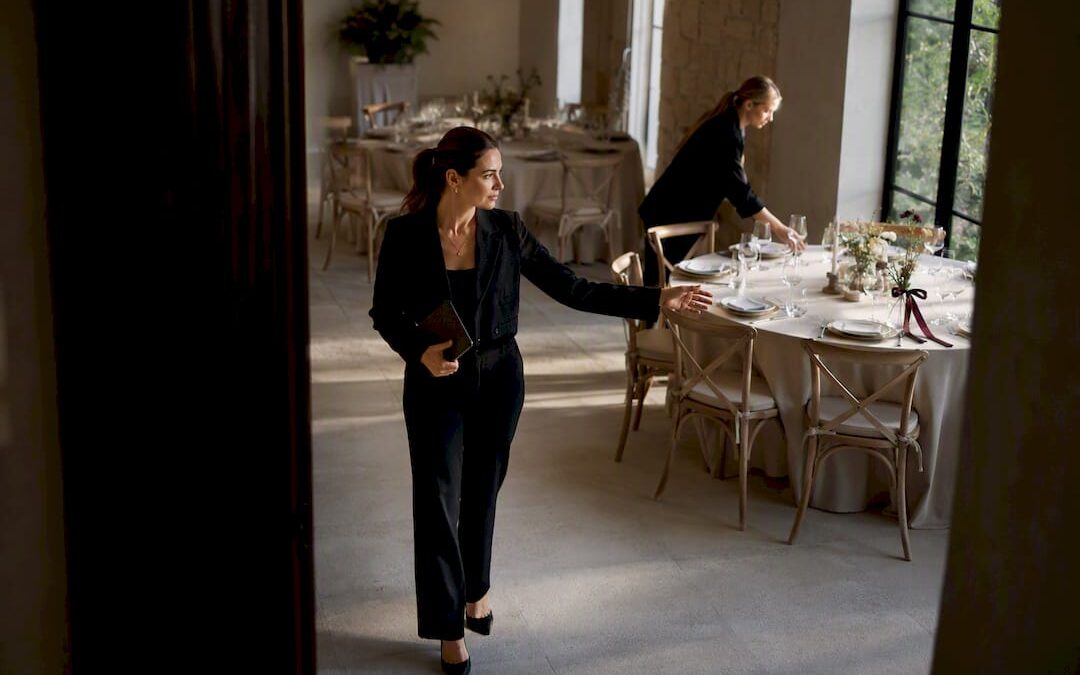
For high-net-worth clients and corporate organisers, “event coordinator job descriptions” describes the suite of service deliverables that turn a luxury brief into a flawless guest experience, not an employment listing. A well-written description names the discovery process, the supplier governance, the on-site management and the reporting a client receives, backed by project management discipline. Winelands Function builds its briefs around exactly this standard.
TL;DR:
- A detailed run sheet, vendor documentation, and post-event feedback are essential deliverables to measure a coordinator’s performance.
- Proven project management skills, calm leadership, extensive relevant portfolio, and data literacy are non-negotiable qualifications for luxury event coordinators.
- Coordinators should handle every phase from discovery to tear-down with clear milestones, contingency plans, and organized communication tools.
- Scope and complexity vary greatly between weddings, corporate launches, and bespoke events, requiring different levels of support and planning depth.
- Request specific examples, references, and proof of supplier relationships before signing, as established relationships often determine event success and priority access.
Table of Contents
- Core duties and responsibilities of a luxury event coordinator
- Skills, qualifications and experience worth requiring
- How a coordinator’s workflow runs from brief to tear-down
- Does scope change between weddings, launches and bespoke events?
- What deliverables and KPIs belong in the proposal
- Hiring checklist: what to request and ask before you sign
- How Winelands Function approaches coordinator briefs
- Ready to brief Winelands Function for your event
- Sources
Core duties and responsibilities of a luxury event coordinator
A description worth paying for reads like an operating manual, not a mission statement. It should tell you precisely what happens between signing and the final toast, and who owns each step.
The strongest luxury coordinator briefs open with discovery and vision alignment: structured conversations that translate your taste, budget and guest priorities into a working design brief. From there, the coordinator moves into supplier identification, negotiating contracts and service-level agreements that protect you if a vendor underdelivers. Budget oversight runs throughout, with milestone scheduling that flags cost creep before it becomes a crisis.
On the day, responsibilities shift to live management: overseeing load-in, directing guest flow, and resolving the small emergencies that never make it into the brochure. A full-service planner manages this sequence continuously rather than parachuting in at the last stage.
At handover, expect concrete paperwork, not a verbal debrief:
- A detailed run sheet covering every hour of the event
- Vendor reconciliations confirming what was delivered against contract
- A post-event report with guest feedback and budget variance
Pro Tip: Ask any prospective coordinator to show you a real run sheet from a past event, redacted for privacy. If they hesitate, that’s a description gap you need to close before signing.
Skills, qualifications and experience worth requiring
Vetting a coordinator on charm alone is how luxury events go wrong quietly. You need proof of capability across four areas before a deposit changes hands.
- Project management fluency. Look for someone comfortable with production scheduling, technical riders and the kind of milestone tracking that IBTM identifies as central to reliable event delivery.
- Leadership under pressure. Discretion, calm client-facing communication and the ability to direct a twenty-person crew without raising their voice.
- Portfolio depth at your scale. A coordinator who has run intimate dinners for twelve cannot be assumed capable of a four-hundred-guest product launch, and vice versa.
- Security and data literacy. Confirm familiarity with non-disclosure agreements and GDPR-aware handling of guest lists, seating charts and VIP travel details.
Experience across weddings, corporate launches and bespoke productions matters more than years in the industry. Ask for evidence, not anecdotes.
How a coordinator’s workflow runs from brief to tear-down
Luxury coordination follows a phased rhythm, and knowing the sequence helps you judge whether a proposal is realistic or optimistic.
Early planning delivers a vision document and preliminary budget. Mid-stage planning produces confirmed supplier contracts, a design mock-up and a draft run sheet. Final-stage planning locks logistics: transport, accommodation, technical rehearsals and contingency plans.
Event day itself typically unfolds over multiple days for larger productions:
- Load-in and structural build, often the day before guests arrive
- Technical rehearsals covering lighting, sound and staging cues
- Guest arrivals, managed through timed entry points and, for larger events, RFID check-ins
- Live event flow, with the coordinator monitoring timing against the run sheet minute by minute
- Break-down, usually overnight or the following morning, with full vendor sign-off
Crew apps and shared dashboards now do much of the heavy lifting here. Project management platforms centralise the guest list, the schedule and live updates, which cuts duplication and gives everyone on-site the same version of the truth. Escalation should always follow a set order: coordinator first, then a named deputy, then the client, with predefined contingency triggers for weather, supplier failure or guest incidents. Our own workflow for luxury event coordination sets out this sequence in more operational detail.
Does scope change between weddings, launches and bespoke events?
Yes, considerably, and a description that treats every event type identically is usually a warning sign.
Weddings demand heavy attention to guest experience and family liaison, often across a multi-day sequence of welcome dinners, the ceremony itself and a farewell brunch. Corporate launches shift the emphasis towards brand deliverables, sponsor obligations, media coordination and managing executives who arrive with their own agendas, a set of demands VOLO Events flags as distinct from social events. Bespoke celebrations frequently involve building an entire environment from raw space, which pulls in specialist suppliers and considerably more complex logistics.
Deciding between coordinator-only support and full-service planning comes down to how much groundwork already exists:
- If your vision, venue and vendors are locked, day-of coordination may suffice
- If you’re starting from a blank page with multiple moving parts, full-service planning is the safer route
What deliverables and KPIs belong in the proposal
A proposal without measurable commitments is a wish list. Insist on these line items before you commit budget.
- A master timeline with named owners for each milestone
- A complete vendor list with contracts and insurance certificates attached
- Floor plans and a detailed run sheet for event day
- A contact roster covering every supplier, venue manager and crew lead
- A written contingency plan for weather, power failure and late deliveries
Fee structures vary: some coordinators charge a flat project fee, others take a percentage of total event spend, and larger retainers sometimes include expense governance built in. Whichever model you choose, ask for KPI reporting on three measures: on-time delivery against the run sheet, budget variance against the original estimate, and guest satisfaction feedback collected post-event. Sustainability is increasingly part of that scorecard too, with waste diversion and local sourcing now common inclusions in premium briefs. For lead times, luxury weddings and brand-critical corporate launches generally need nine to eighteen months of runway to secure the right venues and suppliers.
Hiring checklist: what to request and ask before you sign
Before any deposit, request a small set of documents: a portfolio of comparable events, a sample run sheet, at least two references, proof of liability insurance and a sample contract you can review with your own advisor.
In the interview, push past the polished answers:
- Ask for a specific example of an on-site problem they solved without involving the client
- Ask how many suppliers they can call directly for your venue and date, since established relationships often secure priority access and better terms
- Ask who else will be on the team for your event, not just who signs the contract
Confirm NDAs, data-handling practices and VIP privacy protocols explicitly, particularly if guest lists include public figures. Red flags include vague answers about past failures, reluctance to name references, and pricing that seems detached from the scope described.
Pro Tip: If a coordinator can’t name a specific supplier relationship relevant to your venue, ask why. Reach in a supplier network often decides whether your date and venue are even available.
How Winelands Function approaches coordinator briefs
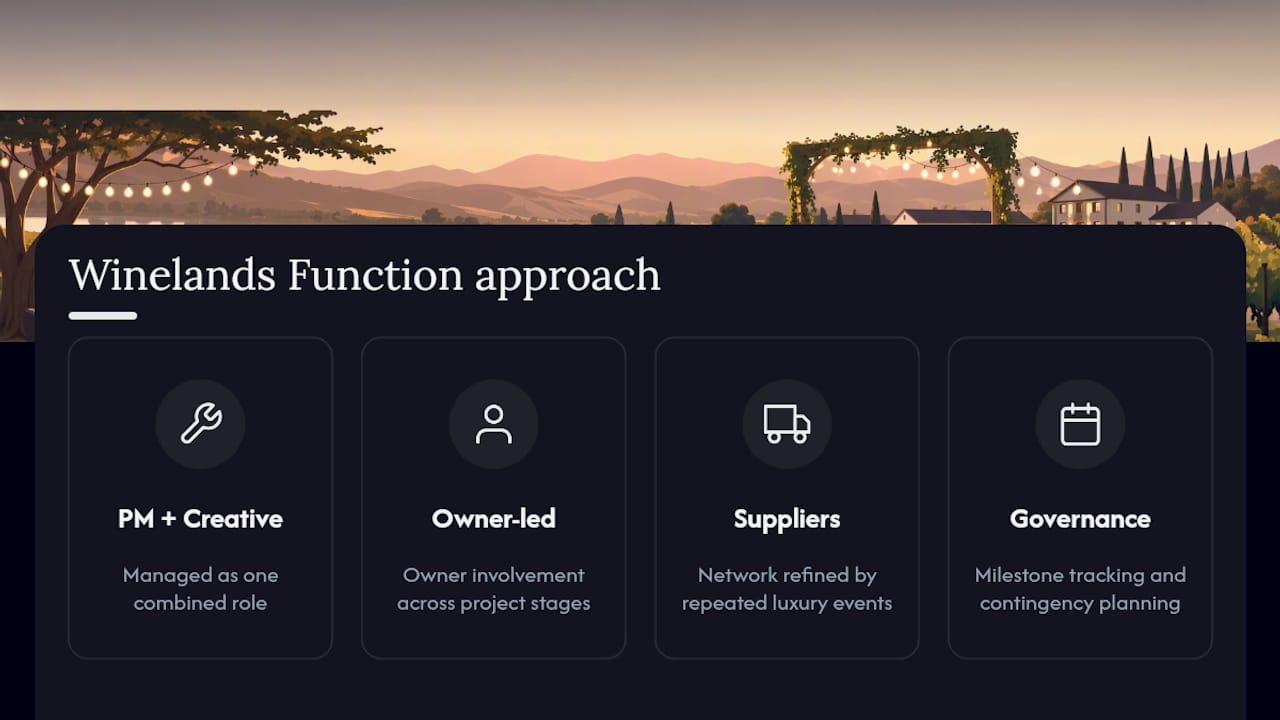
The gap between a generic coordinator listing and a genuinely luxury-capable one comes down to whether project management and creative direction are treated as separate skills or one discipline. At Winelands Function, they’re the same job: a brief is only as good as the milestone tracking, supplier governance and contingency planning behind it.
Owner-led involvement matters more than most clients expect. Continuity across discovery, supplier negotiation and event-day delivery keeps decisions consistent, rather than handed between account managers who never see the room set up. Coert has built Winelands Function’s process around this principle, drawing on structured project management and a supplier network refined through repeated luxury weddings, corporate launches and bespoke builds across Cape Town and the Western Cape. Our event planning coordinator page sets out how that translates into a client-facing proposal.
— Coert
Ready to brief Winelands Function for your event
Winelands Function offers full-service coordination for luxury weddings, corporate launches and bespoke celebrations across Cape Town and the Western Cape, covering supplier management, on-the-day delivery and bespoke production for raw-space builds. Every proposal follows the structure this article has described: a discovery brief, a named supplier list, a detailed run sheet and clear KPI reporting on budget and guest experience.
When you request a consultation, expect a written proposal within days, not a vague pitch deck. It will set out your timeline, your budget bands and a fee structure suited to your event’s complexity, whether that’s day-of coordination or full-service planning from a blank page. Explore the event management services Winelands Function offers, and get in touch to start your own proposal conversation.
Sources
- Project management for event planning | IBTM World
- What happens after you hire a wedding planner? | Reagan Events
- How to hire the right event planner | VOLO Events
- Sustainability in Food Services: 2026 Operator Guide – Wild Foodz