
TL;DR:
- True luxury lies in the invisible details of event experience, not just visible extravagance.
- Careful guest list curation, exquisite venues, and anticipatory service create memorable, exclusive celebrations in Cape Town.
Expensive does not automatically mean unforgettable. Many high-budget events leave guests underwhelmed precisely because money was spent on the visible and obvious — towering floral arrangements, elaborate lighting rigs — while the invisible architecture of the experience was neglected. Learning how to host exclusive celebrations means understanding that true luxury lives in the details: who sits next to whom, what is served at precisely what moment, and whether your staff anticipate a guest’s need before it is even expressed. This guide gives you a precise, expert-led roadmap for planning private events in Cape Town that feel genuinely rare.
Table of Contents
- Assembling the perfect guest list for exclusivity and synergy
- Selecting the right venue and vendors for a luxury Cape Town celebration
- Designing an elegant menu and flawless service for memorable luxury events
- Preparation and flawless execution: checklists, contingencies and timing
- Crafting unforgettable moments and seamless guest experiences
- Why effortless luxury is built on invisible structure and personal care
- Take the next step: expert planning for your exclusive Cape Town celebration
- Frequently asked questions
Key Takeaways
| Point | Details |
|---|---|
| Curated guest list | Limit invitations to 5-8 guests chosen for synergy to foster intimate and natural conversations. |
| Venue and vendor selection | Choose local premium venues and suppliers, booking in shoulder seasons for better availability and costs. |
| Menu and service excellence | Design menus that avoid bitterness to support positive moods, and staff generously for seamless hospitality. |
| Meticulous preparation | Use detailed checklists and early preparation to prevent day-of stress and ensure flawless execution. |
| Invisible luxury | True exclusivity arises from subtle, personalised care and invisible coordination rather than overt extravagance. |
Assembling the perfect guest list for exclusivity and synergy
A flawless celebration starts with inviting the right guests who truly connect. The size and composition of your guest list shapes every other element of the event, from table configuration to conversation energy.
Optimal intimacy sits at 5 to 8 guests, a range supported by social science as the sweet spot for natural conversation clusters without the dynamics becoming overwhelming or fragmented. Beyond that count, the room divides into competing sub-conversations, and you lose the coherent intimacy that defines exclusivity. For corporate celebrations, this principle scales: rather than one massive reception, consider breaking a larger event into curated sub-groups of 6 to 8 for the most important portions of the evening.
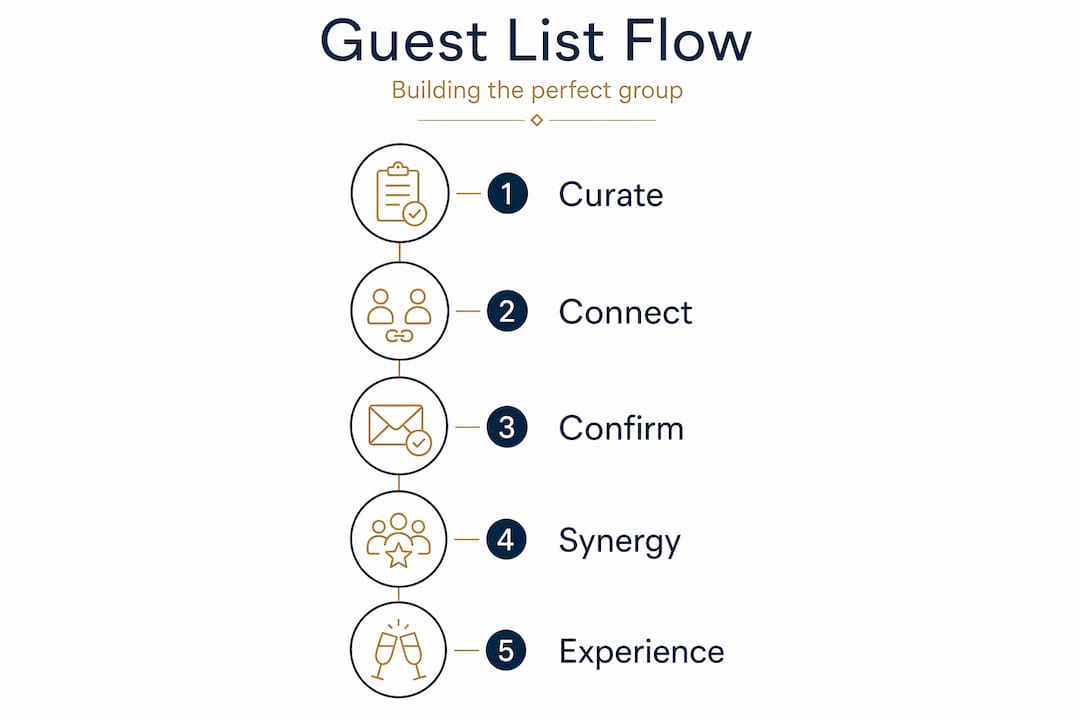
Quality of mix matters as much as count. Curating guest lists like alchemy means selecting guests for what they bring to the collective energy, not simply their individual status. The most memorable private events we see in Cape Town combine industry leaders with creative thinkers and one or two genuinely unexpected guests who shift the conversation entirely.
Your invitation itself signals the tone before a guest arrives:
- Use elegantly printed cards delivered by hand or courier, not digital invitations, for intimate dinners
- Include a no-social-media policy, worded graciously, to protect the privacy that makes the gathering feel rare
- Subtly reference one or two high-profile confirmations in personal follow-up calls to generate genuine anticipation
- Set an RSVP deadline that creates a sense of scarcity rather than open availability
Designing exclusive guest experiences begins the moment someone receives their invitation. Every touchpoint communicates whether this event is truly worth attending.
“The guest list is not a list of names. It is a cast. You are directing an experience, and the chemistry between the people in the room will determine whether the night is remembered or forgotten.”
Selecting the right venue and vendors for a luxury Cape Town celebration
With your guest list perfected, the next step is securing the ideal venue and trusted vendors.
Cape Town is exceptionally well-positioned for exclusive celebrations. World-class venues range from Winelands estates with working vineyards to intimate clifftop properties with Atlantic Ocean views, each offering a distinct character that shapes the entire guest experience. The venue is not merely a backdrop. It is a participant in the story you are telling.
Integrating local culture into your celebration adds a layer of authenticity that money alone cannot manufacture. A private tasting of small-batch Stellenbosch wines, a live performance by a Cape Town jazz musician, or a menu built around indigenous fynbos ingredients all create moments that guests cannot replicate elsewhere. Bespoke luxury celebrations draw deeply from the character of their location rather than importing a generic luxury aesthetic.
When it comes to vendor selection, consider these priorities:
- Vet caterers, florists, and sound engineers who have worked in your chosen venue before
- Align seasonal timing with choosing luxury venues to optimise both atmosphere and budget
- Request site visits with your full vendor team, not just the venue manager
- Confirm all supplier agreements in writing at least eight weeks before the event
Venue and vendor planning at a glance
| Element | What to prioritise | Timing |
|---|---|---|
| Venue | Character, exclusivity, natural light | 3 to 6 months ahead |
| Caterer | Experience with intimate luxury events | 2 to 4 months ahead |
| Florist | Restraint and sophistication over volume | 6 to 8 weeks ahead |
| AV and lighting | Discretion and quality, not spectacle | 6 to 8 weeks ahead |
| Staffing agency | Track record with high-profile clients | 4 to 6 weeks ahead |
One consideration that many planners overlook: shoulder seasons between April and June and August and October not only reduce venue hire rates but also mean your preferred suppliers are more available and less stretched. The personalised event planning guidance approach we recommend always accounts for seasonal dynamics when locking in dates.
Pro Tip: Never book a venue you have only seen in photographs. The quality of natural sound, the layout of adjacent rooms, and the actual sight lines from the dining position all matter enormously and are impossible to judge remotely.
Designing an elegant menu and flawless service for memorable luxury events
With venue and guests arranged, attention to food and service elevates your event’s exclusivity.
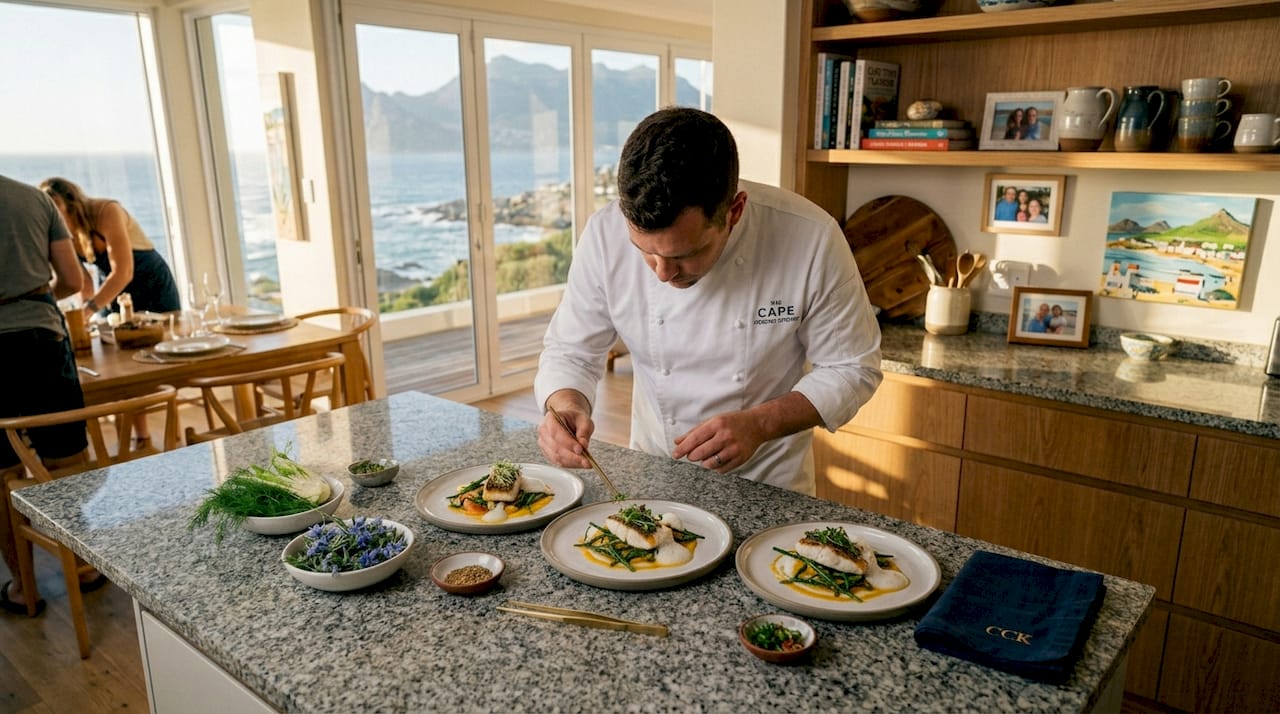
Food choice has a direct effect on social behaviour. Bitter foods increase hostility in guests, particularly supertasters, people genetically wired to experience flavour with heightened intensity. When planning your menu, build around umami-rich, mildly sweet, and balanced flavour profiles that put people at ease. This is not speculation. It is applied food science used by the world’s best event designers.
Smaller, curated menus perform better than extensive ones. A five-course menu with three outstanding dishes is more memorable than a twelve-choice buffet where nothing stands out. Conversation flows when guests are not overwhelmed by decision fatigue.
Standard events versus luxury events: service approach
| Consideration | Standard event | Luxury event |
|---|---|---|
| Menu length | Extensive choice | Curated and concise |
| Staffing ratio | 1 server per 20 guests | 1 server per 10 guests for seated dinners |
| Bartender ratio | 1 per 75 guests | 1 per 50 for standing receptions |
| Service style | Functional, reactive | Anticipatory and discreet |
| Briefing | Basic instructions | Full timeline and VIP notes |
The staffing ratios above are not aspirational. They are the floor, not the ceiling. High-level hospitality means your service team feels like an extension of the host’s inner circle, attentive without hovering, invisible until needed. The guest service experience is often what separates a five-star event from a merely expensive one.
Key service principles to communicate in your staff briefing:
- Every server should know the names and preferences of all VIP guests
- Glasses should never reach below one-third full before being refreshed
- Cleared plates must be removed from the right side, in unison if possible
- Staff must never form clusters or hold personal conversations in sight of guests
Pro Tip: Brief your bar team separately from your floor team. Their roles, guest interactions, and timing cues differ enough that a combined briefing often means neither group absorbs the information fully. For further elevating guest experience, dedicated briefing sessions are non-negotiable.
Preparation and flawless execution: checklists, contingencies and timing
Preparation and precise coordination turn your plan into a seamless celebration.
Twenty-four hours before your event opens, a 50-point onsite checklist covering venue readiness, AV tests, staff briefings, and contingency plans eliminates the assumptions that cause last-minute chaos. The goal is to walk into the event day having already solved every problem you can anticipate, leaving your energy entirely for hosting.
Your layered run-of-show timeline should identify not just what happens when, but who is responsible for each transition and what the contingency is if it does not happen on time. For example: if the first course is delayed by 15 minutes, what does the floor manager do? What does the host do? Having those answers prepared means a delay becomes a non-event.
A reliable pre-event sequence:
- Finalise all vendor and staffing confirmations in writing two weeks before the event
- Conduct a full venue walkthrough with all lead vendors five days out
- Complete all shopping and ingredient sourcing two to three days in advance
- Send a detailed staff briefing document 48 hours before the event
- Run a full team walkthrough of the space the morning of the event
- Allow one hour of quiet time before guests arrive for a final check across all elements
Shopping 3 days to 2 weeks in advance is a practice that transforms the hosting experience from frantic to calm. When every element is sourced and staged ahead of time, the host becomes a gracious presence rather than a harried coordinator.
Pro Tip: Build a 20-minute buffer into every major transition on your run-of-show. Not because you expect delays, but because the best moments in luxury events tend to be unhurried. That buffer protects the pace. For event coordination best practices and step-by-step event planning, time buffers are built into every timeline we create.
Crafting unforgettable moments and seamless guest experiences
Beyond logistics, memorable touches elevate your event to true exclusivity.
The events guests remember longest are not the most expensive ones. They are the ones that surprised them. Planning 2 to 3 unexpected moments into your event arc, such as a tableside surprise course, a private pre-dinner viewing of something rare, or a handwritten personal note at each guest’s place, creates emotional peaks that no amount of standard decor can replicate.
Personalisation at this level is not about monogrammed napkins. It is about a guest feeling that someone thought specifically about them. If you know a guest collects first-edition books, a single rare volume at their seat communicates more luxury than a centrepiece worth ten times the cost. The detail is the message.
What matters most in crafting unforgettable moments:
- Sequencing: Build the evening with intention, from arrival experience to farewell, so guests feel a narrative arc
- Sensory detail: Consider the sound level, the scent of the room, the temperature, and the lighting colour at each stage of the evening
- Genuine warmth: Guests recognise the difference between trained hospitality and genuine care; the best events deliver both
- The exit moment: Seamless details at departure, whether a curated gift, a personalised handwritten card, or simply the host walking each guest out personally, leave the final impression
For hosting bespoke celebrations and customising guest experience, these personalised moments are what convert a well-executed event into a genuinely extraordinary one.
Pro Tip: Brief your photographer or videographer on the surprise moments in advance so they are positioned correctly without ruining the element of surprise. Capturing authentic reactions requires preparation, not luck.
Why effortless luxury is built on invisible structure and personal care
Here is the part of luxury event planning that most guides will not say plainly: the more effortless an event appears to guests, the more work is hidden beneath the surface. The two things are directly proportional.
Truly exclusive celebrations are not built on spectacle. They are built on a framework so thorough and so well-rehearsed that no guest ever catches a glimpse of it. Luxury events succeed through high-level hospitality that makes a specific group of people feel genuinely looked after, not like spectators at a performance.
The assumption that bigger equals better is one of the most damaging beliefs in high-end event planning. We have seen intimate dinners for eight at a Franschhoek estate leave stronger impressions on guests than lavish galas for five hundred. The reason is almost always the same: the small event was personal, and the large one was impressive but impersonal.
Invisible logistics and considered, sustainable practices often define a luxury experience more powerfully than visible extravagance. A guest should not notice that the room temperature was carefully monitored, that the music volume was calibrated to conversation level, or that their dietary preference was quietly communicated to the kitchen the moment they arrived. They simply feel comfortable, cared for, and entirely at ease.
This is the mindset shift that separates truly exclusive celebrations from expensive ones. Understanding what makes an event luxury is less about what you add and more about what you refine. Budget is the starting point, not the result.
Take the next step: expert planning for your exclusive Cape Town celebration
Knowing how to host exclusive celebrations is one thing. Having the right team to execute every element with precision and care is another entirely.
At Winelands Function, we specialise in bespoke and luxury celebrations across Cape Town and the Winelands, from intimate private dinners to high-profile corporate launches. Our approach is built around your vision, not a template. We manage every stage of the process, from initial concept through to final coordination on the day, so that you can be fully present as a host rather than a manager. Whether you are in the early stages of idea development or ready to begin booking, our luxury event planning coordinator team is available to guide you through each decision. Explore our event planning process and take the first step towards a celebration that your guests will genuinely remember.
Frequently asked questions
What is the ideal number of guests for an exclusive celebration?
For exclusivity and natural conversation, aim for 5 to 8 guests, a range that allows for manageable group dynamics and genuine intimacy without the group fracturing into disconnected sub-conversations.
How do I ensure hospitality staff provide seamless luxury service?
Plan for at least one server per ten guests at seated dinners and brief your full team thoroughly on the run-of-show timeline, VIP guest details, and specific preferences to enable attentive, discreet service throughout.
What food choices support a pleasant mood at celebrations?
Avoid bitter foods as they can increase feelings of hostility in guests, particularly among supertasters; instead, build your menu around balanced, umami-rich, and mildly sweet flavour profiles that support relaxed, positive social interaction.
When is the best time to book venues and suppliers in Cape Town for luxury events?
Booking during shoulder seasons between April and June or August to October reduces venue hire rates and significantly improves the availability of preferred suppliers compared to peak summer and holiday periods.
How far in advance should I start preparing for a luxury event to avoid stress?
Begin detailed preparation and sourcing 3 days to 2 weeks before the event to ensure every element is staged calmly, giving you the mental space to focus on hosting rather than last-minute problem-solving.
Recommended
- How to Host Bespoke Celebration for Elegant Occasions – Winelands Function – For Every Occasion, Your Celebration
- Why choose Cape Town events for luxury celebrations – Winelands Function – For Every Occasion, Your Celebration
- How to create exclusive guest experiences at luxury events – Winelands Function – For Every Occasion, Your Celebration
- Expert guide to corporate celebration planning in Cape Town – Winelands Function – For Every Occasion, Your Celebration