
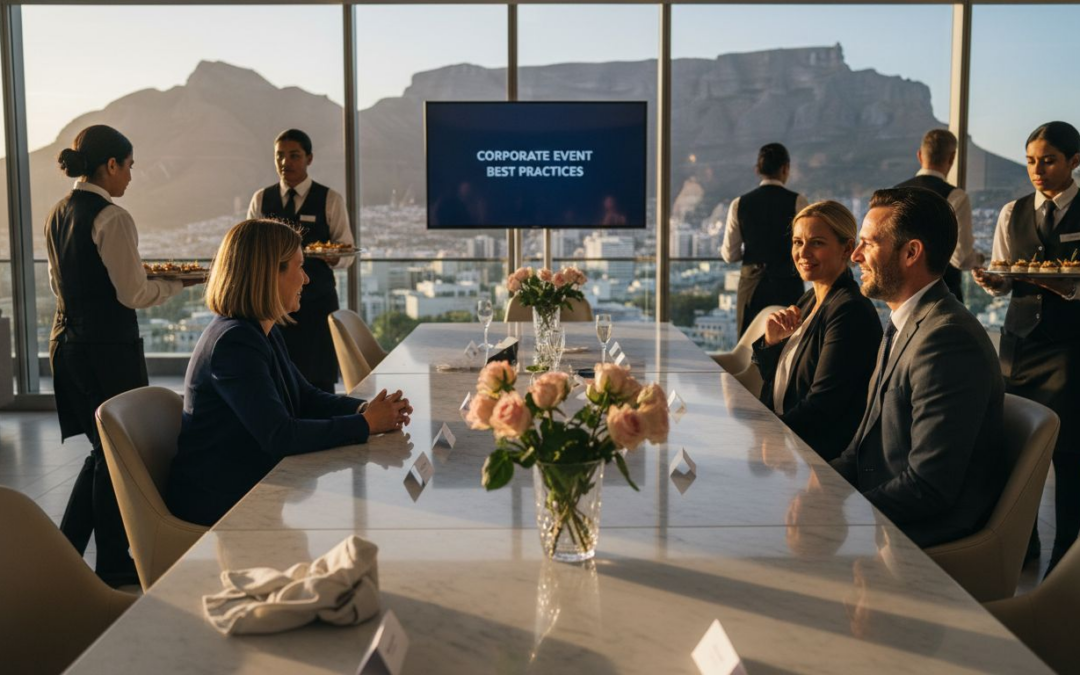
Many companies in Cape Town assume that a large budget alone guarantees a luxury event, yet true sophistication relies on much more than visible opulence. In the world of luxury corporate events, authentic experience design creates moments guests genuinely remember. Understanding what actually defines luxury and clearing up common misconceptions will give you sharper control over the atmosphere you create, ensuring every gathering stands out for all the right reasons.
Table of Contents
- Defining Luxury Corporate Events And Misconceptions
- Tailored Event Formats And Signature Experiences
- Essential Planning Steps For Flawless Execution
- Managing Risks, Compliance, And Guest Satisfaction
Key Takeaways
| Point | Details |
|---|---|
| Understanding Luxury | Luxury corporate events are defined by authentic experience design rather than mere expense, focusing on creating emotional connections. |
| Misconceptions to Avoid | Common myths include equating luxury with opulence or high costs; true luxury centres on personalised, meaningful experiences. |
| Tailored Experiences | Break from generic formats by incorporating local culture and personalised elements that resonate with attendees. |
| Effective Planning | A systematic approach to planning, including risk management and clear objectives, is essential for flawless execution and guest satisfaction. |
Defining Luxury Corporate Events and Misconceptions
Luxury corporate events mean different things to different people, and that’s precisely where confusion starts. Many organisations conflate expense with luxury, assuming that spending more automatically delivers better results. This misunderstanding leads to poorly designed gatherings that feel expensive but fail to create meaningful experiences.
True luxury in corporate settings involves far more than budget allocation. It centres on authentic experience design that speaks to attendees on sensory and emotional levels. Semiotics in luxury event design reveals that successful luxury events evoke feeling and meaning, not merely display wealth through traditional symbols.
What Actually Defines Luxury Corporate Events
Luxury corporate events share specific characteristics that distinguish them from standard business gatherings:
- Exclusivity and selectivity in guest lists and access
- Personalisation tailored to attendee preferences and expectations
- Exceptional quality across all elements—food, venue, service, entertainment
- Sensory richness that creates memorable moments through sight, sound, taste, and atmosphere
- Seamless execution where logistics remain invisible to guests
These elements combine to create what attendees perceive as luxury—not through price tags, but through thoughtful curation and attention to detail.
Common Misconceptions About Luxury Events
The luxury industry has long struggled with loose definitions. Luxury’s meaning varies significantly across contexts, shaped by culture, personal values, and individual expectations. What feels luxurious to a Cape Town executive differs from perceptions in Johannesburg or abroad.
Here are frequent misconceptions that derail corporate event planning:
Myth One: Luxury equals opulence and excess. Reality: Restraint and thoughtfulness often signal luxury more powerfully than over-decoration.
Myth Two: High price guarantees luxury experience. Reality: Money ensures certain resources, but authentic luxury requires strategic design and execution.
Myth Three: All attendees share the same luxury expectations. Reality: Luxury is deeply personal and culturally influenced. Your CFO may value quiet sophistication whilst your marketing director seeks vibrant energy.
Myth Four: Luxury focuses on the event itself. Reality: Premium experiences centre entirely on what attendees feel and remember.
Luxury corporate events succeed when they evoke authenticity and meaning, not when they simply cost more or look more extravagant.
For organisations in Cape Town’s competitive business landscape, this distinction matters enormously. When you design with genuine attention to your specific audience’s values—whether that’s innovation, relationship-building, or creative inspiration—you create luxury that resonates.
To clarify how luxury event misconceptions impact planning, here is a side-by-side comparison:
| Misconception | Typical Result | True Luxury Approach |
|---|---|---|
| Expense equals quality | Overly costly, uninspired | Thoughtful, meaningful design |
| Opulence is luxury | Excessive décor, shallow vibe | Subtlety, emotional connection |
| Uniform expectations | Generic experience | Personalised guest engagement |
| Event is main focus | Venue-centric, forgettable | Attendee memories prioritised |
Pro tip: _Start by asking attendees directly what luxury means to them before your next corporate event. Their answers will guide far better decisions than any industry checklist.
Tailored Event Formats and Signature Experiences
Generic corporate events blend together in attendees’ minds. The gala ballroom with identical centrepieces, the standard networking reception, the predictable awards dinner—these formats have lost their power to inspire or connect. Luxury corporate events succeed when they break from convention and create experiences tailored to your specific audience and venue.
The shift towards customised luxury experiences reflects a fundamental change in how organisations approach corporate gatherings. Rather than applying a template to every event, successful planners now design formats around attendee expectations, local context, and meaningful outcomes.
Building Signature Experiences
A signature experience distinguishes your event through distinctive elements guests cannot find elsewhere. These are not add-ons—they form the structural core of your event design.
Signature experiences typically include:
- Local cultural integration that celebrates Cape Town’s unique heritage and character
- Immersive sensory moments orchestrated throughout the gathering
- Personalised touchpoints that acknowledge individual attendees rather than crowds
- Innovative formats that replace traditional structures with interactive engagement
- Authentic storytelling woven through décor, programming, and service
When you anchor events in genuine local culture and attendee-centred design, luxury becomes memorable rather than merely expensive.
Formats Beyond the Standard Reception
Luxury corporate events increasingly celebrate local traditions and authenticity rather than importing generic formats. This means moving away from ballroom setups into spaces and structures that reflect your brand and location.
Consider these tailored format alternatives:
- Intimate dinner series across multiple small venues rather than one grand hall
- Experiential workshops combining learning, networking, and hands-on participation
- Curated venue tours that transform the space itself into the event narrative
- Progressive events where guests move through different environments and experiences
- Collaborative creation sessions where attendees contribute to the event’s evolution
Each format can be customised further based on your organisation’s values and objectives.
Signature experiences thrive when they reflect your organisation’s character and your attendees’ genuine interests, not industry trends.
For Cape Town-based organisations, this might mean drawing on the region’s wine heritage, natural landscapes, or creative community. The specificity matters enormously—it transforms an event from a corporate obligation into something guests genuinely anticipate.
Pro tip: _Interview your event stakeholders directly about their ideal experience before designing formats. Their responses will reveal opportunities for signature elements far more valuable than industry checklists.
Essential Planning Steps for Flawless Execution
Luxury corporate events demand precision at every stage. A single miscommunication with vendors, a forgotten detail in the timeline, or unclear stakeholder expectations can unravel months of planning. Flawless execution requires a systematic approach that anticipates problems before they arise.
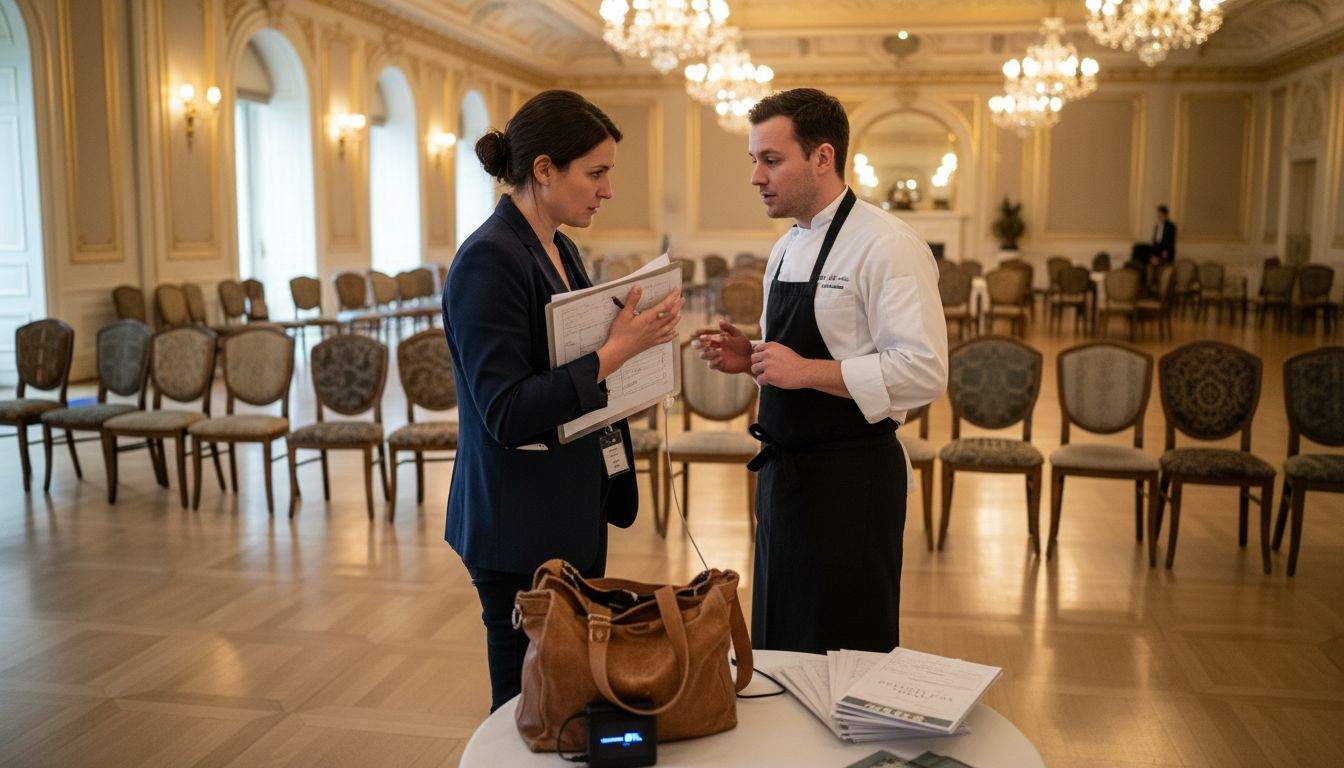
Successful event planners follow structured planning frameworks that emphasise clear objectives, detailed logistics coordination, and contingency planning. This methodical approach transforms potential chaos into seamless experiences.
The Planning Framework
Start by establishing your event’s core purpose before any other decisions. This foundation guides every subsequent choice about format, venue, budget, and messaging.
Your planning framework should address:
- Event objectives defined in measurable outcomes (relationship-building, innovation, recognition, celebration)
- Target audience profiled by role, preferences, and expectations
- Budget allocation with realistic costings and contingency reserves
- Timeline with critical milestones and decision deadlines
- Stakeholder alignment ensuring leadership and departments understand the vision
- Success metrics for evaluating outcomes post-event
This clarity prevents scope creep and keeps teams aligned throughout planning.
Vendor Coordination and Logistics
Luxury events involve numerous moving parts: catering, design, entertainment, logistics, technology, and more. Each requires a dedicated lead responsible for delivering their component flawlessly.
Establish vendor relationships through:
- Clear written briefs outlining your brand standards, event tone, and non-negotiable requirements
- Regular communication protocols with scheduled check-ins at key planning stages
- Detailed specifications covering every element from menu items to lighting colour temperatures
- Contingency plans for each critical component if primary vendors fail
- Walkthrough schedules allowing vendors to experience the venue and understand spatial constraints
- Day-of-event briefings where all teams review timings, procedures, and their specific responsibilities
When vendors understand the broader vision—not just their isolated tasks—they make better decisions independently.
Flawless execution happens when every team member understands how their role contributes to the overall attendee experience.
Communication breakdowns cause most luxury event mishaps. Create a centralised communication hub (shared document, project management platform, or regular meetings) where all stakeholders access updated information. This prevents conflicting instructions and ensures everyone works from the same timeline.
Pro tip: _Schedule a full venue walkthrough with your core team three weeks before the event, with all key vendors present. This single session resolves spatial questions and coordination issues far more efficiently than email chains.
Managing Risks, Compliance, and Guest Satisfaction
Luxury corporate events attract scrutiny. Your guests have high expectations, regulatory bodies monitor compliance, and reputational stakes run deep. A single incident—whether a safety issue, service failure, or regulatory breach—can damage your organisation’s standing for months.
Comprehensive risk assessment and compliance strategies form the foundation of events that run smoothly whilst protecting attendees and your brand. This means identifying potential problems before they materialise and building safeguards throughout your planning.
Risk Identification and Mitigation
Effective risk management starts with honest conversation about what could go wrong. Rather than assuming everything will work perfectly, successful event planners conduct thorough risk assessments identifying potential disruptions across every area.
Key risk categories to evaluate:
- Health and safety (medical emergencies, allergies, accessibility, facility hazards)
- Vendor failures (catering delays, entertainment cancellations, equipment breakdowns)
- Weather and logistics (venue access, guest transport, outdoor element disruptions)
- Reputational risks (guest conduct, social media exposure, brand misalignment)
- Technology failures (audio-visual breakdowns, communication system loss, registration issues)
- Regulatory compliance (liquor licensing, food safety, data protection, accessibility requirements)
Once identified, develop mitigation strategies and backup plans for each critical risk. This preparation transforms potential crises into managed situations.
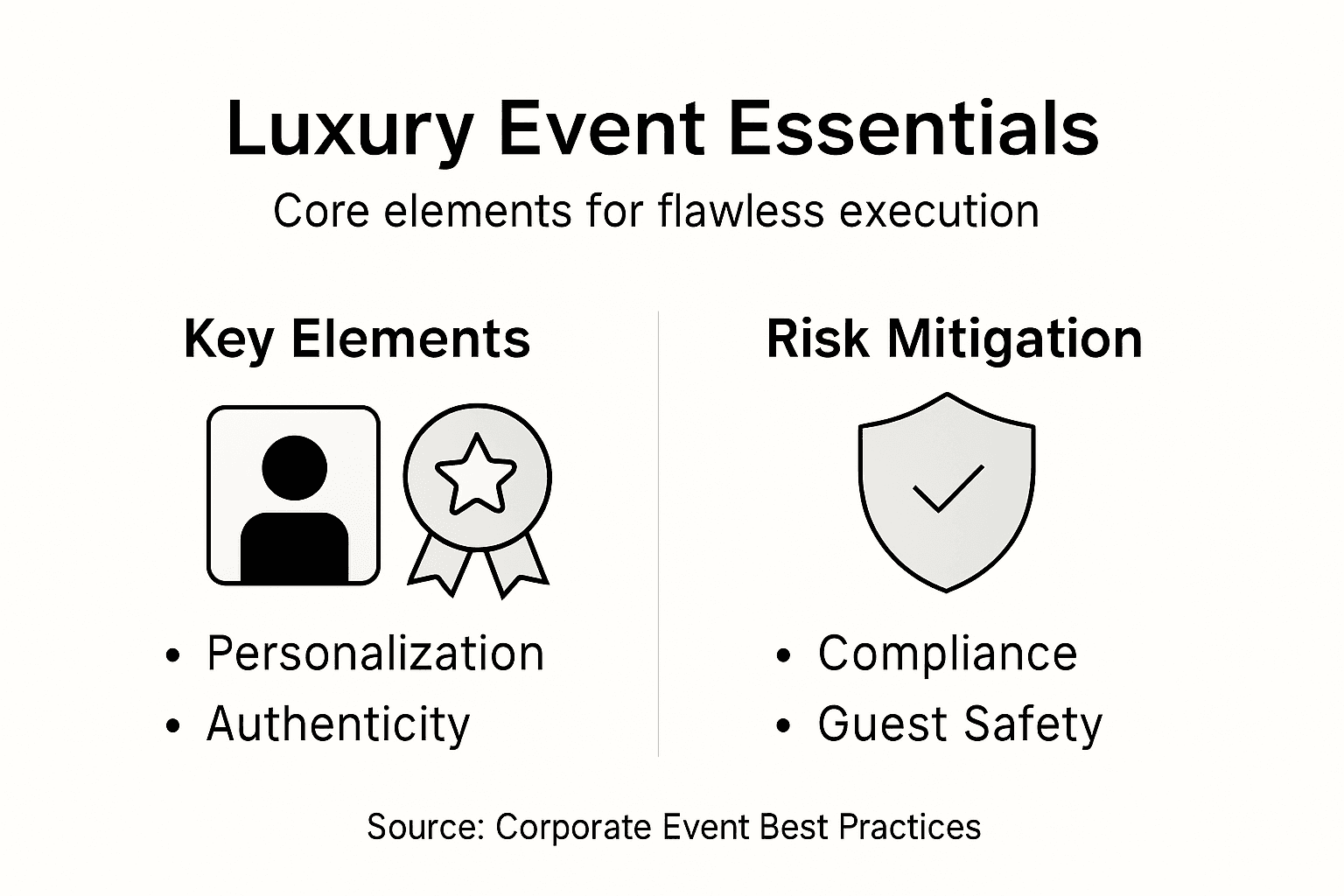
Here’s an at-a-glance summary of risk categories and sample mitigation actions for corporate luxury events:
| Risk Category | Example Issue | Sample Mitigation Strategy |
|---|---|---|
| Health & Safety | Allergic reaction | Pre-event surveys, on-site medical team |
| Vendor Reliability | Catering late arrival | Backup suppliers, clear contracts |
| Weather/Logistics | Outdoor event rain | Indoor alternative, transport planning |
| Technology Failure | AV system breakdown | Redundant systems, technical rehearsal |
| Compliance | Licensing breach | Documented procedures, legal review |
Guest Satisfaction Through Proactive Engagement
Satisfied guests become brand advocates. Dissatisfied ones become critics with amplified voices. Integrated approaches to guest engagement reduce risks whilst enhancing the overall experience by keeping attendees informed, heard, and valued.
Implement these satisfaction strategies:
- Pre-event communication outlining logistics, expectations, and what guests will experience
- On-site feedback mechanisms (QR code surveys, suggestion cards, staff conversations) capturing real-time insights
- Accessibility accommodations addressing mobility, dietary, hearing, and visual requirements without guests needing to ask
- Service recovery protocols empowering staff to resolve minor complaints immediately
- Post-event follow-up thanking attendees and gathering detailed feedback
When guests feel their needs matter, they forgive minor imperfections and remain satisfied.
Anticipating guest needs before problems arise creates loyalty far more effectively than solving complaints after the fact.
Compliance requirements vary by event type and location. In Cape Town, liquor licensing, food safety standards, and accessibility laws all apply. Document all compliance decisions and maintain records proving adherence.
Pro tip: _Create a risk register—a simple spreadsheet listing every identified risk, its likelihood, impact, and mitigation strategy. Review this document monthly during planning and before the event itself.
Elevate Your Luxury Corporate Event with Expert Planning
The article highlights the critical challenges in creating true luxury corporate events such as authentic experience design, personalised engagement, flawless execution and risk management. If you want to move beyond misconceptions like equating opulence with luxury and instead craft events that resonate deeply with your attendees’ values and expectations, expert guidance is essential. Winelands Function specialises in bringing these sophisticated, tailored experiences to life in Cape Town through meticulous attention to detail and creative, culturally relevant event formats.
Discover how to transform every element from sensory richness to vendor coordination into seamless luxury. Whether you aim to impress executives with bespoke signature experiences or ensure every guest feels valued and cared for, our team understands the importance of authentic storytelling and flawless delivery. Learn more about our approach in creating truly memorable events by visiting Winelands Function.
Ready to redefine what luxury means for your next corporate gathering Take the next step with Winelands Function that specialises in high-end corporate event planning in Cape Town. Let us help you design a personalised event that captivates your audience while ensuring impeccable planning and risk management. Contact us today to begin crafting your signature luxury experience.
Frequently Asked Questions
What defines a luxury corporate event?
Luxury corporate events are characterised by exclusivity, personalisation, exceptional quality, sensory richness, and seamless execution. These elements focus on creating meaningful experiences rather than simply reflecting high costs.
How can I personalise a luxury corporate event?
Personalisation can be achieved by tailoring the experience to attendee preferences, offering customised touchpoints, integrating local culture, and ensuring the event format resonates with the specific audience’s expectations and values.
What are common misconceptions about luxury corporate events?
Common misconceptions include the belief that luxury equals opulence, that high cost guarantees a luxury experience, that all attendees share the same luxury expectations, and that the focus should be solely on the event rather than on attendee experiences and memories.
What steps should I take for flawless execution of a luxury corporate event?
Flawless execution involves establishing clear event objectives, aligning stakeholders, coordinating vendors meticulously, maintaining open communication, and preparing comprehensive risk management strategies to address potential issues proactively.
Recommended
- How to Elevate Guest Experience for Luxury Events Easily – Winelands Function – For Every Occasion, Your Celebration
- Corporate Event Management: Elevating Brand Experiences – Winelands Function – For Every Occasion, Your Celebration
- Guest Service Experience: Elevating Luxury Events – Winelands Function – For Every Occasion, Your Celebration
- Corporate Events 2025: Elevating Luxury Experiences Globally – Winelands Function – For Every Occasion, Your Celebration