
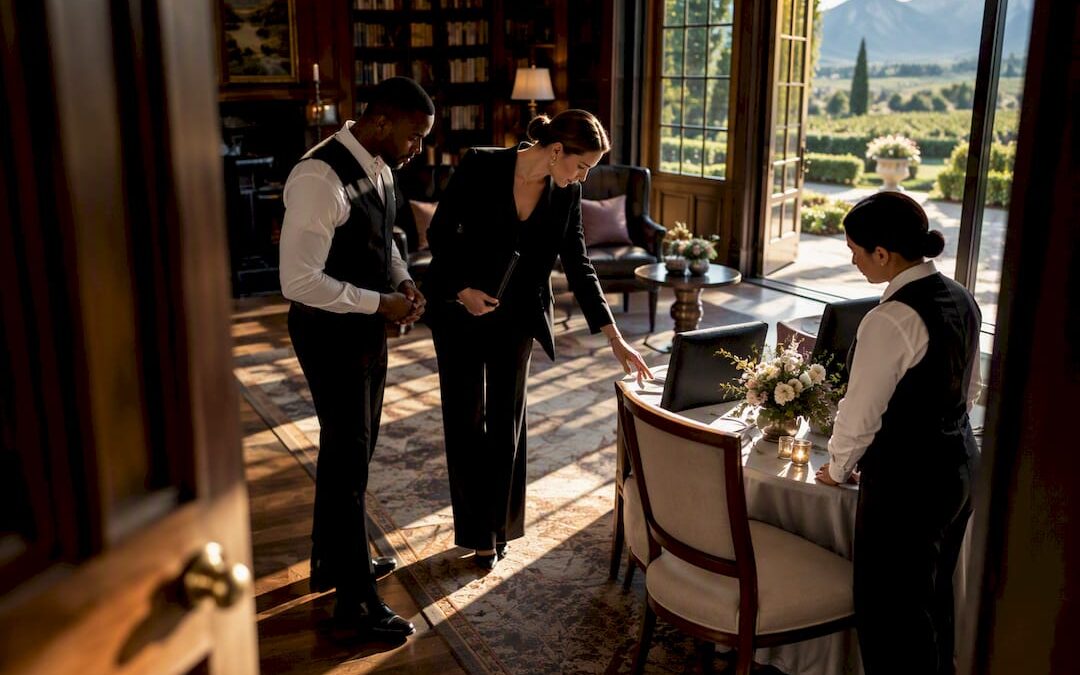
A practical wedding planner, in the luxury sense, is a full-service professional who takes over the creative, logistical, and hospitality work of your wedding so you can be a guest at your own celebration. A luxury wedding planner builds this experience around three roles in one: creative director, project manager, and hospitality lead. Clients consistently describe the result as the first event in years they attended without a clipboard in hand.
TL;DR:
- Budget allocation should prioritize venue, hospitality, and design, as these impact guest experience most and yield perceived luxury.
- Choosing a planner requires reviewing complete weddings, verifying references, and understanding their vendor network to ensure reliability.
- Full-service planners usually start 12 to 18 months before the wedding and cover every phase from concept to day-of management with clear milestones.
- Strong vendor relationships and detailed contracts with contingency plans are essential for avoiding last-minute crises and ensuring smooth execution.
- Technology tools like budget trackers and run sheets support organization, but judgment and personal priorities ultimately shape the event’s success.
Table of Contents
- What does a practical wedding planner actually do?
- How much does a luxury wedding planner cost?
- How do you choose and interview a luxury wedding planner?
- What happens across the planning timeline?
- Why does a planner’s vendor network matter so much?
- How does a practical wedding planner differ from a luxury full-service planner?
- What tools keep a full-service planning process organised?
- What challenges come up most often, and how are they solved?
- How can you budget effectively with a full-service planner?
- How do you customise planning around your priorities?
- A planner’s perspective on full-service value
- How Winelands Function delivers full-service planning
- Sources
- FAQ
What does a practical wedding planner actually do?
A luxury wedding planner manages everything from the first budget spreadsheet to the final vendor payment, and the scope runs far wider than most couples expect before they start interviewing. This is not a single job title but a rotation of disciplines, switching between financial oversight, design direction, and operational command depending on the week.
The core services generally fall into three groups:
- Budget and procurement: developing a working budget, tracking spend against it, scouting venues, and negotiating vendor contracts on your behalf.
- Design and styling: setting the creative direction, sourcing bespoke elements, and coordinating florists, decor teams, and lighting designers into one cohesive look.
- Logistics and delivery: managing staffing, transport, rehearsals, and the minute-by-minute control that keeps the day itself running without visible effort.
A detailed wedding planner services list shows how these groups overlap in practice. A venue decision, for instance, shapes catering logistics, staffing numbers, and even the styling budget in one move.
How much does a luxury wedding planner cost?
Fee structures in this tier tend to follow one of three patterns, and understanding them upfront saves awkward renegotiation later. Many planners charge a percentage of the total wedding budget, commonly a percentage of the overall wedding budget, while others prefer a flat fee agreed at the outset. A hybrid model, blending a base fee with a smaller percentage on top, has become increasingly common for events with unpredictable vendor spend.
Pro Tip: Ask whether the quoted percentage applies to the full budget or only the portion the planner directly manages. Some contracts exclude venue deposits or existing vendor relationships from the calculation, which changes the real cost significantly.
Beyond the headline fee, several items are usually billed separately:
- Staffing for the event day, including additional coordinators for large guest counts.
- Travel and accommodation for destination weddings or multi-venue events.
- Rush fees for compressed timelines under six months.
- Administrative costs and pass-through billing from third-party vendors.
Top planners will itemise these costs upfront rather than folding them into a vague estimate, which is one of the clearest signs you are dealing with a genuinely full-service operation rather than a coordinator stretching their remit.
Where should the spend actually go? Industry experience points consistently to venue, hospitality, and design as the three areas guests notice most. A couple with a fixed budget gets more perceived luxury from an exceptional venue and a well-fed, well-hosted guest list than from marginal upgrades to items nobody but the couple will ever examine closely. Our wedding budgeting guide walks through this allocation logic in more depth.
How do you choose and interview a luxury wedding planner?
Hiring the wrong planner is an expensive mistake to unwind midway through the process, so the interview stage deserves real rigour. Start with the portfolio.
- Review full-event portfolios, not just highlight reels. Ask to see three complete weddings from concept through execution.
- Request references from past clients, ideally ones with a similar guest count or venue type to yours.
- Check for editorial features. Portfolio strength and publication credits are a reliable trust signal at this tier.
- Ask about capacity. How many events will they run in your month?
- Ask how they communicate. Weekly calls, a shared portal, or reactive email only?
- Ask about their vendor network and whether relationships are exclusive or transactional.
- Ask for a contingency example. How did they handle a vendor cancellation or weather disruption previously?
- Ask exactly what is and is not included in the quoted fee.
- Ask who attends on the day and what their specific role is.
- Ask to see a sample run sheet so you understand how the day itself will actually be managed.
Once you shortlist a planner, insist the contract specifies scope, deliverables, and a clear payment schedule tied to milestones rather than dates alone. It should also name insurance coverage, cancellation terms, and force majeure provisions explicitly. Vague contracts are the single biggest source of disputes in this industry, and a planner confident in their process will not resist detailed terms.
What happens across the planning timeline?
Full-service planners are typically engaged 12 to 18 months before the wedding date, and that runway exists for a reason: top venues and vendors book far in advance, and multi-day events need lead time to coordinate properly.
The milestones generally run in this order:
- Initial briefing (month 1): vision, budget, guest count, and non-negotiables are established.
- Concept sign-off (months 2 to 3): design direction, venue shortlist, and initial vendor recommendations.
- Vendor confirmations (months 4 to 9): contracts signed, deposits paid, styling details finalised.
- Final logistics (months 10 to 12): run sheets built, staffing confirmed, rehearsals scheduled.
Throughout, you should receive a live budget tracker, a vendor matrix showing contact details and contract status, and increasingly detailed run sheets as the date approaches. Our step-by-step planning checklist mirrors this same cadence.
On the day itself, a run sheet such as a “Ready 4 PM” version lists exact handovers. Typical entries include hair and make-up completion by 12:30 PM, florals installed by 2:00 PM, and the bridal party briefed and ready by 4:00 PM sharp, with named staff responsible for each checkpoint.
Why does a planner’s vendor network matter so much?
Vendor relationships built over years, not months, are what separate a genuinely full-service planner from someone simply forwarding a list of contacts. Planners who maintain curated vendor lists reduce your risk considerably: reliable suppliers show up, deliver what was agreed, and rarely cause the last-minute crises that plague weddings booked independently.
These relationships also unlock access. Top florists, photographers, and caterers routinely prioritise bookings for planners who bring them repeat business, and some offer bespoke services unavailable to a couple calling cold. Quality assurance runs on several tracks at once:
- Site visits ahead of the event to confirm logistics match the contract.
- Detailed contracts and service level agreements with every major vendor.
- Rehearsals for complex elements, particularly staging and catering timing.
- Direct day-of oversight, so any deviation is caught and corrected in real time.
For destination weddings, guest travel logistics add another layer entirely. A group trip planning toolkit can help coordinate the practical side of getting a large guest list to a single location on time.
How does a practical wedding planner differ from a luxury full-service planner?
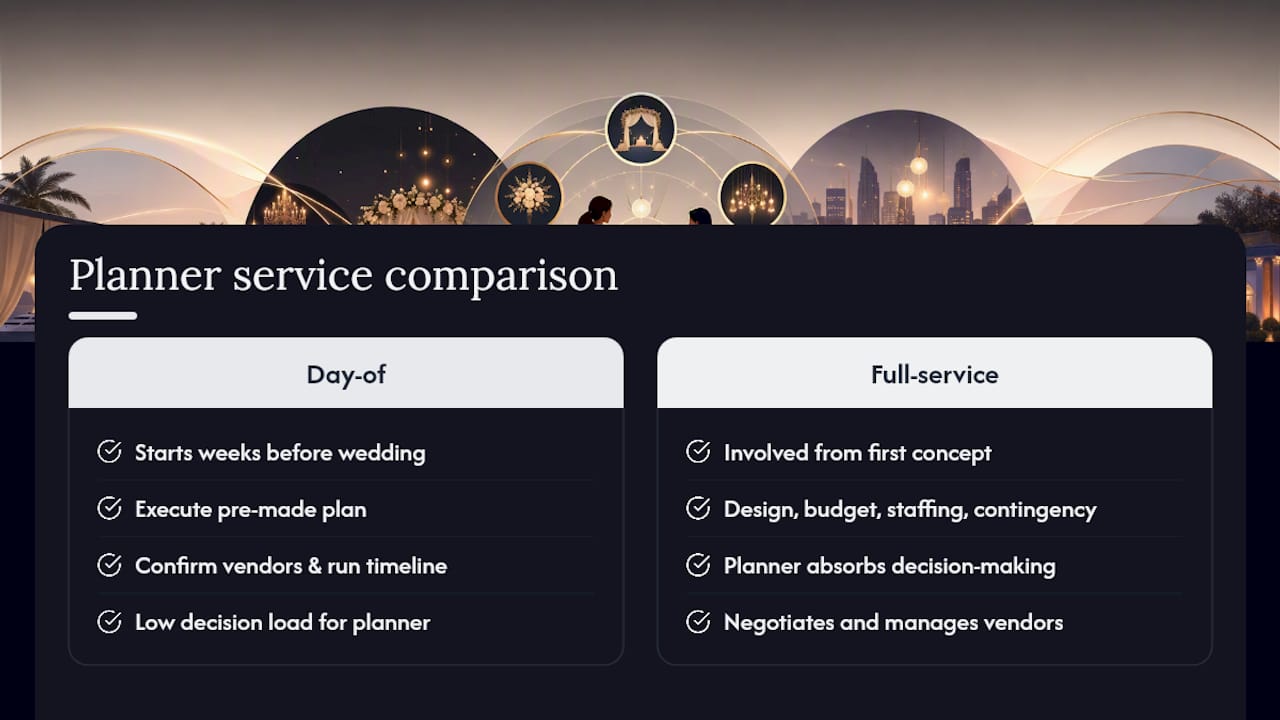
The phrase “practical wedding planner” often gets used loosely, and it matters to separate two genuinely different services hiding under similar language. A day-of coordinator, sometimes marketed as practical or budget-friendly, typically steps in a few weeks before the wedding to execute a plan the couple has already built themselves. Their role is narrow by design: confirm vendor arrivals, run the timeline, and handle problems as they arise on the day.
A luxury full-service planner, by contrast, is involved from the very first concept conversation through the final vendor payment. Design, budget, vendor negotiation, staffing, and contingency planning all sit under one roof rather than being assembled piecemeal by the couple beforehand.
The practical distinction that matters most is who carries the cognitive load. With a coordinator, the couple has already made hundreds of decisions and simply needs someone to execute them well. With full-service planning, the planner absorbs those decisions, presents curated options, and only asks the couple to choose between a small number of vetted paths. For a corporate client managing a launch alongside a demanding calendar, or a couple with no spare capacity for spreadsheets, that difference in cognitive load is often the entire reason to hire full-service rather than day-of.
What tools keep a full-service planning process organised?
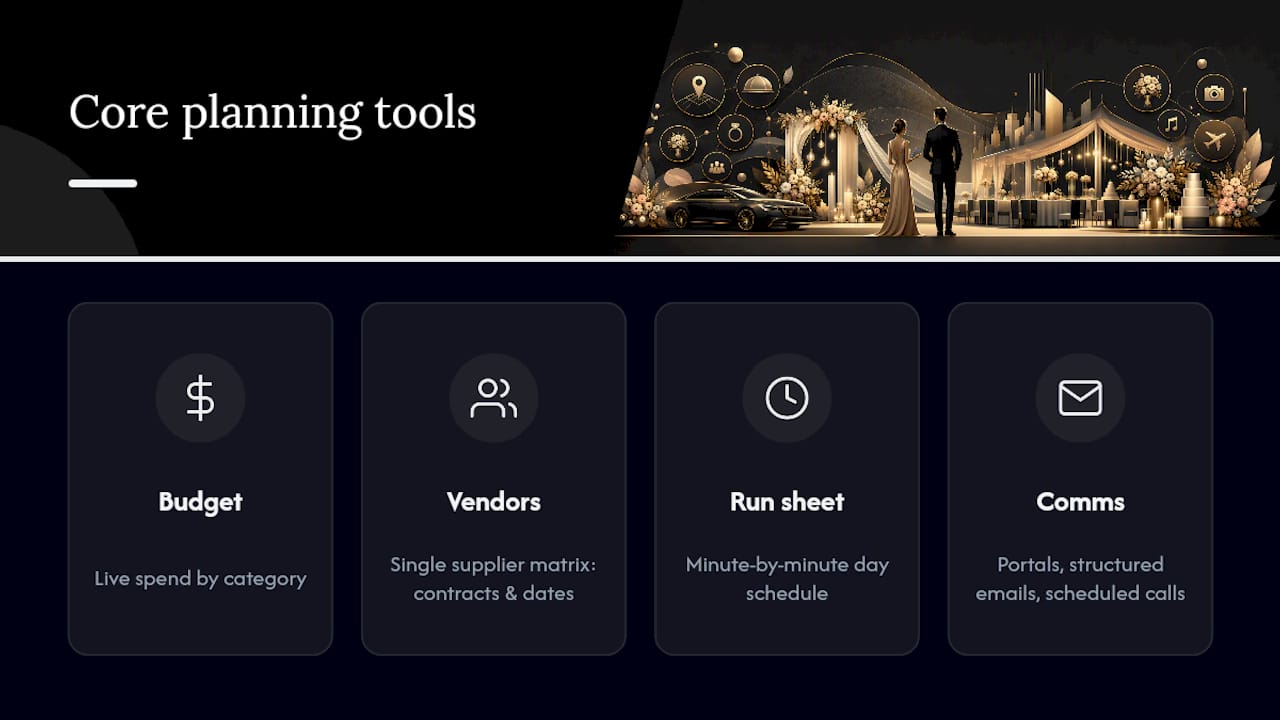
Behind the elegant client experience sits a genuinely technical operation. Shared budget trackers, usually spreadsheet-based or built into dedicated event software, let both planner and client see spend against category in real time rather than discovering overruns after the fact.
Vendor management runs on a matrix: a single document listing every supplier, their contract status, deposit dates, and contact details, so nothing depends on memory. Run sheets, the minute-by-minute documents governing the wedding day itself, are typically built in the final weeks and shared with every vendor and staff member in advance so there is one version of the truth on the day.
Communication tools matter just as much as planning tools. Shared client portals, structured email threads, and scheduled calls replace the scattered text messages that derail less organised processes. For weddings with a scattered guest list, particularly destination events, group logistics platforms help manage travel and accommodation without the planner having to field individual guest queries directly.
None of this technology replaces judgment. The tools exist to make sure a planner’s decisions are documented, trackable, and visible to the client at every stage, rather than trusted purely on faith.
What challenges come up most often, and how are they solved?
Vendor cancellation is the challenge every experienced planner has faced more than once, and it is precisely why the vendor relationships discussed earlier matter so much. A planner with deep backup relationships can usually replace a cancelled supplier within days; a couple working alone often cannot.
Budget creep is the second recurring problem. Styling upgrades, guest list growth, and last-minute vendor add-ons all push costs upward gradually rather than in one visible jump. The solution is the live budget tracker mentioned above, reviewed regularly enough that overruns get caught while they are still small and manageable.
Weather and venue disruption affect outdoor and destination weddings disproportionately. Planners typically build contingency plans into the contract stage, identifying indoor backup spaces and confirming which vendors can pivot on short notice.
Finally, competing priorities between couples, or between a couple and their families, create friction that has nothing to do with logistics. Experienced planners act as a buffer here, translating competing wishes into a single design brief before vendors are ever contacted, which prevents the same disagreement resurfacing at every subsequent decision point.
How can you budget effectively with a full-service planner?
Setting a realistic number before the first meeting saves both time and disappointment. Bring a genuine ceiling figure to the first conversation rather than an aspirational one, since planners work far more effectively with an honest constraint than with a number that quietly expands later.
Ask your planner to rank spending categories by guest impact rather than personal preference alone. Venue, catering, and overall hospitality tend to shape guest experience more than smaller styling details, and a planner with real experience will steer budget accordingly rather than spreading it evenly.
Weddings, even meticulously planned ones, generate unexpected costs, and a contingency line prevents those costs from displacing planned spend elsewhere. Review the budget tracker at agreed intervals, not only when something feels wrong, since regular review is what catches drift early. Our wedding budgeting tips cover this cadence in more detail.
How do you customise planning around your priorities?
No two couples value the same things equally, and a good planner treats that as the starting brief rather than an inconvenience. Some couples want an extravagant, large-scale spectacle; others want something quiet, refined, and deliberately understated. Both are legitimate versions of luxury, and the planner’s job is matching their own taste to yours rather than imposing a house style.
The customisation conversation should happen early and explicitly. Ask which three elements matter most to you, whether that is photography, food, music, or the venue itself, and direct disproportionate budget and attention there. A planner worth hiring will push back gently if your stated priorities and your budget allocation do not match, since strategic allocation rather than unlimited spend is what actually produces a memorable event.
For corporate clients planning launches alongside a wedding season workload, the same logic applies to brand priorities: which moments need to land perfectly, and which are acceptable to simplify. Our bespoke celebration guide covers how this prioritisation translates into an actual design brief.
A planner’s perspective on full-service value
The gap between a couple’s expectation of “help with the wedding” and what full-service planning actually delivers is larger than most people realise before they experience it. At Winelands Function, the work is not really about tasks ticked off a list. It is about absorbing decision fatigue so completely that a couple walks into their own reception with nothing left to manage.
The Ready 4 PM run sheet exists precisely because the best planning is invisible on the day. Clients rarely notice the hundred small handovers that went right. They notice, instead, that they were simply present.
— Coert
How Winelands Function delivers full-service planning
Winelands Function is the alternative to piecing your wedding together vendor by vendor: one team holds the design, the budget, the contracts, and the run sheet, so nothing falls between the cracks of a dozen separate suppliers.

The Full Wedding Planning service covers everything from initial concept through on-the-day execution, built around the same personalised, elegant approach that runs through this entire guide: creative direction, vendor negotiation, budget tracking, and hands-on management on the day itself. It suits affluent couples and corporate hosts who want a single point of accountability rather than a folder of separate contracts to manage themselves.
If you are ready to start the conversation, visit the wedding planning page to discuss your date, your guest count, and your vision, and take the first step toward being a guest at your own celebration.
Sources
- How to Choose a Luxury Wedding Planner: A Comprehensive Guide for High-End Celebrations – Today’s Luxury Weddings
- What Is a Luxury Wedding Planner? Here’s What to Look For – The Knot
- What Does a Wedding Planner Do? | The role & duties explained – Los Angeles Times
FAQ
When should you hire a full-service wedding planner?
Full-service planners are generally engaged 12 to 18 months before the wedding date. This window gives enough time to secure top venues and vendors and manage complex, multi-day logistics properly.
How much does a luxury wedding planner typically cost?
Many planners charge a percentage of the total wedding budget, commonly 15% to 20%, or a flat fee agreed upfront. Winelands Function’s exact pricing for Full Wedding Planning is available directly through the signature services page.
What should a wedding planning contract include?
A solid contract specifies scope, deliverables, and a payment schedule tied to milestones. It should also name insurance coverage, cancellation terms, and force majeure provisions explicitly to protect both parties.
What is a day-of run sheet?
A day-of run sheet, such as a Ready 4 PM run sheet, lists timed responsibilities and handovers for every stage of the wedding day. It is the central tool planners use to keep dozens of moving parts synchronised without visible effort.
How does full-service planning differ from a day-of coordinator?
A day-of coordinator executes a plan the couple has already built, usually stepping in weeks before the event. A full-service planner is involved from the first concept conversation, handling design, budget, vendor negotiation, and staffing throughout the entire process.