

More than 70 percent of business leaders agree that well-designed corporate events can directly improve team performance and client relationships. In today’s connected world, the way organisations plan and deliver these gatherings shapes far more than just the event itself. Understanding what defines a corporate event and why it matters helps companies create experiences that build trust, strengthen culture, and support their long-term goals.
Table of Contents
- Defining Corporate Events And Their Core Purpose
- Major Types Of Corporate Events Explained
- Key Benefits For Businesses And Brands
- Corporate Events And Company Culture
- Planning Essentials For Event Success
Key Takeaways
| Point | Details |
|---|---|
| Corporate Events as Strategic Tools | Corporate events are essential for achieving key business objectives, fostering relationships, and enhancing brand communication. |
| Types and Purposes of Events | Major types include conferences, team-building activities, and product launches, each serving unique strategic purposes. |
| Impact on Company Culture | Thoughtfully designed corporate events strengthen company culture by fostering team cohesion, open communication, and psychological safety. |
| Importance of Planning | Effective event planning requires clear objectives, comprehensive budgeting, and logistical mastery to create impactful experiences. |
Defining Corporate Events and Their Core Purpose
Corporate events are strategic gatherings orchestrated by businesses to achieve specific organisational objectives beyond traditional workplace interactions. Corporate entertainment represents a sophisticated approach to relationship building, team engagement, and brand communication. According to Wikipedia, these events encompass a diverse range of professional gatherings including conventions, conferences, retreats, and celebratory occasions designed to serve multiple critical purposes.
At their core, corporate events are meticulously planned experiences that transcend mere social interactions. They function as powerful tools for businesses to create meaningful connections with employees, clients, stakeholders, and industry partners. These events can serve multiple strategic objectives:
- Strengthening internal team dynamics
- Enhancing professional relationships
- Promoting company products or services
- Recognising employee achievements
- Facilitating knowledge sharing and networking
The fundamental purpose of corporate events extends far beyond simple socialisation. Winelands Function’s guide to corporate event types highlights that these gatherings are carefully crafted experiences with measurable business outcomes. Whether launching a new product, conducting professional training, or celebrating organisational milestones, each event is an opportunity to reinforce company culture, communicate strategic vision, and build lasting professional connections.
Understanding the nuanced role of corporate events requires recognising them as strategic investments rather than optional extras. They represent sophisticated communication platforms where businesses can articulate their values, showcase their capabilities, and create memorable experiences that resonate long after the event concludes. By designing purposeful, engaging corporate events, organisations can transform standard professional interactions into powerful moments of connection, learning, and collective achievement.
Major Types of Corporate Events Explained
Corporate events represent a sophisticated ecosystem of professional gatherings designed to achieve specific business objectives. According to Wikipedia, the MICE tourism framework provides a comprehensive overview of these events, encompassing Meetings, Incentives, Conferences, and Exhibitions as key categories that represent the core of professional corporate interactions.
The primary categories of corporate events can be systematically broken down into several distinct types:
- Conferences and Summits
- Large-scale knowledge sharing platforms
- Industry-specific networking opportunities
- Platforms for thought leadership and innovation
- Team Building Events
- Designed to enhance internal collaboration
- Improve communication and interpersonal dynamics
- Create shared experiences outside traditional work environments
- Product Launch and Promotional Events
- Showcase new company offerings
- Engage potential clients and stakeholders
- Generate media and market attention
Each event type serves a unique strategic purpose within an organisation’s broader communication and engagement strategy. Winelands Function’s guide to corporate event planning emphasises that successful corporate events require meticulous planning, understanding of organisational goals, and a keen sense of audience engagement.
Here’s a summary of the major types of corporate events and their core purposes:
| Event Type | Primary Objectives | Typical Outcomes |
|---|---|---|
| Conferences & Summits | Knowledge sharing Networking Innovation |
Thought leadership Collaborations |
| Team Building | Team collaboration Interpersonal skills |
Stronger teams Improved morale |
| Product Launch & Promotional | Showcasing new offerings Market engagement |
Market attention Brand awareness |
| Executive Retreats & Offsites | Strategic planning Cultural alignment |
Vision clarity Stronger leadership |
| Celebratory & Recognition Events | Employee appreciation Milestone celebration |
Higher motivation Staff retention |
The complexity of corporate events extends beyond mere logistical coordination. They represent carefully choreographed experiences that communicate company culture, vision, and values.
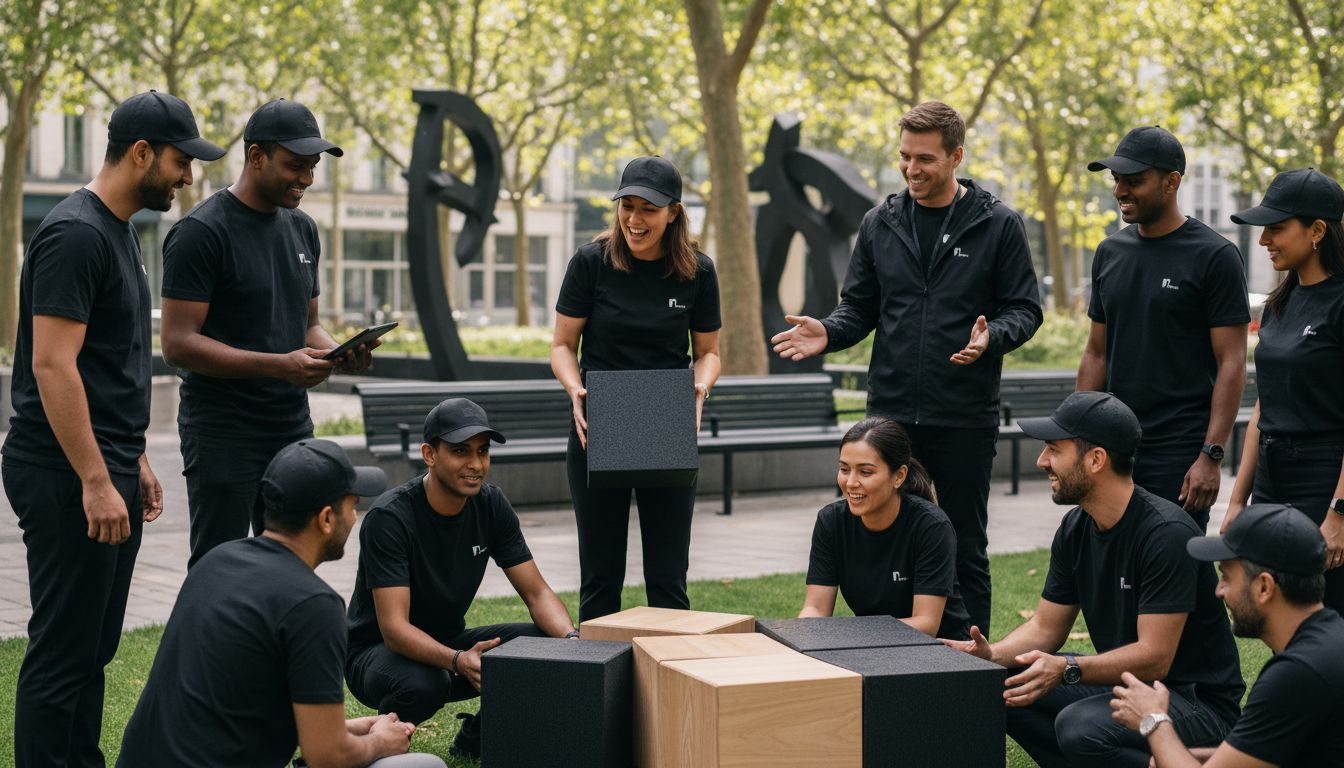 Whether hosting an intimate executive retreat or a large-scale industry conference, these events are sophisticated communication tools that transform standard professional interactions into powerful moments of connection, learning, and collective achievement.
Key Benefits for Businesses and Brands
Corporate events represent far more than simple gatherings; they are strategic investments that deliver multifaceted benefits to organisations. According to Wikipedia, these events are critical platforms for business networking, enabling professionals to build relationships, exchange crucial information, and explore potential opportunities that can drive significant organisational growth.
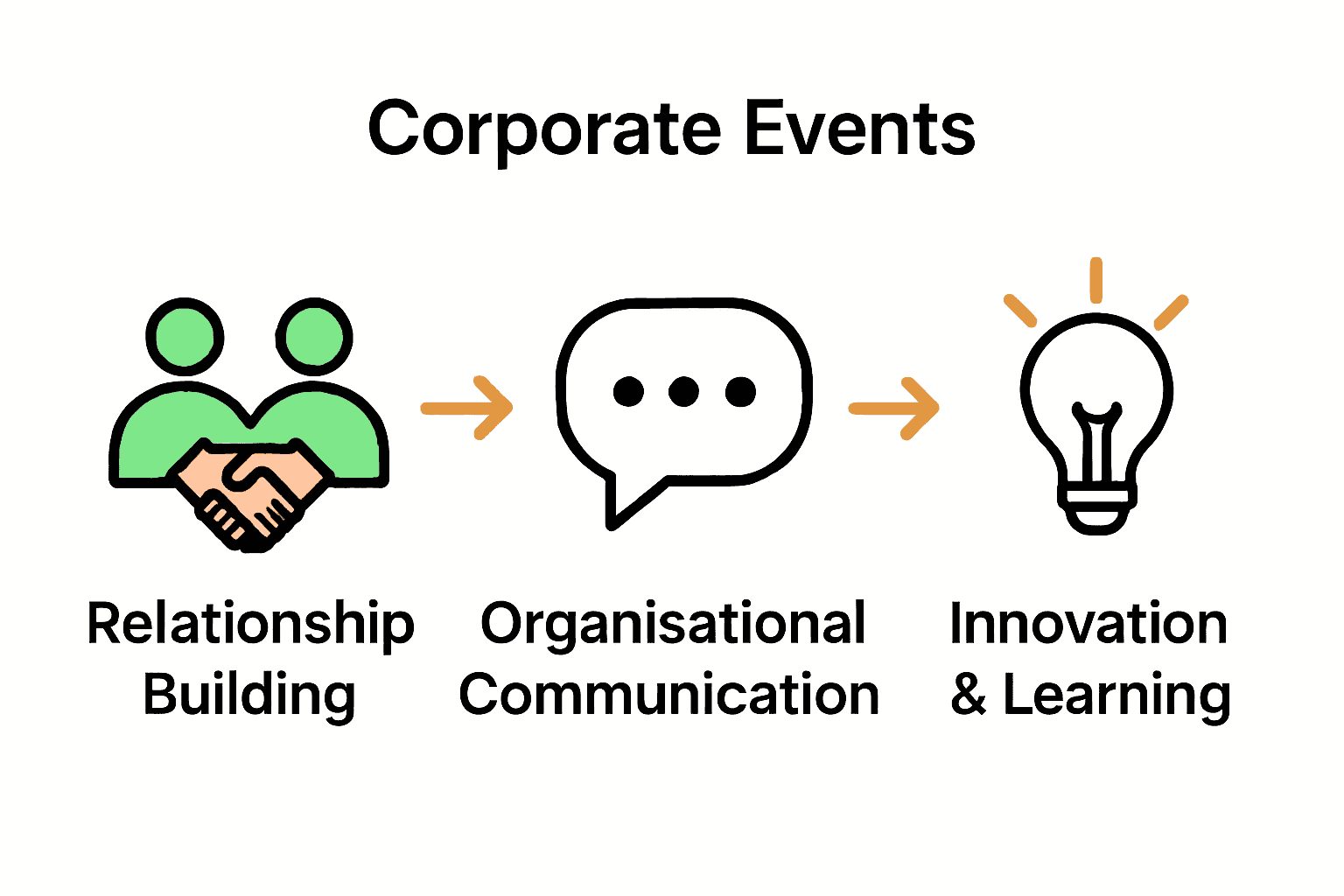
The strategic advantages of corporate events can be categorised into several key domains:
Relationship Building
- Strengthening internal team connections
- Developing external stakeholder relationships
- Creating meaningful professional networks
Organisational Communication
- Reinforcing company vision and values
- Facilitating transparent communication
- Aligning team members with strategic objectives
Innovation and Learning
- Encouraging knowledge sharing
- Promoting cross-departmental collaboration
- Generating innovative ideas and solutions
Research from arXiv specifically highlights how specialised corporate events like hackathons can drive remarkable organisational benefits, including enhanced employee well-being, skill development, and alignment of individual interests with broader company goals. Winelands Function’s guide to corporate event planning further emphasises that these events are not merely optional extras but essential strategic tools for modern businesses.
Ultimately, corporate events transcend traditional communication methods by creating immersive, memorable experiences that resonate deeply with participants. They represent sophisticated platforms where businesses can articulate their culture, showcase their capabilities, and transform standard professional interactions into powerful moments of connection, learning, and collective achievement.
By thoughtfully designing and executing corporate events, organisations can unlock unprecedented opportunities for growth, engagement, and strategic alignment.
Corporate Events and Company Culture
Company culture is not just an abstract concept, but a living, breathing ecosystem that thrives on meaningful interactions and shared experiences. According to Wikipedia, corporate entertainment events such as retreats and holiday parties play a crucial role in enhancing organisational dynamics by fostering team cohesion and significantly improving employee morale.
The transformative power of corporate events in shaping company culture can be understood through several key dimensions:
Relationship Dynamics
- Breaking down hierarchical barriers
- Creating informal interaction spaces
- Encouraging genuine peer-to-peer connections
Communication Channels
- Facilitating open dialogue
- Promoting transparency
- Reinforcing organisational values
Psychological Safety
- Building trust among team members
- Reducing workplace tensions
- Creating supportive professional environments
Wikipedia’s business networking research further emphasises how repeated interactions in professional settings contribute to mutual adaptation and collaborative work cultures. Winelands Function’s curated event experience guide highlights that thoughtfully designed events can be powerful instruments for cultural transformation.
Ultimately, corporate events are more than mere social gatherings. They are strategic interventions that breathe life into organisational values, create shared narratives, and transform abstract cultural principles into tangible, memorable experiences. By investing in meaningful corporate events, organisations can cultivate environments where employees feel genuinely connected, valued, and inspired to contribute their best work.
Planning Essentials for Event Success
Corporate event planning is a nuanced art that transforms conceptual vision into extraordinary experiences. According to Indeed, successful event planning hinges on meticulously setting clear objectives, developing comprehensive budgets, strategically selecting venues, and executing targeted marketing approaches that engage and inspire participants.
The critical components of exceptional event planning can be systematically broken down into key strategic domains:
Strategic Foundation
- Defining precise event objectives
- Establishing realistic budgetary parameters
- Aligning event design with organisational goals
Logistical Mastery
- Selecting optimal venue environments
- Coordinating intricate technical requirements
- Managing comprehensive participant experience
Technological Integration
- Implementing hybrid event capabilities
- Ensuring seamless digital and physical interactions
- Leveraging interactive engagement platforms
Wikipedia’s research on hybrid events underscores the emerging importance of combining physical and virtual event components, expanding organisational reach and accommodating diverse participant preferences. Winelands Function’s guide to event design workflow further emphasises that successful events are meticulously choreographed experiences requiring sophisticated planning and creative vision.
Ultimately, corporate event planning transcends mere logistical coordination. It represents a strategic discipline where creativity, technology, and precision converge to create memorable, impactful experiences that reflect an organisation’s essence. By approaching event planning as a holistic, strategic endeavour, businesses can transform standard gatherings into powerful communication platforms that inspire, connect, and drive meaningful engagement.
Elevate Your Corporate Events with Expert Planning and Unforgettable Experiences
Understanding that corporate events are crucial strategic tools for building relationships, reinforcing culture, and sparking innovation is the first step. Your business deserves an event that captures these goals with precision and elegance. At Winelands Function, we specialise in transforming corporate gatherings into meaningful, impactful experiences that align perfectly with your company’s vision and objectives.
Discover how our luxury event planning services can bring your corporate event to life with meticulous attention to detail and personalised service. Whether you are aiming to enhance team collaboration through engaging team building or launching a new product with style and impact, our expertise ensures your event is flawlessly executed from conception to completion. Start planning your next successful corporate event today by visiting Winelands Function and exploring our full range of tailored solutions designed specifically for discerning clients who demand excellence.
Explore success with our comprehensive corporate event guide and discover the power of a curated event experience that truly reflects your organisation’s values and ambition.
Frequently Asked Questions
What are the main types of corporate events?
Corporate events include conferences, team building events, product launches, executive retreats, and celebratory gatherings. Each type serves strategic purposes such as networking, knowledge sharing, and enhancing team dynamics.
Why are corporate events important for businesses?
Corporate events are crucial because they facilitate relationship building, enhance organisational communication, promote innovation, and create networking opportunities that drive business growth.
How do corporate events impact company culture?
Corporate events significantly impact company culture by fostering team cohesion, encouraging open dialogue, and building trust among employees, which enhances morale and engagement in the workplace.
What are the essential components of successful corporate event planning?
Successful corporate event planning includes defining clear objectives, establishing a comprehensive budget, selecting appropriate venues, and integrating technology for both in-person and virtual participant engagement.
Recommended
- Complete Guide to Corporate Event Planning Success – Winelands Function – For Every Occasion, Your Celebration
- 8 Types of Corporate Events and Their Benefits – Winelands Function – For Every Occasion, Your Celebration
- Corporate Entertainment for Your Year – End Function That Wows – Winelands Function – For Every Occasion, Your Celebration
- Why Hire Event Planner: Complete Guide for 2025 – Winelands Function – For Every Occasion, Your Celebration