

Planning a luxury wedding in Cape Town should be exciting, not overwhelming. Yet 30% of couples report planning stress from poor planner communication. Asking the right questions during the hiring process helps you avoid these pitfalls, ensuring you select a planner who understands your vision and can deliver a seamless, elegant celebration. This guide equips you with targeted questions to confidently hire the perfect planner for your special day.
Table of Contents
- Prerequisites And Timing Considerations
- Evaluating Experience And Expertise
- Discussing Timelines And Milestones
- Budget And Cost Management Discussions
- Customisation And Style Alignment Questions
- Discussing Contract And Service Scope
- Discussing Planner Communication And Availability
- Common Mistakes And Failure Points
- Expected Results And Success Metrics
- Discover Expert Wedding Planning Services In Cape Town
Key takeaways
| Point | Details |
|---|---|
| Start early with clear vision | Hiring 9-12 months ahead with defined style and budget creates a strong foundation for luxury planning. |
| Verify local expertise | Cape Town planners with documented local experience ensure smoother vendor coordination and venue access. |
| Prioritise transparent communication | Clear budget discussions and regular updates prevent misunderstandings and reduce planning stress. |
| Review contracts thoroughly | Detailed contract examination clarifies services, fees, and policies to avoid disputes. |
| Ensure style alignment | Confirming planners can honour cultural traditions and personal aesthetics guarantees a personalised wedding. |
Prerequisites and timing considerations
Before interviewing potential planners, you need to establish a strong foundation for productive conversations. Starting your search 9-12 months before your wedding date is ideal for luxury celebrations, as this timeline allows planners to secure premium vendors and sought-after venues. Early engagement becomes especially critical in Cape Town’s competitive luxury market, where the best wedding venues book quickly.
Develop an initial wedding vision before your first consultation. You don’t need every detail finalised, but understanding your general style preferences, guest count estimates, and celebration scale helps planners tailor their recommendations. This preparation enables more meaningful discussions during interviews.
Define a preliminary budget range to guide your planner conversations. Luxury weddings vary significantly in cost, and knowing your financial parameters allows planners to propose realistic solutions. Researching Cape Town’s luxury wedding landscape beforehand helps you understand what’s achievable within your budget.
Pro Tip: Create a vision board with images representing your dream wedding aesthetic before meeting planners. This visual reference communicates your style more effectively than words alone and helps planners quickly assess if they’re a good fit.
Familiarise yourself with basic luxury wedding planning steps to ask informed questions. Understanding the typical planning process helps you evaluate how thoroughly each planner explains their approach and whether their methodology aligns with your expectations.
Evaluating experience and expertise
A planner’s experience directly impacts your wedding’s success, so probe deeply into their background. Ask how many luxury weddings they’ve coordinated in Cape Town specifically, as local knowledge proves invaluable for navigating the city’s unique venues, vendor networks, and logistical considerations. Request specific examples showcasing their experience with celebrations similar in scale and style to yours.
Over 70% of luxury wedding couples prefer planners with documented local expertise and portfolio evidence.
Request client testimonials or references from recent Cape Town weddings. Speaking directly with past clients reveals insights about communication style, problem-solving abilities, and whether the planner delivers on promises. Ask these references about their overall satisfaction and if they would hire the planner again.
Inquire about the planner’s vendor and venue relationships throughout Cape Town. Established luxury planners typically have strong connections with premium suppliers, which can benefit you through preferential booking, better pricing, or insider knowledge about each vendor’s strengths. These relationships often make the difference between good and exceptional service.

Probe how planners handle unexpected crises or last-minute changes. Every wedding faces unforeseen challenges, from weather disruptions to vendor cancellations. Ask for specific examples of problems they’ve solved under pressure. Their responses reveal problem-solving skills and composure during stressful situations.
Verify their familiarity with Cape Town’s luxury wedding expectations and standards. The city’s high-end wedding market has distinct characteristics, and planners should demonstrate understanding of what discerning couples expect. Consider exploring luxury event planners who specialise in bespoke, sophisticated celebrations.
Discussing timelines and milestones
Understanding how planners structure and communicate scheduling prevents delays and ensures smooth progress. Request a detailed sample timeline outlining major tasks and milestones from engagement to wedding day. This document should break down the planning journey into manageable phases with clear deadlines.
A comprehensive timeline typically includes:
- Initial consultation and vision development (months 9-12 before wedding)
- Venue selection and booking (months 8-10 before wedding)
- Vendor research, interviews, and contracts (months 6-9 before wedding)
- Design finalisation and detail planning (months 3-6 before wedding)
- Final confirmations and rehearsals (weeks 2-4 before wedding)
- Wedding day coordination and execution
Confirm how frequently you’ll receive progress updates and through which channels. Some planners provide weekly email summaries, whilst others prefer monthly in-person meetings. Establish expectations that match your preferred communication style and involvement level.
Discuss vendor booking deadlines and how the planner coordinates multiple suppliers simultaneously. Understanding their coordination approach helps you evaluate their organisational skills. Ask how they ensure no detail falls through the cracks when managing numerous moving parts.
Pro Tip: Request access to the planner’s project management system or tracking tools. Seeing how they organise tasks digitally provides transparency and allows you to monitor progress between formal updates. Review a sample wedding planning checklist to understand typical milestone sequences.
Budget and cost management discussions
Transparent budget conversations form the foundation of a successful planner relationship. Initiate early discussions about how the planner tracks expenses, reports costs, and manages your wedding budget. Ask to see sample budget spreadsheets or tracking documents they’ve used for previous clients.
Inquire how the planner’s vendor relationships might affect your pricing. Some planners receive industry discounts they pass to clients, whilst others earn commissions from vendors. Understanding their fee structure and vendor arrangements ensures complete transparency about costs.
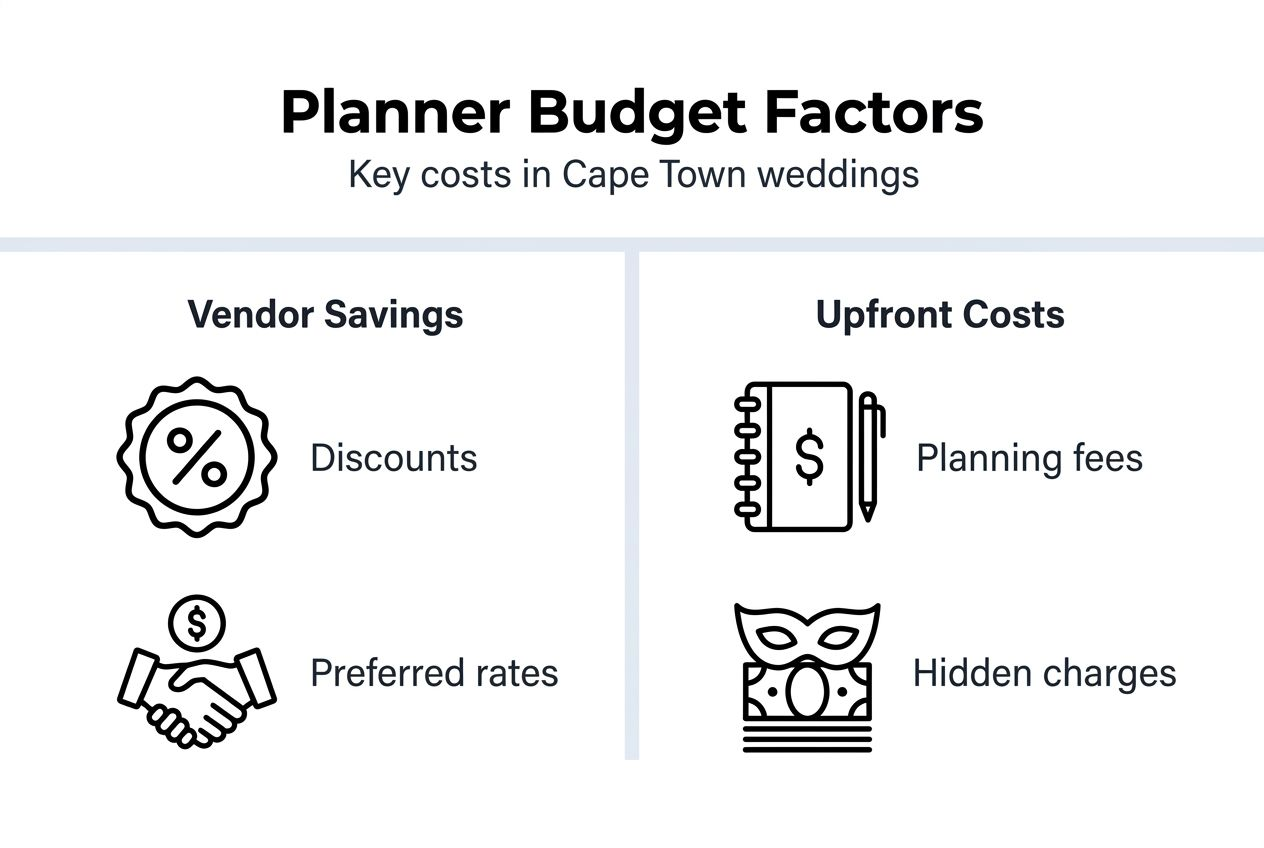
Discuss policies regarding unexpected expenses or budget overruns. Weddings often encounter unforeseen costs, so establish how the planner handles these situations. Ask whether they recommend maintaining a contingency fund and what percentage they suggest.
Clarify exactly what’s included in the planner’s fees versus additional charges. Some planners offer all-inclusive packages, whilst others charge separately for specific services like day-of coordination or overtime. Understanding the complete fee structure prevents surprise bills later.
Ensure you understand how vendor contracts and payments will be managed. Will you contract and pay vendors directly, or does the planner handle these transactions? Clear agreements about payment responsibilities protect both parties. Explore realistic wedding budgets for Cape Town to set appropriate expectations.
Customisation and style alignment questions
Your wedding should reflect your unique story and aesthetic preferences. Ask how planners approach customisation and personalisation for each couple. Exceptional planners view every wedding as a blank canvas rather than applying formulaic templates.
Discuss how cultural and religious traditions will be incorporated respectfully and authentically. If your celebration includes specific ceremonies, rituals, or customs, the planner should demonstrate cultural sensitivity and willingness to research unfamiliar traditions. Ask for examples of how they’ve honoured diverse cultural elements in past weddings.
Confirm how the planner coordinates with photographers and videographers regarding your preferred visual style. Poor coordination between planners and media professionals causes frustration, with 15% of couples reporting dissatisfaction linked to misaligned media preferences. Ensure your planner communicates your vision clearly to all creative vendors.
Review the planner’s portfolio to assess whether their aesthetic aligns with yours. Whilst great planners adapt to various styles, examining their past work reveals their strengths and natural inclinations. Discuss specific elements from their portfolio that resonate with your vision.
| Customisation aspect | Personalised approach | Generic approach |
|---|---|---|
| Wedding themes | Custom-designed reflecting couple’s story | Pre-packaged theme selections |
| Décor elements | Bespoke pieces sourced or created specifically | Standard rental inventory options |
| Cultural traditions | Researched, authentically integrated ceremonies | Surface-level acknowledgement |
| Menu design | Tailored to couple’s heritage and preferences | Standard catering package menus |
Explore luxury wedding ideas for Cape Town couples to identify which creative elements matter most to you, then assess whether planners can deliver those specific touches.
Discussing contract and service scope
Contract clarity protects both you and your planner whilst preventing misunderstandings. Research shows a 35% decrease in planning disputes when contract details are clarified early. Request a sample contract before committing to review terms carefully.
Clarify exactly which services are included in the planner’s standard offering versus optional add-ons. Full-service planning typically covers design, vendor coordination, timeline management, and day-of execution, but specifics vary. Understanding inclusions helps you compare planners accurately.
Discuss cancellation, refund, and rescheduling policies in detail. Whilst nobody plans for wedding postponements, having clear policies provides peace of mind. Ask about deposit refundability, timeline flexibility, and how date changes affect fees.
Verify contract terms regarding liability and responsibilities. Professional planners carry liability insurance and clearly outline what they’re responsible for versus what falls to you or vendors. Understanding these boundaries prevents disputes if problems arise.
Ask how changes or additions during the planning process affect fees. Wedding visions often evolve, so knowing whether scope changes trigger additional charges helps you budget appropriately. Some planners include reasonable modifications, whilst others bill hourly for significant changes.
Review contracts with a solicitor if they contain complex legal language or substantial financial commitments. Professional legal review ensures you fully understand your obligations and protections. Research experienced wedding planners in Cape Town who provide transparent, detailed contracts.
Discussing planner communication and availability
Communication quality determines your planning experience’s stress level. Since 30% of couples experience stress due to inadequate planner communication, establishing clear expectations proves essential.
Poor communication with wedding planners ranks amongst couples’ top planning frustrations, often causing more stress than actual logistical challenges.
Ask how frequently the planner communicates and through which methods. Some couples prefer weekly email updates with monthly video calls, whilst others want more frequent touchpoints. Discuss whether the planner accommodates your preferred communication style.
Confirm the planner’s typical response time for questions or concerns. Professional planners should respond to non-urgent queries within 24-48 hours and urgent matters much faster. Understanding their availability helps set realistic expectations.
Request details about backup coverage if the planner becomes unavailable due to illness or emergency. Reputable planning companies have associate planners or backup systems ensuring continuity. Ask who would step in and how they would be briefed on your wedding details.
Discuss which tools or platforms the planner uses for tracking progress and sharing updates. Many planners use specialised software allowing clients to view timelines, budgets, and vendor information anytime. Access to these systems provides transparency and reduces anxiety.
Understanding the role of a wedding planner in Cape Town helps you identify which communication patterns support effective collaboration versus those that might cause frustration.
Common mistakes and failure points
Learning from others’ errors helps you avoid similar pitfalls. Failing to establish budget transparency from the start causes frequent dissatisfaction. Couples who clearly communicate financial parameters and expect detailed expense tracking experience fewer unpleasant surprises.
Ignoring planner availability often leads to scheduling conflicts and rushed decisions. Before hiring, confirm the planner’s calendar can accommodate your timeline and that they’re not overbooked with other events near your wedding date.
Not incorporating cultural or religious traditions creates disconnection between your vision and the final celebration. If specific customs matter to you, verify the planner’s willingness to research and implement them authentically rather than superficially.
Overlooking contract details can lead to disputes about services, fees, or responsibilities. Contract misunderstandings account for significant planning stress. Reading contracts thoroughly and asking questions about unclear terms protects your interests.
Assuming all luxury planners offer identical services causes mismatched expectations. Each planner has unique strengths, specialities, and service models. Thoroughly vetting multiple candidates helps you find the best fit for your specific needs.
Pro Tip: Schedule quarterly budget and communication reviews with your planner throughout the planning process. These check-ins ensure you stay aligned on finances and address any emerging concerns before they become problems. Avoid common communication mistakes that derail planning experiences.
Expected results and success metrics
Evaluating your planner’s performance helps you assess whether you made the right choice. Client satisfaction ratings provide valuable insight, with exceptional planners achieving 90% or higher alignment between couples’ visions and delivered results. Request satisfaction data from recent clients.
Measure the planner’s ability to meet scheduled milestones with minimal delays. Professional planners typically maintain timeline accuracy within a 5% variance, meaning tasks scheduled for specific dates occur on time or with minor, communicated adjustments.
Evaluate budget adherence by comparing final expenses against initial projections. Skilled planners keep costs within 10% of agreed budgets, accounting for approved changes whilst controlling unexpected expenses through contingency planning.
Consider crisis management effectiveness through testimonials describing how planners handled unforeseen challenges. The best planners solve problems invisibly, ensuring you enjoy your day whilst they manage behind-the-scenes issues.
| Success metric | Excellent performance | Acceptable performance | Poor performance |
|---|---|---|---|
| Client satisfaction | 90-100% vision alignment | 75-89% vision alignment | Below 75% alignment |
| Timeline accuracy | Within 5% variance | 5-15% variance | Over 15% delays |
| Budget control | Within 10% of target | 10-20% over budget | Over 20% overrun |
| Communication responsiveness | Under 24-hour response | 24-48 hour response | Over 48 hours |
| Crisis resolution | Problems solved invisibly | Issues managed with couple awareness | Crises escalated to couple |
Successful planner relationships result in weddings where you feel relaxed, confident, and fully present rather than stressed about logistics. Your planner should create an experience where you enjoy the journey as much as the destination.
Discover expert wedding planning services in Cape Town
After understanding what to ask potential planners, you’re ready to connect with professionals who deliver exceptional results. Winelands Function offers expert wedding planning services tailored specifically for luxury Cape Town celebrations. Their experienced team ensures seamless coordination whilst honouring your unique vision and style preferences.
Explore how professional event management transforms your planning experience from overwhelming to enjoyable. Discover elegant, personalised solutions designed for discerning couples seeking bespoke luxury celebrations that reflect their love story perfectly.
Frequently asked questions
When should I start interviewing wedding planners in Cape Town?
Begin your planner search 9-12 months before your wedding date for luxury celebrations. This timeline allows sufficient opportunity to secure premium vendors and sought-after venues whilst avoiding rushed decisions that compromise quality.
How much does a luxury wedding planner cost in Cape Town?
Luxury wedding planner fees in Cape Town typically range from 10-20% of your total wedding budget, though some charge flat fees or hourly rates. Luxury planners often provide value through vendor discounts and time savings that offset their fees.
What’s the difference between full-service planning and day-of coordination?
Full-service planning covers the entire journey from initial vision development through execution, including design, vendor selection, and timeline management. Day-of coordination begins 4-6 weeks before your wedding, focusing solely on finalising details and managing the event itself.
Should I hire a planner who specialises in my cultural traditions?
Whilst specialisation helps, excellent planners research and respect any cultural tradition authentically. Prioritise planners who demonstrate cultural sensitivity, ask thoughtful questions about your customs, and show genuine interest in honouring your heritage appropriately.
How do I know if a planner’s style matches my vision?
Review their portfolio carefully, paying attention to weddings similar to your aesthetic preferences. Schedule consultations to discuss your vision in detail and assess whether the planner demonstrates enthusiasm and understanding. Trust your instincts about whether you connect with their creative approach.
What happens if my planner becomes unavailable before my wedding?
Professional planning companies maintain backup systems with associate planners who can step in seamlessly. Your contract should specify contingency arrangements, including how backup planners access your wedding details and maintain continuity of service.
Recommended
- Luxury Wedding Planning Steps for an Elegant Cape Town Event – Winelands Function – For Every Occasion, Your Celebration
- Cape Town Wedding Planner: Elevating Luxury Celebrations – Winelands Function – For Every Occasion, Your Celebration
- Role of a Wedding Planner: Elevating Cape Town Luxury – Winelands Function – For Every Occasion, Your Celebration
- Wedding Planning Guide Free: Elevate Your Cape Town Celebration – Winelands Function – For Every Occasion, Your Celebration