
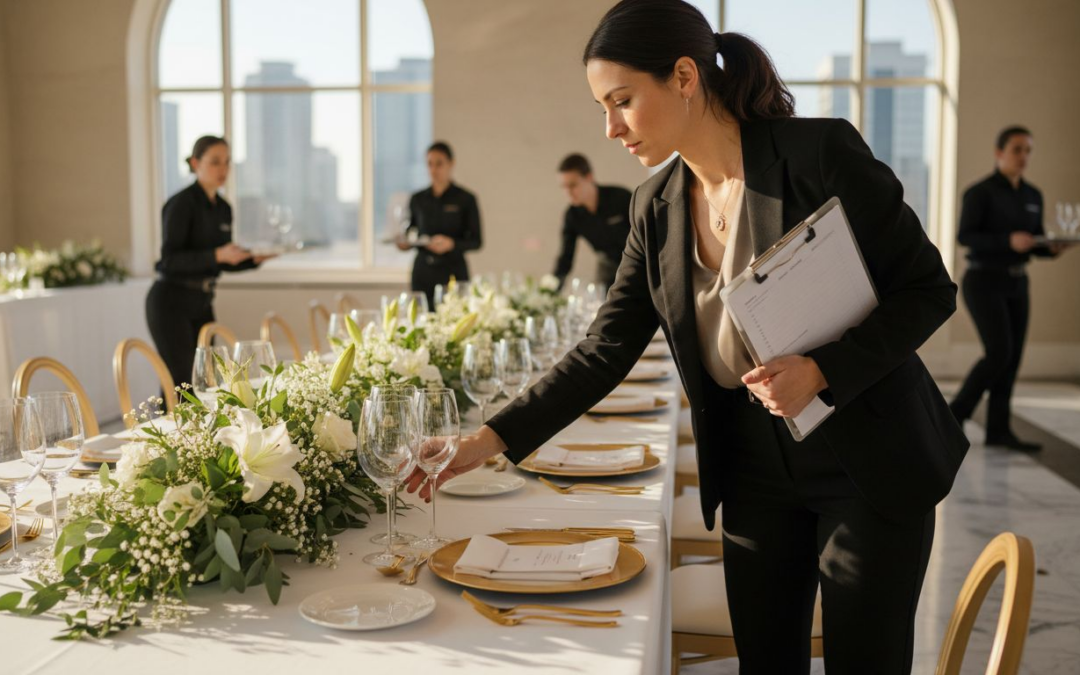
Planning a luxury wedding in Cape Town is about more than choosing beautiful venues and exquisite menus. For couples who value elegance and individuality, the real challenge lies in finding professionals with a strategic vision and mastery of comprehensive logistics management. Event planning blends creativity with operational excellence, turning your unique ideas into impeccably orchestrated celebrations that reflect your personal style and story.
Table of Contents
- Defining Event Planning And Its Core Purpose
- Key Types Of Events And Experiences
- Essential Skills And The Planning Process
- Roles, Responsibilities, And Collaboration
- Risks, Costs, And Common Pitfalls
Key Takeaways
| Point | Details |
|---|---|
| Core Purpose of Event Planning | Event planning is about creating memorable experiences through strategic coordination, logistics, and creative execution. |
| Diverse Event Types | Luxury event planning encompasses various occasions, such as corporate conferences, gala dinners, and personal milestones, each demanding tailored approaches. |
| Essential Skills for Success | Successful event planners must master strategic communication, project management, and risk mitigation to transform client visions into reality. |
| Collaboration and Communication | Establishing clear roles and robust communication frameworks among stakeholders is crucial for seamless event execution and success. |
Defining Event Planning and Its Core Purpose
Event planning is a sophisticated professional discipline that transforms conceptual ideas into extraordinary, memorable experiences. At its core, event management involves strategic coordination of complex logistical, creative, and operational elements to deliver seamless occasions that exceed client expectations.
Professional event planning encompasses several critical dimensions that distinguish it from casual gathering organisation:
- Strategic vision that translates client objectives into tangible experiences
- Comprehensive logistics management covering every minute detail
- Creative conceptualisation that ensures unique, personalised outcomes
- Technical execution requiring precision and professional expertise
- Budget optimisation to deliver maximum value within financial constraints
The fundamental purpose of event planning goes far beyond mere arrangement of spaces and schedules. It represents a nuanced art of crafting experiences that resonate emotionally and strategically with attendees. Professional event management integrates creativity with operational excellence, ensuring that each occasion becomes a meticulously choreographed narrative.
For luxury occasions in particular, event planning transforms abstract concepts into tangible, immersive environments. This requires deep understanding of client vision, technical expertise, vendor management, and an unwavering commitment to perfection.
Event planning is not just about organising an occasion – it’s about curating extraordinary moments that become lifelong memories.
Pro tip: When selecting an event planner, prioritise professionals who demonstrate both creative imagination and rigorous operational capabilities.
Key Types of Events and Experiences
Luxury event planning encompasses a diverse spectrum of sophisticated occasions, each requiring unique strategic approaches and meticulous attention to detail. These events can be broadly categorised into several distinct yet interconnected types, designed to create memorable and transformative experiences for discerning clients.
Professional events represent a significant category that includes:
- Corporate conferences targeting professional networking and strategic communication
- Gala dinners showcasing organisational achievements and building relationships
- Product launches introducing innovative offerings with immersive brand experiences
- Team-building retreats fostering organisational culture and interpersonal dynamics
- International symposiums facilitating knowledge exchange and academic discourse
Experiential learning opportunities extend beyond traditional corporate environments, encompassing social and personal milestone events such as weddings, anniversaries, and significant birthday celebrations. These occasions transcend mere logistical arrangements, becoming profound narrative experiences that reflect individual identities and aspirations.
Personal and social events further subdivide into nuanced categories that demand bespoke planning strategies:
- Destination weddings requiring intricate international logistics
- Milestone birthday celebrations crafted around individual preferences
- Anniversary events commemorating personal and professional achievements
- Cultural celebrations honouring heritage and familial traditions
- Philanthropic galas connecting social consciousness with sophisticated entertainment
Luxury event planning transforms ordinary gatherings into extraordinary, immersive experiences that resonate deeply with participants.
Pro tip: Select an event planner who demonstrates versatility across multiple event categories and can personalise experiences to your unique vision.
Essential Skills and the Planning Process
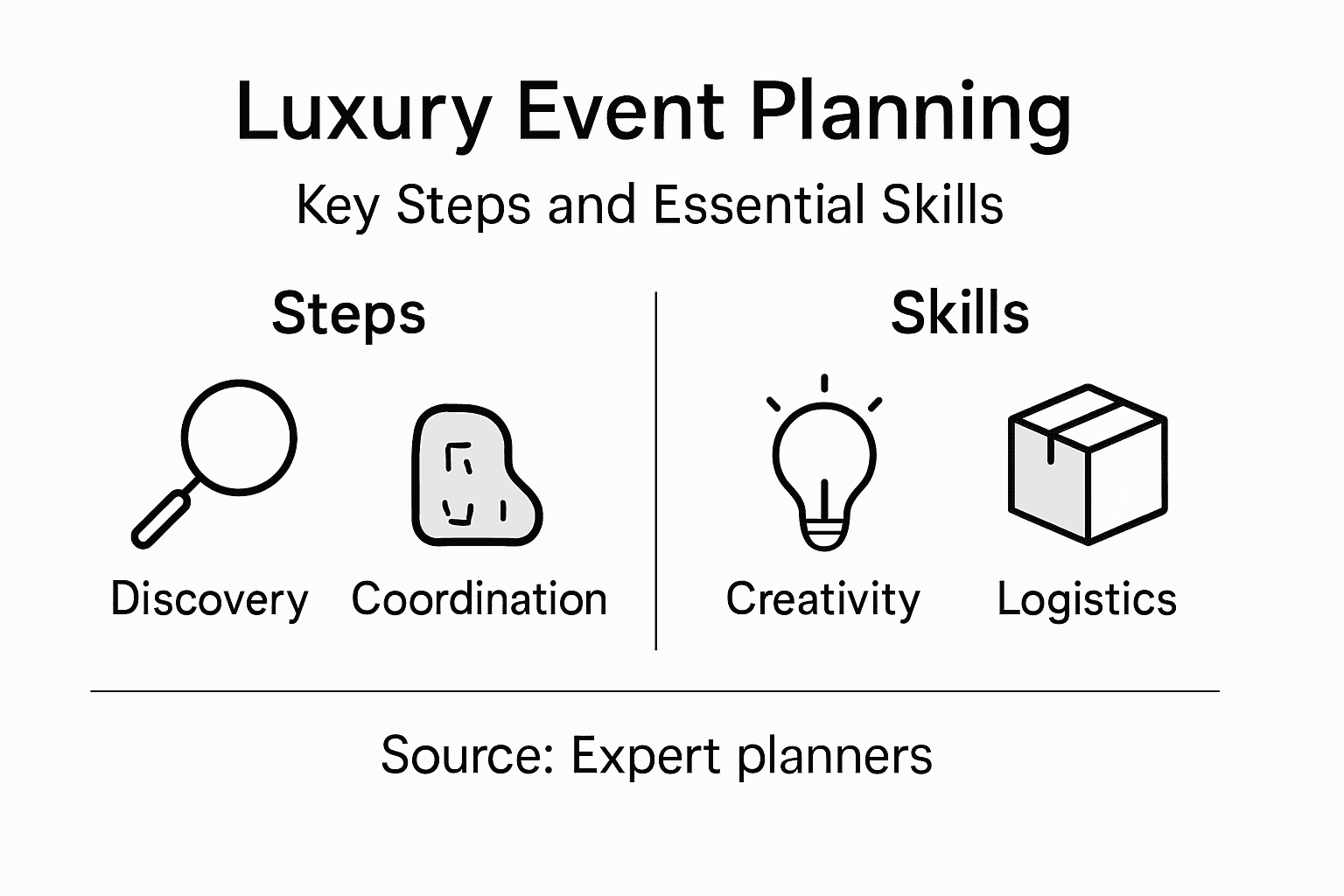
Event planning demands a complex combination of professional skills and strategic capabilities that transform creative vision into flawless execution. Successful event management requires mastering multiple competencies that bridge creativity, technical precision, and interpersonal communication.
The essential professional skills crucial for exceptional event planning include:
- Strategic communication enabling clear client interactions
- Project management for coordinating intricate event details
- Budget negotiation and financial resource allocation
- Vendor relationship management
- Risk assessment and mitigation
- Creative problem-solving under pressure
- Emotional intelligence for managing client expectations
The comprehensive planning process unfolds through meticulously structured stages that ensure systematic and sophisticated event development. Each stage requires specific technical expertise and creative thinking to navigate potential challenges and deliver extraordinary experiences.
Meeting and event planning typically involves a strategic progression through key developmental phases:
- Initial client consultation and vision alignment
- Comprehensive event conceptualisation
- Detailed logistical planning
- Vendor and resource coordination
- Contingency and risk management
- Execution and real-time problem resolution
- Post-event evaluation and client feedback
Exceptional event planning transcends technical skills – it’s about transforming clients’ dreams into meticulously crafted realities.
Pro tip: Develop a personalised planning framework that balances structured methodology with creative flexibility.
Roles, Responsibilities, and Collaboration
Luxury event planning represents a complex ecosystem of interconnected professional relationships, where seamless collaboration determines the ultimate success of an occasion. Strategic event management relies on clearly defined roles that ensure every participant understands their specific responsibilities and contributions.

The key stakeholders in luxury event planning typically include:
Here’s a summary of how each major stakeholder contributes to luxury event planning success:
| Stakeholder | Primary Role | Key Contribution to Success |
|---|---|---|
| Event Planner | Strategic orchestration and oversight | Delivers seamless client vision realisation |
| Client | Vision definition and decision-making | Ensures objectives and preferences are met |
| Vendors | Specialised service execution | Provides high-quality products and services |
| Creative Directors | Design and conceptualisation | Shapes event atmosphere and uniqueness |
| Technical Coordinators | Logistics and operational management | Guarantees smooth technical implementation |
| Supporting Staff | Tactical on-site assistance | Executes detailed tasks professionally |
- Event planner: Overall strategic orchestration and execution
- Client: Vision definition and final approval
- Vendors: Specialised service provision
- Creative directors: Aesthetic and design conceptualisation
- Technical coordinators: Logistical and operational management
- Supporting staff: Tactical implementation
Event management professionals play multifaceted strategic roles that span comprehensive operational domains. These roles extend beyond traditional event coordination, encompassing research, design, technical preparation, stakeholder communication, and post-event evaluation.
Effective collaboration requires establishing robust communication frameworks that facilitate:
- Transparent information sharing
- Clear expectation management
- Responsive problem-solving mechanisms
- Flexible adaptation to changing requirements
- Mutual respect for professional expertise
- Unified commitment to event success
Exceptional events emerge from harmonious collaboration, where each stakeholder’s expertise contributes to a seamless, extraordinary experience.
Pro tip: Develop comprehensive communication protocols that establish clear responsibilities while maintaining collaborative flexibility.
Risks, Costs, and Common Pitfalls
Luxury event planning involves navigating complex financial and operational challenges that can significantly impact overall event success. Event safety risks encompass multiple critical dimensions that demand proactive strategic management and comprehensive contingency planning.
Financial risks and potential cost overruns typically emerge through several key vulnerabilities:
- Vendor contract complexities
- Unexpected logistical expenses
- Technical equipment failures
- Last-minute guest requirement changes
- Currency exchange fluctuations
- Cancellation and postponement risks
Common event planning pitfalls require strategic anticipation to mitigate potential negative outcomes. These challenges demand sophisticated risk management approaches that balance creative vision with pragmatic financial controls.
Critical risk mitigation strategies include:
The following table compares common event risks with effective mitigation strategies in luxury event planning:
| Common Risk | Potential Impact | Mitigation Strategy |
|---|---|---|
| Unexpected logistical expense | Budget overrun, reduced quality | Contingency budgeting and tracking |
| Vendor contract issues | Service interruption, legal disputes | Rigorous vetting and clear contracts |
| Technical equipment failure | Programme delays, guest dissatisfaction | Backup equipment and on-site checks |
| Guest requirement changes | Increased costs, planning disruption | Flexible planning and communication |
- Developing comprehensive contingency budgets
- Implementing rigorous vendor vetting processes
- Creating detailed backup plans for critical event components
- Establishing clear contractual expectations
- Maintaining flexible insurance coverage
- Conducting thorough scenario planning
Effective risk management transforms potential vulnerabilities into opportunities for demonstrating professional excellence.
Pro tip: Always allocate 15-20% of your total event budget as a contingency reserve to manage unexpected challenges.
Elevate Your Luxury Occasion with Expert Event Planning
Planning a luxury event requires more than organising logistics it demands strategic vision, creative imagination, and flawless execution to create extraordinary, immersive experiences. If you seek to overcome challenges such as intricate vendor coordination, budget optimisation and adapting to unexpected changes, partnering with a seasoned professional is essential. At Winelands Function, we understand the nuances that turn your dream into a meticulously crafted reality prioritising every detail from concept to completion.
Discover how our personalised approach can help you navigate risks while delivering sophistication and emotional resonance tailored to your unique vision. Explore our portfolio of services to see why discerning clients trust our expertise for weddings, corporate events and bespoke celebrations. Begin your journey by visiting Winelands Function and reach out today to transform your luxury occasion into an unforgettable experience.
Frequently Asked Questions
What are the key responsibilities of an event planner?
Event planners are responsible for orchestrating all aspects of an event, including strategic vision alignment, comprehensive logistics management, vendor coordination, budget optimisation, and risk assessment to ensure a seamless experience.
How does luxury event planning differ from standard event planning?
Luxury event planning involves a higher level of personalised service, meticulous attention to detail, and creativity to transform ordinary gatherings into extraordinary experiences that resonate with attendees on an emotional level.
What skills are essential for successful event planning?
Key skills for successful event planning include strategic communication, project management, budget negotiation, vendor relationship management, creative problem-solving, and emotional intelligence to effectively manage client expectations.
What common risks should be managed in luxury event planning?
Common risks in luxury event planning include unexpected logistical expenses, vendor contract issues, technical equipment failures, and last-minute guest requirement changes. Effective risk management strategies involve contingency budgeting, rigorous vendor vetting, and the creation of detailed backup plans.
Recommended
- The Event Planner: Elevating Cape Town’s Luxury Occasions – Winelands Function – For Every Occasion, Your Celebration
- Complete Guide to Benefits of Luxury Event Planning – Winelands Function – For Every Occasion, Your Celebration
- Event Planning Coordinator: Crafting Luxury Experiences – Winelands Function – For Every Occasion, Your Celebration
- Roles in Event Management: Elevating Luxury Events – Winelands Function – For Every Occasion, Your Celebration
- 7 Expert Ways To Select Rings For Special Occasions