
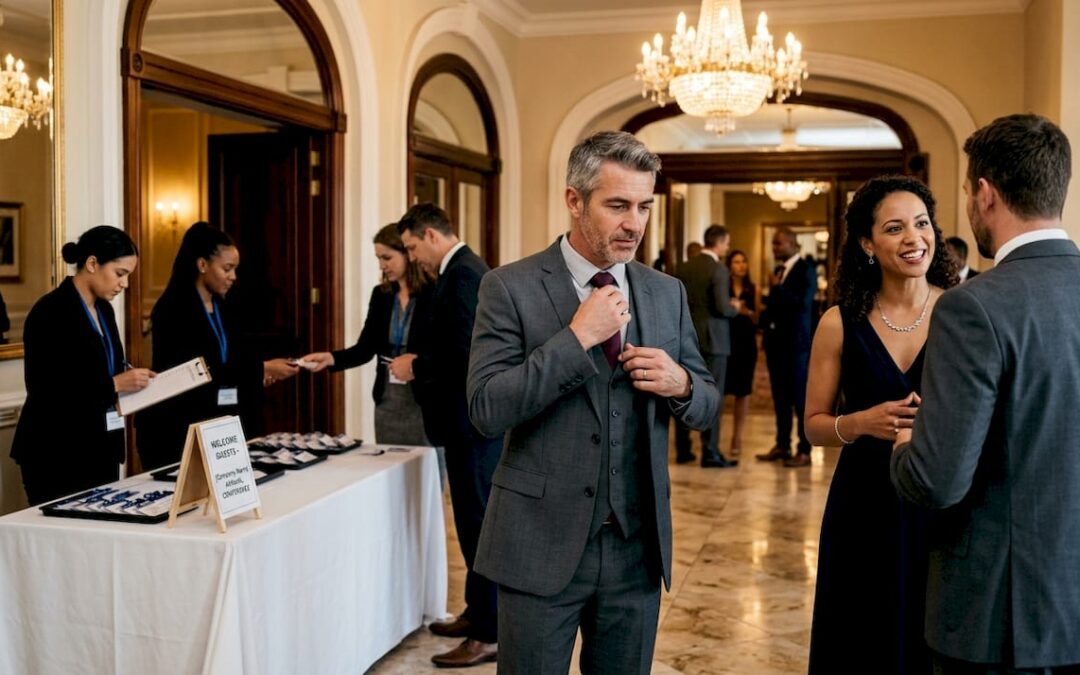
Most corporate event planners have encountered two extremes: the dry, forgettable conference dinner and the over-the-top party that leaves guests wondering what the point was. A true corporate gala sits in neither camp. It is a precisely engineered experience that blends formal elegance with strategic purpose, whether that means celebrating company milestones, recognising outstanding employees, or deepening relationships with key partners. In Cape Town, where world-class venues meet a rich cultural backdrop, the corporate gala has become a mark of genuine sophistication, aligning local flair with international standards. This guide walks you through everything you need to know, from definition and structure to budgeting and venue selection.
Table of Contents
- What is a corporate gala?
- Standard format and structure of a corporate gala
- Comparing gala types: fundraising vs pure corporate focus
- Budget benchmarks and planning for Cape Town galas
- Cape Town venues and thematic sophistication
- Insider tips for elevating your next corporate gala
- Sophisticated corporate gala planning made effortless
- Frequently asked questions
Key Takeaways
| Point | Details |
|---|---|
| Definition matters | A corporate gala uniquely melds formal celebration, networking, and brand engagement under one elegant event. |
| Planning is strategic | Lead times, budgeting frameworks, and intentional details are critical for a flawless Cape Town corporate gala. |
| Cape Town advantage | Local venues and themes significantly increase both attendance and perceived sophistication. |
| Customisation is key | Bespoke touches, sustainability, and expert guidance distinguish ordinary galas from unforgettable experiences. |
What is a corporate gala?
The term gets used loosely, but the definition is actually quite specific. A corporate gala is a formal, elegant event hosted by businesses to celebrate achievements, network with partners, recognise employees, or raise funds, featuring fine dining, entertainment, speeches, and themed décor under a black-tie dress code. That last detail matters more than people realise. The dress code signals intent. It tells every guest that this evening carries weight.
“A corporate gala is not simply a dinner with a podium. It is a curated brand experience where every element, from the centrepiece to the closing act, communicates organisational values.”
What separates a gala from other types of corporate events is the convergence of several high-impact elements:
- Fine dining: Multi-course menus with premium wine pairings
- Awards and recognition: Structured ceremonies that honour achievement
- Themed entertainment: Live performances, keynote speakers, or immersive experiences
- VIP and leadership presence: C-suite executives, brand partners, and industry figures
- Upmarket atmosphere: Bespoke décor, professional lighting, and curated ambience
This is not a casual networking function. Every detail is intentional, and that intentionality is precisely what makes a gala memorable.
Standard format and structure of a corporate gala
Knowing what a gala is and knowing how one actually unfolds are two different things. A well-executed event follows a clear running order, and deviating from it without good reason is where many planners lose control of the guest experience.
The standard gala format includes a drinks reception, multi-course dinner, speeches and awards, live entertainment or a DJ set, and dancing, with planning typically requiring 12 to 18 months of lead time for premium venues. That timeline surprises most first-time organisers. Cape Town’s top venues book out fast, particularly between September and March.
Here is a typical running order for a Cape Town corporate gala:
- Arrival and drinks reception (60 minutes): Guests are welcomed with canapes and cocktails. This is where first impressions are made and informal networking begins.
- Seated dinner, first course (30 minutes): Guests are guided to their tables. Atmosphere shifts from social to ceremonial.
- Welcome address and keynote (20 minutes): Leadership sets the tone. Keep this tight; long speeches kill momentum.
- Main course and table conversation (45 minutes): The social core of the evening. Music should be ambient, not intrusive.
- Awards ceremony or entertainment (40 minutes): The centrepiece of the programme. Pacing here is critical.
- Dessert and closing remarks (20 minutes): Wrap up with warmth and a clear call to action or thank-you.
- Dancing and informal networking (90 minutes): The evening winds down on a high note.
Pro Tip: Brief your AV team and MC together at least two hours before doors open. Sound delays and lighting miscues during the awards segment are the most common complaints at corporate galas, and they are entirely preventable with a proper technical rehearsal.
For a deeper look at what separates good events from great ones, explore these essential corporate event must-haves that experienced planners rely on.
Comparing gala types: fundraising vs pure corporate focus
Not all galas share the same objective, and confusing the two main formats is a costly mistake. Understanding which type suits your goals will shape every decision that follows.
The contrast between gala types is clear: fundraising galas emphasise auctions and donor return on investment, while pure corporate galas centre on networking, morale, and recognition. Seated black-tie formality suits the latter, whereas cocktail-style casual formats work better for donor-driven events where mingling and bidding take priority.
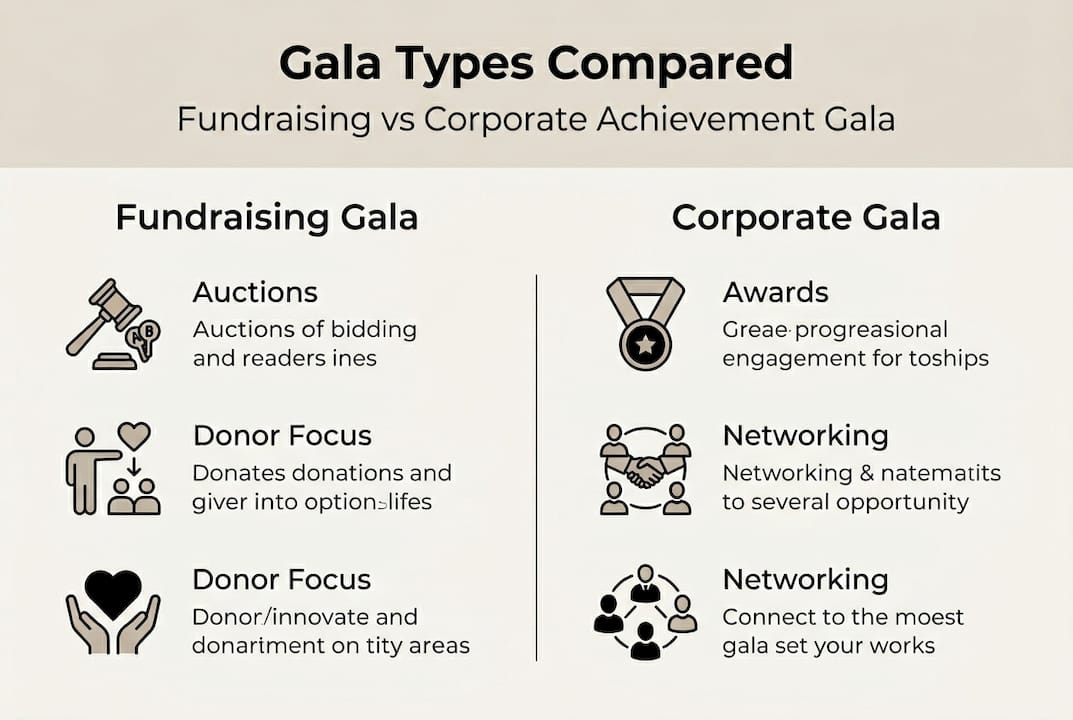
| Feature | Fundraising gala | Corporate achievement gala |
|---|---|---|
| Primary goal | Donor ROI, auction revenue | Recognition, morale, networking |
| Dress code | Black-tie or smart formal | Black-tie |
| Key programme element | Live or silent auction | Awards ceremony |
| Guest profile | Donors, philanthropists | Employees, partners, executives |
| Atmosphere | Energetic, cause-driven | Elegant, brand-aligned |
| Typical duration | 3 to 4 hours | 4 to 6 hours |
Understanding the celebration engagement benefits of each format helps you match the event structure to your organisational goals rather than defaulting to a one-size-fits-all approach.
Pro Tip: If this is your first corporate gala, resist the urge to combine objectives. Pick one primary goal, whether that is employee recognition or client entertainment, and build the entire programme around it. Trying to do everything at once dilutes the impact of everything.
Budget benchmarks and planning for Cape Town galas
Budget conversations are where many corporate galas either take shape or fall apart. Vague estimates lead to scope creep, and scope creep leads to compromised experiences. Concrete benchmarks give you a foundation to work from.
According to Cape Town event budgeting data, a mid-sized gala of around 200 guests typically costs between R450,000 and R700,000 in total, with food and beverage running at R2,000 to R4,000 per person. Venue hire accounts for 15 to 30% of the total budget, food and beverage for 25 to 40%, and audiovisual and technical production for 15 to 25%.
| Budget category | Percentage of total budget |
|---|---|
| Venue hire | 15 to 30% |
| Food and beverage | 25 to 40% |
| AV and technical production | 15 to 25% |
| Décor and theming | 10 to 20% |
| Entertainment | 5 to 15% |
| Contingency | 5 to 10% |
One figure worth noting: events where per-guest spend exceeds R4,000 yield 9% higher engagement scores in post-event surveys. That is not a coincidence. When guests feel genuinely looked after, they engage more deeply with the brand experience. Cape Town events that incorporate local cultural themes also see 30% higher attendance rates compared to generic formats.
For inspiration on what to include beyond the standard programme, browse these unique event activities that add genuine value without inflating costs unnecessarily.
Cape Town venues and thematic sophistication
Cape Town offers a venue landscape that few cities can match. The combination of architectural grandeur, natural scenery, and world-class hospitality infrastructure makes it an exceptional setting for high-end corporate galas.
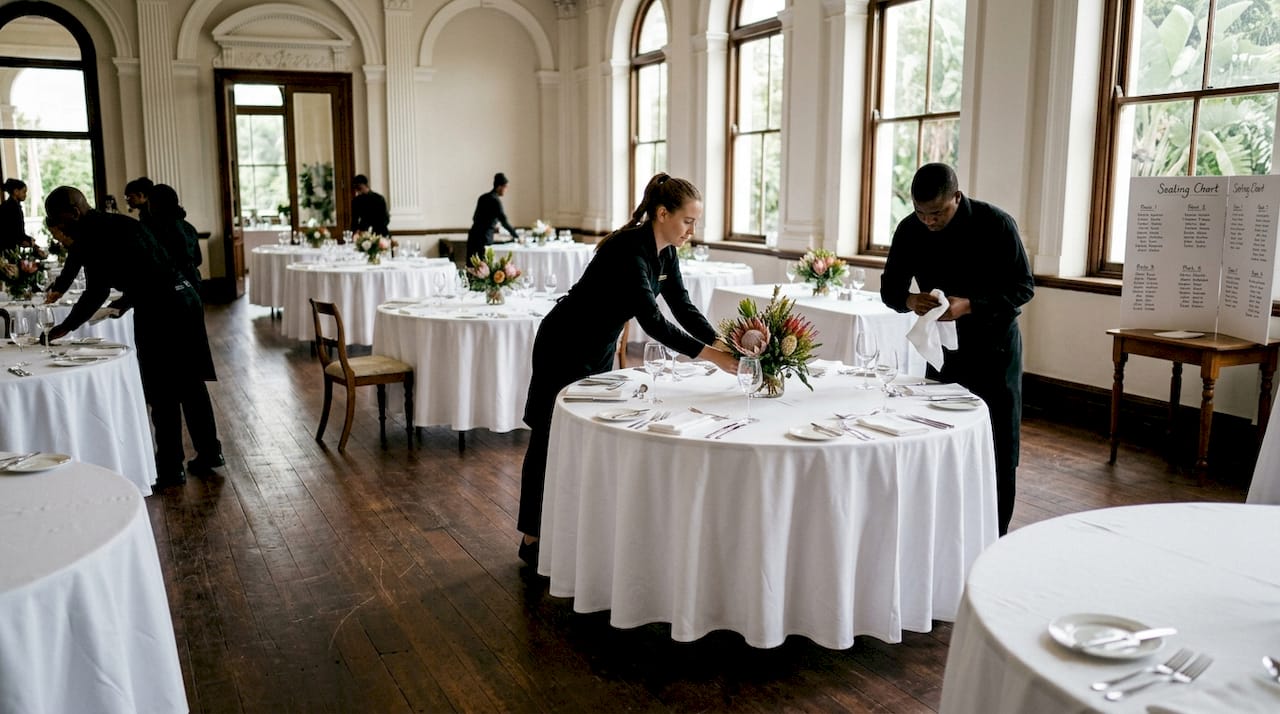
The CTICC and Century City are among the most sought-after venues, with events like the CapeBPO Awards (Century City, October 2025, African Glam theme) and the DealMakers Gala Awards (Sandton, February 2026, 650 attendees) demonstrating the scale and ambition that defines the regional gala circuit.
For luxury Cape Town venues that consistently deliver, consider the following:
- CTICC (Cape Town International Convention Centre): Unmatched capacity and technical infrastructure for large-scale galas
- Century City Conference Centre: Sleek, modern spaces ideal for themed corporate events
- Winelands estates: Intimate luxury with vineyard backdrops, perfect for smaller executive galas
- Waterfront venues: Iconic harbour views that impress international guests immediately
“Integrating local culture, whether through Cape Winelands cuisine, African Glam aesthetics, or indigenous floral arrangements, does not just add visual interest. It creates a sense of place that guests remember long after the evening ends.”
Sustainability is also becoming a non-negotiable for discerning clients. Tracking carbon impact, choosing local suppliers, and minimising single-use materials are now part of the luxury conversation, not an afterthought. Staying current with luxury event trends ensures your gala feels forward-thinking rather than formulaic.
Insider tips for elevating your next corporate gala
The difference between a good gala and an exceptional one rarely comes down to budget. It comes down to intention. Extravagance without purpose impresses no one. Thoughtful details, delivered consistently, create the kind of experience guests talk about for months.
Post-event success hinges on intentional details over extravagance, with guest comfort, seamless technology, and measurable post-event KPIs such as engagement rates, leads generated, and feedback scores forming the backbone of continuous improvement.
Here are the steps that separate elite planners from the rest:
- Map the guest journey: Walk the venue as a guest would, from arrival to departure. Identify friction points before they become complaints.
- Invest in event management software: Tools that handle RSVPs, seating, dietary requirements, and real-time updates reduce human error dramatically.
- Brief every supplier on the brand story: Your florist, caterer, and AV technician should all understand the event’s purpose and tone, not just their individual tasks.
- Build in buffer time: Every segment of the programme should have a five-minute buffer. Speeches run long. Courses arrive late. Buffers save evenings.
- Define your KPIs before the event: Decide in advance what success looks like. Guest satisfaction scores, social media reach, and new business leads are all measurable outcomes.
For a broader view of what is shaping the industry right now, explore the latest corporate event trends and consider how a structured event workflow can keep your team aligned from concept to close.
Sophisticated corporate gala planning made effortless
With all this practical insight, you may be ready to take your next corporate gala from concept to reality. Planning an event of this calibre requires more than a checklist. It requires a partner who understands the nuances of luxury execution in Cape Town’s unique landscape.
At Winelands Function, we specialise in corporate event management that transforms your vision into a seamless, sophisticated experience. From the first planning conversation to the final guest departure, our team handles every detail with precision and care. Whether you need a dedicated event planning coordinator or a fully managed bespoke luxury event, we bring the expertise, supplier relationships, and creative direction that Cape Town’s most discerning clients trust. Reach out today to begin planning a corporate gala that genuinely reflects your brand’s ambition.
Frequently asked questions
How far in advance should I plan a corporate gala in Cape Town?
Allow 12 to 18 months of lead time to secure prime Cape Town venues and ensure thorough coordination, particularly for high-end events during the peak September to March season.
What is the typical guest size and budget for a corporate gala?
Mid-sized Cape Town galas typically host 200 to 300 guests, with total budgets ranging from R450,000 to R700,000 and food and beverage costs of R2,000 to R4,000 per person.
How do I ensure my corporate gala feels sophisticated and unique?
Partnering with experienced luxury planners, selecting venues such as the CTICC, and integrating local culture through Cape Winelands cuisine or African-inspired themes significantly raises both engagement and memorability.
What post-event metrics should I track for corporate galas?
Focus on guest engagement scores, leads generated, and post-event feedback surveys to measure success and identify areas for improvement at future events.
Recommended
- Why host corporate celebrations to boost engagement – Winelands Function – For Every Occasion, Your Celebration
- Why choose Cape Town events for luxury celebrations – Winelands Function – For Every Occasion, Your Celebration
- Activities for corporate events: unique luxury options – Winelands Function – For Every Occasion, Your Celebration
- Corporate Events 2025: Elevating Luxury Experiences Globally – Winelands Function – For Every Occasion, Your Celebration