

Did you know that over 70 percent of engaged couples report high stress levels during wedding preparations? Planning a wedding involves dozens of moving parts, each depending on smooth coordination and careful timing. Understanding the structure behind a wedding coordination workflow is the key to transforming potential chaos into a seamless, joyful celebration where every detail feels effortless.
Key Takeaways
| Point | Details |
|---|---|
| Structured Workflow | A wedding coordination workflow systematically manages planning through stages like initial planning, vendor management, and final implementation. |
| Proactive Communication | Successful coordination relies on effective communication with vendors and clients to anticipate challenges and ensure clear expectations. |
| Risk Management | Implement strategies for risk mitigation, including budget contingencies and regular vendor check-ins, to address potential challenges proactively. |
| Digital Tools Utilization | Leverage advanced project management tools to streamline communication, track tasks, and enhance organizational clarity throughout the planning process. |
Table of Contents
- Defining Wedding Coordination Workflow Fundamentals
- Key Stages In The Coordination Process
- Essential Roles And Responsibilities Explained
- Vendor And Logistics Management Strategies
- Risk Mitigation And Common Mistakes To Avoid
Defining Wedding Coordination Workflow Fundamentals
A wedding coordination workflow transforms the complex landscape of wedding planning into a structured, systematic approach that ensures every detail is meticulously managed. According to research from industry experts, a wedding coordinator’s primary role revolves around logistical and administrative precision, particularly during the critical final weeks before the wedding day.
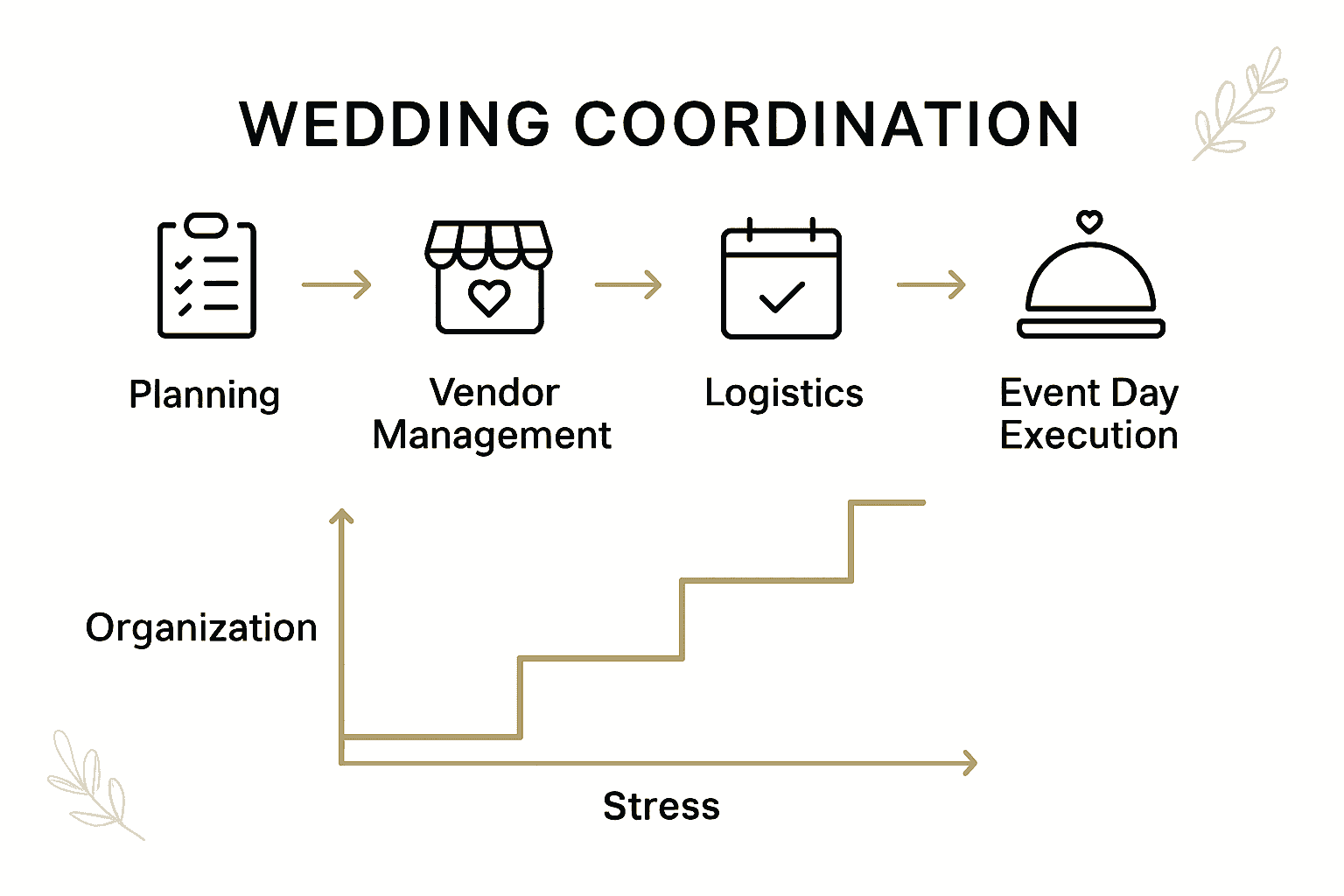
The fundamental workflow typically encompasses several key strategic phases:
- Initial Planning Stage: Establishing comprehensive project timelines and communication protocols
- Vendor Management: Coordinating and synchronising multiple professional services
- Logistical Execution: Managing site walk-throughs, guest logistics, and detailed scheduling

- Final Implementation: Ensuring seamless day-of event execution
Modern wedding coordinators leverage sophisticated project management tools to track progress, communicate effectively, and maintain organisational clarity. Read more about wedding logistics management to understand the intricate details that transform a good wedding into an exceptional celebration.
Successful wedding coordination isn’t just about managing tasks—it’s about creating a stress-free experience for couples by anticipating challenges, proactively solving potential issues, and maintaining a calm, professional approach throughout the planning journey. The workflow acts as a strategic blueprint, converting complex wedding dreams into beautifully orchestrated realities.
Here’s a summary of the main coordination workflow stages:
| Stage | Key Objectives | Typical Activities |
|---|---|---|
| Initial Planning | Define vision Set frameworks |
Project timelines Communication protocols |
| Vendor Management | Select and manage suppliers | Research vendors Negotiate contracts Liaise services |
| Logistical Execution | Co-ordinate event details | Site walk-throughs Guest logistics Schedule refinement |
| Final Implementation | Oversee seamless event delivery | Day-of management Real-time issue resolution |
Key Stages in the Coordination Process
Wedding coordination unfolds through a strategic progression of carefully orchestrated stages, each designed to transform wedding planning from a potentially overwhelming experience into a seamless journey.
According to research from Emerald Engagements, the coordination process spans multiple comprehensive phases that ensure nothing falls through the cracks.
Early Planning Phase
The initial stages are critically important and typically involve:
- Venue Selection: Identifying and securing the perfect location
- Vendor Curation: Researching, interviewing, and selecting professional wedding services
- Budget Alignment: Developing a realistic financial framework
- Preliminary Timeline Creation: Establishing initial event scheduling
Pre-Wedding Coordination
Read more about our step-by-step wedding planning approach, which delves deeper into the intricate details of professional wedding coordination. As outlined by industry research, this phase focuses on:
- Detailed timeline refinement
- Comprehensive vendor communication
- Precise logistical planning
- Rehearsal coordination
Final Execution Stages
The culminating stages involve on-day management, which includes setup oversight, event flow management, and guest experience coordination. According to research from Himalayas Career Guides, these final stages are where meticulous planning transforms into a magical, memorable celebration—ensuring every moment unfolds exactly as envisioned.
Essential Roles and Responsibilities Explained
A wedding coordinator serves as the strategic nerve centre of wedding planning, orchestrating complex logistics with precision and professional finesse. According to research from Himalayas Career Guides, the coordinator’s role extends far beyond simple event management—they are the critical communication hub connecting all wedding elements.
Core Operational Responsibilities
The coordinator’s responsibilities encompass a comprehensive range of critical tasks:
- Vendor Management: Serving as the primary point of contact
- Budget Tracking: Monitoring financial parameters meticulously
- Logistical Coordination: Managing site inspections and venue requirements
- Communication Hub: Ensuring seamless information flow between all parties
Digital Coordination Tools
Explore our guide on wedding logistics management to understand the sophisticated digital ecosystem wedding coordinators leverage. Modern coordinators employ advanced project management software to:
- Centralize communication channels
- Track multiple concurrent tasks
- Create real-time collaborative workflows
- Maintain transparent documentation
Ultimately, a wedding coordinator transforms potential chaos into choreographed elegance. They are part logistical expert, part problem-solver, and part creative director—ensuring that every intricate detail aligns perfectly to create an unforgettable celebration. Their goal isn’t just executing an event, but crafting a seamless, stress-free experience that allows couples to fully immerse themselves in their most cherished moment.
Vendor and Logistics Management Strategies
Successful vendor management is the cornerstone of exceptional wedding coordination, requiring a strategic approach that balances meticulous planning with flexible problem-solving. According to research from Himalayas Career Guides, coordinators play a critical role in researching, recommending, and strategically managing vendor relationships throughout the wedding planning process.
Strategic Vendor Selection
The vendor management process involves several key strategic components:
- Comprehensive Research: Identifying top-tier vendors aligned with the couple’s vision
- Detailed Negotiations: Securing optimal contracts and pricing
- Thorough Verification: Checking vendor credentials, portfolios, and references
- Clear Communication: Establishing transparent expectations and deliverables
Logistical Precision
Explore our comprehensive guide to wedding logistics management to understand the intricate details of vendor coordination. According to insights from Wedding Checkpoint, effective logistics management requires:
- Precise delivery and pick-up scheduling
- Detailed venue requirement clarifications
- Timely setup and teardown coordination
- Proactive communication to prevent potential delays
Ultimately, vendor and logistics management is an art form that transforms complex moving parts into a seamless, beautiful celebration. Skilled coordinators act as strategic conductors, harmonizing multiple professional services to create a perfectly orchestrated wedding experience that exceeds every expectation.
Risk Mitigation and Common Mistakes to Avoid
Wedding planning involves navigating a complex landscape of potential challenges that can derail even the most meticulously organized celebration. According to research from Binfire, successful risk management requires proactive strategies and comprehensive contingency planning.
Critical Risk Areas
The most prevalent wedding planning risks encompass multiple dimensions:
- Vendor Cancellations: Potential last-minute service disruptions
- Weather Disruptions: Unexpected environmental challenges
- Budget Overruns: Financial planning complexities
- Logistical Failures: Coordination and execution gaps
Mitigation Strategies
Read our detailed guide on wedding logistics management to understand comprehensive risk prevention. Based on insights from Blush and Gold, recommended mitigation techniques include:
- Implementing 10-15% budget contingency buffers
- Conducting regular vendor check-ins
- Performing comprehensive final venue walkthroughs
- Designating backup coordinator resources
- Developing detailed, shared planning timelines
- Thoroughly vetting and researching all service providers
Effective risk management transforms potential wedding planning pitfalls into manageable challenges. By anticipating complications and developing strategic backup plans, couples can navigate their wedding journey with confidence, ensuring that unexpected circumstances become mere footnotes in their celebration story.
Make Your Wedding Vision Effortless with Winelands Function
Are you feeling the weight of managing every intricate detail, from vendor negotiations to day-of logistics, highlighted in our “Complete Guide to Wedding Coordination Workflow”? It’s easy to get overwhelmed when trying to ensure nothing falls through the cracks, especially when your goal is a seamless and truly luxurious celebration. If precise planning, stress-free execution, and elegant results are what you seek, Winelands Function is here to bring expertise and peace of mind to your special day.

Discover how our experienced team transforms complex workflows and addresses every pain point outlined in professional event coordination. With meticulous attention to detail and sophisticated tools, we excel at vendor management, logistical harmony, and proactive risk prevention. Visit Winelands Function now to explore our bespoke wedding solutions, review our curated wedding logistics management approach, and learn how our tailored guidance can give you back the joy of wedding planning. Let us help you make every moment perfect—contact us today to begin your journey towards an unforgettable experience.
Frequently Asked Questions
What is a wedding coordination workflow?
A wedding coordination workflow is a structured process that helps manage all aspects of wedding planning, ensuring every detail is organized and executed efficiently.
What are the key stages in the wedding coordination process?
The key stages in the wedding coordination process include the initial planning phase, pre-wedding coordination, and final execution stages, which ensure smooth transitions from planning to the event day.
How can modern wedding coordinators enhance their workflow?
Modern wedding coordinators can enhance their workflow by using advanced project management tools that help track tasks, maintain communication, and document all aspects of the wedding planning process.
What are some common risks in wedding planning and how can they be mitigated?
Common risks include vendor cancellations, weather disruptions, budget overruns, and logistical failures. These can be mitigated by developing contingency plans, conducting regular check-ins with vendors, and maintaining a budget buffer.
Recommended
- The True Value of On-the-Day Coordination – Winelands Function – For Every Occasion, Your Celebration
- Step by Step Wedding Planning for Your Perfect Day – Winelands Function – For Every Occasion, Your Celebration
- How to Manage Wedding Logistics: A Step-by-Step Guide – Winelands Function – For Every Occasion, Your Celebration
- Wedding Planning Step by Step: Your Complete Guide – Winelands Function – For Every Occasion, Your Celebration