

Event designers are the creative minds behind unforgettable experiences, blending artistry with meticulous planning to turn any space into something extraordinary. Some clients are surprised when they learn that event designers use technical design software and 3D rendering tools nearly as often as traditional decor. Most people think it is all about flowers and fairy lights but the real power of an event designer lies in their ability to transform abstract ideas into immersive environments that tell powerful stories and spark genuine emotion.
Table of Contents
- Defining Event Designers And Their Key Responsibilities
- The Importance Of Event Designers In Creating Experiences
- How Event Designers Collaborate With Clients And Vendors
- Exploring The Skills And Qualities Of Successful Event Designers
- Real-World Examples Of Event Design Impacting Occasions
Quick Summary
| Takeaway | Explanation |
|---|---|
| Event designers create immersive experiences. | They transform conceptual ideas into engaging environments that resonate with participants. |
| Strategic collaboration is essential for success. | Effective communication with clients and vendors ensures that design visions are successfully executed and integrated. |
| Understanding sensory impact enhances design. | Knowledge of how colours, lighting, and space affect emotions improves participant satisfaction and engagement. |
| Technical skills and creativity are key. | Mastery of design software and understanding of spatial planning combine artistic vision with practical execution. |
| Successful events tell compelling stories. | Event design goes beyond aesthetics; it creates narratives that engage audiences on emotional levels. |
Defining Event Designers and Their Key Responsibilities
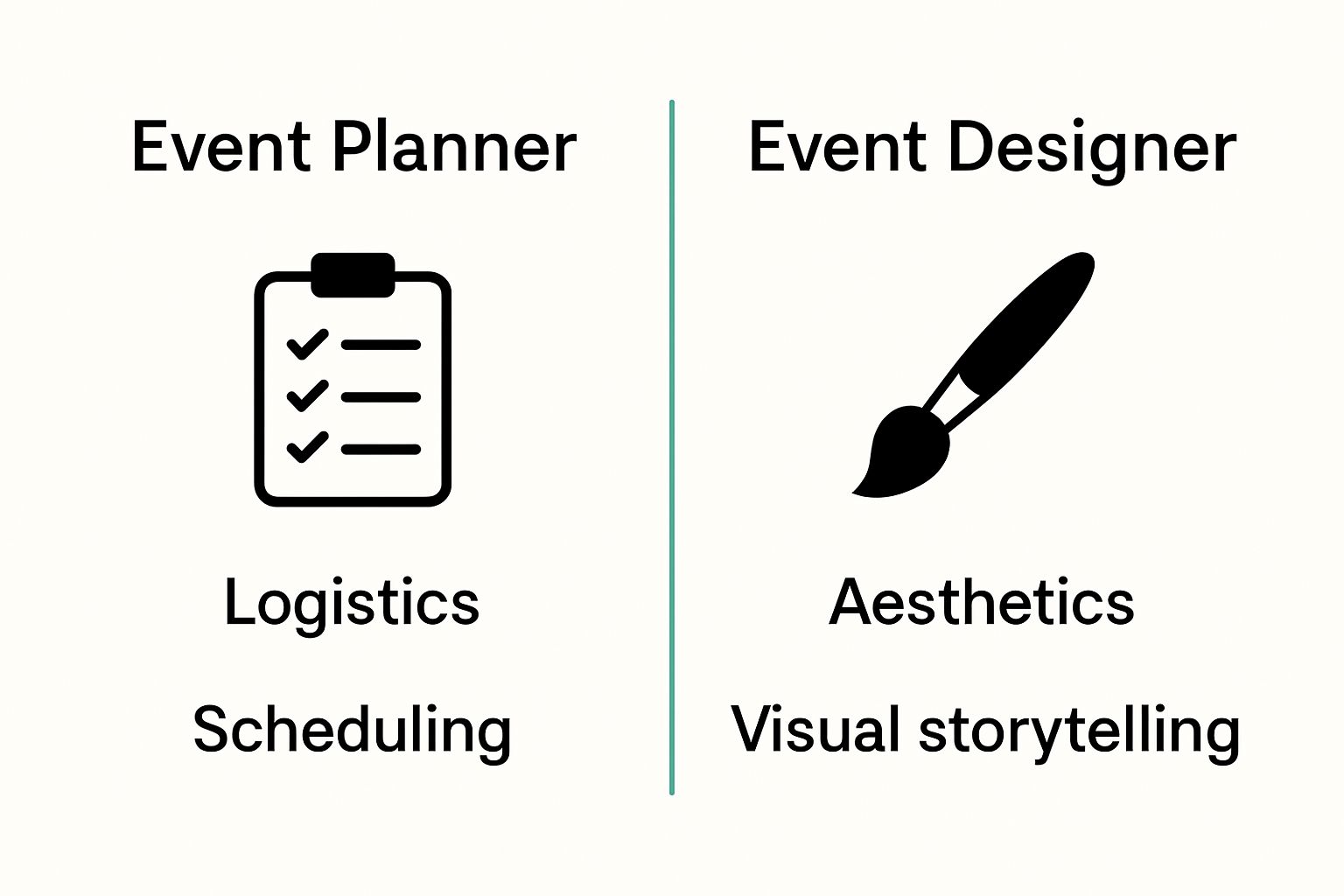
Event designers are creative professionals who transform conceptual visions into immersive, memorable experiences through strategic aesthetic planning and execution. These experts go beyond traditional event planning by focusing specifically on the visual narrative and sensory environment of an event.
The Foundational Role of Event Designers
At their core, event designers are visual storytellers who craft comprehensive experiences through meticulous design strategies. Explore our guide on event design terminology to understand the nuanced language of this profession. Their responsibilities encompass more than mere decoration they create holistic environments that communicate specific emotions, brand messages, and thematic intentions.
Key responsibilities include:
- Developing cohesive visual concepts aligned with client objectives
- Selecting appropriate colour palettes, textures, and design elements
- Creating spatial layouts that enhance guest interaction and experience
- Coordinating with vendors to ensure design integrity
Technical and Creative Expertise
Successful event designers blend technical knowledge with creative imagination. According to Career One Stop, they must possess a sophisticated understanding of spatial design, colour theory, lighting techniques, and architectural principles. Technical proficiency in design software like Adobe Creative Suite and 3D rendering tools is equally crucial.
Their skill set requires them to translate abstract client briefs into tangible, immersive environments that engage multiple sensory experiences. Whether designing an intimate wedding reception or a large corporate launch, event designers must balance aesthetic appeal with functional practicality, ensuring every design element serves a strategic purpose.
The Importance of Event Designers in Creating Experiences
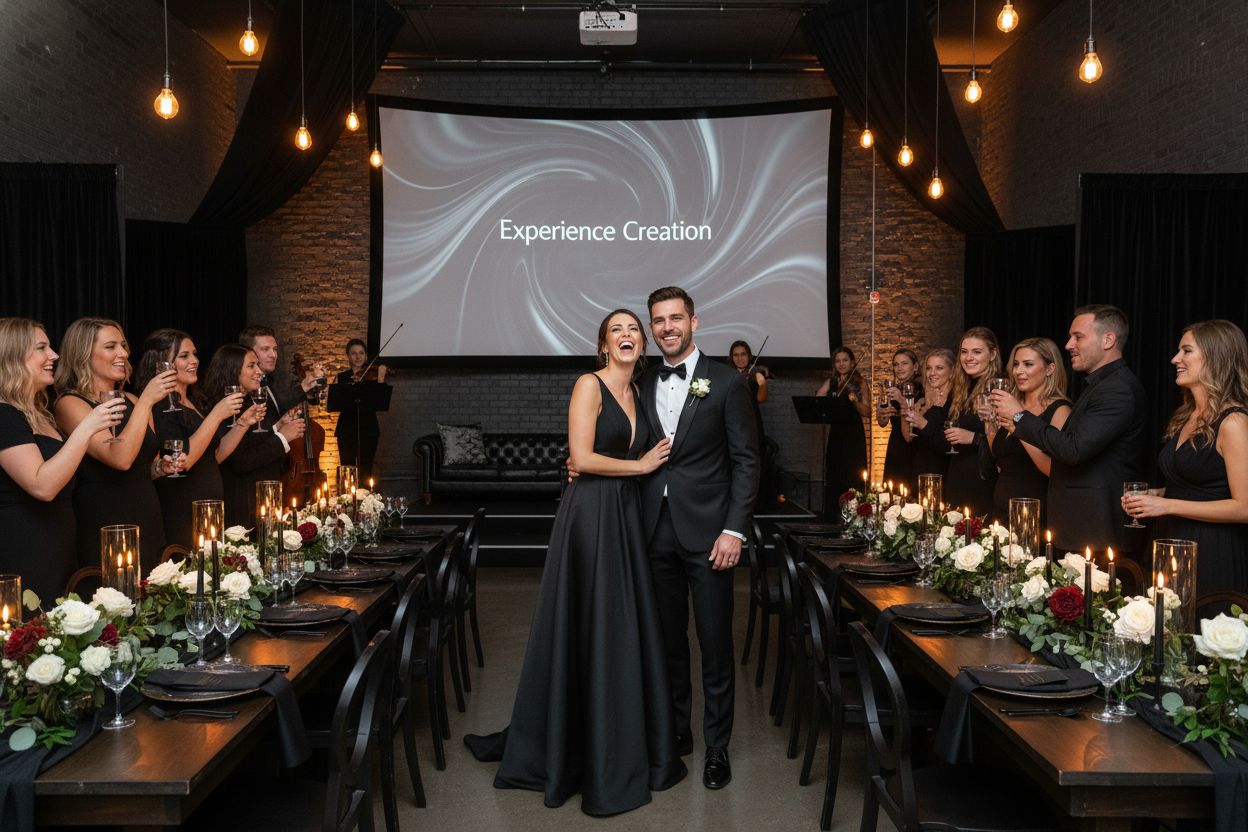
Event designers are instrumental in transforming ordinary gatherings into extraordinary, immersive experiences that resonate deeply with participants. Their strategic approach to design transcends traditional aesthetic considerations, creating multi-sensory environments that communicate powerful narratives and emotional connections.
Crafting Meaningful Experiences
Beyond mere visual arrangement, event designers construct environments that tell compelling stories. Learn more about our event design workflow to understand the intricacies of this process. Strategic experience design involves understanding how physical spaces, sensory stimuli, and visual elements can profoundly influence human perception and emotional engagement.
Key elements of experience creation include:
- Creating immersive environments that evoke specific emotional responses
- Designing spaces that facilitate meaningful human interactions
- Developing thematic narratives through visual and spatial storytelling
- Translating abstract brand or personal concepts into tangible experiences
The Psychological Impact of Design
According to research from ResearchGate, well-designed events significantly enhance participant satisfaction by strategically managing sensory inputs. Event designers leverage principles of environmental psychology, understanding how colour, lighting, spatial arrangement, and texture can subtly manipulate mood, perception, and social dynamics.
Psychological design principles enable event designers to create environments that are not just visually appealing, but emotionally intelligent. Whether orchestrating an intimate wedding celebration or a large corporate conference, these professionals craft experiences that engage participants on multiple cognitive and emotional levels, transforming ordinary gatherings into memorable, transformative moments.
How Event Designers Collaborate with Clients and Vendors
Collaboration lies at the heart of successful event design, requiring intricate communication strategies and a nuanced understanding of stakeholder expectations. Event designers act as strategic intermediaries, bridging client visions with practical vendor capabilities through sophisticated interpersonal and professional skills.
Client Engagement and Vision Alignment
The collaboration process begins with comprehensive client consultations designed to unpack complex requirements and translate abstract ideas into concrete design concepts. Discover our essential event design tips for understanding client communication nuances. Effective communication involves active listening, asking strategic clarifying questions, and presenting design concepts that authentically reflect client aspirations.
Key collaboration strategies include:
- Conducting in-depth initial discovery meetings
- Creating mood boards and visual concept presentations
- Developing iterative design proposals
- Establishing clear expectations and feedback mechanisms
Vendor Management and Coordination
According to Event Industry Research Collaborative, successful event designers must function as expert project managers, coordinating multiple vendor relationships with precision and diplomatic skill. They serve as central communication hubs, ensuring seamless integration of various design elements from different specialist providers.
Vendor collaboration requires intricate negotiation skills and a comprehensive understanding of technical capabilities across diverse disciplines such as floral design, lighting, staging, catering, and audio visual production. Event designers must expertly balance creative vision with practical constraints, negotiating vendor capabilities while maintaining the integrity of the original design concept. Their role transcends mere aesthetic coordination they are strategic facilitators who transform complex multi stakeholder interactions into cohesive, memorable experiences.
Exploring the Skills and Qualities of Successful Event Designers
Event designers represent a unique professional category that demands an extraordinary blend of creative vision, technical proficiency, and interpersonal excellence. Their success hinges not just on aesthetic talent, but on a comprehensive skill set that enables them to transform conceptual ideas into tangible, memorable experiences.
To clarify the distinct expertise required, this table summarises the core creative and technical competencies of successful event designers highlighted in the article.
| Competency | Description |
|---|---|
| Advanced visual communication | Ability to effectively convey design concepts through visuals, sketches, and presentations |
| Proficiency in digital design software | Mastery of design tools like Adobe Creative Suite and 3D rendering platforms |
| Understanding of spatial design | Skill in developing spatial layouts that optimise guest interaction and experience |
| Knowledge of colour theory | Expertise in selecting colour combinations that align with themes and influence emotions |
| Architectural and sensory design | Understanding architectural principles and sensory impact to create immersive environments |
| Conceptual and abstract thinking | Capacity to translate complex ideas into tangible, engaging event experiences |
Creative and Technical Competencies
Successful event designers possess a multifaceted skill portfolio that bridges artistic imagination with practical execution. Learn more about event design terminology to understand the depth of their professional capabilities. Technical mastery encompasses proficiency in design software, spatial planning techniques, and an intuitive understanding of colour theory, architectural principles, and sensory design.
Critical professional skills include:
- Advanced visual communication abilities
- Proficiency in digital design and rendering tools
- Understanding of architectural and spatial design principles
- Strong conceptual and abstract thinking capabilities
Interpersonal and Strategic Capabilities
According to Professional Event Design Association, exceptional event designers transcend technical skills by demonstrating remarkable emotional intelligence and strategic communication abilities. They must seamlessly navigate complex stakeholder relationships, translating diverse perspectives into cohesive design narratives.
Emotional and professional intelligence enables event designers to read subtle client cues, manage vendor dynamics, and maintain creative integrity while meeting practical constraints. Their success depends on their capacity to be creative visionaries, diplomatic negotiators, and precise project managers simultaneously. Whether designing an intimate wedding or a large corporate event, these professionals transform abstract concepts into immersive, meaningful experiences that resonate deeply with participants.
Real-World Examples of Event Design Impacting Occasions
Event design transcends aesthetic decoration, demonstrating profound capacity to transform experiences, communicate narratives, and create lasting emotional impressions across diverse contexts. By strategically manipulating spatial elements, sensory inputs, and visual narratives, event designers craft immersive environments that fundamentally reshape participant engagement.
Corporate and Professional Event Transformations
In professional settings, event designers revolutionise traditional corporate gatherings by creating environments that foster connection, innovation, and strategic communication. Check our essential event design tips to understand nuanced design strategies. Strategic design interventions can convert mundane conferences into dynamic interactive platforms that enhance learning, networking, and organisational culture.
Notable design impact examples include:
- Technology conferences with interactive digital installations
- Product launches featuring immersive brand storytelling environments
- Annual corporate retreats designed to encourage collaborative thinking
- Leadership summits with carefully curated spatial arrangements
Wedding and Personal Celebration Experiences
According to Research Gate’s arts and festival design study, thoughtful event design can dramatically elevate personal celebrations from standard ceremonies to deeply meaningful, personalised experiences. Narrative design enables couples and hosts to communicate complex emotional stories through carefully constructed visual and spatial elements.
Wedding and celebration designers transform traditional venues by creating customised environments that reflect individual personalities, cultural backgrounds, and unique relationship dynamics.
This table compares the approaches and outcomes of event design in corporate/professional settings versus wedding/personal celebration contexts as discussed in the real-world examples section.
| Context | Approach/Focus | Typical Outcomes |
|---|---|---|
| Corporate/Professional Events | Strategic brand storytelling, spatial design | Enhanced networking, strengthened organisational culture, immersive learning platforms |
| Weddings/Personal Celebrations | Personalised narrative design, symbolism | Highly emotional environments, meaningful memories, culturally resonant experiences |
| By integrating personal symbolism, cultural references, and innovative spatial techniques, they craft experiences that transcend conventional event structures, creating memorable moments that resonate deeply with participants and guests. |
Elevate Your Event Vision With Winelands Function’s Design Expertise
Are you struggling to translate your concept into an immersive experience that guests will remember long after the event? The article highlighted that true success lies in the work of event designers who master visual storytelling, emotional engagement and meticulous spatial planning. If you have ever felt overwhelmed by vendor coordination, or unsure how to make your event actually come alive, you are not alone. Many clients desire both elegance and meaning but find it difficult to connect ideas with professional execution. That is where a dedicated team excels.
Discover how Winelands Function bridges the gap between imagination and reality. Our luxury team in Cape Town specialises in crafting cohesive environments for weddings, corporate launches and bespoke celebrations. We listen, interpret your goals and use refined design strategies to ensure every detail resonates with purpose. To explore the level of care and creativity your event deserves, visit Winelands Function and see our curated portfolio of experiences. Reach out now to start your journey towards an unforgettable event where every element has meaning and beauty.
Frequently Asked Questions
What are the main responsibilities of an event designer?
Event designers are responsible for developing cohesive visual concepts, selecting design elements like colours and textures, and creating spatial layouts that enhance guest experiences. To understand their work better, consider reviewing their design portfolio and asking for specific examples of previous projects.
How do event designers create immersive experiences?
Event designers craft immersive experiences by strategically manipulating spatial elements, sensory stimuli, and visual narratives. To create such an experience, begin by identifying the emotions you wish to evoke and then communicate these ideas with your event designer.
What skills should I look for in a successful event designer?
A successful event designer should have strong competencies in visual communication, technical design software, and project management. Focus on interviewing candidates about their experience and ask them to share how they approached previous projects to gauge their expertise.
How do event designers collaborate with clients?
Event designers collaborate with clients through in-depth consultations to unpack needs and translate ideas into concrete design concepts. Start your collaboration by preparing a mood board of your vision to facilitate deeper discussions with potential event designers.
Can an event designer help with budget management during my event planning?
Yes, event designers can assist with budget management by providing cost estimates for various design elements and ensuring that the vision stays within financial constraints. To manage your budget effectively, outline a clear financial plan and communicate it to your designer at the start of the project.
How long does it typically take to design an event?
The time required to design an event can vary greatly depending on its complexity, but a typical timeline can range from a few weeks to several months. For best results, aim to start the design process at least 30-60 days prior to your event date.
Recommended
- Understanding Event Design Terminology Explained
- Understanding the Event Design Workflow for Stunning Events – Winelands Function – For Every Occasion, Your Celebration
- 7 Essential Event Design Tips for Memorable Experiences – Winelands Function – For Every Occasion, Your Celebration
- Understanding What is Full-Service Event Planning – Winelands Function – For Every Occasion, Your Celebration