

TL;DR:
- A poorly planned corporate event can damage reputation, frustrate attendees, and undermine organizational messages.
- Successful events require clear objectives, detailed requirements, structured planning, effective coordination, and thorough post-event review.
A poorly planned corporate event doesn’t just waste budget — it damages reputation, frustrates attendees, and undermines the very message your organisation set out to deliver. For Cape Town’s corporate sector, where clients and stakeholders have increasingly high expectations, the margin for error is narrow. This guide walks you through every critical stage of the planning process, from clarifying your initial objectives right through to post-event review, offering a practical, expert-backed framework designed for professionals who understand that every detail counts.
Table of Contents
- Understanding your event objectives and requirements
- Building your planning toolkit and timeline
- Step-by-step execution: From venue booking to guest experience
- Quality assurance and troubleshooting for flawless execution
- Post-event evaluation and continuous improvement
- Our expert perspective: Why great events succeed or fail
- Let Winelands Function elevate your next Cape Town corporate event
- Frequently asked questions
Key Takeaways
| Point | Details |
|---|---|
| Set clear objectives | A clear goal guides each planning decision and ensures measurable event success. |
| Structure timelines and roles | Detailed planning and defined responsibilities prevent last-minute setbacks. |
| Follow step-by-step execution | A sequenced approach to booking, logistics and guest experience ensures nothing is missed. |
| Prioritise quality checks | Vigilant verification and rapid troubleshooting help deliver flawless events. |
| Review and improve | Post-event analysis and feedback fuel continual enhancement for future successes. |
Understanding your event objectives and requirements
Every successful corporate event begins long before a single venue is booked or a caterer is briefed. It begins with clarity. Before any logistical conversation takes place, you need to answer one fundamental question: what is this event actually for?
Corporate events typically fall into recognisable categories. A product launch demands high-impact brand presentation, carefully curated guest lists, and a venue that amplifies the brand message. A strategy retreat calls for privacy, comfortable working environments, and catering that sustains focus across long sessions. A client appreciation evening requires atmosphere, warmth, and hospitality that lingers in memory long after the final canapé is served. Mixing up these priorities, even subtly, leads to events that feel off-key, no matter how polished the surface appears.
Defining clear objectives is essential for successful event planning, and it directly shapes every decision that follows. Get this wrong and your timeline, budget, and vendor brief all drift in different directions.
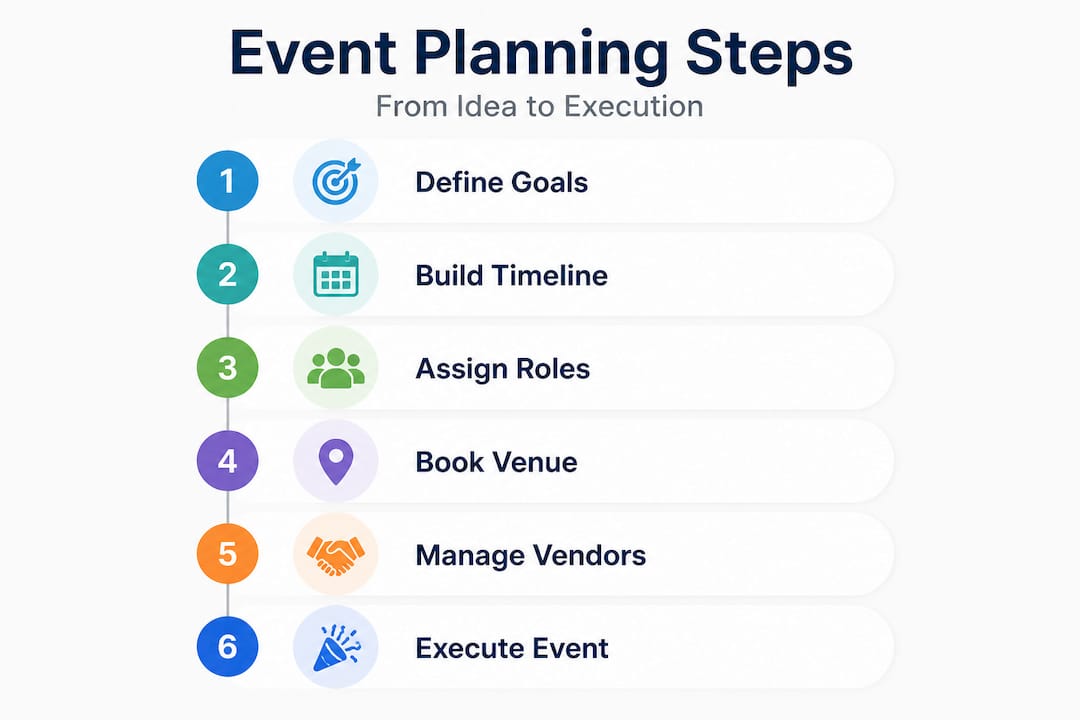
Once the purpose is defined, you need to identify your attendees precisely. Senior executives from international firms have vastly different expectations from mid-level internal staff attending a team-building day. Map out who is attending, what they value, and what level of service will make them feel genuinely looked after.
From there, build your requirements list. The table below provides a useful starting structure.
| Requirement | Details to confirm |
|---|---|
| Event purpose | Launch, retreat, celebration, conference, networking |
| Guest count | Minimum and maximum capacity |
| Catering style | Seated dinner, cocktail, buffet, dietary requirements |
| AV and technology | Presentations, live streaming, sound systems |
| Accommodation | On-site or nearby hotel arrangements |
| Transport | Shuttle logistics, parking, VIP transfers |
| Branding needs | Signage, custom décor, branded materials |
| Budget ceiling | Total and per-head spend |
Using this structure ensures nothing critical is overlooked during briefing sessions. Review your corporate event best practices checklist early, so your requirements align with industry standards from the outset.
Key questions to work through at this stage include:
- What does success look like at the end of this event?
- Which stakeholders need to approve the brief before planning proceeds?
- Are there non-negotiable venue features or restrictions?
- What tone should the event communicate: formal, innovative, celebratory, strategic?
This groundwork saves considerable time later and prevents expensive course corrections mid-planning.
Building your planning toolkit and timeline
With the objectives in place, it’s time to organise your resources and draft a planning structure. The most common reason high-end events unravel is not bad taste or insufficient budget. It is poor workflow. Tasks overlap, responsibilities blur, and critical milestones arrive unannounced.
A structured workflow is key to event planning success, and choosing the right tools to manage that workflow matters enormously. Consider how digital platforms compare with traditional approaches.
| Approach | Strengths | Limitations |
|---|---|---|
| Digital project tools (e.g., Asana, Monday.com) | Real-time collaboration, notifications, version control | Learning curve, requires consistent adoption |
| Shared spreadsheets | Accessible, familiar, flexible | No automated alerts, version conflicts |
| Traditional paper checklists | Tangible, easy to review on-site | Not scalable, difficult to update across teams |
| Hybrid approach | Best of both worlds | Requires clear protocols for consistency |
For most luxury Cape Town corporate events, a hybrid approach works well. Digital tools handle team coordination and supplier tracking, while printed checklists serve as the final on-site reference.
A realistic planning timeline for a three-month lead period looks like this:
- Twelve weeks out: Confirm objectives, assemble the planning team, set the total budget, and shortlist venues.
- Ten weeks out: Book venue, confirm catering brief, and engage core suppliers (AV, décor, entertainment).
- Eight weeks out: Issue invitations, begin guest accommodation planning, confirm speaker or entertainment bookings.
- Six weeks out: Finalise programme, confirm dietary requirements, arrange transport logistics.
- Four weeks out: Send reminder communications to guests, confirm all supplier contracts, review staffing.
- Two weeks out: Full run-through with the core team, final guest list confirmation, brief all venue staff.
- One week out: Final quality checks, distribute on-day briefing documents, confirm contingency plans.
- Event day: Team briefing at venue, final walk-through, guest arrival management.
Assigning clear roles prevents duplication and gaps. Your team typically needs a project manager, a logistics coordinator, a hospitality lead, a communications officer, and a technical liaison for AV and production. The role of venue staff is also critical and should be included in your team briefings early, not just on the day.
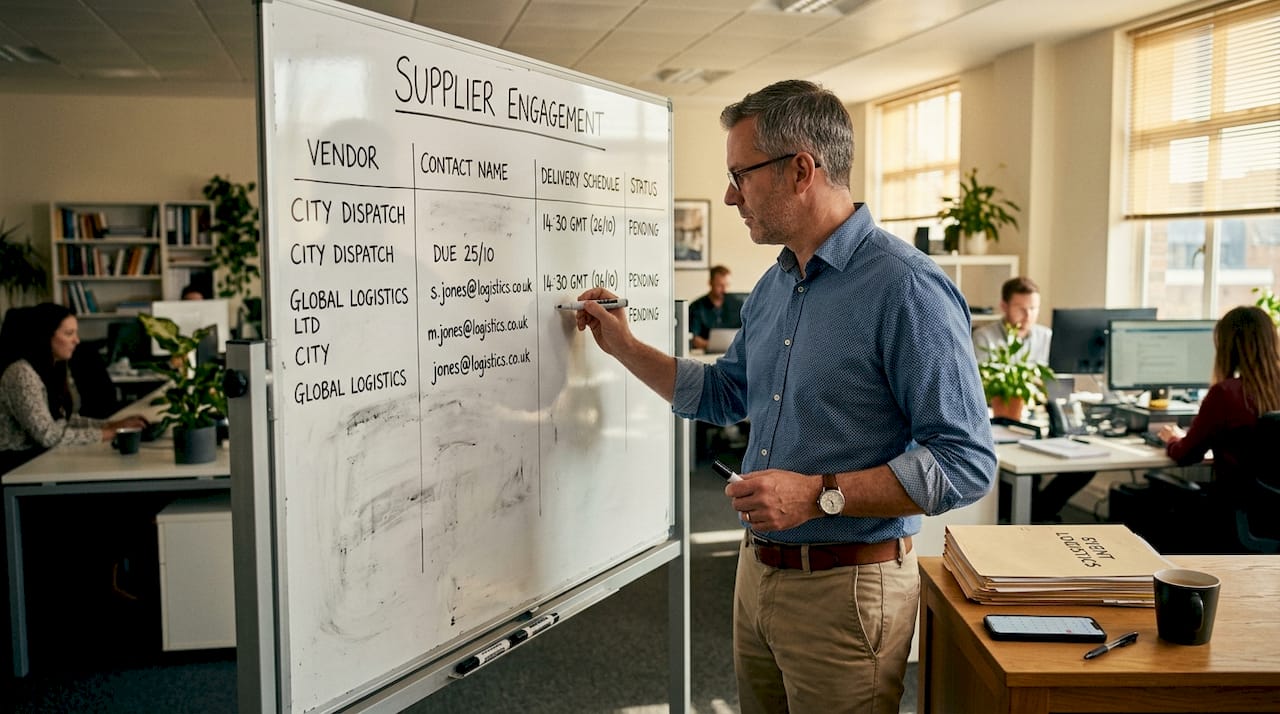
Use your event preparation guide to verify that your supplier engagements align with luxury event standards throughout this period.
Pro Tip: Always build a buffer of at least five to seven days before your event date to absorb last-minute changes without derailing the broader plan. Suppliers often need amendment periods, and guests occasionally require updated arrangements.
Step-by-step execution: From venue booking to guest experience
Armed with your timeline and tools, let’s walk through executing each phase for a seamless luxury event. This is where planning becomes tangible and where the difference between a good event and an exceptional one is made.
-
Venue booking and contract negotiation: Select a venue that serves both the functional and atmospheric needs of your event. Review the contract in detail, paying particular attention to cancellation clauses, noise curfews, exclusive supplier arrangements, and liability terms. Never commit verbally before reviewing the written agreement.
-
Catering brief: Provide your caterer with your full guest profile early, including dietary restrictions, cultural considerations, and service style preferences. For high-end events, request a tasting session to confirm quality before the event day.
-
AV and production coordination: Brief your AV supplier with the event’s full technical requirements. For presentations, live streaming, panel discussions, or awards ceremonies, each scenario requires different equipment configurations. Confirm technical rehearsal times with the venue.
-
Décor and branding: Your décor should reinforce your brand and the event’s tone. For a product launch, this might mean bold brand colours and sculptural centrepieces. For an executive retreat, refined, understated elegance often communicates better.
-
Guest accommodation and transport: This is an area frequently underestimated. Maximising guest comfort through well-arranged accommodation and reliable transport signals genuine hospitality and professionalism.
-
Guest communication: Send clear, well-designed communications at each key stage: initial invitation, confirmation, logistics brief, and a pre-event reminder. Each touchpoint sets expectation and builds anticipation.
“Careful execution of logistics ensures the delivery of a flawless luxury event.” — Winelands Function
Your on-the-day checklist should include guest arrival management, a team communication protocol (walkie-talkies or a group messaging platform), a hospitality station for special requests, and a clear escalation path if issues arise. Study the corporate event planning tips relevant to your event type to ensure your checklist is complete.
Pro Tip: Assign one dedicated team member whose sole role on the day is to shadow the client or host. Their job is to anticipate needs before they are voiced. This single measure dramatically increases perceived service quality.
Quality assurance and troubleshooting for flawless execution
Even the best-laid plans need quality checks and fallback strategies. The events that go wrong most publicly are usually those where quality assurance was treated as optional rather than essential.
Start with a formal final-check protocol approximately 48 to 72 hours before the event. Cover the following:
- Venue setup: walk through the entire space in the same sequence as your guests will experience it
- Technical systems: test all AV equipment, lighting rigs, and microphones under actual event conditions
- Staffing confirmation: verify that all team members and external staff are confirmed and briefed
- Catering sign-off: confirm quantities, service times, and dietary accommodations in writing
- Transport and parking: verify shuttle schedules, parking stewards, and VIP arrival routes
- Emergency and medical: confirm first aid availability and emergency exit access
Proactive troubleshooting is essential for elegant and impactful corporate events. Here is a quick-reference QA table your team can use.
| Component | Verification check | Status |
|---|---|---|
| Venue setup | Walk-through completed and approved | ☐ |
| AV and technical | Full tech rehearsal conducted | ☐ |
| Catering | Menu, quantities, dietary needs confirmed | ☐ |
| Staffing | All roles confirmed and briefed | ☐ |
| Guest communications | Final reminder issued | ☐ |
| Transport | Shuttle and parking confirmed | ☐ |
| Contingency plans | Backup suppliers and protocols in place | ☐ |
For corporate housing solutions for out-of-town guests, confirm accommodation arrangements at least two weeks in advance to avoid availability issues.
Risk management at the luxury end of the market requires backup thinking for every high-risk element. AV fails, caterers withdraw, speakers cancel. Each critical element should have an identified fallback. Document these clearly in your team briefing so everyone knows the response protocol without needing to escalate for basic decisions.
Pro Tip: Brief your entire on-site team on the “never let the guest see the problem” principle. How your team handles a difficulty in real time defines the guest experience more powerfully than the difficulty itself.
Post-event evaluation and continuous improvement
After a successful event, thorough evaluation closes the feedback loop and ensures each event is better than the last. Structured post-event evaluation is key for continuous improvement, and organisations that consistently plan excellent events treat this stage as seriously as the planning itself.
Use a combination of methods to collect meaningful feedback:
- Digital surveys: Distribute within 24 to 48 hours of the event while impressions are fresh. Keep surveys short (five to eight questions) and include at least one open-ended question.
- One-to-one conversations: For senior stakeholders or key clients, a brief follow-up call is worth more than any survey. Ask specifically what exceeded expectations and what could be refined.
- Team debrief: Bring the planning team together within one week of the event. Cover what worked, what didn’t, and what processes need adjustment.
- Supplier performance review: Rate each supplier against the agreed brief. This informs future procurement decisions.
- Objective versus outcome analysis: Return to the objectives you defined at the outset. Did the event achieve its stated purpose? Use measurable indicators where possible: attendance rates, survey scores, social engagement, or lead generation figures.
Document everything. A structured post-event report, archived and accessible, becomes an invaluable resource for future planning cycles. It also demonstrates accountability and professionalism to internal stakeholders who authorise event budgets.
Our expert perspective: Why great events succeed or fail
Stepping back, here’s where most event guides and even seasoned planners go wrong.
Almost every corporate event planning resource focuses on checklists. And checklists matter, genuinely. But they create a dangerous false sense of security. A checklist tells you that the microphone is on. It doesn’t tell you whether the room feels right, whether the host has the right energy, or whether the guest who travelled from London feels genuinely welcomed or merely processed.
The events that people remember — and the ones that move the needle commercially — succeed because they deliver a feeling. That feeling is the product of a thousand small decisions, most of which don’t appear on any standard checklist. The temperature of the room. The way the first drink is offered. The lighting at the moment of reveal. These are not accidental. They are the product of planners who asked, at every decision point, “what will this feel like for the person experiencing it?”
We have seen events with generous budgets and exhaustive checklists fall flat because nobody made those calls. We have also seen events with tight budgets produce extraordinary guest experiences because the planning team never lost sight of the human at the centre of it all.
The other myth worth challenging is that event crises are caused by complex, unforeseeable problems. In reality, most failures trace back to overlooked basics: a supplier who wasn’t re-confirmed, a guest list that wasn’t updated, a technical rehearsal that was skipped to save time. The best practices for corporate events that matter most are rarely glamorous. They are disciplined, repeatable habits applied consistently at every stage.
Adaptability is the final ingredient that separates good planners from exceptional ones. Plans change. Guests are late. Equipment fails. Weather intervenes. Your response in those moments is visible to everyone in the room. Calm, confident adaptability is itself a form of hospitality.
Let Winelands Function elevate your next Cape Town corporate event
Ready to turn these insights into a remarkable experience? At Winelands Function, we bring together the expertise, supplier relationships, and creative precision that luxury corporate events in Cape Town demand.
Whether you are working through your luxury event workflow guide for the first time or refining an established process, our team is here to support every stage. From bespoke celebrations to high-profile product launches and executive conferences, we handle the details so you can focus on what matters: delivering an outstanding experience for your guests. Explore our corporate event management services and get in touch to begin planning your next exceptional event.
Frequently asked questions
What is the ideal lead time for booking a Cape Town corporate event venue?
Three to six months is recommended for popular or high-end venues to secure your preferred date and the full range of services you require.
Which essentials should every step-by-step event plan include?
A well-developed event checklist covers defined objectives, budgeting, venue selection, vendor management, guest communication, and contingency planning.
How do I maximise the guest experience for a luxury corporate event?
Focus on seamless logistics, personal comfort, and high-quality catering, as elevating guest comfort is a key differentiator for premium corporate events.
What are the most common pitfalls in Cape Town corporate event planning?
Key pitfalls include underestimating lead times, communication lapses between team members, and failing to establish a thorough backup plan. Proactive troubleshooting from the outset prevents the majority of these issues.
How can I assess the success of my corporate event?
Gather attendee feedback via surveys and direct conversations, review objectives versus actual outcomes, and document lessons learned. Structured evaluation is key for continuous improvement across future events.
Recommended
- Mastering Corporate Event Workflow for Seamless Success – Winelands Function – For Every Occasion, Your Celebration
- Corporate Event Preparation Guide for Elegance and Impact – Winelands Function – For Every Occasion, Your Celebration
- Corporate event workflow guide: plan high-end events with ease – Winelands Function – For Every Occasion, Your Celebration
- Complete Guide to Corporate Event Planning Success – Winelands Function – For Every Occasion, Your Celebration