

TL;DR:
- South Africa’s events industry contributes R91 billion to GDP and supports 250,000 jobs.
- Professional event management involves creative, logistical, financial, and risk oversight for luxury occasions.
- Expert planning ensures seamless execution, strategic value, and memorable guest experiences.
The South African events industry is far larger and more consequential than most people realise. It contributes R91 billion to the national GDP and supports 250,000 jobs across hospitality, logistics, design, and catering. Yet a surprising number of couples and corporate decision-makers still treat event management as a peripheral service, something to bolt on after the real planning is done. That misconception costs people dearly. This guide explores what professional event management companies genuinely do, what expertise they bring to luxury weddings and bespoke occasions, and why entrusting your high-stakes celebration to a specialist team is one of the most sensible decisions you can make.
Table of Contents
- What do event management companies actually do?
- Expertise required for luxury weddings and bespoke occasions
- How professionals ensure flawless execution and guest experience
- Strategic value for couples and brand clients
- Why luxury event success is never accidental
- Curate your next unforgettable celebration with expert support
- Frequently asked questions
Key Takeaways
| Point | Details |
|---|---|
| Strategic event orchestration | Professional companies handle every detail from vision to delivery for elegant, stress-free events. |
| Expert skills drive outcomes | Creative design, logistics mastery, and supplier networks are essential for premium results. |
| Economic and personal value | Relying on specialists yields financial protection, prestige, and lasting memories for couples and brands. |
| Growing industry importance | The South African events sector plays a pivotal role in both the economy and tourism market. |
What do event management companies actually do?
There is a persistent myth that event management companies simply book venues, arrange flowers, and send confirmation emails. In reality, their role spans creative direction, financial negotiation, stakeholder management, risk mitigation, and guest experience design, all happening simultaneously and often months before the first guest arrives.
A professional event management company functions as the central intelligence of your occasion. From the very first consultation, the team works to translate your vision into a structured, executable plan. That means listening carefully to your priorities, whether that is a particular aesthetic, a guest list that requires cultural sensitivity, or a corporate narrative that must be woven through every moment of the evening.
The scope of what they manage includes:
- Venue sourcing and negotiation, including securing preferred dates and favourable contract terms
- Supplier management, from florists and caterers to lighting engineers and entertainment acts
- Budget oversight, tracking every line item and preventing cost overruns
- Creative concept development, turning abstract mood boards into cohesive, lived experiences
- On-the-day coordination, managing timelines, briefing staff, and problem-solving in real time
- Guest communication and logistics, including transport, accommodation, and accessibility needs
The roles in event management are more varied than most clients initially appreciate. A senior event manager may work across design, finance, operations, and client relations within a single project. Understanding this helps you see why strong agencies command a premium and why that investment protects rather than inflates your budget.
“The best event managers are not order-takers. They are strategic partners who shape outcomes, protect your interests, and absorb the complexity so you can be present for what actually matters.”
The sector’s 5.1% CAGR growth reflects rising client expectations and the growing complexity of premium events. Guests are more discerning than ever, venues are more competitive, and the reputational stakes for both couples and corporate brands have never been higher. Professional event management services exist precisely to meet this elevated standard.
Expertise required for luxury weddings and bespoke occasions
Understanding the scope is just the start. The art and science of crafting high-end experiences demand specialised skills that go well beyond general project management.
Creative direction is where luxury events are won or lost. A skilled creative director does not simply select tablecloths and centrepieces. They build an entire sensory world that reflects the couple’s personality or the brand’s identity. This means making choices about spatial flow, lighting temperature, scent, sound, and the sequencing of moments throughout the evening. Every element is intentional, and every detail reinforces the overarching narrative.
Venue and supplier coordination at the luxury level requires deep, trusted relationships. The best venues in the Cape Winelands, the Garden Route, and Johannesburg are in high demand. An experienced company knows which properties suit which type of occasion, which chefs are performing at their peak, and which photographers consistently deliver extraordinary results. If you are drawn to wilder, more dramatic settings, specialists can also connect you with outstanding bushveld wedding venues that offer a completely different kind of grandeur.
Cultural and protocol expertise is non-negotiable for truly personalised luxury celebrations. South Africa’s diverse communities bring rich traditions to weddings and corporate gatherings alike. An event manager who understands lobola negotiations, interfaith ceremony structures, or the nuanced expectations of multinational corporate guests brings a level of sensitivity that no software platform or checklist can replicate. Getting this wrong is not just an inconvenience; it can cause genuine offence and lasting reputational damage.
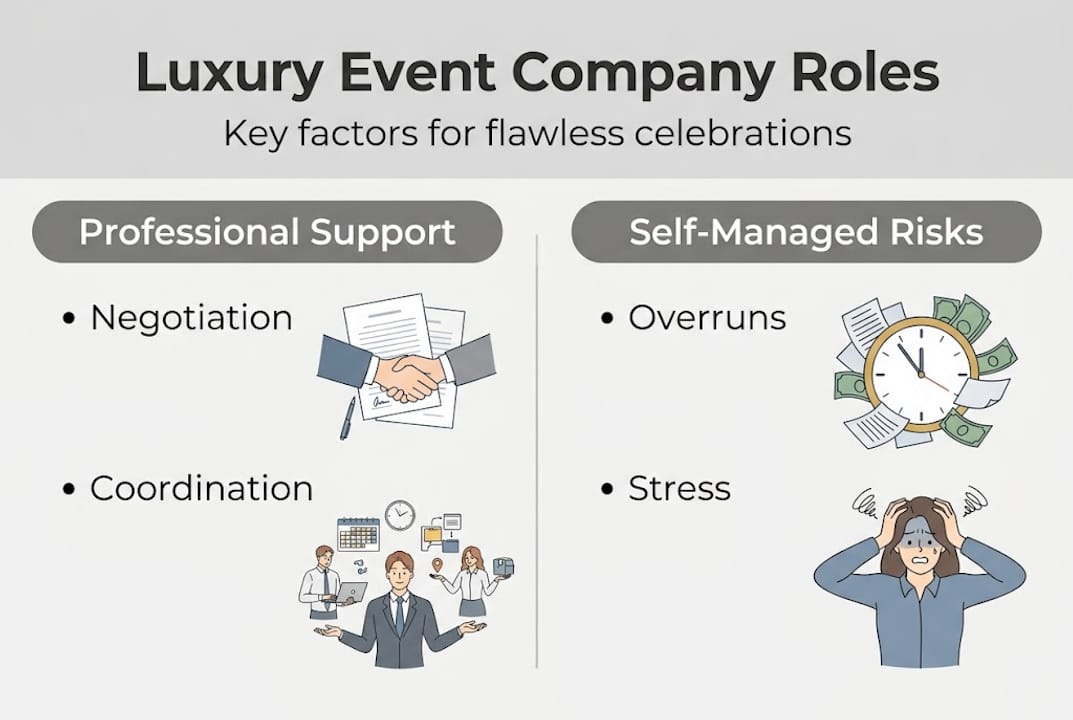
Here is how the outcomes compare when you weigh professional management against a self-managed approach:
| Factor | Professional management | Self-managed approach |
|---|---|---|
| Supplier pricing | Negotiated rates and established relationships | Full retail pricing, limited leverage |
| Creative coherence | Unified theme executed across all touchpoints | Fragmented choices, inconsistent aesthetic |
| Crisis management | Proactive contingency plans, calm resolution | Reactive, stressful, often visible to guests |
| Time investment | Managed entirely by the team | Hundreds of hours from the client |
| Guest experience | Carefully choreographed and seamless | Variable, dependent on amateur coordination |
| Budget accuracy | Closely tracked with professional oversight | Frequent unexpected costs |
Destination weddings drive 8% of Western Cape tourism, which confirms that international and domestic clients are choosing South Africa for its exceptional event offerings. Keeping pace with luxury wedding trends 2026 and the latest luxury event design trends requires ongoing industry knowledge that only specialist teams possess.
Pro Tip: Engage your event management company at least twelve months before a high-end wedding or major corporate launch. The earliest engagements secure the best venues, the most sought-after suppliers, and allow the creative concept to develop without compromise or rushed decisions.
How professionals ensure flawless execution and guest experience
Once there is a plan and a theme, real value is proved in how flawlessly the event unfolds for guests. This is where inexperienced coordination most visibly falls apart, and where seasoned professionals most clearly earn their fees.
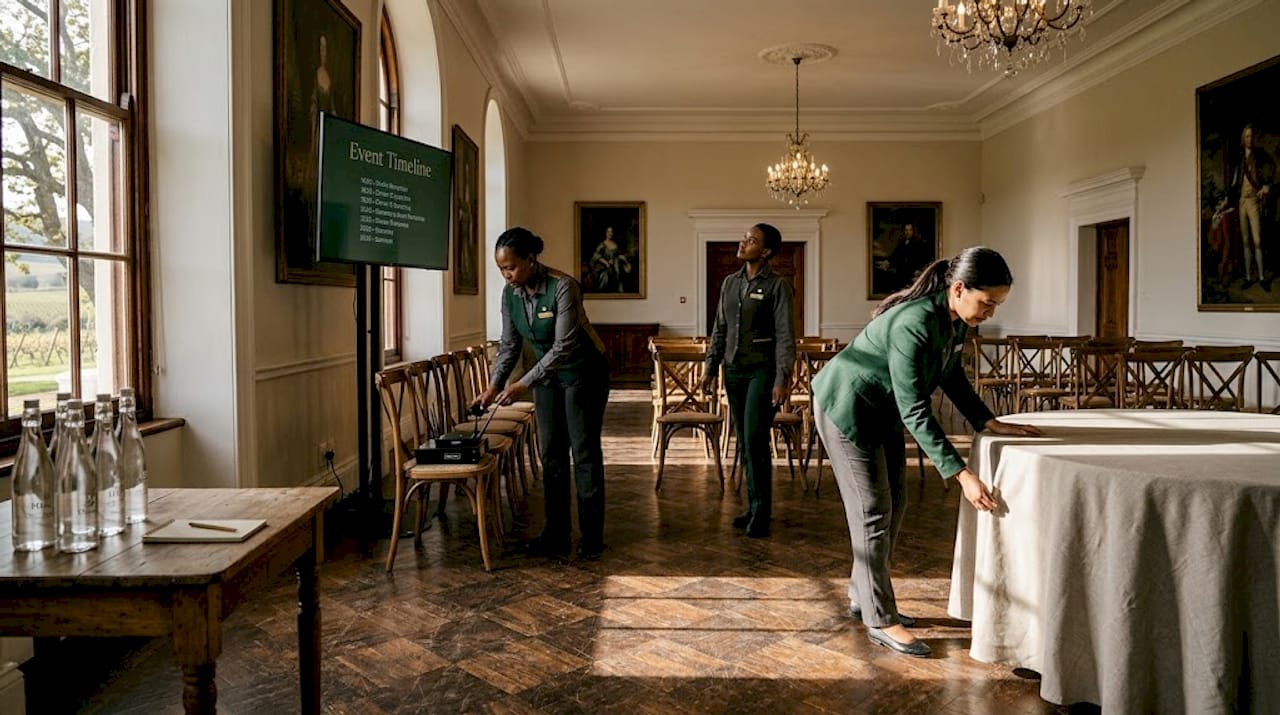
Event managers build detailed run sheets (minute-by-minute schedules shared with every supplier and team member) weeks before the event. These documents account for load-in times, sound checks, catering windows, lighting cues, and the precise moment when guests should move from one space to another. Nothing is left to chance or good faith.
A typical professional approach to orchestrating a major occasion follows a clear sequence:
- Final supplier briefings held 48 to 72 hours before the event, confirming every detail in writing
- Venue walk-through to verify setup, check sight lines, test audio-visual equipment, and identify any last-minute adjustments
- Staff briefings on the day, ensuring every team member knows their role, their position, and the chain of communication
- Guest arrival management, coordinating ushers, parking, accessibility, and the all-important first impression
- Real-time timeline tracking, with a dedicated coordinator monitoring every segment and communicating via discreet radio or earpiece
- Post-event close-down, including supplier sign-offs, venue inspections, and the return of any hired items
Crisis management is where the difference between professional and amateur becomes most apparent. Equipment fails. Guest lists shift at the last minute. Weather intervenes. A confident event management team has contingency plans for each of these scenarios, activated calmly and invisibly so that guests remain blissfully unaware. Our event management tips for luxury weddings detail how this kind of preparation translates to a flawless experience on the day.
Guest satisfaction at luxury events is increasingly measurable. Post-event surveys, social media sentiment, and repeat booking rates all provide clear data. Events managed by experienced professionals consistently outperform those that are improvised or under-resourced. The advantages of high-end event coordinators extend well beyond aesthetics; they are fundamentally about the reliability and quality of the entire guest journey.
The 250,000 jobs supported by South Africa’s events sector reflect just how much human expertise, craft, and coordination goes into delivering a well-run occasion. That workforce represents photographers, sound engineers, florists, chefs, coordinators, stylists, and dozens of other specialists whose contributions must be precisely orchestrated for an event to truly succeed.
Strategic value for couples and brand clients
Beyond smooth delivery, the strategic reasons that top-tier clients entrust their occasions to professionals are compelling and often underappreciated.
Financial risk management is one of the clearest advantages. Luxury events involve significant contracts with venues, caterers, entertainers, and technical suppliers. A professional event company reviews these agreements, identifies punishing cancellation clauses, negotiates payment schedules, and ensures that your deposit is protected. Without this oversight, a single poorly worded contract can expose you to tens of thousands of rands in liability.
Reputation building matters enormously for both couples and corporate brands. The way your event is remembered by guests shapes perceptions of you, your family, or your company for years. An immaculately run celebration signals attention to detail, high standards, and genuine care for the people in the room. These impressions compound over time, influencing everything from personal relationships to business partnerships.
The strategic case for professional management includes several additional benefits:
- Access to exclusive resources: vetted premium suppliers, sought-after venues, and specialist services unavailable to the general public
- Objective advice: professionals recommend what suits your event, not what is most profitable for a single vendor
- Time recovery: the hundreds of hours that self-managing clients spend researching, communicating, and troubleshooting are redirected to other priorities
- Personalisation at scale: even large events feel intimate and considered when a skilled team manages the details
- Continuity of vision: your original creative concept is protected from compromise throughout months of planning
Pro Tip: When choosing an event management partner for a luxury occasion, do not evaluate them solely on their portfolio photographs. Ask specifically how they have handled crises, what their supplier relationships look like, and how they communicate with clients throughout the planning period. These conversations reveal far more than beautiful imagery.
South Africa’s events industry’s R91 billion GDP contribution illustrates the scale of investment that flows through high-end occasions. At the individual client level, this translates to events where the financial and reputational stakes are simply too high to leave to chance. Cape Town, in particular, has developed a strong global reputation as an event destination, and understanding why clients choose Cape Town for their most important occasions helps explain why the city’s specialist firms set the benchmark for the rest of the country.
Why luxury event success is never accidental
Here is an observation that cuts against what most people prefer to believe: there is no such thing as an effortlessly glamorous event. Every occasion that appears to flow naturally, where the food arrives at the perfect moment, the lighting shifts almost imperceptibly as the sun sets, and guests feel guided through the evening without ever feeling managed, is the product of intensive, deliberate preparation by a skilled team working behind the scenes.
The luxury events industry has a visibility problem. When everything goes right, clients and guests attribute it to good fortune or natural elegance. When things go wrong, everyone suddenly understands that coordination matters. This creates a dangerous blind spot for people planning their first high-value occasion.
What truly separates outstanding event companies from mediocre ones is not their catalogue of past events; it is the depth of their thinking before anything is booked or designed. The best firms ask hard questions early: Who are your guests, and what do they expect? What is the emotional journey you want to create? Where are the moments of genuine surprise and delight? Understanding the roles in event management at this level of sophistication explains why the most successful partnerships feel collaborative rather than transactional. Clients who treat their event manager as a strategic partner, not a vendor, consistently report the most satisfying outcomes.
Curate your next unforgettable celebration with expert support
At Winelands Function, we bring together creative vision, operational precision, and deep supplier relationships to deliver celebrations that feel genuinely personal and utterly seamless. Whether you are planning an intimate dinner or a grand occasion, our team applies the same rigorous attention to every detail.
Our approach to luxury bespoke events starts with understanding what you want your guests to feel, not just what they will see. From there, we build experiences that reflect your identity, protect your investment, and create lasting memories. Explore our event management services to see how we handle occasions from concept to close-down, or begin your journey with our dedicated wedding planning team, who specialise in crafting weddings that are as individual as the couples they celebrate.
Frequently asked questions
What makes a good event management company for luxury weddings?
Look for a team with proven experience in bespoke weddings, a well-established network of premium suppliers, and a demonstrable ability to deliver personalised guest experiences. Strong communication throughout the planning process is equally important.
Do event management companies save money for corporate clients?
Professional companies negotiate favourable supplier rates, prevent costly planning mistakes, and protect your investment through expert contract oversight. The R91 billion economic impact of South Africa’s events industry reflects how much financial value professionally managed occasions generate.
Why is South Africa a popular destination for luxury events?
South Africa offers world-class venues, extraordinarily diverse landscapes, and a mature events sector with highly skilled specialists. Destination weddings account for 8% of Western Cape tourism, confirming the country’s global appeal for high-end celebrations.
What trends are shaping high-end celebrations in 2026?
Leading trends include immersive multi-sensory guest experiences, deeply curated personalisation that reflects genuine identity, and a growing commitment to sustainability without compromising on luxury or visual impact.
Recommended
- Roles in Event Management: Elevating Luxury Events – Winelands Function – For Every Occasion, Your Celebration
- Event Management Explained: Crafting Luxury Experiences – Winelands Function – For Every Occasion, Your Celebration
- Event Management Services: Elevating Luxury Occasions – Winelands Function – For Every Occasion, Your Celebration
- Why Event Design Matters for Luxury Celebrations – Winelands Function – For Every Occasion, Your Celebration