

TL;DR:
- Personalisation deepens guest engagement by tailoring every touchpoint from invitation to follow-up. It relies on data-driven techniques like segmentation, predictive modelling, and journey mapping to create truly bespoke experiences. Focusing on emotional resonance over spectacle transforms ordinary events into memorable, meaningful occasions.
Most people planning a high-end event assume the venue does most of the work. Book a stunning Winelands estate, arrange impressive florals, hire a jazz quartet, and the occasion will speak for itself. It rarely does. The guests who leave still talking about an event months later are not describing the chandeliers. They are describing the moment the menu card bore their name in a typeface that matched their company’s brand identity, or the way their favourite Chenin Blanc appeared at precisely the right moment. That is the quiet power of personalisation, and it is what separates a beautiful event from an unforgettable one.
Table of Contents
- What makes an event truly personalised?
- Advanced techniques for luxury event customisation
- Turning data into memorable moments
- Case studies and inspiration: bespoke celebrations in Cape Town
- A fresh perspective on luxury event personalisation
- Let Winelands Function elevate your next luxury event
- Frequently asked questions
Key Takeaways
| Point | Details |
|---|---|
| Personalisation drives impact | Tailoring experiences around guest preferences is the key to luxury events that linger in memory. |
| Data enables bespoke moments | Using CRM, attendance, and live feedback lets planners create unique highlights for every guest. |
| Advanced segmentation is essential | Luxury events achieve true personalisation by segmenting guests and mapping individual journeys. |
| Learn from Cape Town case studies | Real examples demonstrate how creative personalisation transforms celebrations in unique ways. |
| Trust expert guidance | Specialist planners in Cape Town turn insights into unforgettable experiences through nuanced, human-centred design. |
What makes an event truly personalised?
Personalisation is one of the most overused words in the events industry, and one of the least understood. In the context of luxury occasions, it goes far beyond choosing your colour palette or adding a monogram to a napkin. True personalisation means designing every touchpoint of the guest journey around the individual, from the first invitation they receive to the follow-up message they read the morning after.
The science behind this is well-established. Event personalisation involves tailoring experiences using data from CRM systems, historical attendance records, and real-time engagement across pre-event, during-event, and post-event stages. That means you are not guessing what your guests want. You are drawing on evidence to anticipate it.
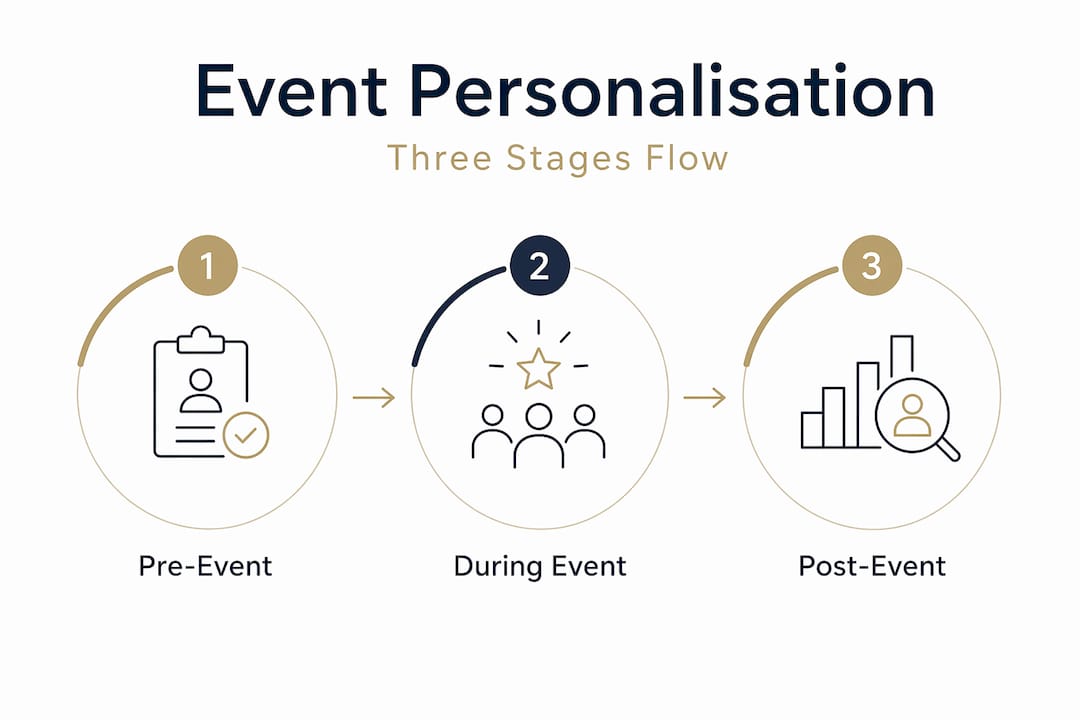
When we think about customising guest experiences for luxury events in Cape Town, the personalisation framework breaks into three clear phases:
- Pre-event: Tailored invitations, bespoke RSVP journeys, curated dietary preference gathering, and personalised event previews sent to VIP guests
- During the event: Customised welcome gifts, individually assigned seating informed by relationship mapping, personalised menus, and entertainment chosen to reflect guest profiles
- Post-event: Thoughtful follow-ups, personalised highlight reels or keepsakes, and data capture for future event planning
“Personalisation is not a feature you add to a luxury event. It is the architecture that holds the entire guest experience together. When it works invisibly, guests feel seen without knowing why.” This principle underpins every bespoke celebration we plan in the Cape Winelands.
The distinction matters enormously for corporate clients. A financial services firm hosting 80 senior partners at a vineyard estate has entirely different personalisation needs from a couple planning an intimate wedding of 40 guests. Yet the methodology is the same: gather meaningful data, map it to touchpoints, and execute with precision.
Advanced techniques for luxury event customisation
With the basics defined, we now examine the most sophisticated techniques used by luxury event professionals to achieve truly bespoke experiences.
The most effective planners use four core methodologies, and understanding each one will change how you think about elevating guest experience. According to current best practice, audience segmentation, predictive modelling, affinity analysis, and journey mapping are the key frameworks for meaningful personalisation in 2026 and beyond.
Here is how they compare in practice:
| Methodology | What it does | Luxury event impact |
|---|---|---|
| Audience segmentation | Groups guests by demographics, behaviour, and value | Enables targeted gifts, seating, and communications |
| Predictive modelling | Uses past data to anticipate future preferences | Removes guesswork from menu and entertainment choices |
| Affinity analysis | Identifies shared interests between guests | Sparks meaningful conversations and connections |
| Journey mapping | Designs the flow of the entire guest experience | Ensures seamless, emotionally resonant moments |
To implement guest experience enhancement through audience segmentation, follow these steps:
- Collect guest data during the registration or invitation process, including dietary requirements, preferred communication styles, and professional interests
- Categorise guests into clear segments such as VIP clients, international visitors, long-standing partners, and first-time attendees
- Assign each segment a customised experience pathway that includes distinct welcome materials, seating areas, and entertainment preferences
- Brief your event team and vendors on each segment’s requirements before the event date
- Monitor real-time engagement during the event and make micro-adjustments where possible
Pro Tip: The most common failure we see in luxury event planning is an over-reliance on templates. Even beautiful templates signal to guests that their experience was pre-packaged. Genuine personalisation requires starting from a blank canvas for each event, even when the venue or format is familiar.
Predictive modelling is particularly powerful for repeat corporate events, such as annual client appreciation dinners or leadership retreats. When you have attendance data from previous years, you can identify which entertainment formats generated the most positive feedback, which table configurations encouraged the most networking, and which catering choices received the highest ratings. These insights feed directly into the planning process and consistently raise the quality of each successive event.
Turning data into memorable moments
Armed with advanced customisation techniques, it is vital to understand how data transforms these tactics into tangible, delightful guest experiences at real Cape Town events.
The process begins well before the event date. A pre-event survey, framed elegantly rather than as a form-filling exercise, can gather remarkable intelligence. You might learn that three of your most important corporate guests are passionate about South African art, that a key couple at your wedding met at a surfing competition, or that the guest of honour at a milestone birthday has a particular fondness for fynbos. Each of these details becomes a building block for a personalised experience.
Perfecting the VIP guest experience workflow involves mapping these data points to specific touchpoints throughout the event. Consider what becomes possible:
- A welcome table featuring a custom art piece by a Cape Town-based painter, commissioned specifically because three key guests are art collectors
- A wine pairing menu that draws on each table’s collective tasting history, curated in partnership with a Stellenbosch sommelier
- Live music selected by genre preference data gathered during RSVP, with a seamless set list that shifts in tone as the evening progresses
- Personalised departure gifts, such as locally sourced rooibos tea blended to match each guest’s flavour profile, with a handwritten note referencing something specific to their attendance
These are not extravagant gestures for their own sake. They are the tangible outputs of a structured data process, and guests perceive them as evidence that their presence genuinely mattered.
| Guest touchpoint | Personalisation technique | Data source |
|---|---|---|
| Invitation design | Brand or interest alignment | CRM profile |
| Welcome gift | Taste and preference matching | Pre-event survey |
| Seating plan | Relationship and affinity mapping | Historical attendance |
| Menu curation | Dietary and flavour preference | RSVP data |
| Entertainment | Genre and format preference | Real-time engagement |
| Departure keepsake | Personal narrative or milestone | Guest relationship history |
The event personalisation framework makes clear that personalisation across all three stages, pre-event, during, and post-event, is what drives the deepest emotional impact.
Pro Tip: High-net-worth guests are acutely aware of their data privacy. Always obtain explicit consent before collecting personal information, and communicate clearly how it will be used. Framing data collection as a service to them, not a process for you, makes all the difference in how they respond.
The post-event phase is where many planners leave considerable value on the table. A personalised follow-up, referencing a specific moment from the evening, reinforces the emotional impact of the event and builds the kind of loyalty that leads to memorable hospitality events being discussed and recommended long after the occasion.
Case studies and inspiration: bespoke celebrations in Cape Town
Let us see how these strategies are actually applied in Cape Town’s most elevated celebrations, from weddings to corporate galas.
Cape Town’s unique geography and cultural richness make it an extraordinary canvas for personalised events. The Winelands, the Atlantic coastline, the fynbos-covered mountain slopes, and the city’s thriving arts and design scene each offer personalisation opportunities that are simply not available anywhere else in the world.
Consider the range of bespoke event inspirations that become possible when data and creativity work together:
- A wedding where the couple’s shared love of botanical illustration was woven through every detail, from pressed fynbos ceremony programmes to hand-drawn place cards by a local artist, creating a unique bespoke celebration with genuine narrative coherence
- A corporate gala where guests were segmented by their industry focus, with breakout experiences ranging from a guided barrel-tasting masterclass for the banking sector to an interactive design sprint facilitated by a Cape Town creative agency for the tech clients
- A milestone birthday celebration where the guest of honour’s life journey was mapped into a five-course tasting menu, each dish representing a decade and accompanied by a story told through a custom illustrated booklet
- An international client retreat at a Franschhoek estate where each delegate received a personalised itinerary, their preferred reading material in their rooms, and a welcome note written in their home language
The sensory dimensions of luxury events are particularly relevant in Cape Town, where the natural environment actively engages sight, smell, taste, and touch in ways that dramatically heighten emotional memory.
Hyper-local details matter enormously. Indigenous proteas and restios in place of imported blooms. A string quartet playing arrangements of traditional Cape Malay melodies. A bespoke installation by a celebrated Woodstock artist. These choices signal to guests that their experience was conceived specifically for this place, this moment, and these people. When you understand how to create exclusive guest experiences, Cape Town’s cultural and natural assets become powerful personalisation tools rather than mere backdrops.
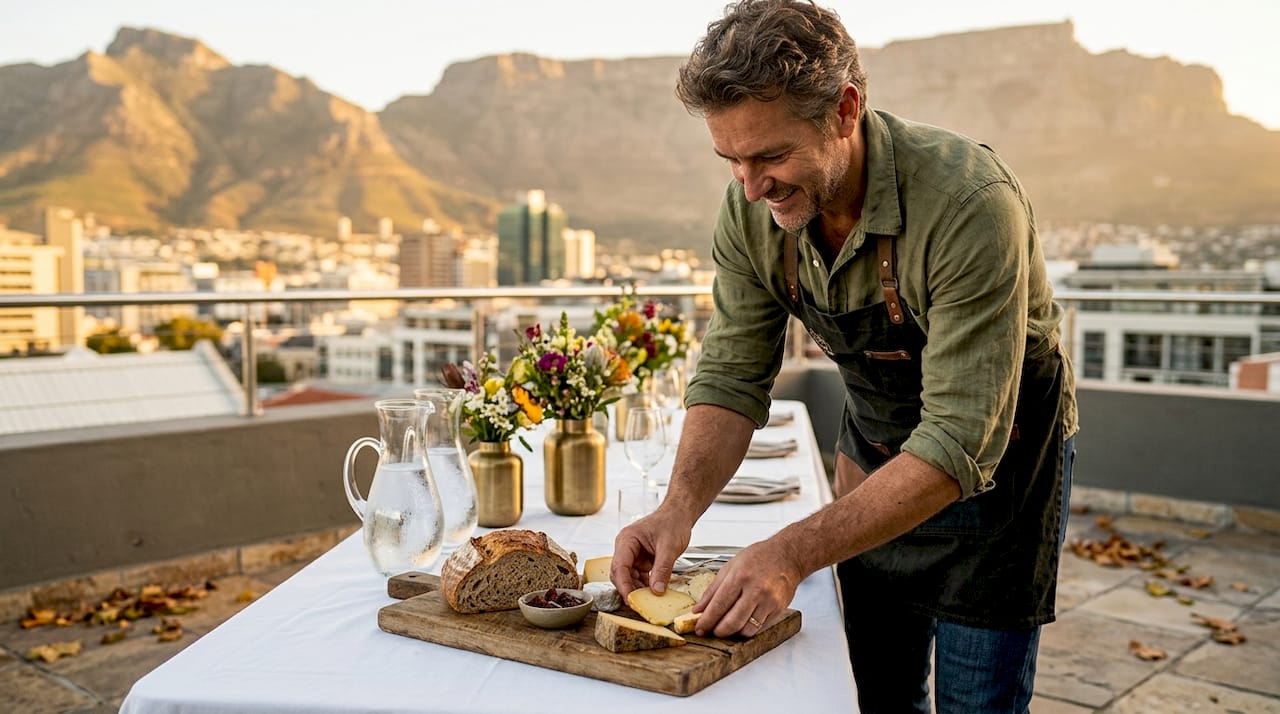
Journey mapping is especially effective here because Cape Town venues offer such varied spatial narratives. A guest arriving at a Stellenbosch estate can move through a lavender walk, a courtyard reception, a candlelit cellar dinner, and a terrace fireside gathering, each space offering its own curated sensory experience and carrying the personal narrative of the event forward.
A fresh perspective on luxury event personalisation
Having examined local case studies, it is worth sharing what we have actually learnt at Winelands Function after years of planning events at this level. Most of it contradicts what the industry tends to celebrate publicly.
The loudest conversation in luxury events is about spectacle: the dramatic floral installations, the celebrity entertainers, the extraordinary venues. These elements attract attention and photograph beautifully. But they are rarely what guests remember most deeply. When we speak to clients after their events, the moments they describe with the greatest warmth are almost always quiet ones. The place card with a handwritten message. The song that played at exactly the right moment. The waiter who remembered a guest’s name from a previous event and greeted them accordingly.
This tells us something important. Most planners, even experienced ones, invest their creative energy in visible gestures while underinvesting in the invisible architecture of emotional resonance. Human-centred design, which means building empathy for each guest’s perspective into every decision, is what creates the conditions for those quiet, powerful moments.
We have also learnt that the most effective personalisation often happens subconsciously. Guests do not consciously notice that their table’s wine selection was calibrated to their collective preferences. They simply feel that the evening was exceptionally well-considered. They cannot articulate why. That feeling of being seen without being observed is the highest achievement of luxury bespoke events.
The practical implication is this: invest in storytelling and seamless flow before you invest in lavish features. A coherent narrative that carries guests from arrival to departure, reinforced by subtle personalised details throughout, will create deeper emotional impact than an expensive centrepiece surrounded by an otherwise generic experience. Opulence impresses. Personal resonance moves people.
Let Winelands Function elevate your next luxury event
After reflecting on the transformative power of personalisation, here is where you can turn insight into action for your next memorable event.
At Winelands Function, we build every event from the individual outward. Our approach to bespoke and luxury celebrations integrates data-driven planning with the deep creative intelligence that only comes from years of experience in Cape Town’s most extraordinary settings. Whether you are coordinating a landmark corporate function or planning the most significant celebration of your life, our team brings structure, imagination, and genuine care to every detail. Explore our event management approach or discover how our bespoke party planning process can make your vision a reality.
Frequently asked questions
How does personalisation differ from customisation in event planning?
Personalisation uses data to tailor every aspect of an event to individual guest preferences, while customisation refers to adjusting specific elements such as decor, menus, or entertainment without that individual-level insight.
Which data sources are most effective for luxury event personalisation?
CRM systems, historical attendance, and real-time engagement data are the most powerful sources, particularly when used across all three event stages: pre-event, during, and post-event.
Can personalisation enhance corporate events as well as weddings?
Absolutely. Audience segmentation and journey mapping are equally effective for corporate galas, client retreats, and product launches as they are for weddings and bespoke celebrations.
What is the biggest mistake affluent event organisers make?
Relying on generic templates and pre-packaged formats rather than building experiences from individual guest insight is the most common and costly error in luxury event planning.
Recommended
- Luxury Bespoke Events | Winelands Function
- How to create exclusive guest experiences at luxury events – Winelands Function – For Every Occasion, Your Celebration
- How to Elevate Guest Experience for Luxury Events Easily – Winelands Function – For Every Occasion, Your Celebration
- How to customise guest experience for luxury events – Winelands Function – For Every Occasion, Your Celebration