

TL;DR:
- Luxury clients seek emotional resonance and sensory immersion over visual spectacle.
- Successful branding relies on personalization, subtlety, and brand alignment across all elements.
- Post-event storytelling and measurement are essential to reinforce impact and future success.
Most luxury clients care far less about logos and décor than you might expect. What they truly seek is emotional resonance, a feeling that lingers long after the last guest departs. Yet the common assumption is that event branding is simply a matter of colour palettes and centrepieces. In reality, luxury clients prioritise emotional resonance over visual spectacle, and the most successful Cape Town events are built on that principle. This guide walks you through the full luxury event branding process, from foundational pillars to post-event storytelling, so you can approach your next occasion with genuine clarity.
Table of Contents
- Core pillars of luxury event branding
- Designing the journey: From concept to experiential marketing
- Quiet luxury and subtle brand communication
- Measuring impact and post-event storytelling
- What most experts miss about luxury event branding
- Experience luxury event branding with Cape Town experts
- Frequently asked questions
Key Takeaways
| Point | Details |
|---|---|
| Personalisation drives success | Tailoring events to individual stories and values ensures lasting impact. |
| Quiet luxury outshines spectacle | Subtle, multi-sensory elements yield deeper emotional engagement than grand visuals. |
| Measuring results is vital | Tracking both ROI and attendee sentiment guarantees continuous improvement. |
| Post-event storytelling matters | Sharing narratives after the event extends the value and reach of branding. |
Core pillars of luxury event branding
Successful luxury event branding rests on four interconnected principles. Understanding them is the difference between an event that impresses and one that is genuinely remembered. The importance of event design cannot be overstated when each element must work in concert to tell a coherent story.
The four core pillars are:
- Personalisation: Every detail should reflect the client’s story, values, and aspirations. Generic templates have no place here. A corporate launch in Cape Town’s Winelands should feel distinctly different from a wedding in the same venue, even if the flowers are identical.
- Sensory immersion: Great branding engages all five senses. The scent of fynbos at arrival, the texture of a linen programme, the precise temperature of the room. Each element contributes to a unified emotional experience.
- Quiet luxury: Refined restraint outperforms spectacle at every turn. Subtle, considered detail signals confidence and taste in a way that overt displays simply cannot.
- Brand alignment: Whether the client is a corporation or a couple, every element must communicate their core values. Misalignment between brand and experience creates cognitive dissonance that guests feel, even if they cannot articulate why.
“The events that endure in memory are those where every choice, from the lighting to the menu typography, feels intentional and true to the host’s identity.”
The data supports this approach. 80% of luxury events succeed specifically because of thoughtful design, and the same proportion of luxury clients prioritise emotional resonance above all else. This is not a soft metric. It directly influences whether guests return, refer others, or become long-term advocates.
Exploring luxury event themes for special occasions reveals just how varied personalisation can be in practice. The 2025 and 2026 planning trends also confirm that quiet luxury and sensory layering are now the dominant expectations among discerning clients, not emerging ideas.
Designing the journey: From concept to experiential marketing
With the pillars defined, it is crucial to see how these transform into practice for luxury occasions. The distinction between a creative-led and a logistical-led approach is significant. Logistics-first planning tends to produce technically correct events that feel hollow. Creative-led planning, where the emotional narrative is established before a single vendor is booked, produces experiences that feel inevitable and right.
The sequential process for luxury event branding typically follows these stages:
- Vision and values workshop: Establish the emotional outcome before any aesthetic decisions are made.
- Creative brief development: Translate values into sensory language, colours, textures, sounds, and stories.
- Vendor and venue alignment: Select partners whose own aesthetic and service philosophy match the brief.
- Experiential design and rehearsal: Map the guest journey minute by minute, identifying every brand touchpoint.
- Live execution and real-time adaptation: Respond to the room, not just the run sheet.
- Post-event measurement: Capture data, stories, and emotional feedback immediately after the event.
The commercial case for this rigour is compelling. Luxury events yield 25 to 34% ROI and experiential marketing can boost sales tenfold, making the investment in a thorough creative process entirely rational.
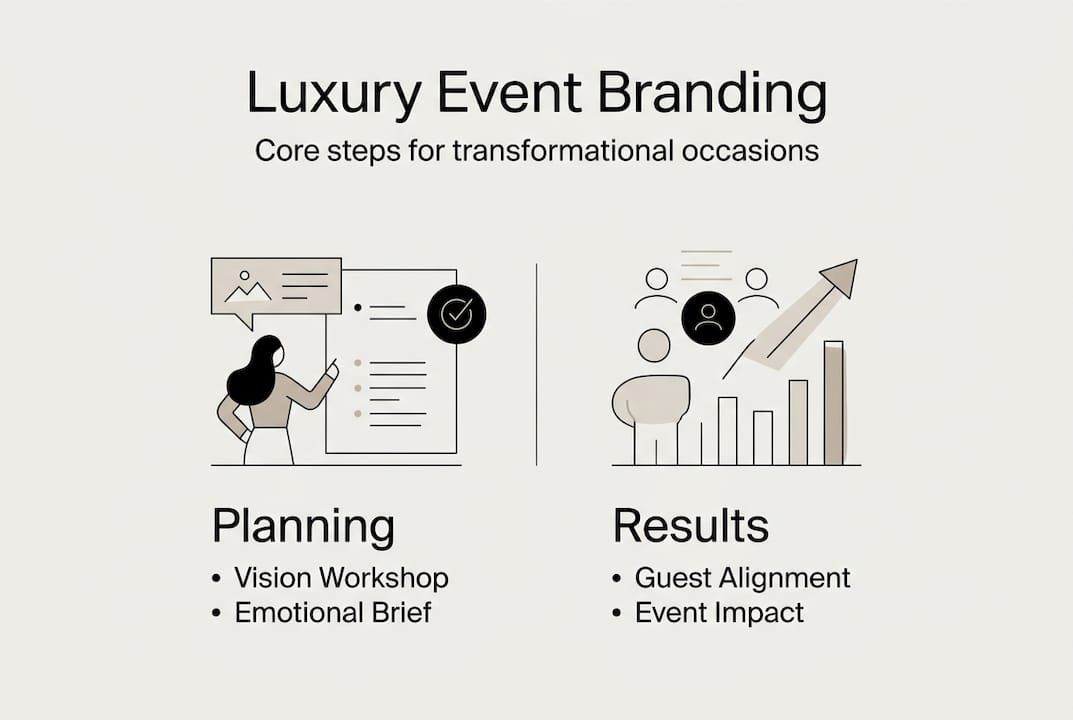
| Stage | Key output | Success indicator |
|---|---|---|
| Vision workshop | Emotional brief | Client alignment score |
| Creative development | Brand narrative | Coherence across touchpoints |
| Experiential delivery | Guest journey map | Net Promoter Score |
| Post-event review | Impact report | ROI and social reach |
Pro Tip: Build ROI metrics into the planning stage from day one. Decide upfront how you will measure emotional and commercial success, whether through post-event surveys, pre-order data, or social impressions. This makes the measurement stage far more actionable and gives clients tangible evidence of value.
For a deeper look at how luxury event management structures this process end to end, and how innovation and exclusivity are shaping client expectations in 2026, both resources offer practical context.
Quiet luxury and subtle brand communication
Refining the process further, we see the specific tools and techniques used to embed brand identity quietly yet powerfully. The most sophisticated events in Cape Town do not announce themselves loudly. They reveal themselves gradually, through micro-sensory details that accumulate into a profound overall impression.
Consider the contrast between overt and invisible branding:
| Overt branding | Invisible integration |
|---|---|
| Large logo banners | Monogrammed linen napkins |
| Branded merchandise piles | Bespoke scent diffused at arrival |
| Repeated verbal brand mentions | Curated music reflecting brand values |
| Generic floral arrangements | Botanicals sourced from the client’s home region |
The micro-sensory toolkit available to luxury event designers includes:
- Scent: A signature fragrance introduced at arrival and carried through the evening creates powerful memory anchors.
- Sound: A curated acoustic journey, from arrival to farewell, shapes mood and pacing without a single word.
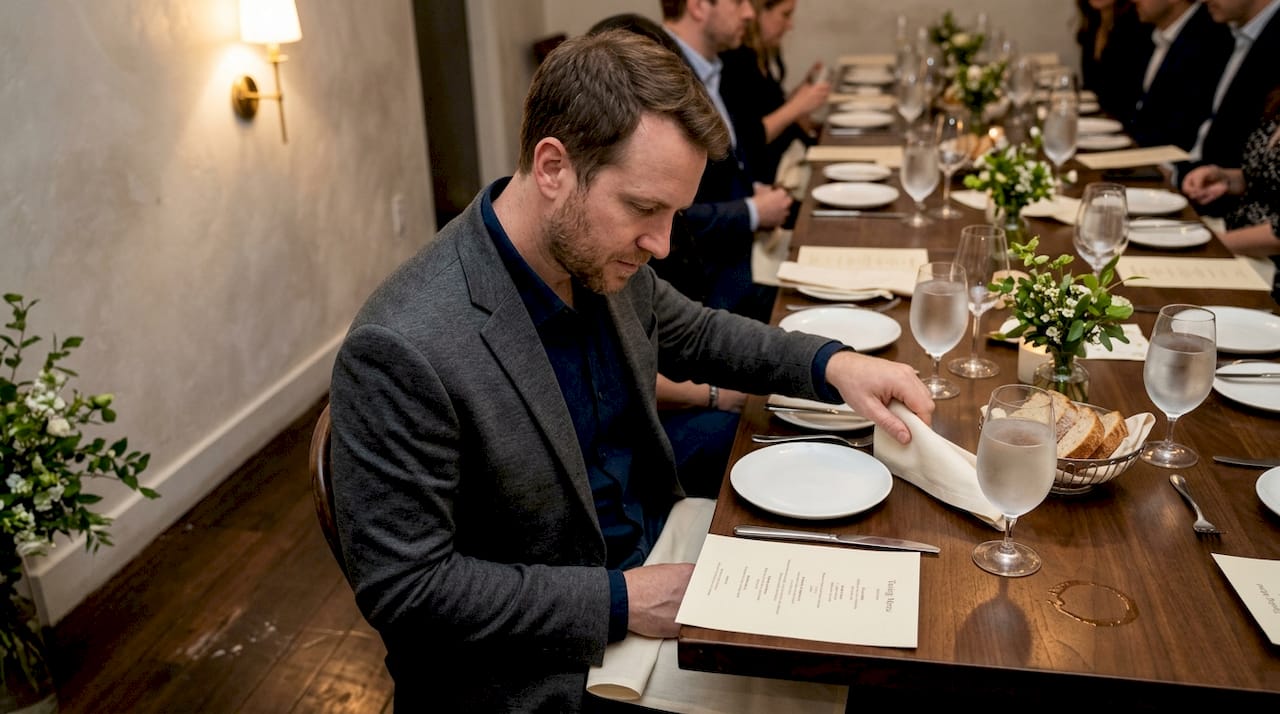
- Texture: The weight of a menu card, the grain of a table surface, the softness of a chair. These tactile cues communicate quality before a guest consciously registers them.
- Visual rhythm: Lighting transitions timed to the programme create emotional peaks and valleys that guide the guest experience.
- Taste: A menu that reflects the client’s heritage or brand story turns every course into a narrative moment.
Thoughtful design over spectacle is what separates truly memorable luxury events from expensive ones. The results speak clearly: post-event polls consistently show a 97% positive response rate when these principles are applied with discipline.
Learning how to elevate the guest experience at luxury events, and staying current with event design trends in South Africa, will help you apply these principles with confidence. The standard of luxury guest service expected in Cape Town’s premium market makes this level of detail non-negotiable.
Measuring impact and post-event storytelling
To complete the branding cycle, it is vital to quantify success and weave stories that carry your event’s brand into future occasions. Many clients invest heavily in the event itself and then leave enormous value on the table by neglecting the post-event phase entirely.
Effective measurement covers both emotional and commercial dimensions:
- Attendee feedback surveys: Sent within 24 hours while impressions are fresh. Focus on emotional language, not just satisfaction scores.
- Social impression tracking: Monitor organic reach and sentiment in the days following the event.
- Pre-order and conversion data: For product launches or corporate events, track direct commercial outcomes.
- Net Promoter Score: A single question that captures the likelihood of referral, one of the most reliable indicators of genuine brand impact.
- Qualitative storytelling sessions: Short recorded conversations with key attendees capture nuanced emotional responses that numbers cannot.
The data from well-executed luxury events is striking. Post-event polls show 97% positive response, a 45% pre-order increase, and over 100 million social impressions for marquee occasions.
Post-event storytelling is where the branding cycle truly closes. The narrative you build from guest testimonials, photography, and emotional data becomes the foundation for future campaigns and referrals.
Key elements of a strong post-event narrative include:
- A curated visual story published within 72 hours
- Two or three guest quotes that capture emotional truth, not just compliments
- A brief impact summary shared with the client, quantifying both emotional and commercial outcomes
- A forward-looking statement that connects this event’s story to the client’s next occasion
Pro Tip: Record short video testimonials from two or three guests immediately after the event, before they leave the venue. These authentic, in-the-moment responses are far more compelling than anything captured days later and become invaluable assets for future client campaigns.
Reviewing corporate event best practices will give you a structured framework for applying these measurement and storytelling principles across different event types.
What most experts miss about luxury event branding
Having explored measurement and storytelling, here is a perspective shaped by years of working in Cape Town’s luxury event industry. Most commentary on event branding focuses on trends, the latest floral style, the newest lighting technology, the most talked-about venue. This is a trap.
The events that genuinely move people are not the ones that followed the trends most faithfully. They are the ones where the team paused, listened carefully, and adapted. Continuous adaptation outperforms trend-following every single time. The quiet moments between the headline acts, a thoughtful pause in the music, an unexpected personal touch, are where emotional resonance is actually built.
Misaligned expectations, weak brand alignment, and neglected post-event storytelling are the real culprits behind events that disappoint, not budget constraints or venue limitations. Emotional intelligence in the planning process, the ability to read what a client truly values beneath what they say they want, is the skill that separates exceptional event management from merely competent execution. Plan for the quiet moments. Measure the feelings. That is where the real work happens.
Experience luxury event branding with Cape Town experts
The principles in this guide represent the standard that discerning clients in Cape Town rightly expect. Knowing the framework is one thing. Having a team that has lived it across hundreds of occasions is another entirely.
Winelands Function specialises in bespoke luxury celebrations that translate your values into unforgettable sensory experiences. From the initial vision workshop to post-event storytelling, our event planning coordinators manage every detail with precision and care. Whether you are planning a corporate launch, a wedding, or a private celebration, explore our event coordination workflow to understand exactly how we bring your vision to life.
Frequently asked questions
What makes luxury event branding different from standard event branding?
Luxury event branding focuses on emotional resonance, sensory immersion, and subtlety, prioritising bespoke storytelling and client values over visual spectacle. Standard event branding tends to rely on logos and generic aesthetics rather than deeply personalised narratives.
How is ROI measured for luxury event branding in Cape Town?
ROI is tracked through attendee feedback, pre-orders, social impressions, and post-event sales, with luxury events yielding 25 to 34% ROI and consistently high emotional engagement scores.
Which pitfalls should be avoided during the event branding process?
Avoid misaligned expectations, no contingency plan, weak brand alignment, and neglecting post-event storytelling or the measurement of emotional impact.
Can multi-sensory branding be applied to small, bespoke events?
Yes, sensory immersion creates memorable impact regardless of event size, and carefully curating sight, sound, scent, touch, and taste can elevate even the most intimate gathering into a genuinely extraordinary experience.
Recommended
- How to Elevate Guest Experience for Luxury Events Easily – Winelands Function – For Every Occasion, Your Celebration
- Luxury Event Themes: Elevating Every Special Occasion – Winelands Function – For Every Occasion, Your Celebration
- Corporate Event Best Practices: Elevating Luxury Experiences – Winelands Function – For Every Occasion, Your Celebration
- Event Design Process: Complete Guide for Luxury Events – Winelands Function – For Every Occasion, Your Celebration
- Comment les goodies haut de gamme renforcent l’image de marque – Balzeo