
TL;DR:
- Personalising ceremonies involves crafting authentic vows, rituals, and visuals that reflect the individuals and their stories. Focusing on two or three meaningful elements produces a deeper, more impactful experience than spreading efforts across all aspects. Starting with personal stories and traditions, rather than visual design, creates memorable events rooted in genuine connection.
Ceremony personalisation is defined as the deliberate process of embedding authentic, individual meaning into an event through custom vows, rituals, visual themes, and guest engagement. Knowing how to personalise ceremonies separates a forgettable occasion from one guests recall years later. Whether you are planning a wedding in the Cape Winelands or a corporate awards ceremony in Cape Town, the principle is the same: specificity creates emotional impact. Generic scripts and borrowed traditions produce polished events. Personalised ones produce stories.
What are the essential elements to personalise in ceremonies?
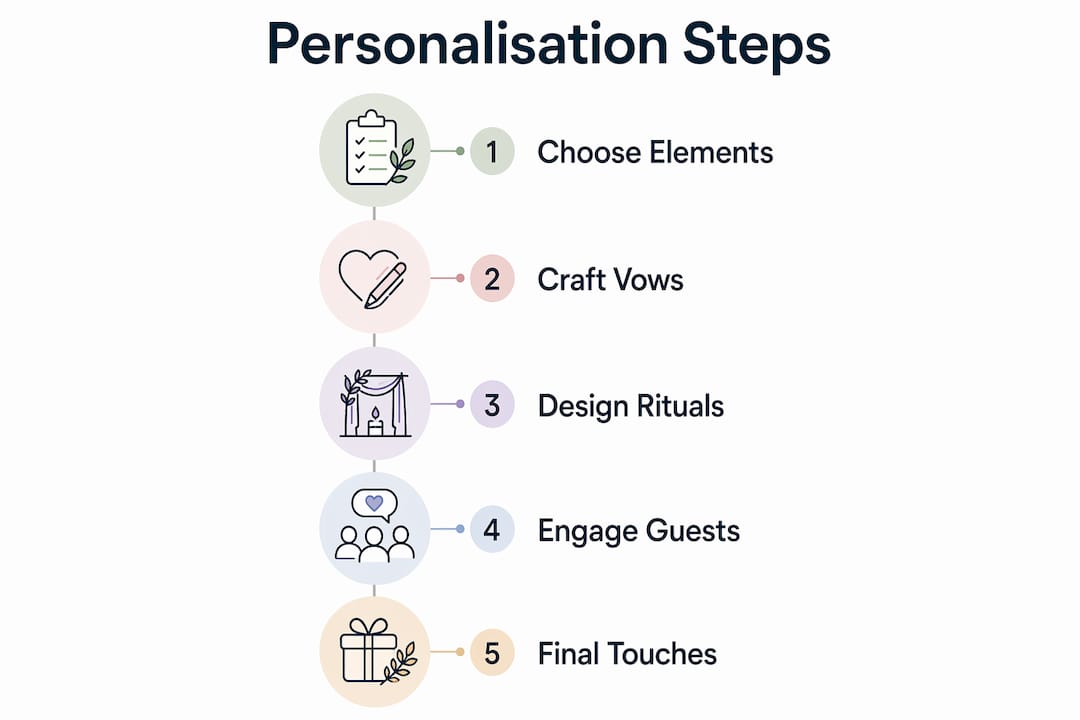
The five most impactful areas for ceremony personalisation are vows, rituals, narrative scripts, visual design, and guest participation. Each one offers a distinct opportunity to reflect the people involved rather than a template.
- Custom vows. Write vows that sound like you, not a greeting card. Specific, authentic communication in vows, focusing on genuine moments rather than grandiose poetry, creates far stronger emotional impact than flowery declarations.
- Meaningful rituals. A unity candle is a ritual. So is a shared whisky toast, a tree planting, or a corporate team signing a founding charter. The ritual should connect to something real in the couple’s or organisation’s story.
- Bespoke scripts. Work with your officiant or MC to build a narrative around your history. A bespoke ceremony narrative centres on a unique script and logistics tailored to a specific guest list, producing an unrepeatable experience.
- Visual and thematic design. Colour palettes, table settings, and venue styling should reflect personality, not just trend reports. A couple who met at a bookshop can use literary motifs. A tech company launching a product can use its brand origin story as a visual thread.
- Guest participation. Invite guests to contribute. Ask them to write a memory on a card, hold a candle, or respond aloud during a vow exchange. Participation converts spectators into witnesses.
Pro Tip: Pick two or three of these elements to personalise deeply rather than touching all five lightly. Depth in a few areas reads as intentional. Breadth across all of them reads as busy.
How to craft authentic and personalised vows
Writing vows that sound genuinely like you requires a structured approach, not inspiration alone. Follow these steps to produce vows that hold up under pressure and in front of an audience.
- Answer ultra-specific questions first. Before you write a single vow sentence, answer prompts such as: “What is the moment I knew this was serious?” and “What does this person do that no one else notices?” These answers become your raw material.
- Structure from memory to promise. Effective vows move from specific memories to concrete promises, using simple sentences to maintain audience attention and emotional connection. Start with a real moment, then state what you commit to because of it.
- Set the right length. Polished vows should be ready at least three weeks before the ceremony, with a target speaking time of 60–120 seconds, which is roughly 100–250 words. Shorter than 60 seconds feels rushed. Longer than two minutes loses the room.
- Balance tone deliberately. One moment of humour is welcome. Three moments of humour turns vows into a stand-up set. Decide on your ratio before you write, not after.
- Read them aloud, repeatedly. Vows written to be read silently often stumble when spoken. Read yours aloud to a friend or record yourself. Sentences that feel natural on paper can feel awkward at pace.
Pro Tip: Avoid the phrase “I promise to always.” It is the most common vow opener and the least memorable. Start with a specific memory instead.
| Vow element | What to do | What to avoid |
|---|---|---|
| Opening line | Name a specific shared memory | “From the moment I met you…” |
| Middle section | State 2–3 concrete promises | Vague declarations like “I’ll always be there” |
| Closing line | End with a forward-looking commitment | Trailing off with “…and so much more” |
| Tone | One moment of warmth or humour | Multiple jokes that undercut sincerity |
| Length | 100–250 words, spoken in 60–120 seconds | Anything over three minutes |
What are creative rituals and narrative techniques for unique ceremonies?
Custom rituals and narrative elements crafted around guests’ personalities create deeply engaging, one-of-a-kind experiences. The key is grounding each ritual in something real rather than selecting one from a list because it looks appealing.
- Couple or event-specific rituals. A pair of architects might sign a blueprint of their first home together. A company celebrating its tenth anniversary might have founding employees place a time capsule. The ritual earns its place because it belongs to no one else.
- Narrative-driven event design. Themed scripts, flash mob moments, and character-led corporate dinners all use storytelling to carry guests through an experience. Bespoke murder mystery events, for example, build character roles and plot twists around real guest personalities and shared histories. The result is a ceremony that feels authored, not assembled.
- Cultural and family legacies. Integrating a family tradition, a cultural blessing, or a heritage recipe into the programme adds layers of meaning that generic ceremonies cannot replicate. The key is to explain the tradition briefly so all guests feel included rather than excluded.
- Inside jokes, handled well. Honouring unique inside jokes in ceremonies, with a short explanation for the wider audience, enhances intimacy without alienating guests who are not in on the reference.
“Focusing on quirky, unique traits of the individuals involved turns ceremonies into authentic, memorable celebrations rather than scripted performances.” — Brides
The difference between personalising a wedding and a corporate ceremony is primarily one of purpose. A wedding ceremony personalises to honour a relationship. A corporate ceremony personalises to reinforce identity, values, or strategic milestones. Both benefit from the same principle: honouring the weird, meaning the specific, quirky, real details that belong only to the people involved.
How to personalise guest experience and engagement effectively
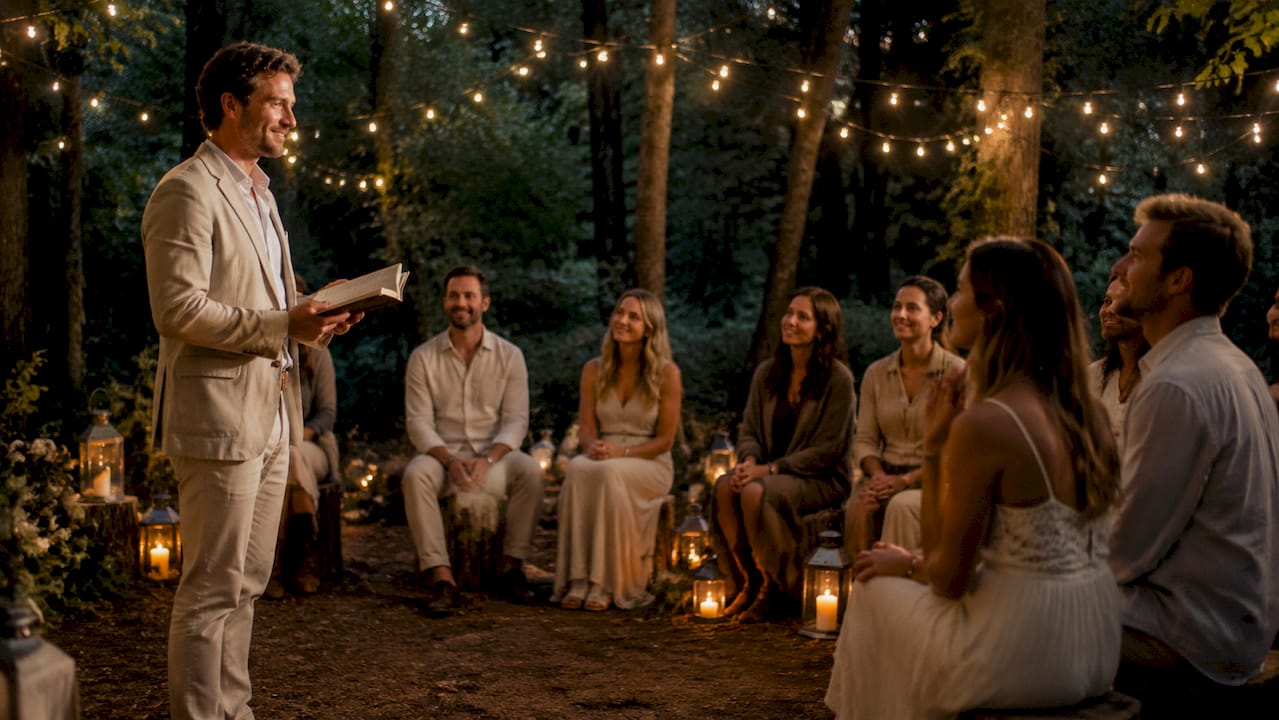
Personalised guest engagement is the practice of tailoring communication, participation, and logistics to individual attendees rather than treating the audience as a single block. Done well, it increases satisfaction and emotional investment. Done poorly, it overwhelms both the planner and the guest.
| Approach | Wedding ceremony | Corporate ceremony |
|---|---|---|
| Pre-event communication | Personalised invitation with guest’s connection to the couple | Customised agenda based on attendee role or interest |
| During the event | Assigned meaningful roles (reader, candle holder) | Interactive breakout moments or live polling |
| Post-event follow-up | Handwritten thank-you note referencing a shared memory | Personalised summary or highlight reel by department |
| Personalisation depth | Deep on 2–3 moments | Tied to strategic goals such as engagement or loyalty |
Focusing on one or two key personalisation areas improves attendee satisfaction for planners new to personalising corporate or large-scale events. This is not a limitation. It is a discipline. Trying to personalise every touchpoint dilutes the impact of each one.
For corporate events, personalisation should be data-driven to align with strategic goals such as engagement or loyalty, rather than being purely aesthetic. Knowing that 60% of your attendees are senior managers who rarely attend networking events changes how you design the room, the agenda, and the follow-up. Tools like Cvent, Eventbrite, and Bizzabo all offer attendee segmentation features that support this kind of targeted design.
Pro Tip: For weddings, the single most effective guest engagement moment is one that requires no effort from the guest but makes them feel seen. A table card that references something specific about them costs almost nothing and is remembered for years.
You can find more on crafting these moments in Winelandsfunction’s guide to luxury guest experiences.
Key takeaways
Ceremony personalisation works best when it is specific, intentional, and concentrated on two or three meaningful elements rather than spread thinly across every detail.
| Point | Details |
|---|---|
| Specificity over sentiment | Name real memories and concrete promises rather than using generic declarations in vows or scripts. |
| Rituals earn their place | Choose rituals that belong to your story, not ones selected from a trend list. |
| Depth beats breadth | Personalising two or three elements deeply produces more impact than touching every element lightly. |
| Corporate personalisation needs data | Align corporate ceremony personalisation with strategic goals using attendee data, not just aesthetic choices. |
| Vow timing matters | Aim for 60–120 seconds of spoken vows, prepared at least three weeks before the ceremony. |
Why I think most ceremonies are personalised in the wrong order
Most planners I work with start with the visual. They choose a colour palette, a floral scheme, and a table layout before they have written a single word of the ceremony script. The result is a beautifully dressed event with a generic heart.
The ceremonies I have seen move people most deeply start from the inside out. The vows come first. The ritual comes second. The visual design follows those two decisions rather than leading them. When a couple tells me they met at a vineyard in Stellenbosch and their first shared meal was a specific bottle of Chenin Blanc, that detail shapes everything: the table setting, the welcome drink, the script, the music. The visual becomes an expression of the story rather than a backdrop borrowed from a magazine.
The same principle applies to corporate events. I have coordinated launches where the entire evening was built around the founding team’s origin story. The room layout, the speaker order, the menu choices all reflected a specific chapter in the company’s history. Guests did not just attend an event. They experienced a piece of the organisation’s identity.
My advice is to resist the urge to start with Pinterest. Start with a conversation. Ask the couple or the client: “What is the one thing about this occasion that no other event in the world could claim?” The answer to that question is your ceremony’s foundation. Everything else is decoration.
— Coert
Let Winelandsfunction personalise your next ceremony
Planning a ceremony that genuinely reflects who you are requires more than good taste. It requires the kind of coordinated expertise that turns personal details into a coherent, moving experience.
Winelandsfunction specialises in bespoke luxury celebrations across Cape Town and the Winelands, from intimate weddings to large-scale corporate events. The team works with you from the first conversation to the final moment, translating your story into every element of the ceremony. Whether you need a wedding planning coordinator who understands how to customise vows and rituals, or a corporate event specialist who can align personalisation with your strategic goals, Winelandsfunction brings the expertise to make it real. Get in touch to begin planning a ceremony that belongs entirely to you.
FAQ
What does personalising a ceremony actually involve?
Ceremony personalisation involves customising vows, rituals, scripts, visual design, and guest engagement to reflect the specific people and story at the centre of the event. The most impactful personalisation focuses on two or three elements done with depth rather than touching every element lightly.
How long should personalised wedding vows be?
Vows should be 60–120 seconds when spoken aloud, which is approximately 100–250 words. They should be finalised at least three weeks before the ceremony to allow time for practice and refinement.
Can corporate ceremonies be personalised in the same way as weddings?
Corporate ceremonies can be personalised, but the approach differs. Corporate personalisation should be tied to strategic goals such as attendee engagement or brand loyalty, using attendee data to inform decisions rather than relying solely on aesthetic choices.
What is the most common mistake in personalising ceremonies?
The most common mistake is starting with visual design before establishing the narrative. Choosing décor before writing the script produces a well-dressed event with a generic ceremony at its centre. Start with the story, then let the visuals follow.
How do I include cultural traditions without alienating guests?
Incorporate cultural or family traditions with a brief, warm explanation in the programme or from the officiant. Explaining the tradition to the wider audience ensures all guests feel included rather than excluded from the meaning.
Recommended
- Luxury Bespoke Events | Winelands Function
- Exploring Tips for Bespoke Celebrations: A Comprehensive Guide – Winelands Function – For Every Occasion, Your Celebration
- How to Create Bespoke Celebration for Luxury Events – Winelands Function – For Every Occasion, Your Celebration
- Ceremony Tips for a Seamless Wedding Day – Winelands Function – For Every Occasion, Your Celebration