

Planning a wedding can feel overwhelming with choices and expectations everywhere you turn. Yet, among all the romance and excitement, most couples are stunned to learn that venue and catering alone can swallow up 40 to 50 percent of your entire budget. Everyone talks about dream gowns and perfect playlists. The real magic starts much earlier, with a clear-eyed vision and simple groundwork that saves you heartache and money down the line.
Table of Contents
- Step 1: Define Your Wedding Vision And Budget
- Step 2: Create A Comprehensive Timeline
- Step 3: Secure Key Vendors And Venues
- Step 4: Coordinate Guest Arrangements And Communication
- Step 5: Execute The Plan On The Wedding Day
- Step 6: Evaluate And Finalise Logistics Post-Celebration
Quick Summary
| Key Point | Explanation |
|---|---|
| 1. Define your wedding vision and budget | Establish a clear vision and budget to guide your planning and maintain financial stability throughout the process. |
| 2. Create a detailed planning timeline | Develop a timeline with key milestones that helps you stay organised and manage tasks efficiently over time. |
| 3. Secure venues and reliable vendors early | Prioritise selecting vendors and venues that align with your vision and budget to ensure availability and fit. |
| 4. Coordinate guest arrangements effectively | Implement a guest management system to track invitations and accommodations, ensuring all guests feel welcomed. |
| 5. Conduct post-celebration evaluation | Review your budget outcomes and vendor performances while preserving memories, providing insights for future celebrations. |
Step 1: Define Your Wedding Vision and Budget
Beginning your wedding journey starts with crystallizing your dream celebration and establishing financial boundaries that transform vision into reality. This foundational step sets the trajectory for every subsequent decision, ensuring your wedding reflects your unique love story while maintaining financial prudence.
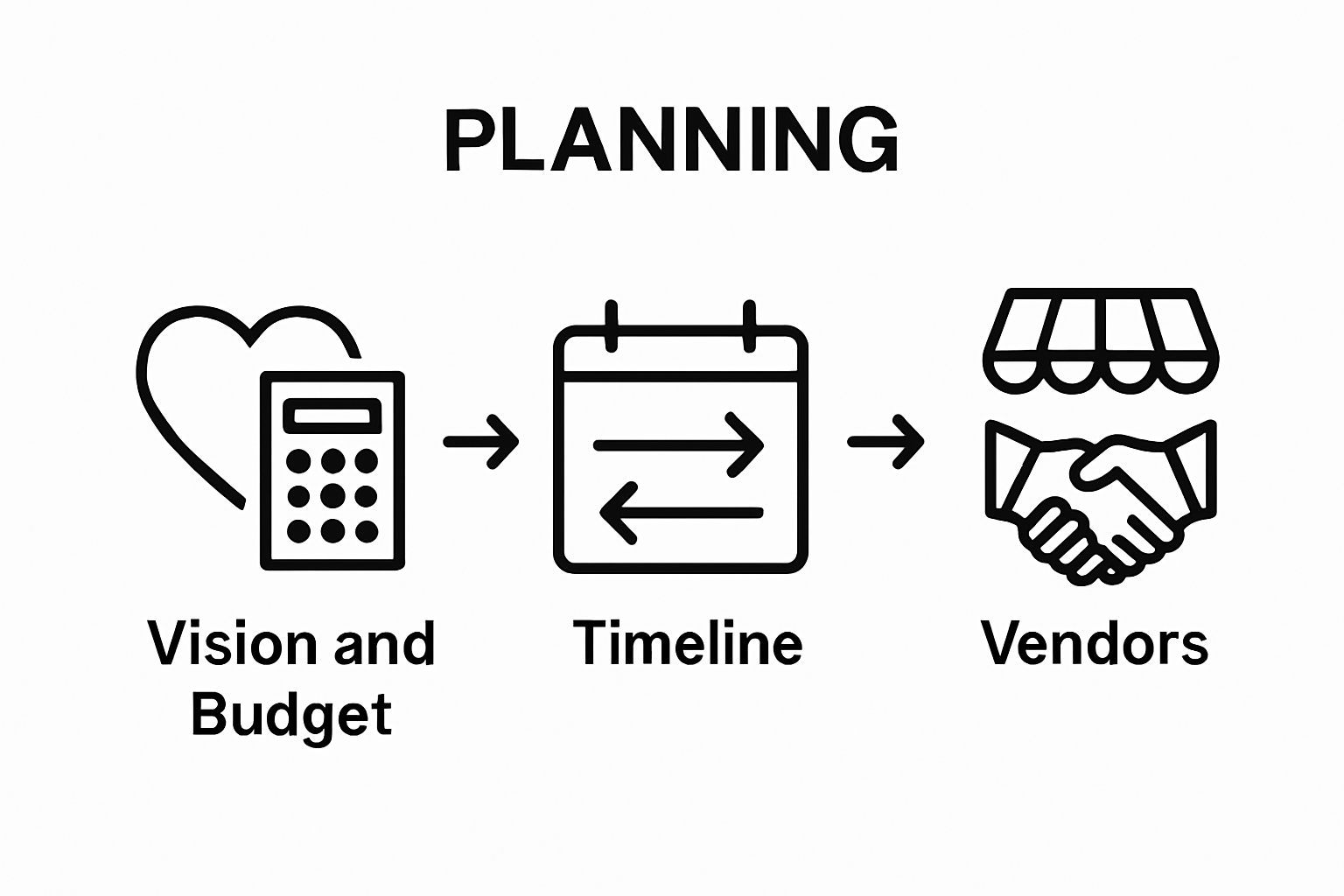
Imaging your perfect wedding requires honest conversations about personal style, shared values, and realistic expectations. Consider the emotional landscape of your celebration: Are you dreaming of an intimate vineyard gathering with twenty close friends, or an elaborate ballroom extravaganza with hundreds of guests? Understanding your collective vision helps create a cohesive planning strategy.
Financial planning demands transparency and collaborative decision making. Learn more about wedding budget strategies to navigate potential challenges. Start by having an open discussion about your total budget, identifying who will contribute financially. Some couples receive support from family, while others choose to fund the entire celebration independently.
Below is an overview of typical budget allocation for main wedding elements to assist in financial planning and prioritising spending.
| Wedding Element | Typical Percentage of Total Budget |
|---|---|
| Venue and Catering | 40-50% |
| Photography and Videography | 10-15% |
| Attire and Beauty | 8-10% |
| Flowers and Decor | 8-10% |
| Music and Entertainment | 5-10% |
| Miscellaneous Expenses | 10-15% |
Breakdown of typical budget allocation might include:
- Venue and Catering: 40-50%
- Photography and Videography: 10-15%
- Attire and Beauty: 8-10%
- Flowers and Decor: 8-10%
- Music and Entertainment: 5-10%
- Miscellaneous Expenses: 10-15%
Remember that flexibility is key. Your initial budget will likely evolve as you explore options and prioritize elements most meaningful to you. Tracking expenses meticulously using spreadsheets or specialized wedding planning apps can help maintain financial discipline.
Successful completion of this step means having a clear, mutually agreed wedding vision and a realistic budget that aligns with your dreams without causing unnecessary financial strain. By establishing these parameters early, you create a solid foundation for a joyous and stress free wedding planning experience.
Step 2: Create a Comprehensive Timeline
Creating a comprehensive wedding timeline transforms abstract planning into a structured roadmap that guides every aspect of your celebration. This critical step translates your vision into actionable milestones, ensuring no detail falls through the cracks and reducing potential stress as your wedding day approaches.
Timeline development begins with identifying your wedding date and working backwards strategically. Most couples recommend starting serious planning 12 to 18 months in advance, which provides ample time for research, booking vendors, and managing unexpected challenges. Explore our detailed wedding planning guide for additional insights into effective scheduling.
Consider your timeline as a living document that requires regular updates and refinement. Digital tools like collaborative spreadsheets or specialized wedding planning apps can help track progress and maintain synchronization between partners and potentially involved family members. These platforms allow real time updates, shared task management, and centralised communication.
The following table summarises key milestones within a comprehensive wedding timeline, outlining actions and approximate timing to keep your planning on track.
| Milestone | Recommended Timing |
|---|---|
| Announce engagement, draft guest list | 12 months before |
| Book venues, research attire | 9 months before |
| Send save the dates, begin vendor consultations | 6 months before |
| Finalise catering, music, photography | 4 months before |
| Confirm guest count, complete seating | 2 months before |
| Final vendor meetings, create day of schedule | 1 month before |
Key timeline milestones typically include:
- 12 months before: Announce engagement, draft initial guest list
- 9 months before: Book primary venues, research wedding attire
- 6 months before: Send save the dates, begin vendor consultations
- 4 months before: Finalize catering, music, and photography
- 2 months before: Confirm final guest count, complete seating arrangements
- 1 month before: Final vendor meetings, create detailed day of schedule
Successful timeline creation involves anticipating potential complications and building flexibility into your plan. Factor in buffer periods for unexpected delays, family dynamics, and vendor coordination. Professional wedding planners recommend maintaining open communication channels and setting realistic expectations throughout the process.
Verification of a comprehensive timeline means having a clear, mutually understood document that outlines specific tasks, responsible parties, and deadlines. Your timeline should feel like a supportive guide rather than a restrictive mandate, allowing for organic adjustments while maintaining overall progress towards your wedding day.
Step 3: Secure Key Vendors and Venues
Selecting the right vendors and venues represents a pivotal moment in wedding logistics, transforming your conceptual vision into a tangible celebration. This step requires strategic research, thoughtful negotiations, and careful alignment between your budget, aesthetic preferences, and practical requirements.
Begin by prioritizing your core venue selection, which will significantly influence subsequent vendor choices. Popular wedding locations often book months or even years in advance, so early investigation is crucial. Learn more about wedding planning strategies to navigate this complex process more effectively. Consider venues that not only match your aesthetic but also accommodate your guest count, offer logistical convenience, and align with your budgetary constraints.
Vendor selection demands meticulous evaluation beyond surface impressions. Request comprehensive portfolios, read detailed client testimonials, and schedule personal consultations to assess compatibility. Professional photographers, caterers, musicians, and florists should demonstrate not just technical skill but also an ability to understand and execute your unique wedding vision.
Key considerations when selecting vendors include:
- Professional credentials and experience
- Portfolio demonstrating consistent quality
- Positive client references
- Clear communication and responsiveness
- Transparent pricing structures
- Flexibility and problem solving capabilities
Negotiation plays a critical role in vendor selection. Do not hesitate to discuss package details, potential customizations, and precise service expectations. Written contracts should explicitly outline service scope, payment schedules, cancellation policies, and contingency plans. Request itemized quotes that break down all potential expenses to avoid unexpected financial surprises.
Successful vendor and venue procurement means assembling a cohesive team that shares your wedding vision while providing professional expertise. Your selections should feel like collaborative partnerships rather than transactional arrangements. By investing time in thorough research and maintaining open communication, you create a strong foundation for a seamless, memorable wedding celebration.
Step 4: Coordinate Guest Arrangements and Communication
Guest coordination represents a complex choreography of communication, logistics, and hospitality that transforms your wedding from a personal celebration into a shared experience. This critical step requires strategic planning, empathy, and meticulous attention to detail to ensure every guest feels welcomed and informed.
Begin by developing a comprehensive guest management system that tracks invitations, responses, dietary requirements, and accommodation needs. Explore our guide on creating seamless event setups to understand the nuanced approach required for sophisticated guest coordination. Digital tools like wedding websites or specialized management platforms can centralise communication and simplify tracking.
Invitation design and distribution serve as the first touchpoint for guest communication. Select designs that reflect your wedding aesthetic while providing clear, concise information. Digital invitations offer cost effective and environmentally friendly alternatives, allowing real time tracking of responses and enabling quick follow up communications. Include essential details such as date, venue location, dress code, and RSVP instructions.
Key guest communication elements include:
- Comprehensive wedding website with event details
- Clear RSVP instructions and deadlines
- Accommodation and transportation recommendations
- Detailed schedule of wedding weekend events
- Contact information for wedding coordination team
Accommodation planning requires proactive management, particularly for destination or out of town weddings. Negotiate group rates with local hotels, provide multiple lodging options at different price points, and consider creating welcome packages with local area information. Consider transportation logistics, especially if your venue is in a remote location or requires shuttle services between ceremony and reception sites.
Successful guest arrangement coordination means creating a seamless, stress free experience that allows your guests to focus on celebrating your union. By anticipating potential challenges, maintaining clear communication, and providing comprehensive information, you transform logistical planning into an expression of hospitality and care.
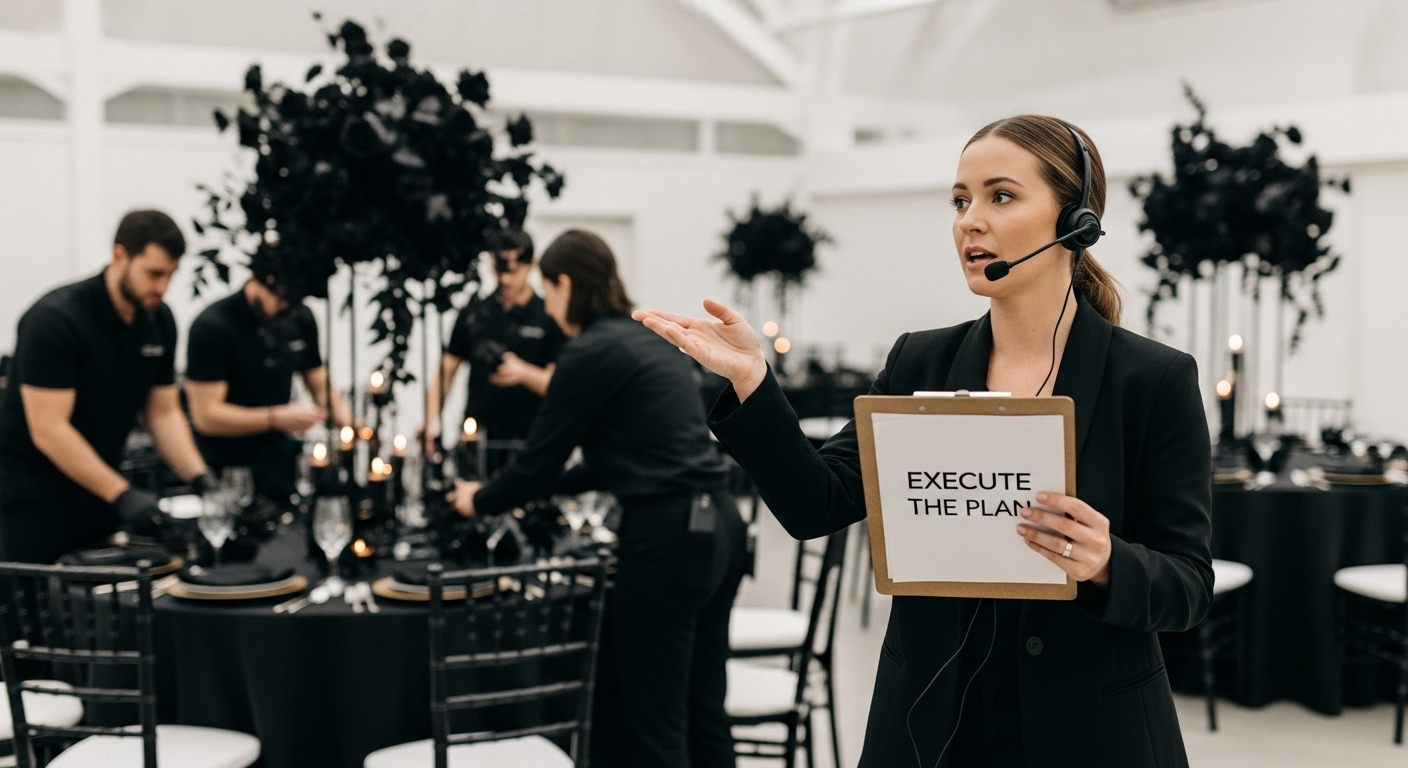
Step 5: Execute the Plan on the Wedding Day
Wedding day execution transforms months of meticulous planning into a living, breathing celebration of love. This final logistical stage demands calm precision, adaptability, and a strategic approach to managing countless moving parts simultaneously. Discover the true value of professional day of coordination to understand the intricate choreography required for a seamless event.
Prepare a detailed day of timeline that assigns specific responsibilities to key members of your wedding party and family. Professional wedding coordinators recommend creating a minute by minute breakdown that includes setup times, vendor arrival windows, photography sequences, and contingency protocols. This document becomes your operational blueprint, ensuring everyone understands their role and potential backup scenarios.
Communication remains paramount during wedding day logistics. Establish a dedicated communication channel using group messaging apps or walkie talkies for immediate coordination between wedding party members, vendors, and key family representatives. Designate a point person responsible for troubleshooting unexpected challenges, allowing you to remain focused on enjoying your celebration.
Critical wedding day coordination elements include:
- Confirming vendor arrival and setup times
- Managing wedding party transportation
- Handling last minute wardrobe adjustments
- Coordinating photography and videography sequences
- Managing unexpected weather or venue complications
- Maintaining the overall event timeline
Emotional management is equally important as logistical coordination. Despite extensive planning, unexpected moments will inevitably arise. Cultivate a mindset of flexibility and grace, understanding that minor imperfections often become cherished memories. Your ability to remain present and joyful transcends any logistical challenges.
Successful wedding day execution means creating a fluid, stress free environment where love takes center stage. By preparing comprehensively, maintaining open communication, and embracing spontaneity, you transform careful planning into an extraordinary, once in a lifetime celebration.
Step 6: Evaluate and Finalise Logistics Post-Celebration
Post wedding logistics represent the final chapter in your comprehensive wedding planning journey, transforming accumulated experiences into valuable insights for future celebrations. This crucial step involves systematic reflection, financial reconciliation, and preserving the memories that made your special day extraordinary. Explore how professional event management extends beyond single occasions to understand the broader perspective of event evaluation.
Begin by conducting a comprehensive financial reconciliation, comparing your initial budget against actual expenditures. Collect and organize all final invoices, receipts, and vendor contracts. This process not only provides clear financial closure but also offers insights into areas of potential cost optimization for future event planning. Track unexpected expenses, understand where budget allocations worked effectively, and document lessons learned for potential future celebrations.
Vendor communication remains essential during this phase. Schedule brief follow up meetings or send detailed feedback emails to each primary vendor. Discuss their performance, express gratitude, and provide constructive observations that can help improve their services. Professional vendors appreciate honest, thoughtful feedback and often maintain professional relationships that could be beneficial for future event recommendations.
Key post celebration evaluation elements include:
- Comprehensive financial reconciliation
- Vendor performance assessment
- Memory preservation strategies
- Thank you note preparation
- Initial marriage administrative tasks
- Personal reflection and celebration
Memory preservation represents another critical aspect of post wedding logistics. Collaborate with your photographer and videographer to select and organize final wedding images. Create digital and physical albums, consider creating backup copies of visual memories, and potentially develop unique keepsake items that commemorate your celebration. This process transforms wedding documentation from mere records into cherished family heirlooms.
Successful post celebration logistics mean transforming your wedding experience into a structured, meaningful conclusion that honors both the emotional and practical dimensions of your extraordinary day. By approaching this final step with intentionality and care, you create a lasting foundation for your marital journey.
Elevate Your Wedding with Winelands Function’s Expert Logistic Solutions
Managing wedding logistics can feel overwhelming. From setting your budget to coordinating guests and securing trusted vendors, each stage presents its own unique challenges. The article highlighted the pressure of keeping every detail in sync so that your wedding vision unfolds flawlessly. That level of precision demands not only time, but also expertise, leaving many couples feeling lost or anxious as the big day approaches.
Discover how effortless wedding planning becomes when you place your trust in the professionals at Winelands Function. Our high-end event specialists in Cape Town are masters at transforming even the most complex wedding logistics into seamless, memorable experiences. Experience our meticulous approach to organising your venue, vendors, guest management and more, all while keeping your style and personal story front and centre.

Choose stress-free perfection for your celebration. Visit Winelands Function now and explore how our tailored planning, extraordinary attention to detail, and luxury service can bring your unique wedding to life. Book your consultation today to secure your date before the coming season fills up.
Frequently Asked Questions
What are the first steps in managing wedding logistics?
Begin by defining your wedding vision and budget. This sets the foundation for your planning process and helps ensure your celebration aligns with your unique preferences and financial boundaries.
How can I create a comprehensive wedding timeline?
Start by identifying your wedding date and then work backwards, planning tasks 12 to 18 months in advance. Utilize digital tools for tracking progress and maintaining open communication with your partner and family members throughout the planning process.
What should I consider when selecting wedding vendors?
Prioritise professional credentials, experience, and client references. Ensure your selected vendors align with your wedding vision and budget. Clear communication and flexibility are also essential in the vendor selection process.
How can I effectively manage guest arrangements for my wedding?
Develop a guest management system to track invitations, responses, and dietary requirements. Ensure clear communication through wedding websites or management platforms, providing comprehensive information about the event and accommodation details.
Recommended
- Wedding Planning Step by Step: Your Complete Guide – Winelands Function – For Every Occasion, Your Celebration
- Groom Getting Ready Tips – Winelands Function – For Every Occasion, Your Celebration
- Understanding Why Hire Wedding Planners for Your Event
- Master the Bespoke Event Setup Process in Cape Town