

TL;DR:
- Exclusive luxury events are defined by personalized anticipation and unique access, not just opulence.
- Preparation focusing on guest insights and emotional connection creates memorable, repeatable experiences.
- Genuine exclusivity relies on empathy, authenticity, and adaptive service rather than material grandeur.
There is a profound difference between an event that costs a fortune and one that guests recall for years. High budgets guarantee neither loyalty nor lasting memory. Cape Town’s luxury event market is one of the most competitive in the southern hemisphere, and Cape Town luxury hotel occupancy reached 72.5% in April 2025, reflecting a surge in affluent demand that raises the bar for every planner and host in the city. The question is not how much you spend. It is how precisely you anticipate, personalise, and choreograph every moment from arrival to farewell.
Table of Contents
- Setting the standard: What defines an exclusive guest experience?
- Preparation: Laying the groundwork for bespoke events
- Execution: Hyper-personalisation and on-site anticipation
- Verification: Measuring success and reinforcing the experience
- The real secret: Why exclusivity is never one-size-fits-all
- Partner with Cape Town’s luxury experience experts
- Frequently asked questions
Key Takeaways
| Point | Details |
|---|---|
| Personalisation is critical | High-end guests value tailored experiences that recognise their individual tastes and needs. |
| Preparation drives success | Thorough guest research and intentional planning ensure exclusivity is both credible and memorable. |
| Anticipation creates delight | Meeting needs before guests voice them elevates events above standard luxury hospitality. |
| Follow-up extends exclusivity | Thoughtful, personalised post-event communications make experiences last and drive loyalty. |
Setting the standard: What defines an exclusive guest experience?
Before any venue is booked or menu is curated, you need a clear understanding of what exclusivity actually means to today’s sophisticated guest. Many planners conflate it with luxury, but the two are not the same thing.
Luxury refers to the material dimension: fine fabrics, premium champagne, Michelin-calibre cuisine, and architecturally stunning spaces. Exclusivity, by contrast, is relational. It is the feeling that this event was designed entirely for you, that your host anticipated your preferences before you voiced them, and that no detail was left to chance. The luxury guest service elements that genuinely resonate with discerning guests are almost always rooted in emotional precision rather than conspicuous opulence.
The shift to hyper-personalisation is now industry consensus among top venues, with AI-driven guest profiles enabling proactive anticipation such as preferred wine already chilled on arrival, dietary preferences honoured without prompting, and preferred seating confirmed silently. Sustainability and locally sourced ingredients are also rising sharply in guest expectations, particularly among international visitors to Cape Town who are accustomed to global best practice.
The core components of an exclusive memorable event experience can be summarised clearly:
- Privacy and discretion: High-net-worth guests and C-suite executives value environments where their presence and preferences are protected.
- Access to unique experiences: A curated wine tasting in a private Stellenbosch cellar, a bespoke dinner beneath the Milky Way on a private estate, or a behind-the-scenes cultural tour that money alone cannot buy.
- Anticipatory service: Staff who resolve a need before a guest recognises it themselves. This requires genuine preparation and a culture of attentiveness.
- Seamless digital enhancements for events: From personalised digital welcome screens to real-time agenda updates, technology should serve the guest invisibly.
| Benchmark | Standard luxury event | Exclusive luxury event |
|---|---|---|
| Guest recognition | Name on a place card | Full preference profile used throughout |
| Menu | Premium, fixed selection | Individually curated per guest |
| Service model | Reactive | Anticipatory |
| Unique access | Open venue | Private or restricted experience |
| Follow-up | Generic thank-you | Personalised post-event touchpoint |
“The most memorable luxury experiences are not the grandest. They are the ones where every guest feels, without quite knowing why, that everything was arranged specifically for them.”
Preparation: Laying the groundwork for bespoke events
Once you understand the expectations, meticulous preparation becomes the foundation of any memorable affair. This is where most events either win or lose, long before a single guest arrives.
The traditional approach to high-end event planning starts with venue, catering, and programme. Bespoke planning inverts this entirely. You start with the guest. Who are they? What do they value? What do they dislike? What would genuinely surprise and delight them? Only once you have answered these questions do venue and catering decisions become straightforward.
| Traditional approach | Bespoke approach |
|---|---|
| Venue selected first | Guest profile developed first |
| Standard premium menu | Menu built around individual preferences |
| Generic luxury details | Personalised touches throughout |
| Programme designed by host | Programme shaped by guest preferences |
| One-way communication | Guests subtly involved in anticipation |
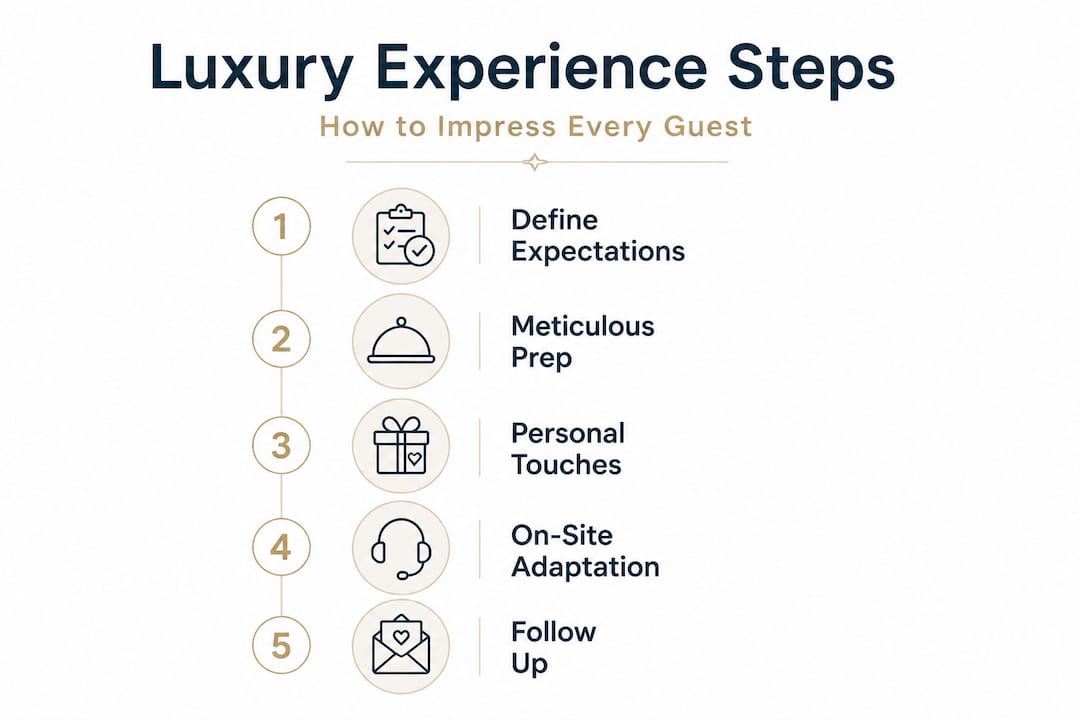
For improving guest experience at the highest level, follow this preparation sequence:
- Define your intention clearly. What specific emotion or outcome should every guest leave with? Inspiration, belonging, gratitude, excitement? This intention should guide every decision that follows.
- Build individual guest profiles. Collect dietary requirements, preferred drinks, names of partners or colleagues, professional interests, and any personal details shared in prior interactions. For returning guests, reference the history.
- Curate resources around the profiles. This means briefing caterers, florists, entertainers, and venue staff with relevant guest information so that every team member can serve proactively.
- Design your anticipation sequence. This is the pre-event experience: a beautifully crafted invitation, a teaser communication, perhaps a small curated gift delivered beforehand. Anticipation is a measurable component of satisfaction.
- Conduct a full team briefing. Every person present on the day should know the guest list, the intention of the event, and the key personal details for at least the primary guests.
- Prepare contingency responses. Exclusive experiences demand flawless recovery when something changes. Identify your most likely variables and plan elegant responses in advance.
Pro Tip: For corporate C-suite events, intention over opulence consistently outperforms budget. Gifting suites and peer discussion moments, designed around participants’ actual interests, drive year-on-year attendance far more reliably than spectacular venues alone.
Investing in guest experience design at the preparation stage pays dividends throughout the event itself, because decisions are made deliberately rather than reactively under pressure.
Execution: Hyper-personalisation and on-site anticipation
With all preparations complete, the event arrives. Now hyper-personalisation brings the plan to life in ways that both delight guests and reinforce exclusivity at every turn.
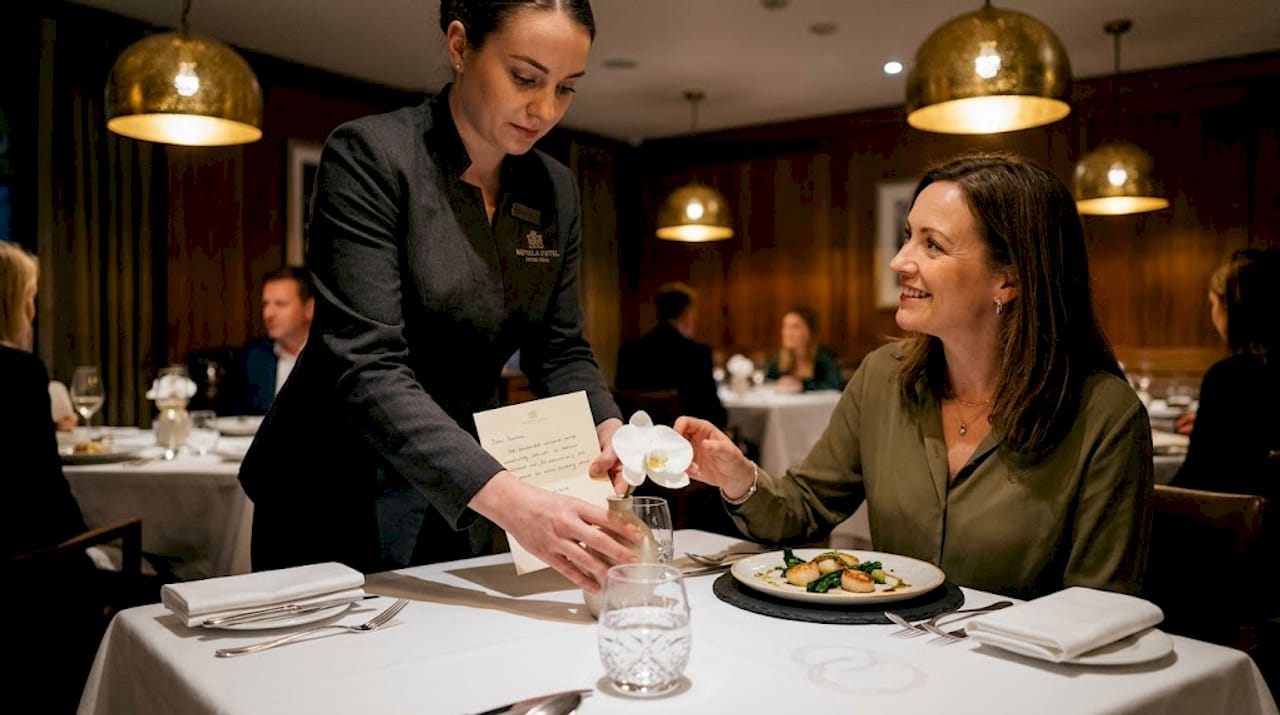
The difference between a well-run luxury event and a truly exclusive one becomes visible in the first five minutes. How is the guest greeted? Is their name spoken naturally, or read from a clipboard? Is their preferred drink already in hand, or are they directed to a general bar? These small moments communicate volumes about the level of care and preparation that has gone into the occasion.
Hyper-personalisation through AI and data profiles is now standard practice among leading luxury venues globally, with proactive anticipation becoming the clearest differentiator between good service and exceptional service. This does not require a technology budget that rivals a hotel chain. It requires disciplined use of the information you already have.
High-impact on-site personalisation ideas that consistently elevate guest experience:
- Named, curated welcome gifts that reflect the individual guest’s known interests, sourced locally from Cape Town’s artisan producers and winemakers.
- Locally sourced seasonal menus prepared with ingredients from named farms in the Winelands, providing authentic stories your sommelier or host can share at the table.
- Expert hosts and guided moments such as a private winemaker’s introduction, a local artist presenting their work personally, or a conservation guide sharing behind-the-scenes insight.
- Real-time adaptation by staff, empowered to make decisions on the spot rather than escalating every request to a manager.
- Personalised programme cards or digital displays at each seat, showing the guest’s name and a curated agenda tailored to their interests.
- Discreet dietary management so that no guest ever feels conspicuous about their requirements.
Leveraging digital engagement tools such as event apps can further personalise the on-site journey, allowing guests to customise their experience, signal preferences in real time, and connect with other attendees in ways that feel organic rather than engineered.
Pro Tip: Brief your VIP guest workflow team to replace reactive service language (“Let me know if you need anything”) with proactive observation. Train staff to notice the nearly empty glass, the guest standing alone, or the slight hesitation before the buffet, and respond naturally before the guest signals a need.
The outcome of consistently elevating guest experience through these on-site practices is tangible. Cape Town luxury hotels saw RevPAR rise 20.1% to ZAR 2,287, with ADR reaching ZAR 3,146, data that reflects what happens when affluent guests feel genuinely valued and return both in person and through recommendation.
Verification: Measuring success and reinforcing the experience
The event may end, but exclusivity must linger. Here is how to guarantee lasting impact and ensure that every experience informs the next one, creating a cycle of continuous improvement that compounds over time.
Many organisers treat the post-event phase as an afterthought. A generic email of thanks, a brief survey link, and then silence. For measuring guest experience at the luxury level, this approach is simply inadequate. Your guests are accustomed to premium follow-through in every area of their professional and personal lives.
Follow this post-event sequence:
- Send personalised follow-up within 24 hours. Reference a specific moment from the event that was personal to each recipient. This is not a bulk email. It is a brief, warm, considered note.
- Deliver a curated post-event gift. A local experience follow-up such as a bottle of wine from the estate featured at the event, or a handwritten note with a small artisan product, creates a physical reminder of the occasion that guests keep and mention.
- Collect structured feedback. Use a combination of NPS (Net Promoter Score, a single-question measure of how likely a guest is to recommend an experience), direct qualitative surveys, and social mention analysis to build a full picture of impact.
- Document all learnings. What exceeded expectations? What fell short? Which personalisation details resonated most? Build this into future guest profiles and planning templates.
- Identify your advocates. Which guests shared the experience publicly or mentioned it in conversation? These individuals are your most valuable marketing channel and deserve additional recognition in future events.
| Measurement method | What it captures | Best used for |
|---|---|---|
| NPS survey | Likelihood to recommend | Overall satisfaction benchmark |
| Direct qualitative survey | Specific experience feedback | Understanding what worked and what did not |
| Social mention analysis | Public sentiment and reach | Brand and reputation impact |
| Host debrief interviews | Operational and service quality | Internal process improvement |
| Repeat attendance rate | Long-term loyalty | Measuring year-on-year event value |
Cape Town’s luxury market shows strong repeat demand, confirming that exceptional event experiences generate genuine long-term value, not only for guests but for the hosts and brands who create them.
Pro Tip: When sending post-event communication to C-suite or VIP guests, use their preferred communication channel rather than defaulting to email. Some senior executives respond far more warmly to a brief handwritten note or a direct personal message than to a professionally formatted digital communication.
The real secret: Why exclusivity is never one-size-fits-all
Here is something that the luxury event industry rarely says plainly: emotional intelligence is more powerful than any production budget. After years of creating and studying high-end events across Cape Town and the Winelands, the clearest pattern we observe is this. The events guests remember and speak about are almost never the most expensive ones. They are the ones where something deeply personal happened. Where they felt genuinely seen.
Many planners, including experienced ones, fall into the trap of equating exclusivity with material grandeur. Rare flowers flown in from Amsterdam. A headline DJ or international chef. A venue that costs more per night than most people earn in a month. These elements have their place, and we would never dismiss the importance of quality. But they are the frame, not the painting.
The real work of corporate luxury event insights and indeed any exclusive event is emotional. It is the question asked before any venue is selected: “Who are these people, and what would make them feel that this evening was created entirely for them?” The answer to that question is almost always more nuanced, more personal, and more interesting than “a bigger budget.”
Real-time adaptation is the capability that separates good planners from exceptional ones. When a key guest arrives visibly stressed after a delayed flight, the exclusive response is not to proceed with the planned schedule regardless. It is to quietly adjust the first hour, ensure a moment of calm and refreshment, and allow the guest to arrive emotionally as well as physically. That kind of responsiveness cannot be scripted. It requires empowered teams, genuine attentiveness, and a culture that prioritises the guest’s actual state over the planner’s ideal sequence.
Authenticity matters enormously in Cape Town specifically. International guests who visit this city are often searching for something that feels genuinely rooted in place, in culture, and in story. An exclusive experience that draws on the real heritage of the Winelands, the actual narratives of local artisans and winemakers, and the authentic landscape of the Western Cape will always outperform a generic luxury format transplanted from London or Dubai. The place itself is part of the experience.
Partner with Cape Town’s luxury experience experts
Translating everything in this guide into a seamless, unforgettable event requires the kind of local knowledge, supplier relationships, and operational precision that only comes from genuine expertise in Cape Town’s high-end market.
At Winelands Function, we specialise in bespoke luxury celebrations that are built around your guests from the very first planning conversation. Whether you are hosting an intimate dinner for twenty or a landmark corporate occasion for two hundred, our approach ensures that every detail, from the first invitation to the post-event gift, is designed with intention and executed with precision. Our team understands the specific expectations of affluent local and international guests, and we bring established relationships with the Winelands’ finest venues, caterers, and experience providers to every event we manage. Explore our luxury event planning services to discover how we can bring these strategies to life for your next occasion, or speak with us directly about elevating guest experience at your next event.
Frequently asked questions
What makes a guest experience in Cape Town truly exclusive?
Genuine exclusivity is built on personalised anticipation and unique access, not simply lavish spending. Hyper-personalisation via AI profiles and proactive service are now the clearest markers of an exclusive experience in Cape Town’s luxury market.
How do luxury venues in Cape Town use personalisation?
Leading venues use AI-driven guest profiles and real-time data to proactively cater to individual preferences, from preferred wine ready on arrival to bespoke menus that reflect each guest’s dietary values and tastes.
Does exclusivity mean higher costs for hosts?
Not necessarily. For C-suite and VIP events, intention consistently outperforms spend, with thoughtful gifting, peer discussion moments, and emotionally intelligent service driving more loyalty than expensive production alone.
Why is follow-up important after a luxury event?
Timely, personalised follow-up extends the emotional impact of the event beyond the occasion itself, reinforcing the guest’s sense of having been valued and significantly increasing the likelihood of repeat attendance and personal recommendation.
What is Cape Town’s current market demand for luxury events?
Cape Town’s luxury hotels recorded occupancy of 72.5% in April 2025, with RevPAR rising 20.1%, reflecting robust and growing demand from both local and international affluent guests and event clients.
Recommended
- How to Elevate Guest Experience for Luxury Events Easily – Winelands Function – For Every Occasion, Your Celebration
- How to customise guest experience for luxury events – Winelands Function – For Every Occasion, Your Celebration
- Guest Service Experience: Elevating Luxury Events – Winelands Function – For Every Occasion, Your Celebration
- What is guest experience design? A guide for luxury events 2026 – Winelands Function – For Every Occasion, Your Celebration
- How venue choice shapes guest experience at rustic weddings