
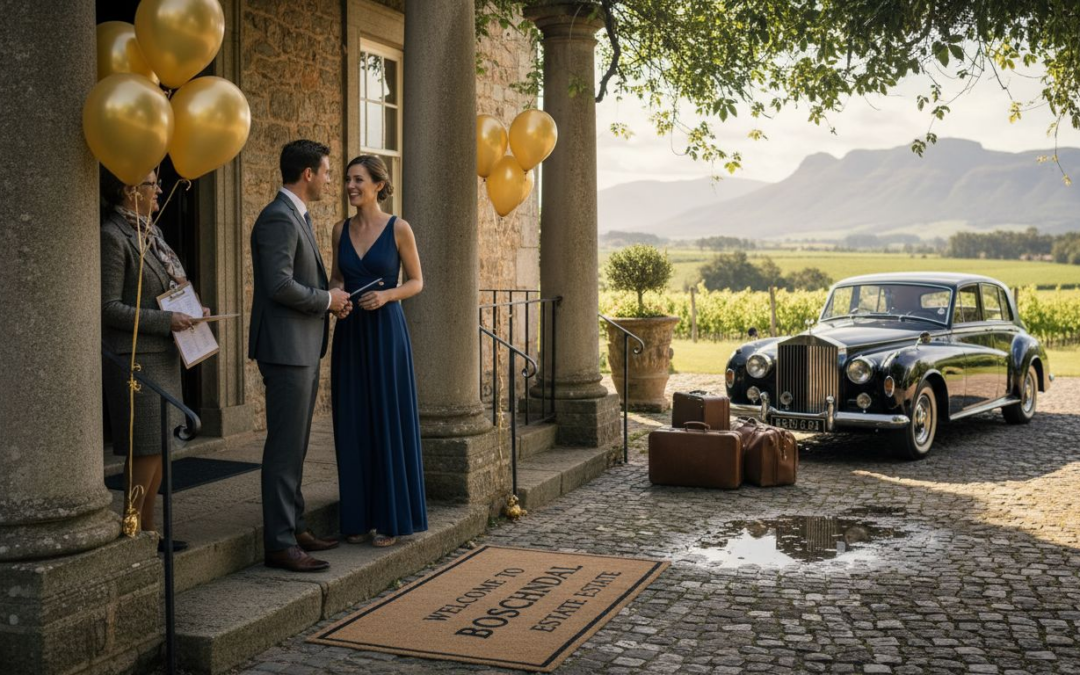
Flawless logistics alone never satisfy discerning guests at premium events in Cape Town. The true difference lies in mastering the core principles that shape a memorable guest service experience—authenticity, sensory engagement, and personalisation. Luxury planners and hosts looking to create unforgettable weddings and corporate occasions will find that embedding these principles, backed by service quality and attentive anticipation, transforms gatherings into cherished memories.
Table of Contents
- Guest Service Experience Core Principles
- Variations In Luxury Event Guest Service
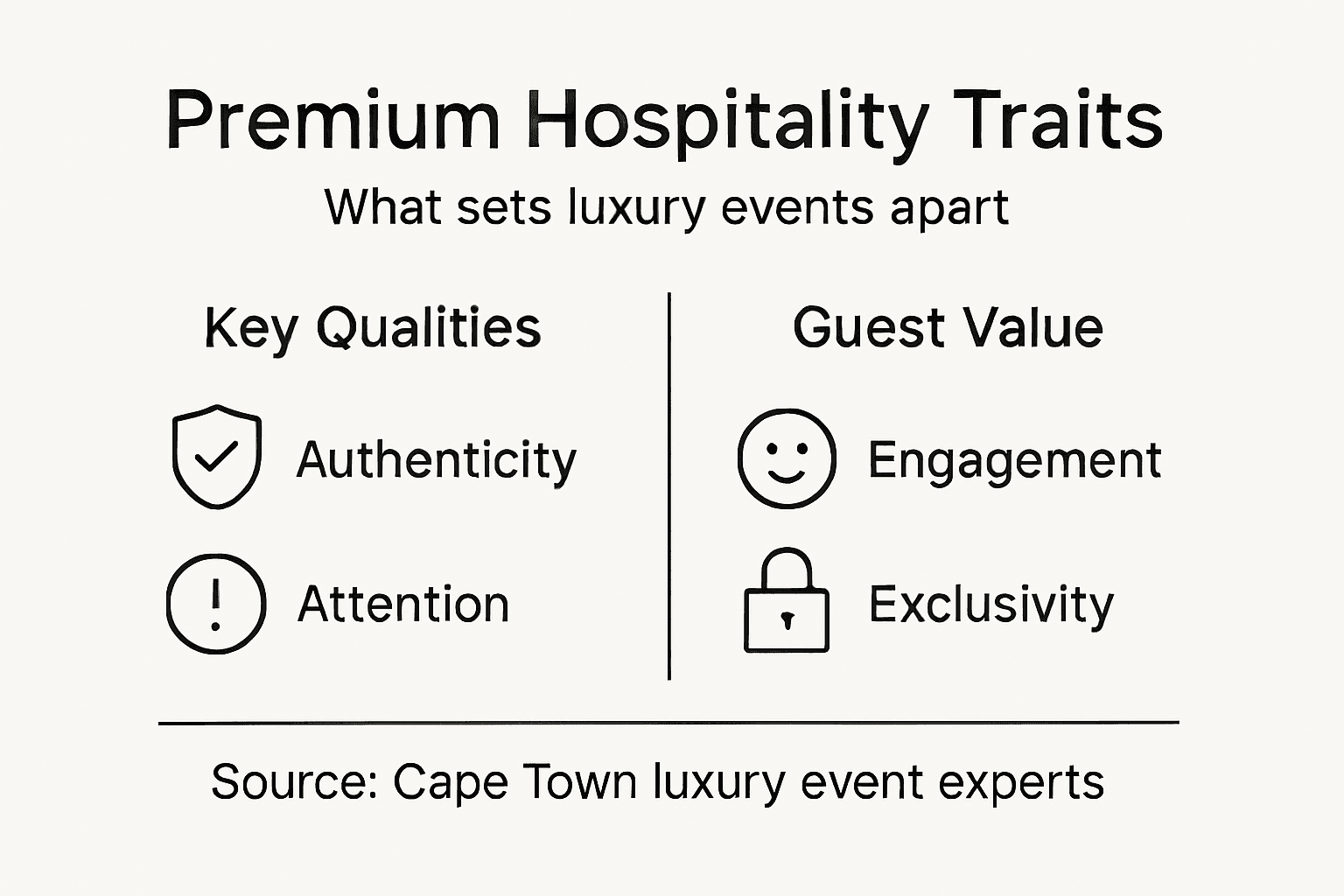
- Distinctive Features Of Premium Hospitality
- Roles And Responsibilities In Guest Interactions
- Risks, Pitfalls, And Best Practice Solutions
Key Takeaways
| Point | Details |
|---|---|
| Authenticity is Crucial | Ensure all elements of the event genuinely reflect its purpose and resonate with guests’ values. |
| Sensory Engagement Enhances Experience | Engage multiple senses through carefully curated selections and ambient elements to create lasting memories. |
| Personalisation is Essential | Acknowledge individual guest preferences to provide tailored experiences that feel genuine rather than scripted. |
| Team Roles Shape Success | Clearly define roles and responsibilities among staff to foster seamless service and authentic guest interactions. |
Guest service experience core principles
Luxury events in Cape Town demand more than just flawless logistics. Your guests expect an experience that resonates emotionally, speaks to their values, and lingers in their memory long after the last toast. The foundation of this lies in understanding core principles that transform ordinary gatherings into unforgettable occasions.
The first principle centres on authenticity. Your guests can detect manufactured moments instantly. Whether it’s a corporate gala or intimate wedding in the Winelands, every interaction, décor choice, and service touchpoint must feel genuinely aligned with your event’s purpose and your guests’ expectations.
Sensory engagement forms the second pillar. Think beyond what your guests see—consider what they taste, hear, smell, and feel. A perfectly curated wine selection, ambient soundscapes, the fragrance of seasonal flowers, and the texture of premium linens all contribute to designing memorable guest experiences that engage multiple senses simultaneously.
Personalisation is non-negotiable at this level. Your guests should feel individually recognised, not processed through a standardised formula. This extends from greeting preferences to dietary requirements to conversation starters tailored to their interests.
Core service principles worth embedding into your event:
- Service quality through rigorous staff training and clear protocols
- Cultural relevance that reflects your guests’ backgrounds and values
- Experience design that sequences moments for maximum emotional impact
- Attentive anticipation where staff notice needs before they’re voiced
- Consistent execution across every guest touchpoint
Your guests won’t remember every detail, but they’ll remember how your event made them feel.
These principles don’t stand alone. An integrated model combining service and experience factors creates synergy—where brilliant service amplifies brilliant experience design, and memorable experiences elevate the perception of service quality.
The gap between adequate and exceptional lies in how deliberately you apply these principles. Most planners focus exclusively on logistics. Premium event planners focus on the human experience these logistics enable.
Pro tip: Map your event timeline by guest emotional moments rather than schedule times—identify where you want guests to feel surprised, connected, inspired, or celebrated, then build your service protocols around amplifying those emotions.
Variations in luxury event guest service
One-size-fits-all approaches crumble at luxury events. Your guests arrive with vastly different backgrounds, expectations, and definitions of what “luxury” means to them. Understanding these variations allows you to craft experiences that resonate authentically with each demographic without feeling generic.
Cultural differences shape service expectations significantly. A guest from Northern Europe may prefer understated elegance and efficiency, whilst guests from other regions might expect more visible personalisation and warm engagement. Neither preference is better—they’re simply different frameworks for perceiving quality service.
Regular luxury consumers and occasional ones perceive service quality through different lenses. Frequent luxury event attendees notice subtle refinements: staff timing, anticipatory service, background coordination. First-time luxury guests often focus on visible grandeur—quality of décor, prominence of premium elements, obvious markers of exclusivity.
Service customisation based on cultural differences becomes essential when serving diverse guest profiles. This extends beyond mere politeness to fundamentally reshaping how your team delivers care.
Key variations to consider when planning:
- Age demographics shape technology comfort levels and preferred communication styles
- Travel context determines whether guests seek relaxation, networking, or both
- Previous event experiences establish their reference points for quality
- Social dynamics within your guest group influence comfort levels and interaction patterns
- Professional backgrounds affect their interests and conversation starters
The most powerful luxury service adapts invisibly—guests never feel they’re being “managed” based on a profile.
Your staff training should address these variations explicitly. Rather than teaching a single service script, train your team to read subtle cues—how guests greet each other, whether they’re comfortable with eye contact, their pace of conversation.
In Cape Town’s luxury event landscape, you’re often hosting genuinely global audiences. International guests attending Winelands events bring different service expectations from their home countries. The corporate delegate from London operates with different assumptions than the visiting entrepreneur from Dubai or São Paulo.
The variation also appears in what drives guest satisfaction. Some measure success through culinary excellence, others through seamless coordination, still others through meaningful conversations facilitated by thoughtful seating and pacing.
The following table summarises how different guest demographics assess and value luxury event experiences:
| Guest Type | What They Prioritise | Example Service Focus |
|---|---|---|
| Frequent luxury attendees | Subtle refinements and seamless flow | Impeccable timing, invisible coordination |
| First-time luxury guests | Visible markers of exclusivity | Grand décor, premium elements |
| International visitors | Cultural alignment and recognition | Custom greetings, adapted protocols |
| Younger guests | Technological integration and customisation | Mobile apps, bespoke menus |
| Corporate delegates | Efficient networking and comfort | Thoughtful seating, privacy zones |
Pro tip: During initial client meetings, ask specific questions about your guest composition—travel origins, event frequency, professional sectors—then create a simple variation guide for your service team rather than generic protocols.
Distinctive features of premium hospitality
Premium hospitality operates on a fundamentally different philosophy than standard service. It’s not about more of everything—it’s about intentionality in every choice. Your guests should feel the difference before they can articulate it.
Exclusivity forms the bedrock. This doesn’t necessarily mean scarcity or astronomical pricing. Rather, it means your guests experience something genuinely unavailable elsewhere. A Winelands wedding orchestrated with precision by Winelands Function offers exclusivity through bespoke curation, not just through access restrictions.
Authentic engagement distinguishes premium from performative. Your staff connects with guests as humans, not as ticket numbers moving through a system. Conversations feel genuine, recommendations feel considered, and service feels personalised rather than scripted.
Attention to detail separates memorable from exceptional. This means noticing that a guest arrived from a morning meeting and probably needs their jacket pressed. It means adjusting ambient noise when conversation groups form. It means remembering how someone takes their coffee without asking twice.
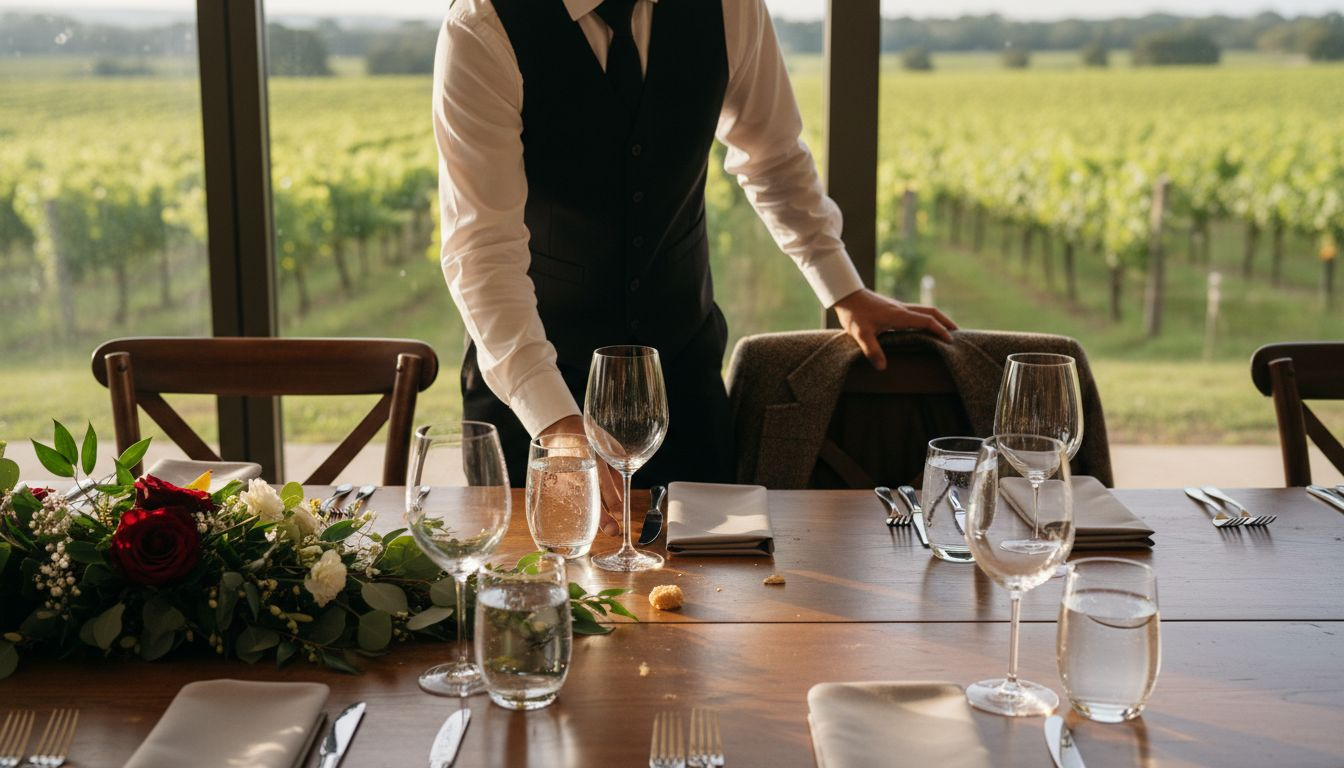
Premium hospitality blends luxury material goods with unique service experiences, creating layered satisfaction. Your beautiful venue matters, but only when paired with seamless service. Your exquisite menu matters, but only when delivered with attentive care.
Distinctive features worth embedding across your event:
- Symbolic benefits that communicate status and belonging to your guests
- Exceptional quality visible in materials, food, beverages, and furnishings
- Personalised experiences tailored to individual preferences and histories
- Anticipatory service that addresses needs before guests voice them
- Experiential enjoyment that engages senses and emotions simultaneously
Premium hospitality is felt before it’s analysed—guests recognise quality through their nervous system, not their intellect.
The psychology matters here. Your guests arrive with preconceptions about what they deserve. Premium hospitality validates those expectations whilst simultaneously exceeding them. It’s the delicate balance between meeting guests where they are and gently elevating their experience.
In Cape Town’s competitive luxury event market, distinctive features become your differentiator. Any planner can hire premium caterers. Fewer can orchestrate the complete sensory narrative that transforms a gathering into an experience your guests discuss for years.
These features aren’t luxuries layered on top of basic service. They’re foundational to how premium hospitality operates—how your team thinks, how your spaces are designed, and how every decision prioritises guest perception and satisfaction.
Pro tip: During event planning, audit each service touchpoint for authenticity—if it feels scripted to your team during rehearsal, it’ll feel scripted to your guests during execution; redesign until it feels genuinely responsive.
Roles and responsibilities in guest interactions
Your event’s success hinges not on one person, but on how clearly every team member understands their role in shaping guest experiences. When staff operate without clear responsibilities, interactions become inconsistent and opportunities slip away.
Frontline employees carry the heaviest responsibility. They’re the visible embodiment of your event’s philosophy. Whether greeting guests at arrival, managing table service, or facilitating conversations, their presence either reinforces or undermines your carefully planned experience.
These team members must engage at four distinct levels simultaneously. Behavioural engagement means executing tasks flawlessly. Relational engagement means connecting authentically with guests. Emotional engagement means genuinely caring about guest satisfaction. Cognitive engagement means understanding why each interaction matters.
Frontline staff shape guest experiences through behavioral, relational, emotional, and cognitive engagement, co-creating personalised interactions that exceed expectations. This isn’t scripted; it’s intuitive service built on clear training and genuine care.
Key responsibilities across your event team:
- Anticipation specialists who notice unspoken needs before they become problems
- Connection facilitators who introduce guests strategically and enable meaningful conversations
- Quality guardians who maintain standards across every service moment
- Problem solvers empowered to resolve issues without checking permissions
- Experience coordinators who adjust timing and flow based on guest energy
The best interactions feel invisible—guests never notice the coordination behind seamless service, only that their needs were met before they asked.
Staff roles encompass facilitating civility and utility, fostering positive memorable experiences through personalised communication. Beyond friendliness, guests expect genuine social connection and information exchange that enriches their experience.
Clarity matters profoundly here. Your sommelier has different responsibilities than your welcome coordinator. Your event planner has different responsibilities than your chef. Yet all must understand how their specific role contributes to cohesive guest experience.
At luxury events, responsibilities extend beyond task completion to emotional labour—genuinely engaging with guests, reading emotional cues, and adjusting service intensity accordingly. This demands staff who understand their role transcends position title.
In Cape Town’s premium event landscape, differentiation emerges through how intentionally you’ve structured roles. Any venue can hire servers. Exceptional planners train staff to become experience orchestrators—people who understand they’re not serving food or drinks, but facilitating memorable moments.
Pro tip: Create a single-page responsibility map for each role defining what they own, what they coordinate, and what they escalate; share during team briefing so everyone understands how their interactions fit the complete experience narrative.
Risks, pitfalls, and best practice solutions
Luxury events expose vulnerabilities that standard events never reveal. Your guests’ elevated expectations create higher stakes—one misstep damages reputation far more severely than at ordinary gatherings. Understanding these risks transforms them into manageable challenges.
Service failures represent the most dangerous pitfall. When something goes wrong at a luxury event, guests don’t quietly accept it. They compare your failure against their expectations and often share negative experiences publicly. A cold dish, forgotten preference, or delayed service becomes a story they tell for years.
Ineffective recovery compounds initial failures. Many planners attempt surface-level fixes without addressing root causes. Guests recognise when recovery feels transactional rather than genuine. Proactive service recovery and managing high guest expectations prevent dissatisfaction from becoming reputational damage.
Authenticity failures undermine premium positioning. Guests immediately detect when personalisation feels fabricated or when your team doesn’t genuinely understand their needs. Forced enthusiasm or scripted interactions signal you view them as transactions, not valued individuals.
Personalisation gone wrong creates another pitfall. Attempting to customise every element without understanding individual preferences can backfire. A guest who mentioned dietary restrictions feels tracked rather than cared for if you overemphasise it throughout the evening.
Common risks worth addressing:
- Inconsistent execution across multiple team members and service moments
- Technology failures when relying on systems that lack redundancy
- Staff fatigue leading to degraded service quality across event duration
- Assumption errors where you misinterpret what guests actually need
- Sustainability perception gaps where values misalign with guest expectations
The fastest path to luxury event failure is assuming yesterday’s approach works today—luxury markets evolve rapidly, and staying relevant demands continuous learning.
Embracing personalisation and emotional engagement whilst upholding sustainability differentiates your offerings in competitive markets. Guests increasingly evaluate events through values alignment, not just surface quality.
Best practices begin with continuous staff training. Your team’s knowledge baseline determines what failures become possible. Invest in scenario training—how to handle the guest who arrives upset, the preference conflict mid-event, the unexpected dietary need.
Implement clear recovery protocols before problems emerge. Empower your team to resolve issues without seeking permission. When staff hesitate, guests sense bureaucratic obstacles instead of genuine care.
Regularly solicit feedback from recent events. Ask what guests noticed, what surprised them, what could improve. This reveals blind spots your planning missed. In Cape Town’s luxury market, reputation spreads through intimate social networks. One exceptional event creates ambassadors; one failure creates critics.
The table below highlights best practice solutions for common risks in luxury event management:
| Key Risk | Proactive Solution | Benefit to Guest Experience |
|---|---|---|
| Inconsistent execution | Standardised, role-based training | Consistent interactions throughout event |
| Technology failure | Redundancy planning and manual backups | Reliable service regardless of tech issues |
| Staff fatigue | Rotational scheduling and wellness breaks | Energetic, attentive service from all staff |
| Authenticity failure | Regular scenario-based rehearsals | Genuine, unscripted guest connections |
| Sustainability misalignment | Transparent sourcing and green protocols | Event aligns with guests’ personal values |
Pro tip: Build a “failure forecast” document for each event identifying the top five things that could go wrong, then create specific responses for each scenario and share with your team during briefing so problems become opportunities for exceptional recovery.
Elevate Your Luxury Event with Expert Guest Service
Delivering truly remarkable guest service experiences requires a deep understanding of authenticity, personalised engagement, and impeccable attention to detail. The challenges highlighted in “Guest Service Experience: Elevating Luxury Events” reveal that today’s luxury guests expect more than flawless logistics—they desire emotional connection and culturally tailored service that speaks to their values. Whether facing risks like inconsistent execution or the demand for anticipatory service, fulfilling these needs takes more than routine planning.
At Winelands Function, we specialise in transforming these complex requirements into seamless, memorable moments. Our bespoke event planning approach integrates all the core principles of premium hospitality, from sensory engagement to personalised guest interactions. With a dedicated team trained to anticipate and adapt to diverse guest profiles in Cape Town and beyond, we ensure your event not only meets but exceeds the highest luxury standards.
Discover how our meticulous service orientation and detailed experiential design can elevate your next celebration into an unforgettable occasion.
Begin your journey to impeccable guest service today by exploring our portfolio and connecting with seasoned experts at Winelands Function. Let us help you craft an event where every detail resonates with authenticity and elegance. Visit our homepage now to start planning personalised excellence.
Frequently Asked Questions
What are the core principles of guest service experience for luxury events?
The core principles include authenticity, sensory engagement, personalisation, service quality, cultural relevance, and attentive anticipation, all aimed at creating memorable and emotional experiences for guests.
How can I ensure my luxury event meets diverse guest expectations?
Understanding cultural differences, varying levels of luxury experience, and distinct guest demographics can help you tailor experiences that resonate authentically with each individual without feeling generic.
What distinguishes premium hospitality from standard service?
Premium hospitality focuses on intentionality rather than excess. It offers exclusivity, authentic engagement, and meticulous attention to detail, ensuring that each guest feels genuinely valued and catered to.
What are common risks associated with luxury event management?
Common risks include service failures, ineffective recovery, authenticity failures, personalisation gone wrong, and consistency issues. Proactive solutions such as thorough staff training, clear recovery protocols, and regular feedback can mitigate these risks.
Recommended
- How to Elevate Guest Experience for Luxury Events Easily – Winelands Function – For Every Occasion, Your Celebration
- Event Management Services: Elevating Luxury Occasions – Winelands Function – For Every Occasion, Your Celebration
- Complete Guide to Guest Experience Enhancement – Winelands Function – For Every Occasion, Your Celebration
- Event Management Explained: Crafting Luxury Experiences – Winelands Function – For Every Occasion, Your Celebration