

TL;DR:
- Executive events are strategic tools focused on brand impact and stakeholder engagement.
- A systematic process from goal setting to post-event analysis ensures luxury standards and measurable ROI.
- Attention to invisible details and post-event follow-up are key to creating memorable, impactful experiences.
Most corporate executives assume that a high-end event begins and ends with a prestigious venue and a polished guest list. That assumption is precisely where costly oversights begin. The executive event planning process is a layered, strategic discipline that aligns business objectives with every logistical and experiential detail. From stakeholder engagement to post-event analysis, the gap between a forgettable function and a genuinely impactful one lies in the rigour of the process behind it. This guide breaks down that process clearly, so you and your team can plan, execute, and evaluate executive events with the confidence and precision they demand.
Table of Contents
- Defining the executive event planning process
- Key stages of the executive event planning process
- Selecting vendors and venues for high-impact executive events
- Measuring success: Post-event analysis for executives
- A strategic view: What most event planners overlook with executive functions
- Let us help you elevate your executive event
- Frequently asked questions
Key Takeaways
| Point | Details |
|---|---|
| Strategic alignment | Executive event planning must connect every detail to business objectives for true impact. |
| Phased process | Successful events follow a clear step-by-step process from vision to measurement. |
| Quality partners | Selecting top vendors and venues elevates both the guest experience and event reputation. |
| Data-driven evaluation | Robust post-event analysis is essential to demonstrate value and improve future outcomes. |
Defining the executive event planning process
Executive events are not simply larger or more expensive versions of ordinary corporate gatherings. They are strategic instruments. Where a standard office party might measure success by attendance and catering quality, an executive function is measured by its impact on leadership credibility, brand positioning, and stakeholder engagement. As corporate goals align with event outcomes, every decision from décor to speaker selection becomes a deliberate business choice.
The distinction becomes clearer when you compare the two approaches side by side.
| Factor | Ordinary event planning | Executive event planning |
|---|---|---|
| Primary goal | Logistics and attendance | Strategic outcomes and brand impact |
| Decision-makers | Office manager or HR | C-suite and communications team |
| Success metric | Guest satisfaction | ROI, brand uplift, media coverage |
| Vendor standard | Cost-effective | Luxury, compliance, and brand-aligned |
| Post-event review | Informal feedback | Structured analysis with KPIs |
The team behind an executive event typically includes a dedicated event strategist, a communications lead, a security coordinator, a VIP liaison, and a technical director. Each role exists because the stakes are higher and the margin for error is narrower.
Strategic objectives for executive events commonly include:
- Reinforcing corporate culture and leadership vision
- Building relationships with key clients, investors, or media
- Launching products or initiatives with maximum brand impact
- Rewarding high-performing teams in a manner consistent with brand values
Critically, the planning process does not end when guests leave. Post-event analysis is a non-negotiable stage. It captures what worked, what did not, and what the event actually delivered against its stated objectives. Reviewing event preparation essentials before you begin ensures that your team enters the process with the right foundations already in place.
“The difference between a good event and a great one is rarely the budget. It is the clarity of purpose that drives every decision from day one.”
Key stages of the executive event planning process
A systematic step-by-step approach ensures that no detail is overlooked in luxury events. Breaking the process into defined stages also creates natural checkpoints for executive sign-off, which protects both the planning team and the broader organisation.
Here are the core stages of an executive event planning process:
- Objective setting: Define what success looks like before anything else. Align with your leadership team on measurable outcomes, target audience, and the narrative the event must communicate.
- Budget allocation: Establish a realistic budget that reflects luxury standards. Build in a contingency of at least 10 to 15 percent for unforeseen costs, which are common in high-end productions.
- Concept and design: Develop the event’s creative direction, including theme, atmosphere, and brand expression. Every visual and sensory element should reinforce the event’s strategic purpose.
- Vendor and venue selection: Source and vet suppliers against strict criteria covering service quality, compliance, and brand alignment. This stage deserves its own focus, which we cover in the next section.
- Risk management planning: Identify potential disruptions, from weather and technical failures to security concerns, and prepare documented contingency plans for each.
- Guest experience design: Map the attendee journey from invitation to departure. VIP protocols, dietary requirements, accessibility, and personalised touches all belong here.
- Execution and live management: Deploy your team with clearly defined roles and real-time communication tools. A detailed run-of-show document is essential.
- Post-event evaluation: Conduct a structured debrief within 48 hours. Gather data, review KPIs, and document lessons for future events.
In South Africa, industry experience suggests that executive events with 100 or more attendees require a minimum of 12 to 16 weeks of lead time to meet luxury standards reliably. Rushing this timeline is one of the most common reasons high-end events underdeliver.
Pro Tip: Centralise all communications, decisions, and approvals in a single shared platform. Whether you use a project management tool or a shared document, a clear decision log prevents miscommunication and protects accountability across your entire planning team. Reviewing luxury event best practices can further sharpen your team’s approach at each stage.
Selecting vendors and venues for high-impact executive events
Your vendors and venue are not just service providers. They are extensions of your brand on the day. A single underperforming supplier can unravel months of careful planning, and at an executive level, that risk is simply unacceptable. Venue selection and partner quality are key to delivering luxury event experiences that meet the expectations of senior stakeholders.
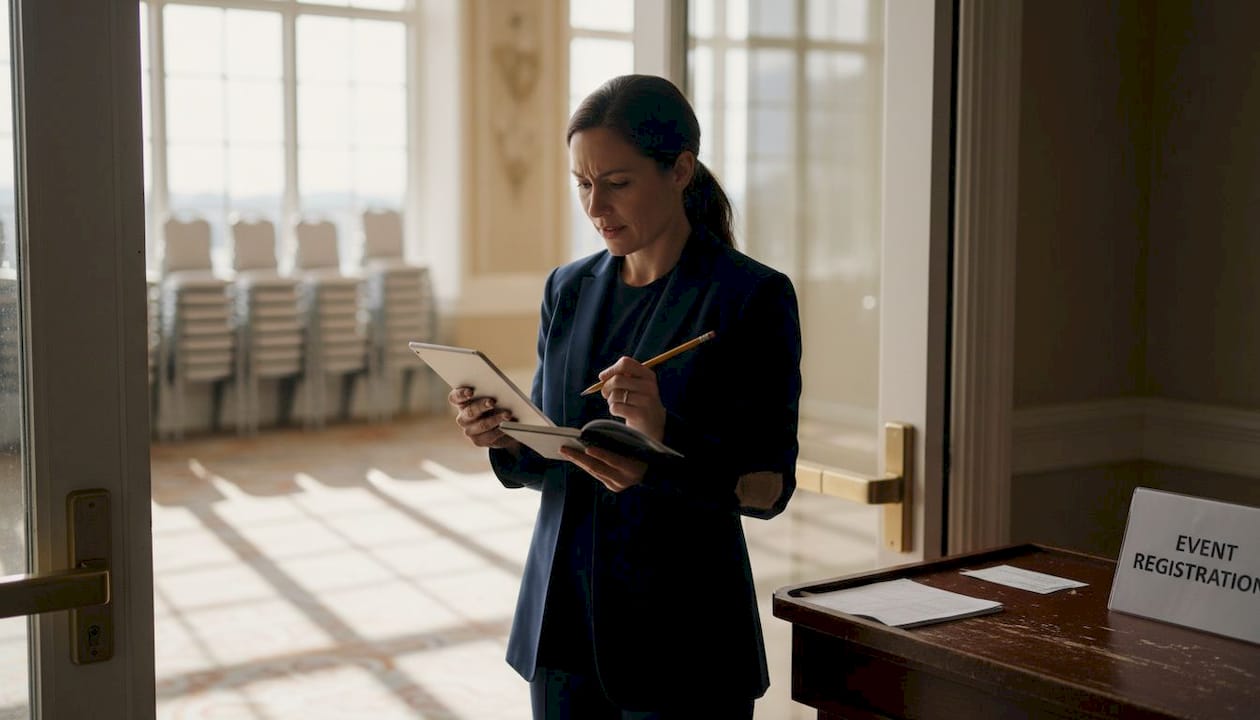
When evaluating venues, the contrast between luxury and standard options is significant.
| Criteria | Standard venue | Luxury executive venue |
|---|---|---|
| Service staff ratio | General | Dedicated, trained event staff |
| Technical infrastructure | Basic AV | Integrated AV, lighting, and connectivity |
| Exclusivity | Shared or semi-private | Fully exclusive buyout available |
| Catering flexibility | Set menus | Bespoke menus with dietary customisation |
| Location and access | Variable | Strategic, with VIP parking and security |
When assessing vendors, ask the following before signing any contract:
- Can you provide references from executive-level events of similar scale?
- How do you handle last-minute changes or technical failures on the day?
- What compliance certifications do you hold, particularly for catering and security?
- How do you communicate with the lead planner during live event management?
- Does your service standard align with our brand values and guest expectations?
Technology is increasingly a differentiating factor. Vendors who offer integrated event management platforms, live attendance tracking, and real-time reporting give your team a meaningful advantage. When choosing luxury event venues in the Cape Town Winelands, for example, the combination of natural beauty, world-class infrastructure, and experienced local suppliers creates an environment that elevates the guest experience without requiring excessive effort to manufacture atmosphere. Exploring exclusive venue options early in the process gives your team more negotiating leverage and greater flexibility on dates.
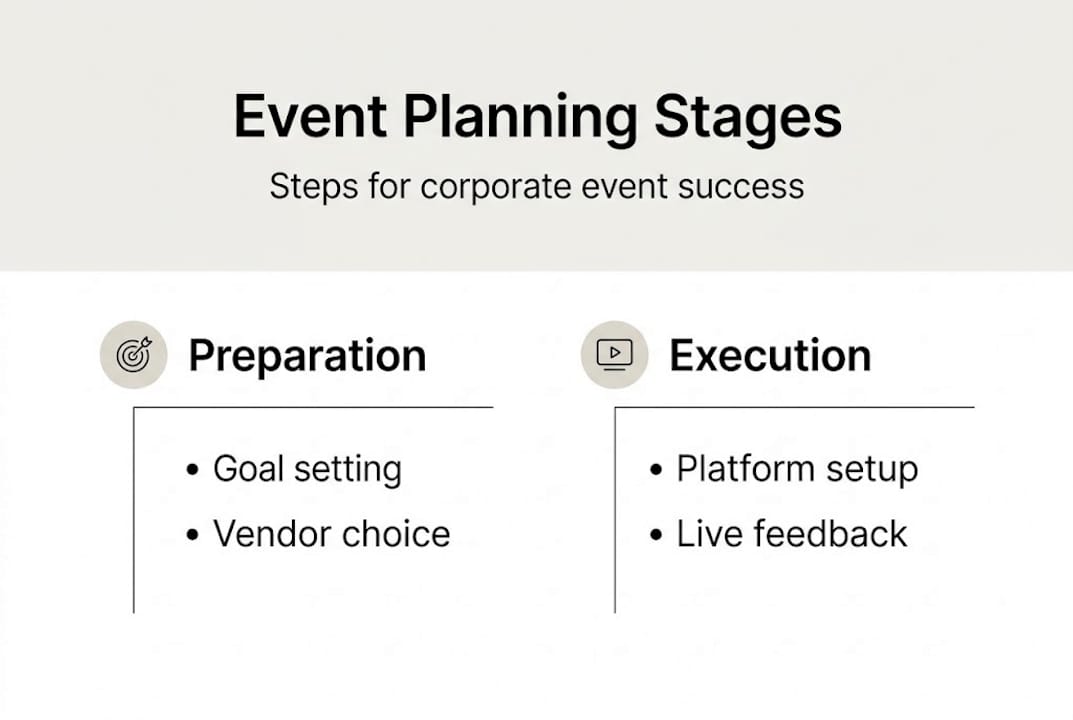
Measuring success: Post-event analysis for executives
Selecting the right partners is only part of the journey. Understanding and evaluating the impact of your event ensures long-term success and justifies future investment. Effective post-event analysis drives ongoing improvement and measurable ROI, making it one of the most valuable stages in the entire process.
Executive events should be evaluated against a defined set of KPIs established during the objective-setting stage. These typically include:
- Stakeholder feedback scores: Collect structured feedback from key attendees within 24 to 48 hours while impressions are still fresh.
- Brand uplift indicators: Monitor social media sentiment, press coverage, and brand mention volume in the days following the event.
- Business outcomes: Track leads generated, partnerships initiated, or deals progressed as a direct result of the event.
- Attendance and engagement rates: Compare actual attendance against targets, and measure session participation or interaction levels.
- Budget performance: Review actual spend against budget, noting where contingency was used and why.
“Organisations that conduct structured post-event reviews are significantly more likely to improve event ROI year on year, yet fewer than half of corporate event teams do so consistently.”
The debrief session should involve all key stakeholders, not just the planning team. Leadership perspectives on what the event communicated and how it felt to attend are qualitative data points that quantitative metrics cannot capture alone.
Pro Tip: Invest in event management software that tracks registration, attendance, and feedback in one place. Tools like this reduce reporting time significantly and make it far easier to present a clear ROI case to your board or executive committee. Aligning your evaluation framework with key event success factors ensures that nothing important falls through the cracks between execution and review.
A strategic view: What most event planners overlook with executive functions
After working across dozens of high-end corporate events, one pattern stands out clearly. The events that fall short rarely do so because of a major failure. They fail in the margins. A VIP guest whose dietary requirement was overlooked. A security briefing that was not shared with the venue team. A post-event follow-up that never arrived.
Most planners pour energy into the visible elements, the staging, the catering, the programme, and underinvest in the invisible architecture that makes senior stakeholders feel genuinely valued. Micro-level planning is not a nice-to-have at executive level. It is the standard.
There is also a tendency to treat the event as the finish line. In reality, the most powerful relationship-building often happens in the 72 hours after an event, through personalised follow-ups, curated content shares, and meaningful acknowledgements. Understanding insights on guest service at a luxury level reveals that the guest experience does not end when the lights go down. It continues in every touchpoint that follows. Align every detail, seen and unseen, with your strategic corporate outcomes, and you will consistently deliver events that people remember for the right reasons.
Let us help you elevate your executive event
Planning a high-impact executive event requires more than a checklist. It demands a partner who understands the strategic weight of every decision, from venue selection to the final post-event report.
At Winelands Function, we bring precision, creativity, and genuine luxury expertise to every corporate event we manage. Our team works closely with executives and event planners to design experiences that reflect your brand and deliver measurable outcomes. Whether you are planning a product launch, a year-end function, or a leadership summit, our executive event planning solutions are built to exceed expectations at every stage. Start with our corporate event preparation guide and take the first step towards an event your stakeholders will not forget.
Frequently asked questions
What differentiates executive event planning from regular event planning?
Executive event planning is outcome-driven, aligning every element with corporate objectives, luxury standards, and high-level stakeholder engagement rather than simply managing logistics.
What is the first step in the executive event planning process?
Goal alignment precedes all other planning stages. The first step is setting clear, measurable objectives with your leadership team before any logistical decisions are made.
How do you measure the success of an executive event?
Post-event analysis blends quantitative KPIs such as ROI and attendance rates with qualitative insights like stakeholder satisfaction and brand sentiment gathered after the event.
Why is vendor selection critical in executive event planning?
Vendor and venue selection directly influence service quality, brand perception, and risk management. A single underperforming supplier can compromise the entire guest experience at a luxury event.
What role does technology play in executive event success?
Technology ensures seamless communication across planning teams, streamlines logistics management, and enhances the guest experience through personalised registration, real-time updates, and structured post-event reporting.
Recommended
- Mastering Corporate Event Workflow for Seamless Success – Winelands Function – For Every Occasion, Your Celebration
- Complete Guide to Corporate Event Planning Success – Winelands Function – For Every Occasion, Your Celebration
- Corporate Event Preparation Guide for Elegance and Impact – Winelands Function – For Every Occasion, Your Celebration
- 7 Essential Corporate Event Planning Tips for Success – Winelands Function – For Every Occasion, Your Celebration
- Succession Planning Basics: Secure Your Leadership Pipeline – Finblog