

Managing sophisticated events in Cape Town means more than just organising a schedule or booking a five-star venue. Luxury wedding and corporate planners face the challenge of transforming abstract visions into seamless experiences that impress even the most discerning guests. With every detail under the microscope, building a reputation for meticulous attention to detail and seamless client liaison becomes your greatest asset. Discover the strategic insights that will set your coordination skills apart in a market where expectations are as high as the mountain views.
Table of Contents
- Defining The Event Planning Coordinator Role
- Types Of Luxury Events Managed
- Key Skills And Essential Qualifications
- Core Responsibilities And Client Liaison
- Risk Management And Legal Considerations
- Budgeting, Costs, And Supplier Coordination
Key Takeaways
| Point | Details |
|---|---|
| Role Definition | An event planning coordinator orchestrates every detail of luxury events, ensuring alignment with the client’s vision and managing all logistics. |
| Exceptional Communication | Effective communication is essential for translating client expectations into actionable plans while maintaining strong vendor relationships. |
| Risk Management | Understanding legal requirements and employing comprehensive risk management strategies is crucial to prevent crises and ensure event success. |
| Financial Oversight | Accurate budgeting and expense tracking are vital to delivering events within the client’s financial parameters while maximising the quality of services. |
Defining the event planning coordinator role
At its heart, an event planning coordinator is the orchestrator of experiences. You serve as the central hub connecting clients, vendors, venues, and countless moving parts into a cohesive whole. Your role encompasses far more than simply booking a space and arranging catering. You are responsible for planning, organising, and executing events whilst ensuring every detail aligns with your client’s vision. This means managing timelines that could span months, negotiating contracts with vendors who understand luxury standards, tracking budgets that reflect premium pricing, and coordinating logistics so seamlessly that guests never see the work behind the scenes.
In the luxury event space, your role demands a particular finesse. You are not simply managing an event; you are curating an experience that justifies five-figure price tags and exceeds the expectations of discerning clientele. This requires you to act as the central point for organising events, managing approvals from venues, liaising with municipal offices if required, and facilitating communication between multiple stakeholders. Your responsibilities include:
- Schedule management: Coordinating timelines that account for multiple vendor deliveries, setup phases, and contingency planning
- Vendor relationships: Negotiating with premium suppliers and maintaining partnerships that deliver consistently at the highest standard
- Budget oversight: Tracking expenditure across dozens of line items whilst identifying opportunities to enhance value without compromising quality
- Regulatory compliance: Understanding permit requirements, liquor licensing, insurance obligations, and health and safety protocols specific to Cape Town venues
- Client communication: Keeping clients informed and reassured throughout the planning process, managing expectations, and delivering on promises
- Problem solving: Responding to the inevitable curveballs with grace, creativity, and solutions that maintain the event’s integrity
What sets luxury event coordinators apart is not just what you do, but how you do it. Your communication skills must be impeccable. You must translate a client’s abstract vision into concrete specifications that vendors understand. You must communicate with confidence and clarity, whether you are briefing a florist on the exact shade of ivory required or explaining to a venue manager why your client’s specific requirements matter. Your organisational systems must be robust enough to manage hundreds of details without dropping a single thread. A misplaced vendor contact, a forgotten deposit deadline, or a miscommunicated guest count can unravel months of meticulous planning.
Problem-solving ability separates adequate coordinators from exceptional ones. Things go wrong. A wine shipment arrives damaged three days before a corporate gala. A key vendor cancels unexpectedly. Weather forces last-minute adjustments to outdoor setups. The finest coordinators don’t panic; they pivot. They have backup suppliers pre-vetted. They understand their venues well enough to reimagine spaces. They maintain the composure that clients depend on when crisis strikes.
Your role is ultimately about ownership. Clients hire you because they want someone to take complete responsibility for their event’s success. That means you are not a middleman relaying instructions; you are the decision-maker who understands the full picture and acts accordingly. You anticipate problems before they materialise. You understand that a luxury experience is built on thousands of small decisions made correctly, consistently, and with intention. When you truly inhabit this role, you become indispensable to your clients, and your reputation becomes your most valuable asset.
Pro tip: Create a comprehensive event coordinator checklist template specific to luxury events that you customise for each client, covering vendor communications, approval timelines, and quality assurance checkpoints. This prevents details from slipping through cracks whilst giving clients visibility into your process.
Types of luxury events managed
Luxury event coordinators work across a diverse portfolio of occasions, each with distinct requirements and sophistication levels. The breadth of your expertise as a coordinator directly determines your marketability and earning potential. You are not simply managing parties; you are orchestrating high-profile cultural, sporting, and business occasions that demand personalised, immersive experiences with exacting service standards. Understanding the nuances of each event type allows you to position yourself as a specialist capable of commanding premium fees and attracting the clientele who value expertise.
Luxury weddings remain the cornerstone of most high-end event coordination practices in Cape Town and beyond. These are not standard ceremonies; they are multi-day experiences that often span weekend retreats, welcome dinners, rehearsal events, and celebrations that extend well beyond the ceremony itself. A luxury wedding coordinator manages bride and groom expectations, navigates complex family dynamics, secures exclusive venues across the Winelands or coastal locations, and orchestrates floral installations that cost more than most people’s homes. Corporate galas and product launches occupy another tier entirely. These events require understanding of brand positioning, stakeholder management, media presence, and the ability to create moments that generate publicity and reinforce corporate identity. A corporate gala for a financial institution operates under completely different parameters than a tech product launch, yet both demand the same calibre of execution.
Your portfolio should showcase diverse event types that demonstrate your range:
- Luxury weddings: Destination weddings, intimate ceremonies, grand celebrations, multi-event weekends
- Corporate events: Board dinners, gala fundraisers, product launches, conference openings, executive retreats
- Social celebrations: Milestone birthdays, anniversaries, engagement parties, vow renewals for affluent clientele
- Exclusive gatherings: Private dinners for collectors, wine tastings in the Winelands, members-only club events
- Charity and philanthropic events: Benefit galas, silent auctions, foundation fundraisers where attendees expect sophistication and exclusivity
- Cultural and entertainment events: Concert launches, theatrical premieres, gallery openings, exclusive preview events
What unites these varied occasions is the expectation of meticulous attention to detail, customised vendor management, and sophisticated client liaison. A corporate gala client and a bride planning her wedding may have different end goals, but both expect you to understand their vision intuitively, anticipate their needs, and deliver flawlessly. The corporate client wants their event to position their brand as innovative and prestigious. The bride wants her day to feel like a reflection of her personality and her partner’s, executed to perfection. Your job is understanding those distinct motivations and tailoring your approach accordingly.
Cape Town’s location offers particular advantages for luxury event coordination. You have access to vineyard venues in Stellenbosch and Franschhoek that offer natural elegance and world-class wine selections. Coastal venues provide dramatic backdrops for photogenic moments that clients will treasure. Urban spaces in the city centre appeal to corporate clients seeking sophistication and accessibility. Your knowledge of these varied venues, their unique capabilities, their vendor ecosystems, and their seasonal advantages becomes a competitive asset. A coordinator who can propose a winter corporate gala at a Constantia Valley estate with heated outdoor spaces and warming stations demonstrates the kind of creative problem-solving that justifies luxury pricing.
The most successful luxury coordinators develop deep expertise in one or two event types whilst maintaining competence across others. You might position yourself as a destination wedding specialist who also handles corporate retreats. Or you might specialise in high-end corporate events with secondary expertise in milestone celebration events. This specialisation allows you to command premium rates within your niche whilst maintaining flexibility to expand your client base. Your reputation in one area builds credibility that attracts similar clients seeking similar experiences.
To clarify the varying demands of luxury event types, consider their distinct requirements and challenges:
| Event Type | Unique Requirement | Typical Challenge |
|---|---|---|
| Luxury Wedding | Weekend-long experiences | Family dynamics, unique décor |
| Corporate Gala | Brand alignment | Media presence, stakeholder approval |
| Social Celebration | Highly personalisation | Guest expectations, privacy |
| Charity Event | Sophisticated fundraising | Donor engagement, silent auction flow |
| Cultural Launch | Artist and sponsor management | Audience curation, media compliance |
Pro tip: Create detailed case studies for each major event type you manage, documenting the specific challenges overcome and unique solutions implemented. These become your most persuasive marketing tool when prospective clients assess whether you understand their specific event type’s demands.
Key skills and essential qualifications
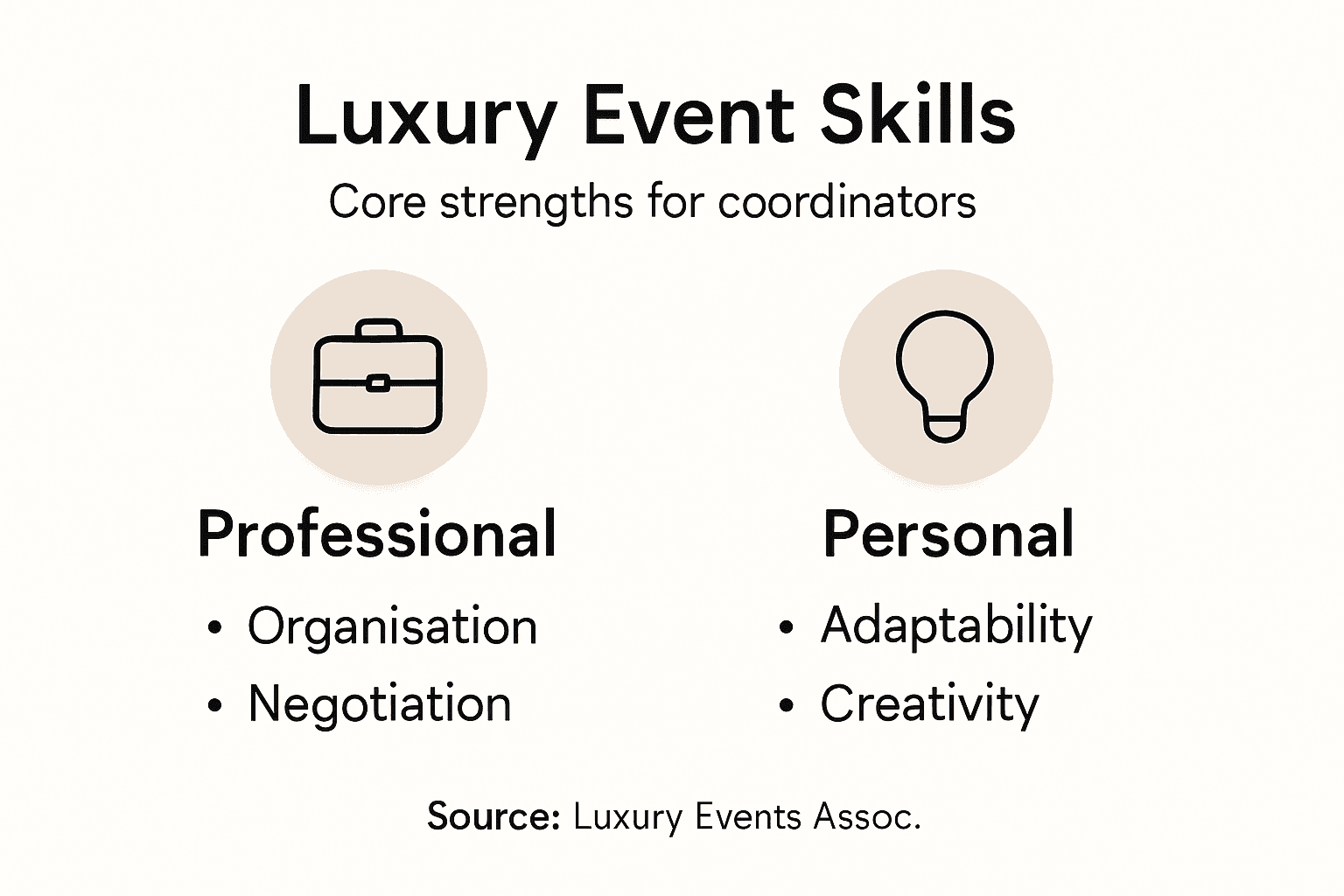
Becoming a successful luxury event coordinator requires a deliberate combination of hard skills, soft skills, and formal qualifications. This is not a field where you can succeed on charm alone. The most in-demand coordinators possess organisational ability, excellent communication, networking, negotiation, adaptability, and problem-solving capabilities. These skills work together to create a coordinator who clients trust implicitly. A client hiring you for a high-end event is not hiring a service provider; they are hiring peace of mind. They are paying for the confidence that nothing will fall through the cracks and that every detail reflects their values and expectations.
Organisational ability separates adequate coordinators from exceptional ones. This is not about having a tidy desk or colour-coded spreadsheets, though those help. True organisational mastery means building systems robust enough to track hundreds of moving parts simultaneously without losing a single detail. You need to manage vendor contracts, payment schedules, design specifications, guest lists, dietary requirements, seating arrangements, timeline dependencies, and contingency plans. A single missed deadline can cascade into catastrophic consequences. If a florist’s deposit isn’t paid on time, they might release your date. If a venue contact’s phone number is misplaced, you cannot confirm final headcount. Your systems must be so reliable that you could manage a 500-person wedding whilst simultaneously planning a corporate gala. Strong communication skills are equally non-negotiable. You must translate client vision into vendor-ready specifications. You must manage difficult conversations when reality doesn’t match expectations. You must inspire confidence through clarity and transparency. A client who feels you truly understand their vision will trust your recommendations. A vendor who knows exactly what you need will deliver with precision. Your ability to articulate requirements, listen carefully to concerns, and communicate updates keeps everyone aligned.
Negotiation and networking abilities directly impact your profitability. You need relationships with premium vendors who understand luxury standards and will work within your clients’ budgets. Strong negotiation skills allow you to secure better rates, ensure superior service, and create win-win arrangements that keep vendors eager to work with you repeatedly. Adaptability separates coordinators who thrive from those who merely survive. Events never proceed exactly as planned. A guest list changes dramatically two weeks before the event. A key vendor cancels unexpectedly. Weather forces last-minute reimagining of outdoor spaces. The finest coordinators maintain composure, think creatively, and pivot seamlessly. Problem-solving ability is the ultimate skill that ties everything together, allowing you to navigate the inevitable curveballs with grace.
Regarding formal qualifications, degrees or certifications in event management, hospitality, or business, supported by practical experience in event logistics, budget management, and client relations position you as a credible professional. Many luxury clients prefer coordinators with formal training because it signals that you understand industry best practices, liability considerations, and professional standards. However, formal qualifications alone are insufficient. You must couple education with practical experience.
Consider pursuing qualifications strategically:
- Event Management certifications: Professional certifications from recognised bodies demonstrate your commitment to the industry
- Hospitality or business degrees: University qualifications signal credibility to high-end clients and provide foundational knowledge in budget management and stakeholder relations
- Specialised training: Courses in luxury event coordination, destination event management, or specific event types (weddings, corporate events, experiential marketing) differentiate you from generalist coordinators
- Technical proficiency: Competence with event management software, design tools, and digital platforms is increasingly expected, particularly for corporate clients managing virtual or hybrid components
Beyond formal qualifications, you need practical mastery. Work extensively in event logistics before positioning yourself as a luxury coordinator. Assist established coordinators. Work with venues. Manage vendor relationships from entry-level positions. Learn how events actually function, what can go wrong, and how to solve problems creatively. This experiential knowledge cannot be taught in a classroom. It comes from managing dozens of events and learning from both successes and failures.
For Cape Town-based coordinators specifically, develop deep knowledge of local venues, their capabilities, their seasonal advantages, and their vendor ecosystems. Understand municipal requirements, licensing considerations, and local regulations that affect event execution. Build relationships with premium local suppliers who consistently deliver luxury-standard service. This localised expertise becomes your competitive advantage and justifies premium pricing to clients seeking someone who truly understands the Cape Town landscape.
The strongest coordinators combine all these elements: formal qualifications that signal credibility, diverse practical experience that builds problem-solving capability, and specialist expertise in specific event types that command premium rates. This combination allows you to attract discerning clients, manage complex events flawlessly, and build a reputation that becomes your most valuable asset.
Pro tip: Pursue at least one relevant certification or specialised training course specific to luxury events or your primary event type, then prominently feature this qualification in your marketing materials and client communications. Formal credentials reassure affluent clients that you understand industry standards and best practices.
Core responsibilities and client liaison
Your core responsibilities as a luxury event coordinator span the entire event lifecycle, from initial planning through post-event follow-up. These are not tasks you delegate or outsource; they are the foundation of your value proposition. Venue selection, vendor management, schedule coordination, budget adherence, and on-site event execution represent the technical backbone of your role. Yet equally important is how you execute these responsibilities in partnership with your clients. The finest coordinators understand that managing an event and managing a client relationship are intertwined. You cannot succeed at one without excelling at the other.
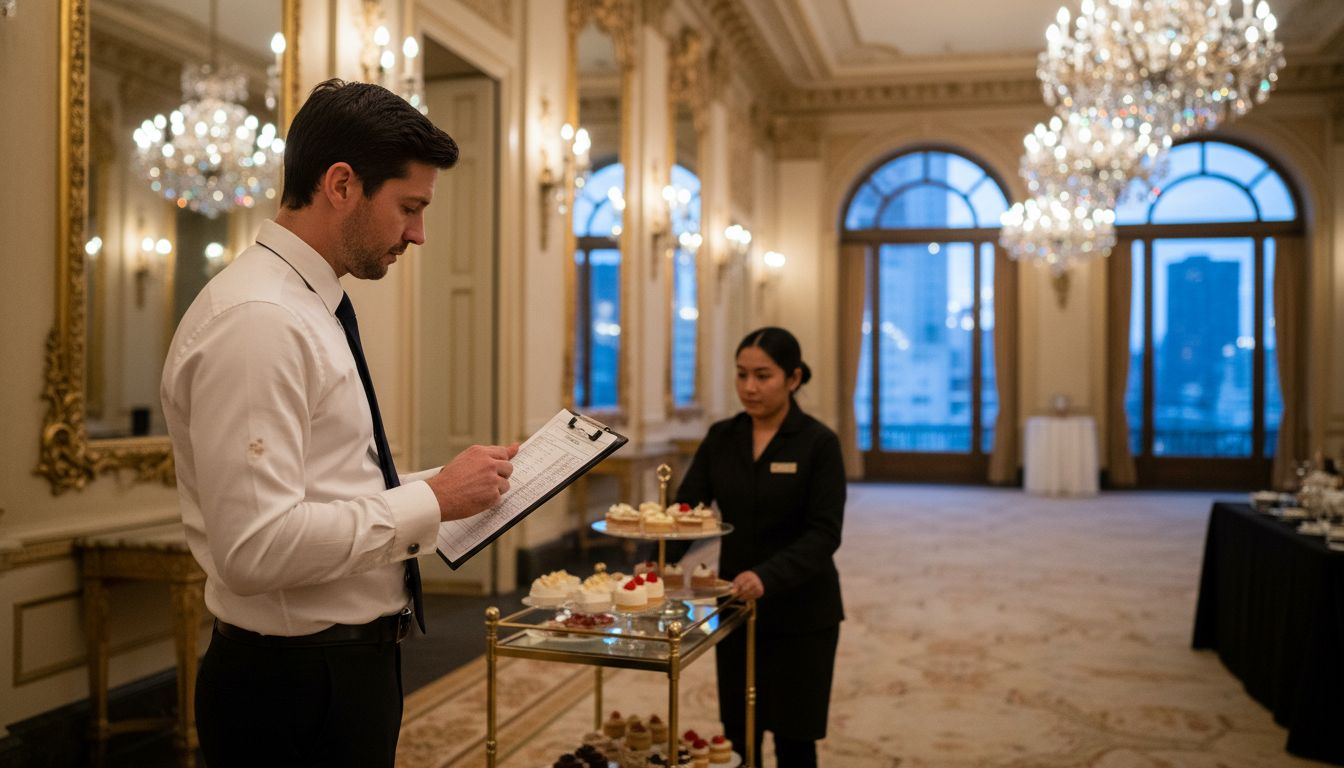
Venue selection demands more than simply finding a pretty space. You must understand your client’s vision intimately, then identify venues that align with that vision whilst offering practical advantages they may not have considered. A bride might envision an intimate vineyard wedding, but you know that particular vineyard has limited indoor backup space, making weather contingency planning critical. A corporate client might request a contemporary urban venue, but you recognise that a particular historic estate offers more sophisticated branding opportunities and better guest flow. Your responsibility is presenting options that achieve their objectives whilst anticipating practical considerations they haven’t yet encountered. Vendor management requires building and maintaining relationships with premium suppliers who understand luxury standards. You negotiate contracts that protect your clients’ interests and your own reputation. You establish clear communication channels and quality expectations with florists, caterers, musicians, photographers, and dozens of other specialists. When a vendor delivers exceptional work, you maintain that relationship for future events. When a vendor underperforms, you do not rehire them, no matter how convenient the relationship might be.
Schedule coordination involves creating detailed timelines that account for every task’s dependencies. Invitations cannot be finalised until the guest list is confirmed. Seating arrangements cannot be completed until responses are tallied. Final numbers cannot be provided to catering until seating is confirmed. Each task has predecessors and successors, and a single delay cascades forward. Budget adherence requires vigilant tracking. You manage deposits, progress payments, and final invoices. You understand where costs concentrate and where you can optimise without compromising quality. On-site event execution demands calm presence and meticulous attention. You coordinate vendor arrivals, manage timeline adherence, troubleshoot problems as they arise, and ensure quality delivery throughout the event.
Client liaison elevates these technical responsibilities into true partnership. Creating detailed timelines, coordinating diverse teams, negotiating contracts with suppliers, and ensuring quality control requires maintaining ongoing dialogue with clients to incorporate feedback, adjust plans, and deliver a seamless, personalised event experience. This ongoing dialogue is not administrative; it is strategic. Your communication sets client expectations, builds confidence, and aligns decision-making. Consider these client liaison touchpoints:
- Initial discovery: Deep listening to understand not just what the client wants, but why they want it and what success looks like to them
- Regular progress updates: Scheduled check-ins that keep clients informed without creating unnecessary anxiety or decision fatigue
- Decision collaboration: Presenting options with your recommendations, then genuinely incorporating client feedback into final choices
- Issue communication: When problems arise, communicating them promptly with proposed solutions rather than waiting until crises develop
- Expectation management: Gentle reality-testing when client ideas don’t align with timelines, budgets, or practical constraints
- Post-event debrief: Capturing feedback and lessons learned that inform future events and demonstrate your commitment to continuous improvement
The difference between adequate coordinators and exceptional ones often comes down to communication quality. An adequate coordinator updates clients when required. An exceptional coordinator anticipates questions before clients ask them and proactively provides information that demonstrates progress and builds confidence. An adequate coordinator communicates problems. An exceptional coordinator communicates problems alongside thoughtful solutions, positioning themselves as a trusted advisor rather than a messenger of bad news.
In luxury event coordination, your reputation is built on how reliably you execute your core responsibilities and how effectively you manage client relationships. A flawlessly executed event delivered through fractious client communication creates dissatisfaction. A beautifully managed client relationship coupled with sloppy execution destroys your credibility. Your goal is excelling at both simultaneously, creating experiences where clients feel genuinely supported, informed, and thrilled with the outcome.
Pro tip: Establish a structured communication calendar with clients that includes initial discovery, monthly progress updates, decision deadlines, and weekly check-ins as the event approaches. Proactive scheduled communication prevents urgent client emails and emergency calls whilst demonstrating your organisation and commitment to keeping them informed.
Risk management and legal considerations
Luxury event coordination operates within a complex web of legal, regulatory, and risk management requirements. This is where many coordinators stumble, either through ignorance or complacency. You might execute a flawlessly beautiful event, but if you have overlooked critical legal or safety considerations, the consequences can be severe. Your liability exposure extends far beyond the event itself. A guest injury, a vendor dispute, or regulatory non-compliance can result in legal action that destroys your reputation and finances. This section is not glamorous, but it is absolutely essential. Risk management involves anticipating potential challenges such as safety concerns, regulatory compliance, and community impact, requiring coordination with local authorities, securing necessary permits, and developing contingency plans. These are not bureaucratic formalities; they are the foundation of professional event management.
Understanding your local regulatory environment is non-negotiable. In Cape Town, event coordination involves multiple layers of compliance. You must understand liquor licensing requirements if alcohol will be served. You need building permits or venue approval for events exceeding certain occupancy thresholds. You require public liability insurance that protects you and your clients from guest injury claims. You must comply with health and safety regulations, particularly regarding food service, which requires licensed catering and proper food handling protocols. Outdoor events may require environmental permits or community notifications. Your venue contract should clarify who holds responsibility for permits. Never assume the venue has secured everything you need. Confirm. Document. Verify. A missed permit can force cancellation of an event weeks or days before execution.
Contract management is critical legal work. Every vendor agreement should be documented in writing. This protects both parties by clarifying expectations, scope of work, payment terms, and cancellation policies. When negotiating vendor contracts, clarify liability provisions. Who is responsible if the photographer becomes ill and cancels? What happens if catering quality falls below standards? What are the payment terms if the event is cancelled? These conversations feel uncomfortable, but they prevent far more painful conflicts later. Managing risks in luxury events requires comprehensive legal oversight including compliance with local laws, insurance requirements, health and safety regulations, and contractual obligations, including developing crisis management strategies and handling privacy concerns. Luxury events often attract high-profile attendees or involve sensitive information. You must protect client privacy and guest confidentiality. Do not discuss event details with other clients or vendors outside what is necessary. Manage photography restrictions carefully, particularly for corporate events where competitive sensitivity exists.
Insurance deserves its own consideration. Public liability insurance protects you if a guest is injured at an event. Professional indemnity insurance covers claims related to your professional services. You need these policies in place before you coordinate your first event. Review your coverage with an insurance broker who understands event coordination. Ensure your coverage extends to the types of events you coordinate and the venues you work with. Some venues require you to carry specific minimum coverage levels. Others require additional insureds on your policy. Understanding these requirements prevents last-minute surprises.
Crisis management planning is often overlooked until crisis strikes. What happens if severe weather forces last-minute changes? What is your protocol if a key vendor cancels days before the event? What do you do if a guest becomes seriously ill? How do you handle media inquiries if a high-profile event experiences issues? Developing contingency plans before crises occur means you respond calmly and strategically rather than in panic. Brief your clients on contingency scenarios during planning. Discuss what alternatives exist if weather forces changes. Explain your crisis communication protocol. Clients who understand you have thought through scenarios feel far more confident in your leadership.
Specific risks vary by event type. Outdoor events require weather contingencies, which might mean rental costs for backup structures. Large events require crowd management planning and coordination with local authorities. Events serving alcohol require licensed servers and responsible service protocols. Corporate events with sensitive content require security measures and attendee confidentiality agreements. Wedding events with multiple family groups require careful communication to prevent conflicts. Take time to identify risks specific to each event type you handle, then develop protocols to manage those risks.
Finally, document everything. Keep copies of permits, insurance certificates, vendor contracts, and approval emails. Take photographs of venue conditions before and after your event. Keep records of all client communications regarding decisions and expectations. This documentation protects you if disputes arise. It also demonstrates your professionalism to clients and authorities. The finest event coordinators are invisible when everything runs smoothly, but their documentation reveals the meticulous work beneath the surface.
Pro tip: Create a legal compliance checklist specific to each event type you coordinate, documenting required permits, insurance coverage, vendor contract essentials, and regulatory approvals. Complete this checklist systematically for every event, ensuring no compliance requirement slips through the cracks.
Budgeting, costs, and supplier coordination
Budgeting is where event coordination transforms from an art into a science. You can envision the most beautiful event imaginable, but without disciplined financial management, that vision becomes impossible or financially ruinous. A luxury wedding with a £150,000 budget operates under completely different constraints than one with £50,000. Your responsibility is understanding where every pound goes, maximising value at each expenditure point, and protecting your client from cost overruns that destroy their financial plan. Effective budgeting involves negotiating costs with suppliers, tracking expenses, and ensuring the event remains financially viable without compromising quality. This requires discipline, spreadsheet mastery, and the backbone to make difficult decisions when costs threaten to exceed allocations.
Start with comprehensive cost estimation. Every element of your event has a price. Venue rental, catering, florals, photography, music or entertainment, lighting, décor, rentals, transport, insurance, permits, and contingency funds all demand accurate pricing. Build your budget line by line, using quotes from actual suppliers rather than generic estimates. A florist’s quote for a specific wedding is far more reliable than industry averages. Request detailed quotes that break costs into components. When a caterer quotes £85 per person, understand what that includes. Are cocktail hour canapés included or charged separately? What about service and gratuity? Does the venue’s bar charge include staff, glassware, and mixers? Understanding component costs allows you to identify where you can optimise without sacrificing quality.
Supplier coordination directly impacts your bottom line and final product quality. Coordinators work closely with suppliers to secure competitive pricing, manage timelines, and oversee logistics, ensuring supplier services meet the luxury event’s quality and aesthetic requirements whilst adhering to budget limits. Building strong relationships with reliable vendors gives you leverage on pricing. When you regularly hire the same florist, caterer, or photographer, they offer better rates because they value your consistent business. Conversely, demanding unreasonably low prices damages vendor relationships and results in mediocre service. The goal is fair pricing that allows vendors to deliver excellent work at sustainable margins. When you negotiate, frame discussions around value, not just cost. A photographer willing to deliver 2,000 edited images is worth more than one delivering 500, even if both quote similar prices.
Track expenses meticulously from first quote through final invoice. Create a spreadsheet listing every vendor, quoted cost, deposit paid, and final amount owing. Update this regularly as actual invoices arrive. Compare actual costs against budget and identify variances immediately. If catering costs run 15 percent higher than budgeted, understand why. Did guest count increase? Did the client add menu upgrades? Did the caterer apply unexpected service charges? Early identification of overages allows you to adjust other budget categories before problems accumulate. By the time final invoicing occurs, you should have no surprises.
Cost management requires strategic decision-making. Luxury events can absorb premium pricing for visible elements like florals, venue, and catering, which guests experience directly. Less visible elements like permits, insurance, and contingency funds must exist but can be optimised. Some clients want to allocate significant budgets to luxury transport for guests or extensive entertainment. Others prefer investing heavily in catering quality and florals. Your job is helping clients allocate their budget strategically based on their priorities and the event’s nature. A corporate gala might prioritise impressive décor and entertainment. A destination wedding might prioritise exceptional catering and accommodation coordination.
Always build contingency into budgets. Events invariably encounter unexpected costs. A supplier increases pricing days before delivery. A last-minute guest count increase requires additional catering. Weather forces rental costs for backup structures. A contingency reserve of 10 to 15 percent of total budget prevents these surprises from forcing compromises on quality. Discuss contingency with clients explicitly. Explain that you are building a buffer to protect the event’s success without requiring mid-event budget emergency decisions.
Finally, understand that your reputation includes financial reliability. Clients trust you to deliver exceptional experiences within agreed budgets. When you consistently deliver on budget, you attract clients who appreciate your financial discipline. When you allow budgets to spiral, you damage your credibility and profitability. The finest luxury coordinators are those who deliver extraordinary experiences without financial stress for their clients.
The table below summarises legal and financial essentials for luxury event coordinators:
| Requirement | Description | Business Impact |
|---|---|---|
| Insurance | Liability and indemnity cover | Protects against financial losses |
| Contract Management | Written supplier agreements | Reduces disputes, clarifies scope |
| Regulatory Compliance | Permits, licensing, safety protocols | Prevents fines and event shutdown |
| Expense Tracking | Line-by-line budget management | Stops overruns, builds trust |
| Contingency Planning | Protocols for unexpected scenarios | Maintains event stability |
Pro tip: Create detailed budget templates for each event type you coordinate, itemising every potential cost category based on past events. Use these as starting points for new events, allowing you to estimate budgets accurately and identify cost overruns immediately rather than discovering them at final invoicing.
Elevate Your Luxury Event with Expert Coordination
Navigating the complex demands of luxury event planning requires more than passion it demands mastery in every detail from meticulous budgeting and vendor negotiation to flawless client communication and legal compliance. If you are looking to transform your vision into an extraordinary reality while avoiding common pitfalls like unexpected costs timeline delays or last-minute crises Winelands Function offers specialised solutions tailored to high-end weddings corporate galas and bespoke celebrations across Cape Town and the Winelands.
Experience the confidence that comes from partnering with a team who understands the intricate balance of creativity and precision essential to luxury event coordination. From exclusive venues to trusted premium suppliers we orchestrate every element so you can enjoy an elegant seamless event. Discover how Winelands Function brings your dream event to life with professionalism and personalised service. Start your journey now by visiting our homepage to explore our comprehensive offerings or learn more about our expertise in luxury weddings and corporate event planning. Secure your date today and ensure your next event is flawlessly executed without compromise.
Frequently Asked Questions
What are the primary responsibilities of an event planning coordinator?
An event planning coordinator is responsible for planning, organising, and executing events, managing timelines, budgets, vendor relationships, and ensuring compliance with regulations, while also maintaining communication with clients throughout the process.
How does being a luxury event coordinator differ from standard event coordination?
Luxury event coordination requires a higher level of detail, quality, and experience. Coordinators must curate immersive experiences that exceed client expectations, manage intricate logistics, and negotiate with premium suppliers while delivering impeccable service.
What skills are essential for a successful event planning coordinator?
Key skills include exceptional organisational ability, strong communication, negotiation skills, adaptability, and problem-solving capabilities. A background in event management, hospitality or relevant experience is also beneficial.
How do I manage a budget effectively for luxury events?
Effective budget management involves detailed cost estimation, tracking expenses line by line, negotiating with suppliers, and building in contingency funds to cover unexpected costs. Clear communication with clients regarding budget priorities is also crucial.
Recommended
- The Event Planner: Elevating Cape Town’s Luxury Occasions – Winelands Function – For Every Occasion, Your Celebration
- Roles in Event Management: Elevating Luxury Events – Winelands Function – For Every Occasion, Your Celebration
- 7 Essential Event Management Tips 2025 for Luxury Planners – Winelands Function – For Every Occasion, Your Celebration
- Master the Personalized Event Planning Process for Luxury Occasions – Winelands Function – For Every Occasion, Your Celebration