
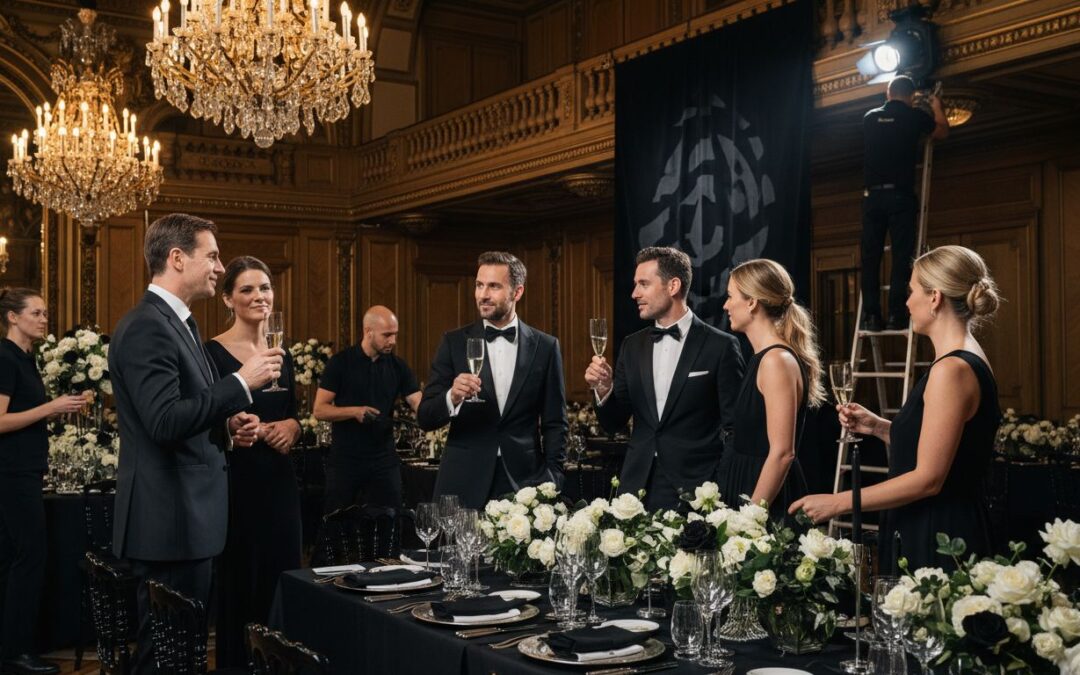
Over 70 percent of attendees say a well-designed event leaves a stronger impression than the content alone. Thoughtful event design does more than decorate a space, it shapes how guests feel, connect, and remember each moment. Planning a high-end gathering means understanding how strategy, creativity, and flawless teamwork join forces to turn every detail into an experience that lingers in memory.
Table of Contents
- Defining The Event Design Process
- Phases Of Event Design And Planning
- Key Elements Of High-End Event Design
- Roles, Responsibilities, And Team Dynamics
- Budgeting, Risks, And Legal Considerations
Key Takeaways
| Point | Details |
|---|---|
| Comprehensive Planning is Essential | Successful event design requires detailed planning that aligns objectives, resources, and design elements to create impactful experiences. |
| Audience Insight is Crucial | Understanding the demographics and preferences of attendees helps in tailoring the event to meet their expectations and enhance engagement. |
| Collaboration Drives Success | Clearly defined roles and responsibilities within the team facilitate effective communication and coordination throughout the event design process. |
| Financial and Risk Management are Key | Comprehensive budgeting and risk assessment are vital to ensure the smooth execution of luxury events and to prepare for unforeseen circumstances. |
Defining the Event Design Process
Event design represents the strategic blueprint that transforms an ordinary gathering into an extraordinary experience. According to Geneseo, this process fundamentally involves determining the event’s core goal, selecting a compelling name, and establishing a thematic framework that resonates with prospective attendees.
At its essence, event design is a meticulous craft that blends creativity with strategic planning. UNLV emphasises that successful events begin with comprehensive planning, ensuring that themes, design elements, and content align to communicate a powerful, cohesive message. This approach goes beyond mere aesthetics, focusing on creating meaningful experiences that engage and inspire participants.
The event design process typically involves several critical components:
- Defining Clear Objectives: Establishing precise goals that will guide every subsequent design decision
- Audience Analysis: Understanding the demographics, preferences, and expectations of attendees
- Conceptual Development: Crafting a unique narrative and visual identity for the event
- Experiential Mapping: Designing intentional touchpoints that create memorable interactions
Successful event design is not about creating spectacle, but about orchestrating moments that connect, communicate, and leave a lasting impression on participants.

Phases of Event Design and Planning
Event design and planning is a structured journey that transforms conceptual ideas into extraordinary experiences. According to EMBOK, the event management process encompasses five critical phases: Initiation, Planning, Implementation, Event, and Closure, each representing a crucial stage in creating memorable gatherings.
The planning phase requires meticulous attention to detail. Events emphasises developing clear goals and objectives, assembling a skilled team, and creating comprehensive plans that address every logistical requirement. This approach ensures that no critical aspect is overlooked during the design process.
Key phases in event design and planning typically include:
Here’s a summary of the five key phases of event design and planning:
| Phase | Main Focus | Example Activities |
|---|---|---|
| Conceptualisation | Define purpose and vision | Set objectives Outline event narrative |
| Strategic Planning | Create detailed execution strategy | Develop timeline Assign team roles |
| Resource Allocation | Identify and secure resources | Budget planning Secure venues/vendors |
| Design Development | Develop visual and experiential elements | Design décor Create event branding |
| Logistics Management | Coordinate operational details | Technical setup Manage guest flow |
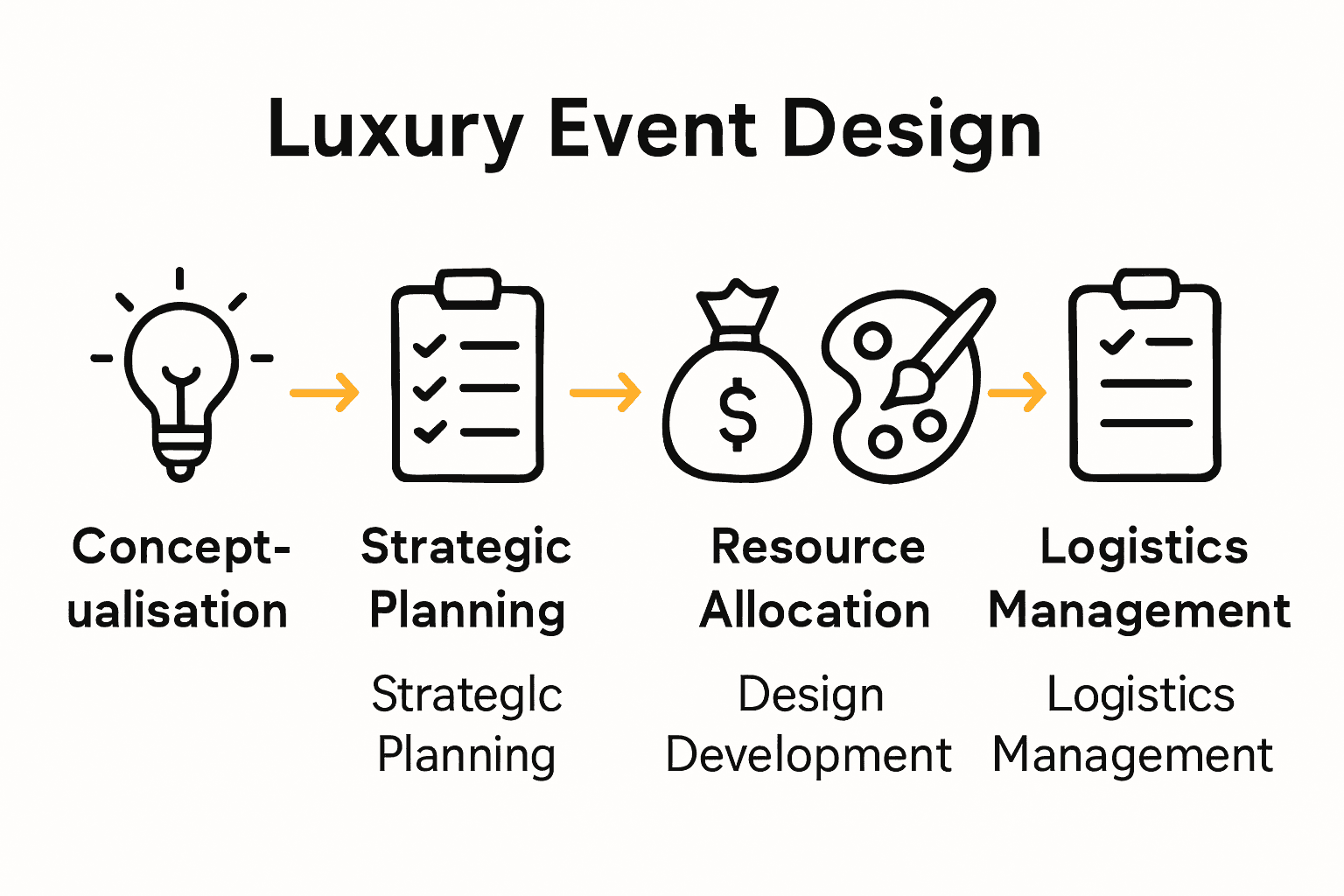
- Conceptualisation: Defining the event’s core purpose and vision
- Strategic Planning: Developing detailed roadmaps and execution strategies
- Resource Allocation: Identifying and securing necessary resources
- Design Development: Creating visual and experiential elements
- Logistics Management: Coordinating technical and operational requirements
Successful event design is an intricate dance of creativity and precision.
Learn more about our comprehensive event design workflow, where we transform complex planning into seamless, extraordinary experiences that captivate and inspire.
Key Elements of High-End Event Design
Luxury event design transcends mere aesthetic arrangement, representing a sophisticated fusion of purpose and exceptional experience. According to Geneseo, the foundational elements begin with determining a precise event goal, selecting a memorable name, and establishing a theme that powerfully communicates the event’s essence to prospective attendees.
UNLV emphasises that high-end event design requires setting crystal-clear objectives that meticulously align themes, design elements, and content to craft a cohesive and impactful narrative. This approach transforms events from standard gatherings into extraordinary experiences that resonate deeply with participants.
Key elements of luxury event design include:
- Conceptual Integrity: Creating a unified vision that reflects the event’s core purpose
- Sensory Engagement: Designing immersive experiences that stimulate multiple senses
- Personalisation: Tailoring every detail to reflect the specific audience and occasion
- Technical Sophistication: Integrating cutting-edge technology and seamless logistics
- Aesthetic Refinement: Curating visual and atmospheric elements with exceptional precision
For those seeking to understand the nuanced world of luxury event experiences, our comprehensive guide on luxury event decor offers deeper insights into creating truly memorable moments that transcend ordinary expectations.
Roles, Responsibilities, and Team Dynamics
Luxury event design demands a meticulously orchestrated team with clearly defined roles and interconnected responsibilities. According to George Washington University, effective event management requires assembling a specialized team with distinct positions such as event manager, registration manager, and production manager, each accountable for specific critical aspects of the event’s execution.
UNLV emphasises the importance of comprehensive planning, highlighting that successful team dynamics emerge from identifying precise resources and establishing clear objectives that guide collaborative decision-making throughout the event process. This approach ensures that every team member understands their unique contribution to the overall event vision.
Key roles in a high-end event design team typically include:
- Event Director: Overseeing the entire event strategy and vision
- Creative Director: Developing the conceptual design and aesthetic direction
- Logistics Coordinator: Managing technical requirements and operational details
- Client Relations Manager: Ensuring client expectations are understood and exceeded
- Technical Production Specialist: Handling audiovisual and technological integrations
For professionals seeking to dive deeper into the intricate world of event team management, our comprehensive guide on understanding the luxury event design process provides invaluable insights into building and managing world-class event design teams.
Budgeting, Risks, and Legal Considerations
In the realm of luxury event design, financial planning and risk management are paramount to ensuring seamless execution. According to AFF4, comprehensive budgeting extends far beyond simple expense tracking, encompassing a detailed accounting of potential costs including venue expenses, catering, equipment rentals, staffing, marketing, insurance, and critically, establishing substantial contingency funds.
UNLV emphasises the critical importance of pre-event planning, highlighting that understanding an event’s core goals and systematically identifying necessary resources forms the bedrock of effective risk management and financial strategy. This approach transforms budgeting from a mere accounting exercise into a strategic planning tool that anticipates potential challenges and opportunities.
Key considerations in luxury event financial and legal planning include:
- Comprehensive Budget Allocation: Detailed financial mapping across all event elements
- Risk Mitigation Strategies: Identifying and planning for potential operational challenges
- Legal Compliance: Ensuring adherence to venue, insurance, and licensing requirements
- Contractual Protections: Developing robust agreements with vendors and partners
- Contingency Financial Planning: Establishing reserve funds for unexpected scenarios
For event professionals seeking deeper insights into navigating the complex landscape of event financial management, our guide to understanding luxury event design processes provides comprehensive strategies for creating financially sound and legally resilient event experiences.
Elevate Your Luxury Event with Expert Design and Flawless Execution
Crafting a luxury event that truly captivates requires more than just beautiful décor. It demands a clear vision, tailored sensory experiences, and precise logistical harmony as highlighted in the event design process. If you find yourself overwhelmed by the challenge of conceptualising, planning, and orchestrating high-end experiences that leave lasting impressions, you are not alone. Common pain points include aligning your event objectives to a cohesive theme, managing intricate team roles, and safeguarding your budget with strong risk and legal strategies.
Winelands Function specialises in transforming these complex challenges into seamless, breathtaking realities. From setting crystal-clear goals to coordinating every technical and aesthetic detail, our skilled team ensures every moment resonates with elegance and sophistication. Explore how our understanding of luxury event design process can guide your journey and why clients trust our expertise for weddings, corporate functions, and bespoke celebrations.
Ready to turn your vision into an extraordinary experience that speaks to your unique audience and reflects your highest standards? Discover our full range of personalised services at Winelands Function and start planning an event that will be remembered long after the last guest departs. Visit us today and let your luxury event dreams take flight.
Frequently Asked Questions
What are the key phases of the event design process?
The event design process consists of five key phases: Conceptualisation, Strategic Planning, Resource Allocation, Design Development, and Logistics Management. Each phase focuses on defining objectives, creating strategies, securing resources, developing design elements, and coordinating operational details.
How do I define clear objectives for my event?
To define clear objectives, consider the core purpose of your event, the desired outcomes, and the audience’s expectations. Establish specific, measurable goals that will guide your design and planning decisions throughout the entire process.
What elements are essential for high-end event design?
Essential elements of high-end event design include conceptual integrity, sensory engagement, personalisation, technical sophistication, and aesthetic refinement. These elements work together to create a cohesive and memorable experience for attendees.
How can I effectively manage risks in luxury event planning?
Effective risk management in luxury event planning involves comprehensive budgeting, identifying potential operational challenges, ensuring legal compliance, and developing contingency plans. Establish reserve funds to address unexpected scenarios that may arise during the event execution.
Recommended
- Understanding the Luxury Event Design Process – Winelands Function – For Every Occasion, Your Celebration
- 7 Essential Event Design Tips for Memorable Experiences – Winelands Function – For Every Occasion, Your Celebration
- Master the Bespoke Party Planning Process for Luxury Events – Winelands Function – For Every Occasion, Your Celebration
- Understanding the Role of Event Designers in Success – Winelands Function – For Every Occasion, Your Celebration
- 7 Classic Dinner Party Essentials for Unforgettable Evenings
- 7 Prime Examples of Luxury Transportation for High Country Events – Ashe County Livery blog