
TL;DR:
- Effective event coordination relies on early preparation, clear frameworks, and meticulous planning to ensure a seamless guest experience. Key steps include defining objectives, building a detailed run sheet, and maintaining flexible adaptability during execution. Post-event reviews are essential for continuous improvement and building strong supplier relationships.
Coordinating an elegant event is one of those endeavours that looks effortless from the outside and is anything but from the inside. Whether you are planning a wedding in the Cape Winelands, a corporate launch, or a milestone celebration, the gap between a good event and a truly memorable one comes down to structure. The elegant event coordination steps you follow before, during, and after the day determine everything. 89% of planners agree that starting early and working to a clear framework is the single biggest factor in flawless execution. This guide gives you exactly that framework.
Table of Contents
- Key takeaways
- Elegant event coordination steps: laying the foundations
- Designing the event experience step by step
- Locking in final preparations before the day
- Managing the event on the day
- Post-event review: closing the loop
- My honest take on elegant event coordination
- Plan your next elegant event with Winelandsfunction
- FAQ
Key takeaways
| Point | Details |
|---|---|
| Start at least six months out | Early preparation secures venues, suppliers, and gives you time to refine every detail. |
| Budget with a contingency buffer | Allocate 10 to 15% of your budget for unexpected costs to avoid last-minute financial stress. |
| Build a run sheet from day one | A detailed run sheet shared with all suppliers keeps the entire team aligned on timing and responsibilities. |
| Plated service elevates elegance | Plated dining controls pacing, reduces visual chaos, and creates the right atmosphere for speeches and toasts. |
| Review within 48 hours post-event | Capturing feedback and lessons learned while memories are fresh leads to measurable improvements next time. |
Elegant event coordination steps: laying the foundations
Every polished event begins long before the first guest arrives. The preparation phase is where the real work happens, and skipping any part of it creates pressure that compounds on the day itself.
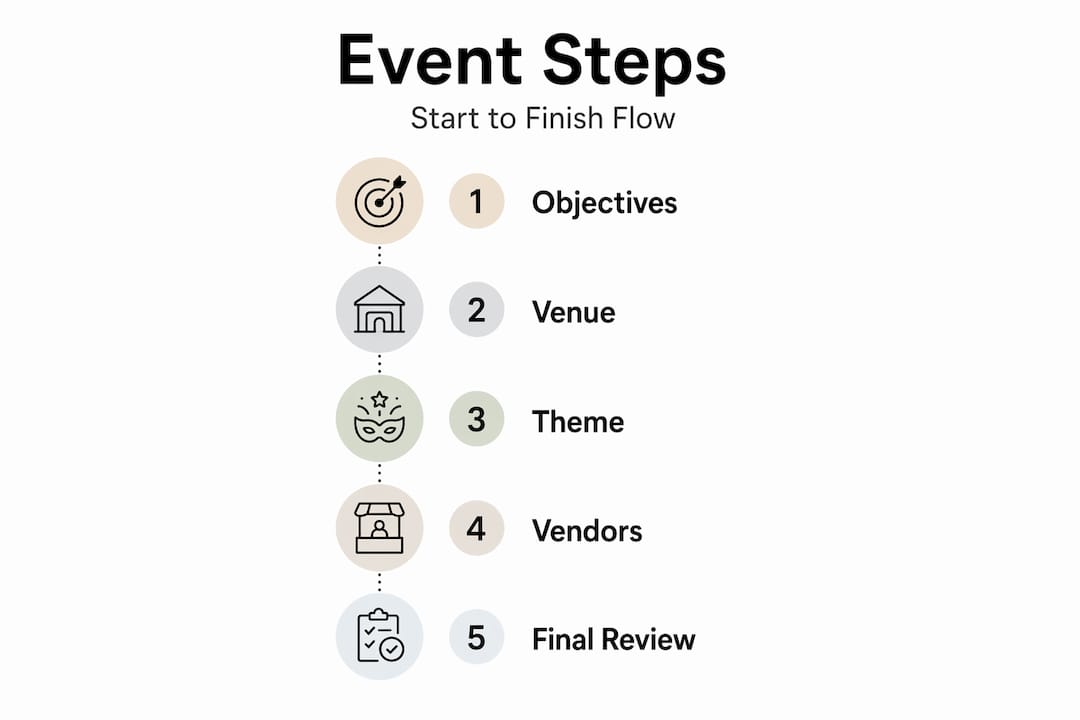
Start by defining your event objectives clearly. Are you celebrating a personal milestone, launching a product, or hosting an annual corporate gathering? The answer shapes every decision that follows, from venue selection to catering style. Write down three to five specific outcomes you want guests to experience, and use those as your benchmark throughout planning.
Next, build your budget with honesty. A common mistake is budgeting only for what you expect. Experts advise including a 10 to 15% contingency buffer to cover service charges, overtime, and logistical surprises. A practical way to structure this is to divide your total spend into fixed costs (venue and catering, roughly 60%), flexible costs (décor and technology, roughly 30%), and a contingency fund of 10% set aside and untouched until needed.
Assembling the right team comes next. Even if you are coordinating a smaller gathering, you need clearly defined roles. Consider the following positions:
- Lead coordinator: Owns the run sheet and is the primary point of contact for all suppliers
- Décor and setup lead: Manages venue dressing, lighting, and all aesthetic elements
- Guest liaison: Handles arrivals, seating queries, and dietary needs on the day
- Technical support: Oversees audio-visual equipment, presentations, and sound checks
Venue selection deserves its own conversation. Accessibility, parking, capacity, and the ambiance all need to match your event’s tone. A formal gala requires a different setting to a bespoke garden celebration. Shortlist three options and visit each in person before committing.
Pro Tip: When visiting a venue, walk through it at the same time of day your event will start. Natural light, noise from adjacent spaces, and the feel of the room change significantly depending on the hour.
Designing the event experience step by step
Once foundations are in place, the event design phase begins. This is where your event planning step by step process moves from logistics into experience, and the two must work in harmony.
A cohesive theme is the thread that connects every element. Your colour palette, table arrangements, floral choices, and lighting all communicate a mood before a single word is spoken. Choose a theme that aligns with your client’s or your own personality, and resist the temptation to incorporate too many competing ideas. Restraint is the hallmark of an elegant event.
Catering decisions carry enormous weight. Plated sit-down service provides a more controlled and elevated dining experience than a buffet, giving you precise command over timing and guest flow. Structured pauses during a plated meal also create natural moments for speeches and presentations, holding guest attention without distraction. For corporate functions especially, this structure signals professionalism.
Here is a practical sequence for coordinating the event design:
- Confirm the theme and colour palette at least four months before the event
- Brief the décor and lighting supplier with a detailed mood board and reference images
- Select catering style and menu in collaboration with your caterer, confirming dietary options early. Collecting dietary information during registration allows your caterer to accommodate plant-based, allergen-free, and other requirements without last-minute panic
- Book entertainment and speakers and confirm their technical requirements, stage positioning, and timing within your programme
- Draft the event programme including all transitions, breaks, and timing for each segment
Technology tools also belong in this phase. Project management platforms, shared supplier portals, and digital timeline builders reduce the risk of miscommunication between teams.
Pro Tip: When briefing entertainment, ask for a technical rider at the point of booking, not the week before the event. Late technical surprises are among the most disruptive on-day issues coordinators face.
Locking in final preparations before the day
The final preparation phase, typically the two to four weeks before the event, is where coordination becomes almost military in its precision. This is the stage that separates experienced coordinators from those who improvise their way through.
Confirm every supplier in writing, with clarity on their arrival time, the name of the team member they report to on the day, and what happens if something goes wrong. A detailed run sheet shared with all parties is non-negotiable. Your run sheet should include:
- Full event timeline broken into 15-minute intervals
- Contact numbers for every supplier, team member, and venue manager
- Contingency notes for the three most likely problems (weather, late arrivals, technical failure)
- Seating plan and dietary flags for the catering team
- Supplier arrival windows and setup completion deadlines
Guest communication also intensifies in this window. Send final confirmations to attendees, include any logistical information they need (parking, dress code, arrival time), and follow up on outstanding RSVPs personally.
“An elegant event’s success rests heavily on invisible operational logistics such as timing, permissions, and supplier control, rather than just aesthetic elements.” — Event Management Dubai Done Properly
Prepare a “war room” for on-the-day problem solving. This is simply a dedicated space, even a corner of the venue, where the lead coordinator can manage issues discreetly without stepping into the event itself. Stock it with printed run sheets, a first aid kit, spare stationery, a portable charger, and a contact list. Guests should never see the machinery that keeps an elegant event running.
Managing the event on the day
The day of the event is where every hour of preparation is tested. Real-time management requires calm authority and the ability to make decisions quickly without visibly rattling.
- Arrive before your suppliers. Walking an empty venue gives you a final opportunity to spot issues before setup begins.
- Conduct a technical check for audio-visual equipment, microphones, and lighting at least 90 minutes before guests arrive.
- Brief your team in person using the run sheet. Everyone should know their role, their first task, and who they call if something goes wrong.
- Monitor dining timing with discipline. The transition from starter to main to dessert should align precisely with your programme. A single point of accountability reduces miscommunication between the kitchen and the front of house significantly.
- Manage speech and presentation timing actively. Brief speakers in advance and position a discreet signal person at the front so speakers know when to wrap up.
- Keep communicating. Use a shared messaging channel or earpieces for key team members. Silence between coordinators during an event creates gaps that guests notice.
The most common on-day issue is timing slippage. If one segment runs long, do not try to recover every minute at once. Identify where you can absorb five to ten minutes without affecting the overall experience, and adjust quietly. You can explore coordination workflow strategies in detail to prepare for these moments in advance.
Post-event review: closing the loop
Many planners treat the end of the event as the finish line. The best ones treat it as the start of the next one.
Schedule a debrief within 48 hours. A post-event review conducted soon after captures fresh insights that are lost within a week. Gather feedback from three groups: clients or hosts, guests (via a short digital survey), and your supplier team. Ask specific questions rather than general ones. “What was the single moment you remember most?” yields more useful data than “Did you enjoy the event?”
Document the following in a written record:
- What went according to plan and why
- What required improvisation and what the outcome was
- Supplier performance ratings with notes
- Budget actuals versus estimates, line by line
- Guest feedback themes and any dietary or logistical complaints
Recognise your team’s contribution formally. A brief thank-you note or a post-event gathering maintains the relationships that make your next event easier to coordinate. Strong supplier and team networks are among the least visible but most valuable assets a coordinator builds over time.
Pro Tip: Create a master event file for each event you coordinate. Store your run sheet, supplier contacts, budget actuals, and feedback summary in a single folder. Over three to five events, this archive becomes an invaluable reference that shortens your planning time considerably.
My honest take on elegant event coordination
I’ve coordinated enough high-end events to say this with confidence: the plans that look the most polished on paper are not always the ones that produce the best events. What I’ve found actually works is a combination of meticulous preparation and deliberate flexibility.
In my experience, the coordinators who struggle most are those who treat the run sheet as a script rather than a guide. When a speaker runs three minutes long or a supplier arrives late, the planner who can adapt without panic is the one guests never notice. The one who cannot is the one who creates a ripple that everyone feels.
What I’ve learned is that client relationships matter more than any single event element. When clients trust you completely, they give you the space to make calls in the moment. That trust is built in every briefing call, every prompt reply, and every honest update about what is and is not possible. The technical side of event management can be taught. That kind of rapport takes real investment.
My take on run sheets: they should be detailed enough that any competent person could pick one up and manage the day. But they should always include a column for “if this goes wrong, we do this.” The contingency notes are where the real craft lives.
— Coert
Plan your next elegant event with Winelandsfunction
If this guide has shown you how much goes into a truly polished occasion, you will appreciate what it means to have an experienced team by your side.
Winelandsfunction specialises in luxury event coordination for weddings, corporate functions, and bespoke celebrations across the Cape Winelands and beyond. From initial concept through to post-event review, the team manages every step with the kind of precision and personal attention that turns a good event into one guests talk about for years. Whether you are planning an intimate dinner or a grand corporate launch, Winelandsfunction offers bespoke party planning and wedding planning in Cape Town tailored to exactly what you have in mind. Reach out to start your planning conversation today.
FAQ
How far in advance should I start planning an elegant event?
Start at least six months before the event date. 89% of planners agree that early preparation is the key factor in securing venues, building the right team, and executing without last-minute pressure.
What is the best catering style for an elegant occasion?
Plated sit-down service is the preferred choice for elegant events. It provides consistency, controls pacing, and creates natural intervals for speeches and presentations without disrupting the guest experience.
Why is a run sheet so important in event coordination?
A run sheet gives every supplier and team member a shared reference for timing, responsibilities, and contingency plans. Sharing it in advance significantly reduces miscommunication and keeps the day on track.
How should I handle unexpected problems on the event day?
Prepare contingency notes for the three most likely issues before the day, and designate a quiet coordination space away from guests. Calm, decisive adjustments made behind the scenes preserve the atmosphere without guests ever knowing there was an issue.
When should I conduct a post-event review?
Hold your debrief within 48 hours of the event. Memories are sharpest in that window, and gathering feedback from clients, guests, and suppliers at this point produces the most useful insights for improving future events.
Recommended
- Workflow for Luxury Event Coordination: Step-by-Step Success – Winelands Function – For Every Occasion, Your Celebration
- Best practices for flawless luxury event coordination – Winelands Function – For Every Occasion, Your Celebration
- Corporate Event Preparation Guide for Elegance and Impact – Winelands Function – For Every Occasion, Your Celebration
- High End Event Coordination Steps for Exceptional Results – Winelands Function – For Every Occasion, Your Celebration