
TL;DR:
- Personalised experiences create lasting emotional memories that distinguish memorable events from forgettable ones.
- Gathering detailed guest data and using technology enables tailored, scalable, and authentic luxury event experiences.
- Genuine connection and local authenticity, rather than surface opulence, define true luxury guest experiences.
Generic events are forgotten before guests reach the car park. You might spend a fortune on flowers and catering, yet if the experience feels impersonal, it leaves no lasting impression. For couples planning high-end weddings and corporate event managers in Cape Town, the difference between a spectacular occasion and a forgettable one lies almost entirely in personalisation. Bespoke guest experiences create emotional memories that guests carry for years. This guide walks you through every stage of crafting a truly tailored luxury event, from gathering the right data to measuring your success long after the last guest has departed.
Table of Contents
- The foundation: understanding your guests’ desires
- Essential tools and planning techniques for personalisation
- Step-by-step: crafting a bespoke guest journey
- Measuring success: feedback, ROI, and long-term relationships
- The truth about luxury: real connection over surface opulence
- Next steps: bring your vision to life with expert support
- Frequently asked questions
Key Takeaways
| Point | Details |
|---|---|
| Know your guests | Personalised events start with understanding guest preferences and cultural backgrounds. |
| Combine tech and empathy | Leverage technology and emotional intelligence to deliver memorable, luxury experiences. |
| Craft the journey step-by-step | Plan each phase of the event to surprise and delight, from invites to follow-up. |
| Measure and improve | Collect guest feedback and analyse results to constantly refine your approach. |
The foundation: understanding your guests’ desires
With the stage set, let’s explore how truly personalised luxury starts with anticipating your guests’ unique expectations. The most common mistake in high-end event planning is treating personalisation as an afterthought. You cannot design a bespoke guest experience in hospitality by guessing. You need structured insight gathered well before a single venue is booked.
Start by segmenting your guest list. For weddings, segments might include immediate family, international guests, close friends, and colleagues. For corporate events, you might separate senior executives, international delegates, and junior staff. Each group has different expectations, mobility requirements, and cultural backgrounds. Treating them as one homogeneous audience is where most planners fall short.
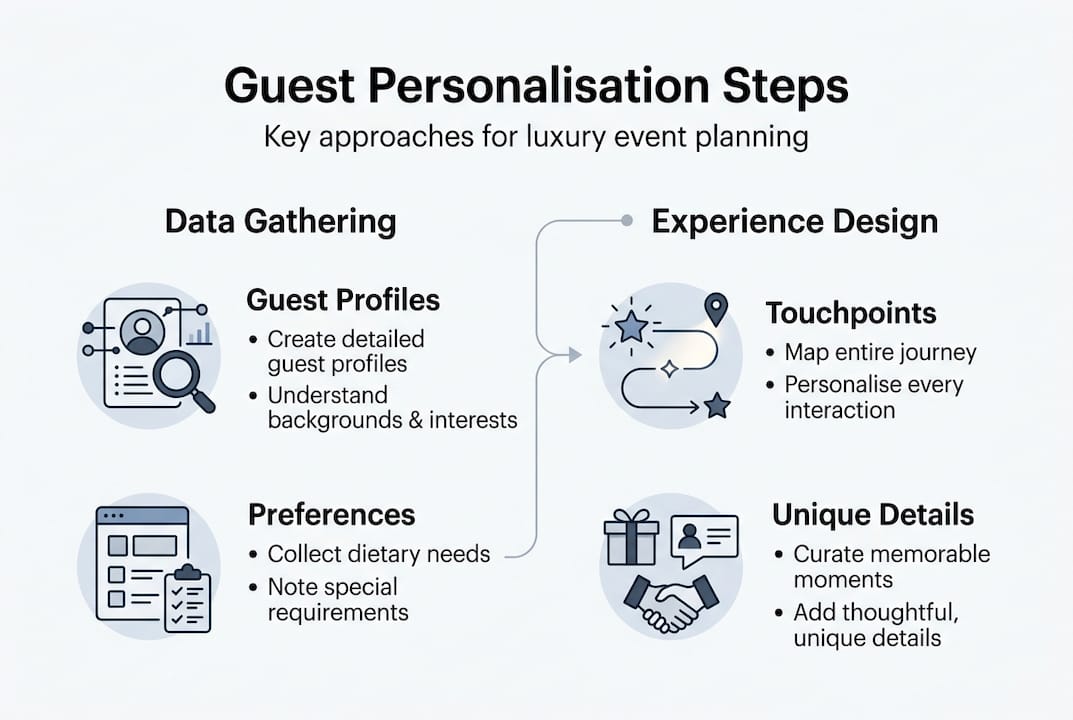
Emotional mapping goes far beyond a logistical agenda. A logistical agenda tells you when guests eat. Emotional mapping tells you how you want guests to feel at each moment, from the nervous excitement of arrival to the warmth of a heartfelt farewell. This distinction is what separates a well-run event from a truly extraordinary one. Your guest experience enhancement guide should reflect emotional beats, not just timings.
Cultural personalisation is especially powerful in Cape Town, where a Cape Town wedding experience can weave gospel choirs, biltong bars, and indigenous botanical elements into a celebration that feels rooted and alive. For international corporate guests, acknowledging cultural dietary norms and communication styles signals respect and sophistication.
Here are the key data points worth collecting for every guest:
- Dietary requirements and allergies
- Mobility and accessibility needs
- Language preferences and translation requirements
- Hobby and interest profiles
- Cultural or religious observances
- Previous event attendance history
The table below illustrates how data collection differs between event types:
| Data point | Wedding priority | Corporate priority |
|---|---|---|
| Dietary requirements | High | High |
| Cultural traditions | Very high | Medium |
| Networking preferences | Low | Very high |
| Hobby and interest profiles | High | Medium |
| Mobility accessibility | High | High |
| Language preferences | Medium | Very high |
Luxury events use CRM and RFID technologies to track and anticipate guest needs in real time, turning raw data into seamless, personalised moments throughout the event.
Essential tools and planning techniques for personalisation
Once you know your guests’ wants, you’ll need the right mix of tech and hands-on preparation to deliver. Technology is no longer optional in luxury event planning. It is the infrastructure that makes personalisation scalable and consistent.
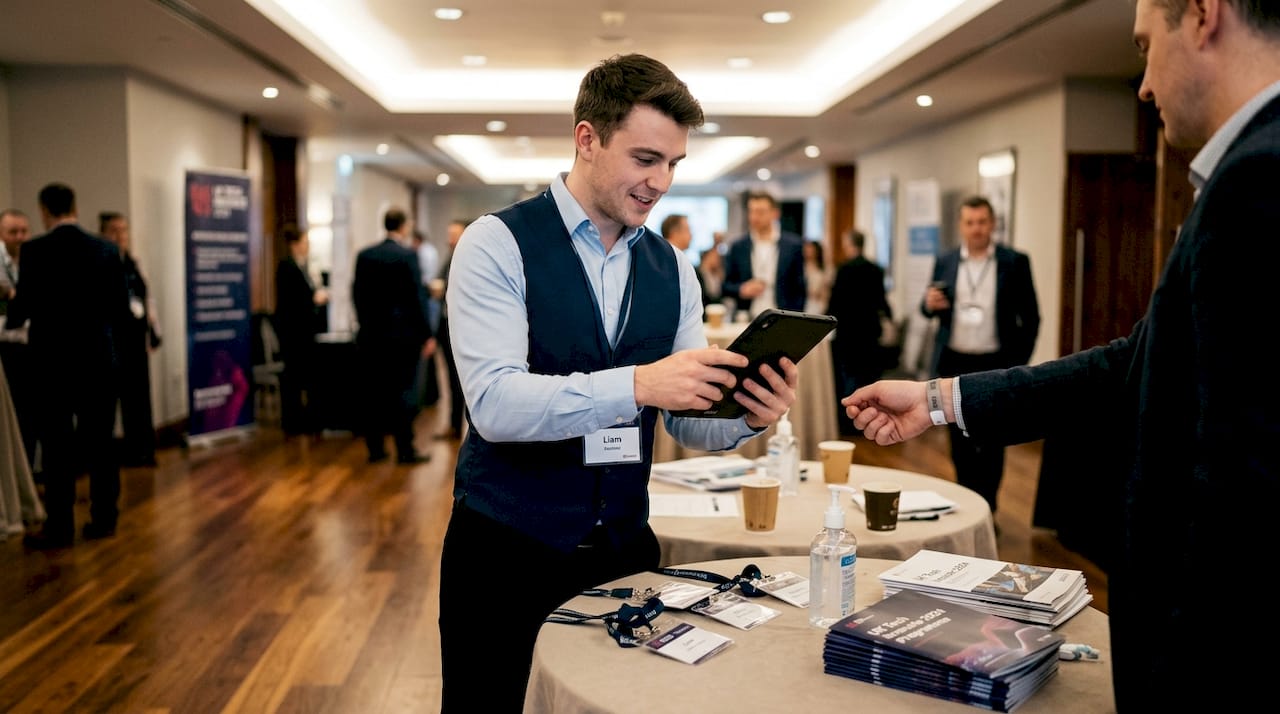
A CRM system allows you to store and retrieve guest profiles instantly. RFID wristbands or smart badges let staff identify guests on approach, enabling them to greet people by name, offer preferred drinks, or direct them to reserved seating without a single awkward pause. Mobile event apps give guests personalised schedules, interactive maps, and real-time updates tailored to their preferences.
Emotional journey mapping is a practical technique worth mastering. Begin by listing every touchpoint a guest experiences, from the invitation they receive to the thank-you note they read three days later. Then assign an emotional intention to each touchpoint. Should the arrival feel exciting? Should the dinner feel intimate? This map becomes your creative brief for every supplier and staff member involved.
The comparison below shows physical versus digital guest touchpoints:
| Touchpoint type | Examples | Personalisation potential |
|---|---|---|
| Physical | Welcome gifts, table settings, printed menus | High, tactile, memorable |
| Digital | Event app, email communications, RFID check-in | High, scalable, data-rich |
| Hybrid | Interactive photo stations, personalised QR menus | Very high, combines both |
Pro Tip: Map your guest journey on a physical timeline pinned to a wall. Colour-code each touchpoint by emotional intention. If three consecutive touchpoints share the same colour, you risk emotional monotony. Vary the rhythm deliberately.
Staffing is where many luxury events quietly fail. White-glove service involves a 1:4 staff-to-guest ratio for the highest level of attentiveness, ensuring no guest waits, feels overlooked, or has to search for assistance.
For guest service experience to feel genuinely exclusive, staff must be briefed on individual guest profiles, not just general event logistics. Your guest experience design brief should include specific notes on VIP guests, cultural sensitivities, and any known preferences gathered during the data collection phase.
Key staffing principles for luxury events:
- Brief every team member on the emotional journey map
- Assign dedicated hosts to VIP guests and key stakeholders
- Empower staff to make small, spontaneous gestures without seeking approval
- Conduct a full walkthrough rehearsal at least 48 hours before the event
Step-by-step: crafting a bespoke guest journey
With your plan in place, here’s how to bring each layer of your guest journey to life. The guest experience begins long before the event itself. Pre-event communication sets the emotional tone and builds anticipation. A beautifully designed invitation with a personalised note already signals that this occasion is different.
Here is a practical sequence for building a bespoke guest journey:
- Send personalised save-the-dates with a brief story about the event’s inspiration or theme.
- Gather guest data through a thoughtfully designed pre-event questionnaire.
- Create individual guest profiles and share relevant details with your planning team and suppliers.
- Design arrival moments that surprise and delight, such as a personalised welcome gift or a curated sensory experience at the entrance.
- Build exclusive on-the-day moments including private access to a special area, a cultural immersion activity, or a bespoke amenity matched to each guest’s profile.
- Train staff to respond adaptively, reading guest moods and adjusting service pace, formality, or interaction style in real time.
- Close with intention, ending the event with a gesture that guests will remember, such as a handwritten note, a locally sourced keepsake, or a personalised digital memory.
- Follow up within 72 hours with a personalised thank-you message and a short feedback survey.
Weddings often use storytelling and local colour, such as biltong bars or cultural tours, while corporate events focus more on scalable networking and measurable ROI. Understanding which mode your event sits in helps you prioritise where to invest your personalisation budget.
Pro Tip: For weddings, consider creating a “memory wall” where guests contribute a handwritten note or photograph during the event. It costs very little but generates enormous emotional value and gives the couple a tangible record of their guests’ presence.
Knowing how to elevate guest experience means treating the post-event phase as seriously as the day itself. A personalised follow-up transforms a one-time guest into a long-term advocate. Your guest experience guide should include post-event protocols as a non-negotiable step.
Statistic to note: Events that include personalised post-event follow-up see significantly higher guest satisfaction scores and repeat attendance rates compared to those that do not follow up at all.
Measuring success: feedback, ROI, and long-term relationships
The impact of guest-centred customisations deserves to be measured. Here’s how to know if your approach truly worked. Collecting meaningful feedback is not about sending a generic five-star rating form. It is about asking questions that reveal emotional resonance and practical gaps.
Key guest satisfaction metrics worth tracking:
| Metric | How to measure | Why it matters |
|---|---|---|
| Net Promoter Score (NPS) | Post-event survey | Indicates likelihood of recommendation |
| Emotional satisfaction rating | Qualitative feedback form | Reveals whether the experience resonated |
| Service responsiveness score | Staff-specific feedback | Identifies training needs |
| Personalisation recognition | Open-ended survey question | Shows whether guests noticed bespoke touches |
| Return intent | Direct question in follow-up | Predicts long-term relationship value |
“The most valuable feedback is not what guests say they enjoyed. It is what they remember unprompted three weeks later.”
Corporate events focus on ROI and data-driven personalisation using technology at scale, which means your post-event analysis should include attendance data, engagement rates from the event app, and any measurable business outcomes such as leads generated or partnerships formed.
For weddings, ROI looks different. It manifests as referrals, social media sharing, and the kind of word-of-mouth that fills your calendar for the next season. Both corporate event best practices and sustainable event planning principles point toward the same conclusion: the events that perform best long-term are those that invest in relationships, not just aesthetics.
Building anticipation for future events starts immediately after the current one ends. A brief, personalised note that hints at what is coming next keeps your audience emotionally invested. It transforms guests into a community.
The truth about luxury: real connection over surface opulence
After years of planning events across the Cape Winelands and greater Cape Town, we have seen a consistent pattern. The events that guests talk about longest are rarely the ones with the most extravagant floral installations or the most expensive catering menus. They are the ones where someone clearly thought about them specifically.
We have witnessed corporate launches where six-figure budgets produced polite applause and nothing more, simply because the experience felt assembled rather than authored. We have also seen intimate weddings where a single detail, perhaps a playlist built from the couple’s shared history or a table centrepiece referencing a guest’s home country, reduced guests to tears of genuine joy.
The uncomfortable truth is that surface opulence is easy to replicate. Emotional intelligence is not. Local authenticity cannot be purchased from a catalogue. It must be researched, understood, and woven into every layer of the event with genuine care. This is what luxury bespoke events truly require: not more budget, but more intention.
Guest loyalty is built through thoughtful gestures that say, “We saw you. We remembered.” That is the standard worth pursuing.
Next steps: bring your vision to life with expert support
Ready to elevate your next celebration? Discover how Winelands Function can turn vision into exquisite reality.
At Winelands Function, we specialise in crafting bespoke and luxury celebrations that place your guests at the very centre of every decision. Whether you are coordinating an intimate wedding in the Cape Winelands or managing a large-scale corporate launch, our team brings structured creativity and meticulous attention to detail. Explore our luxury event coordination workflow to understand how we approach every project, or begin your journey with our dedicated wedding planning Cape Town service. We would love to help you create an experience your guests will never stop talking about.
Frequently asked questions
What is the first step in customising guest experience for luxury events?
Start by gathering detailed guest information including dietary needs, cultural preferences, and accessibility requirements. CRM and RFID tools help translate that data into genuinely personal moments throughout the event.
How do you balance personalisation with event scalability?
Scalable technologies such as CRM systems and RFID allow you to deliver unique, individual touches without overwhelming your planning team. Technology at scale is precisely how corporate events manage personalisation for hundreds of guests simultaneously.
Why is emotional storytelling important for weddings in Cape Town?
Emotional storytelling anchors a celebration in something real and specific, making it impossible to replicate or forget. Cape Town weddings that incorporate local culture, such as gospel choirs or biltong bars, create moments that resonate far beyond the day itself.
How can luxury events be made more sustainable?
Prioritise local suppliers, choose eco-friendly materials, and embed sustainable practices into your planning process from the outset. Sustainability is now a marker of genuine luxury rather than a compromise on quality.
Recommended
- How to Elevate Guest Experience for Luxury Events Easily – Winelands Function – For Every Occasion, Your Celebration
- Complete Guide to Guest Experience Enhancement – Winelands Function – For Every Occasion, Your Celebration
- What is guest experience design? A guide for luxury events 2026 – Winelands Function – For Every Occasion, Your Celebration
- Guest Service Experience: Elevating Luxury Events – Winelands Function – For Every Occasion, Your Celebration
- Master the Marble Interior Design Workflow for Luxury Spaces – Marmorique