

Almost 80 percent of luxury event planners in major cities report that clear objectives are vital for flawless corporate gatherings, yet even experienced British and South African teams can encounter workflow hurdles. For senior executives in Cape Town, fine-tuned processes make the difference when launching high impact brands or hosting prestigious company events. This guide delivers practical, actionable steps for organizing stunning occasions that meet every expectation and impress sophisticated stakeholders.
Table of Contents
- Step 1: Define Event Objectives And Requirements
- Step 2: Assemble Your Planning Team And Assign Tasks
- Step 3: Develop A Detailed Timeline And Budget
- Step 4: Select Suppliers And Secure Venue Arrangements
- Step 5: Coordinate Execution And Monitor Progress
- Step 6: Verify Event Delivery And Evaluate Results
Quick Summary
| Key Message | Explanation |
|---|---|
| 1. Define clear event objectives | Establish specific, measurable goals aligned with organisational aims for effective planning. |
| 2. Assemble a capable planning team | Form a diverse team with defined roles to manage various event aspects effectively. |
| 3. Create a detailed timeline and budget | Develop a comprehensive plan outlining key milestones and financial parameters for smooth execution. |
| 4. Select appropriate suppliers and venues | Choose suitable vendors and venues through strategic evaluation and clear contract negotiations. |
| 5. Evaluate event outcomes systematically | Conduct thorough assessments post-event to gather insights and improve future planning processes. |
Step 1: Define event objectives and requirements
Setting clear objectives is your foundational first step in creating a successful corporate event. When you begin planning, you need to crystalise precisely what you want to achieve by establishing measurable goals and requirements.
Start by asking yourself critical strategic questions. What specific outcomes does your organisation want from this corporate event? Are you launching a product, building team cohesion, recognising employee achievements, or networking with potential clients? Each objective will dramatically shape your entire event strategy. Your objectives should be specific, measurable, and directly aligned with broader organisational aims. For instance, a product launch might aim to generate 50 qualified leads, while a team building event could target improving interdepartmental communication.
Once you have defined your core objectives, translate them into concrete requirements. This involves determining your target audience, anticipated attendee numbers, preferred venue characteristics, technological needs, and budget parameters. Thorough event planning requires understanding each requirement’s strategic importance. Document these details meticulously to provide a clear roadmap for subsequent planning stages.
The table below summarises typical event objectives and their associated measurement criteria.
| Objective Type | Example Aim | Key Measurement Criteria |
|---|---|---|
| Product Launch | Generate 50 qualified leads | Number of leads, attendee engagement |
| Team Building | Improve communication | Survey scores, observed interaction |
| Recognition Event | Celebrate employee achievements | Attendance rates, satisfaction feedback |
| Client Networking | Establish new business contacts | New contacts made, follow-up meetings |
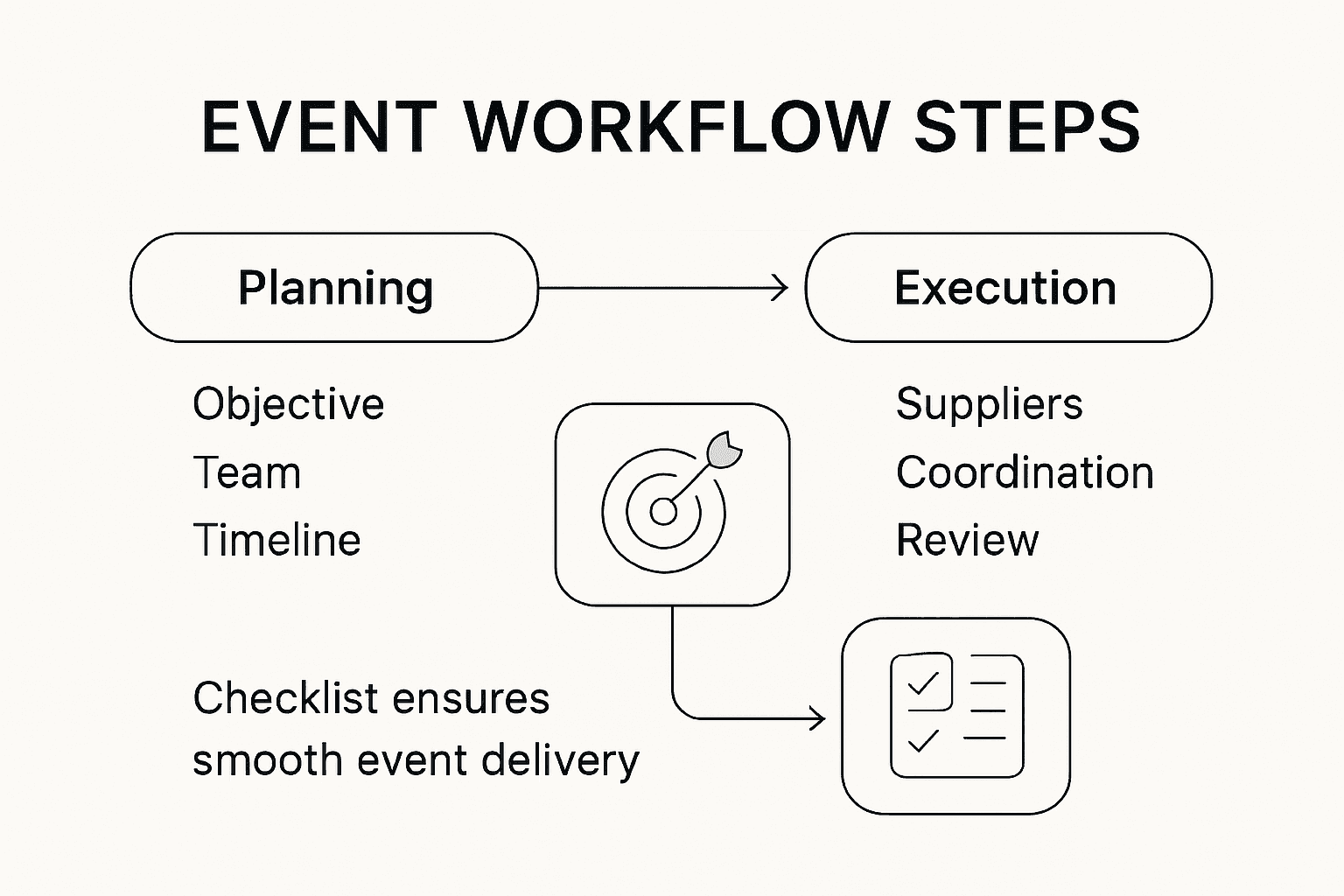
Expert Recommendation: Create a one-page event brief that summarises your objectives and requirements to ensure all stakeholders share a unified understanding of the event’s purpose and scope.
Step 2: Assemble your planning team and assign tasks
Building a robust planning team is crucial for transforming your event vision into reality. Forming a collaborative team with clear roles and responsibilities ensures every aspect of your corporate event receives meticulous attention.

Start by identifying key professionals within your organisation who possess complementary skills. Look for individuals with expertise in project management, marketing, finance, logistics, and creative design. Your team should represent diverse capabilities that collectively address the multifaceted requirements of your event. Critically, each team member needs a well-defined role with specific accountability. For example, assign one person to manage venue logistics, another to handle sponsorship communications, and a third to oversee technical requirements and audiovisual setups.
Effective team collaboration depends on establishing transparent communication channels and monitoring progress. Consider using project management software to track tasks, set deadlines, and enable real-time updates. Regular team meetings will help synchronise efforts, resolve potential challenges quickly, and maintain momentum towards your event objectives.
Expert Recommendation: Create a responsibility matrix that clearly outlines each team member’s specific tasks, deadlines, and reporting structures to prevent confusion and maximise efficiency.
Step 3: Develop a detailed timeline and budget
Creating a comprehensive timeline and budget is your strategic roadmap for transforming event aspirations into executable plans. Outlining key milestones and financial parameters ensures systematic coordination and fiscal control across all planning stages.
Your timeline should be granular and include critical touchpoints from initial planning through post event evaluation. Break down each phase into specific tasks with realistic deadlines. This means mapping out everything from initial venue research and speaker confirmations to marketing campaign launches and final logistical preparations. When developing your budget, consider comprehensive expense categories including venue costs, audiovisual equipment, catering, marketing materials, staff compensation, and crucial contingency funds. Effective budgeting requires aligning financial projections with organisational priorities and maintaining disciplined fiscal oversight.
Remember that flexibility is key. Your timeline and budget are living documents that will likely require periodic adjustments. Build in buffer periods for unexpected challenges and maintain open communication with your planning team about potential financial or scheduling shifts. Regular review and proactive management will help you stay on track and minimise last minute surprises.
The following table outlines critical event budget categories and common examples.
| Budget Category | Common Examples | Strategic Importance |
|---|---|---|
| Venue Costs | Hire fee, setup fees | Secures suitable environment |
| Catering | Meals, refreshments | Ensures guest satisfaction |
| Technical Services | AV equipment, Wi-Fi | Enables smooth presentations |
| Marketing | Promotional materials, adverts | Drives attendance and awareness |
| Contingency Fund | Buffer for unforeseen expenses | Mitigates unexpected cost overruns |
Expert Recommendation: Create a dynamic spreadsheet that allows real time tracking of both timeline milestones and budget allocations, enabling your team to monitor progress and make informed decisions quickly.
Step 4: Select suppliers and secure venue arrangements
Selecting the right suppliers and securing an appropriate venue are critical milestones that will define your event’s success. Effective venue and vendor coordination requires strategic negotiation and comprehensive contract management to ensure your event meets all organisational objectives.
Comprehensive supplier management involves meticulous vendor onboarding, careful evaluation, and continuous communication. Begin by creating a detailed request for proposal (RFP) that outlines your specific requirements for each supplier category—including catering, audiovisual equipment, decor, and technical support. Request comprehensive quotes, review past performance portfolios, and conduct site visits or virtual consultations to assess their capabilities. Pay close attention to their flexibility, technical expertise, and alignment with your event’s unique needs. Prioritise suppliers who demonstrate not just technical competence, but also a proactive approach to problem solving and adaptability.
When securing your venue, consider factors beyond mere physical space. Evaluate technical infrastructure, accessibility, parking facilities, audiovisual capabilities, and potential backup options. Negotiate contracts that include clear deliverables, cancellation policies, and contingency plans. Ensure all agreements are documented in writing and include precise expectations for setup, breakdown, and potential additional charges.
Expert Recommendation: Create a comprehensive supplier evaluation matrix that scores potential vendors across multiple criteria including cost, reliability, past performance, and cultural fit with your event objectives.
Step 5: Coordinate execution and monitor progress
Coordinating event execution requires precision, real-time communication, and proactive problem solving. Maintaining continuous oversight ensures your event remains aligned with the original strategic plan while allowing flexibility for unexpected challenges.
Effective project management during the execution phase involves systematic tracking of progress, risk identification, and responsive strategy adjustments. Establish a central communication hub where team members can provide instant updates, share critical information, and rapidly escalate potential issues. Use digital project management tools that allow real time tracking of tasks, enabling you to monitor each team member’s progress and quickly address bottlenecks. Schedule brief daily check ins with key team members to maintain momentum and ensure everyone understands their responsibilities and current project status.
Prepare contingency plans for potential disruptions. This means having backup strategies for technical failures, vendor complications, or unexpected logistical challenges. Designate specific team members as problem resolution specialists who can quickly assess and mitigate risks without disrupting the overall event flow. Maintain open communication channels with suppliers and venue staff, ensuring everyone understands the event objectives and can collaborate effectively during execution.
Expert Recommendation: Implement a live dashboard that provides instant visibility into task completion, potential risks, and real time performance metrics across your entire event planning team.
Step 6: Verify event delivery and evaluate results
The final stage of event management is a critical reflection process that transforms your experience into valuable organisational learning. Event evaluation represents a systematic approach to assessing success through comprehensive data analysis that goes far beyond simple performance measurement.
Post event verification involves meticulously reviewing outcomes against original objectives and documenting comprehensive insights. Gather feedback through multiple channels including attendee surveys, stakeholder interviews, and team member debriefings. Analyse both quantitative metrics like attendance numbers and financial performance alongside qualitative feedback about attendee experience and event impact. Pay special attention to areas where your actual results diverged from initial expectations. This might include unexpected logistical challenges, remarkable audience engagement moments, or budgetary variations that warrant deeper investigation.
Compile a detailed post event report that not only summarises what occurred but provides strategic recommendations for future events. Include sections on financial reconciliation, operational effectiveness, stakeholder satisfaction, and clear actionable insights for improvement. This documentation serves as an institutional knowledge base that will enhance your team’s event planning capabilities for future projects.
Expert Recommendation: Create a standardised post event evaluation template that allows consistent measurement and comparison across different corporate events, enabling progressive improvement in your event management approach.
Elevate Your Corporate Event with Expert Planning and Seamless Execution
Mastering the corporate event workflow requires crystal clear objectives, precise timelines and budgets, and flawless supplier coordination. If you find yourself overwhelmed by the complexities of defining measurable goals or managing last-minute challenges, you are not alone. The detailed steps of assembling a dedicated team and continuously monitoring progress can make or break your event’s success. At Winelands Function, we understand that every element from venue selection to real-time execution demands sophisticated attention to detail and personalised service.
Our luxury event planning expertise, showcased at Winelands Function, means you gain a trusted partner who will transform your vision into a polished reality. Whether you are planning a high-profile corporate launch or an intimate recognition event, our team brings precision, creativity and reliability to every stage. Discover how our bespoke solutions perfectly align with industry best practices like comprehensive timeline development, supplier evaluation and rigorous event delivery verification.
Start your journey to seamless corporate event success today by exploring our curated portfolio and tailored service offerings at Winelands Function. Step confidently into a stress-free planning experience where your objectives are our priority. Contact us now to craft an extraordinary event that leaves a lasting impression.
Frequently Asked Questions
What are the key objectives to define for a corporate event?
Defining clear objectives is essential for a successful corporate event. Start by setting specific, measurable goals such as generating qualified leads or improving team communication, which will guide your planning process.
How can I assemble an effective event planning team?
Forming a collaborative team is crucial for event success. Identify individuals with complementary skills and assign clear roles and responsibilities to ensure every aspect of the event is covered efficiently.
What should I include in a comprehensive event timeline?
A detailed event timeline should map out all critical tasks from initial planning to post-event evaluation. Break down phases into specific deadlines, allowing for flexibility while ensuring progress toward your objectives.
How can I effectively manage event budgets?
Effective budget management involves outlining all expenses and aligning them with your organisational priorities. Create a dynamic budget spreadsheet to track allocations in real time, ensuring you stay within your financial limits.
What steps should I take to coordinate event execution?
Coordinating execution requires constant oversight and communication. Establish a central hub for updates and maintain regular check-ins with team members to address challenges promptly and ensure the event flows smoothly.
How can I evaluate the success of my corporate event?
Evaluate your event by comparing outcomes against set objectives and gathering feedback from attendees and stakeholders. Compile a detailed post-event report to document insights and recommendations for future improvements.
Recommended
- Master the Event Timeline Planning Process for Seamless Events – Winelands Function – For Every Occasion, Your Celebration
- Workflow for Luxury Event Coordination: Step-by-Step Success – Winelands Function – For Every Occasion, Your Celebration
- Corporate Event Preparation Guide for Elegance and Impact – Winelands Function – For Every Occasion, Your Celebration
- Complete Guide to Luxury Event Styling Workflow – Winelands Function – For Every Occasion, Your Celebration
- What is Corporate Booking? Understanding Its Importance – Guestly Homes