
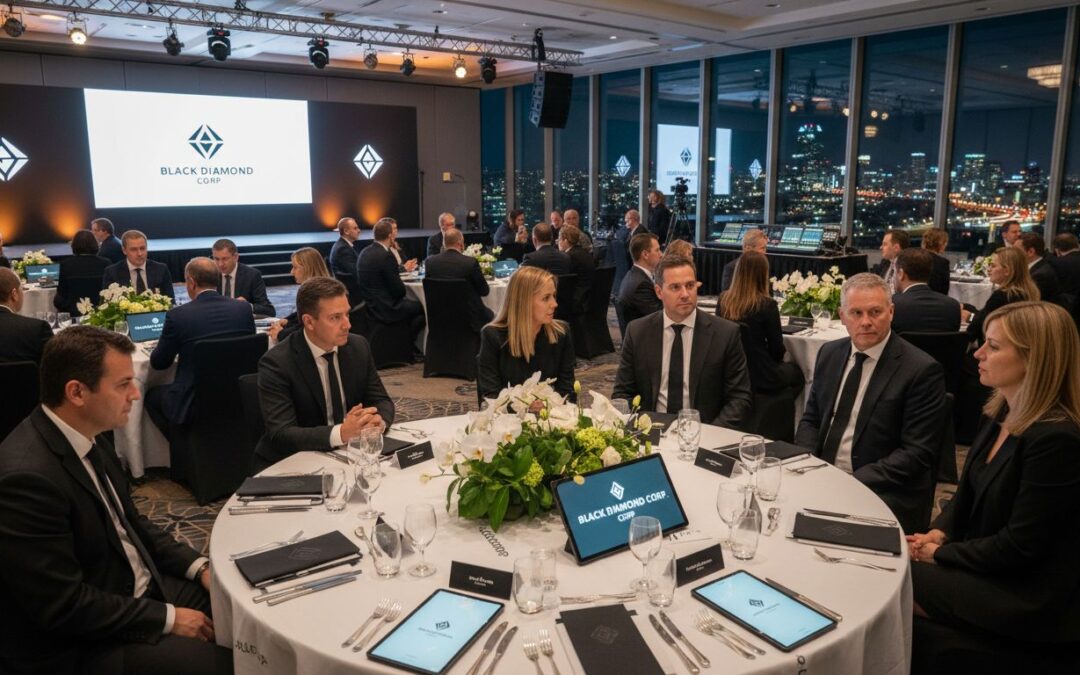
More than 80 percent of british companies report that well planned corporate events directly improve team engagement and business outcomes. Yet, many organisers underestimate how complex it can be to deliver a truly memorable event that meets strategic goals. A smooth process begins with clear objectives, smart venue selection, and careful attention to details. This step by step guide will show you how to create a successful corporate gathering that inspires, impresses, and delivers real results.
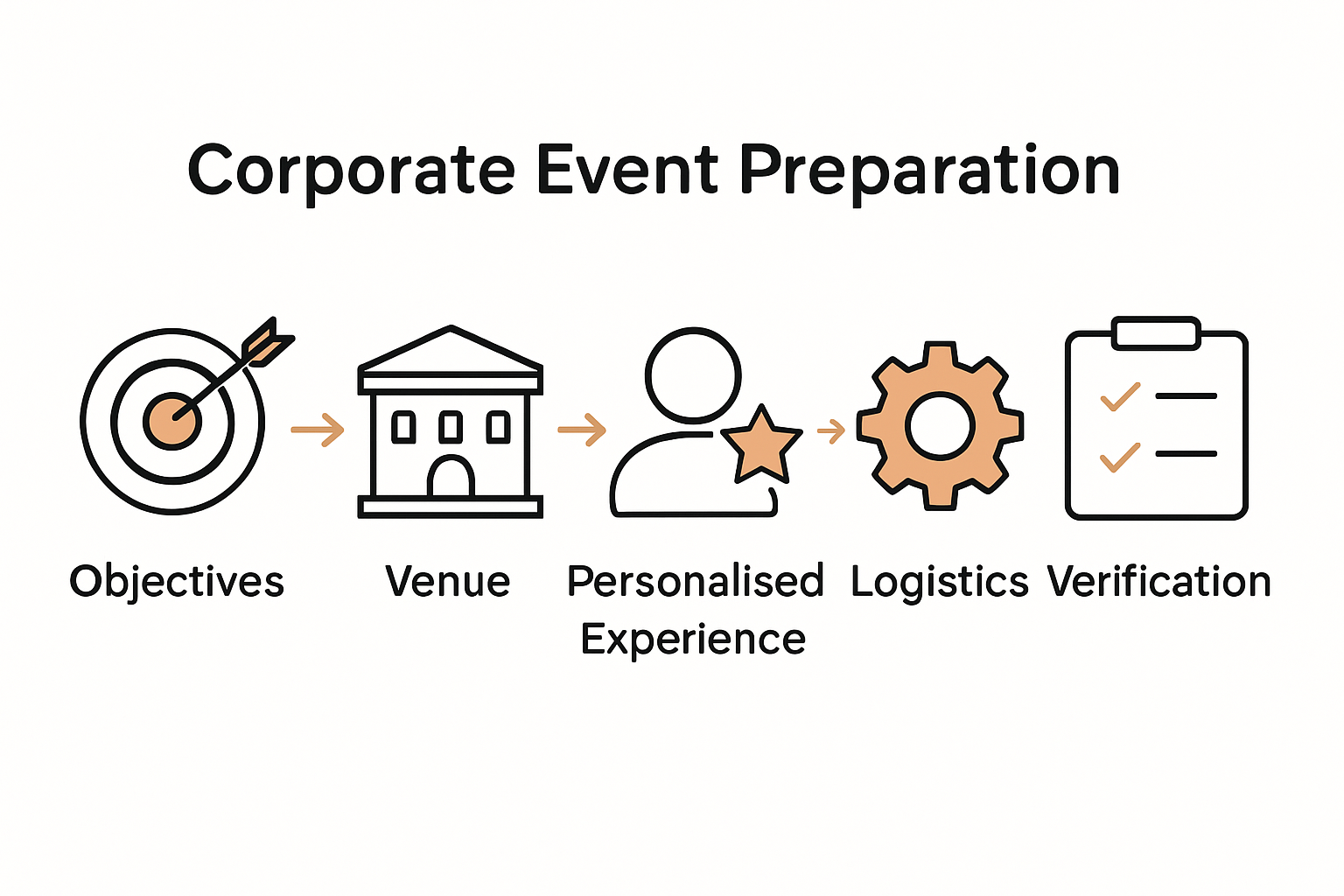
Table of Contents
- Step 1: Define Your Event Objectives And Format
- Step 2: Select And Secure A Prestigious Venue
- Step 3: Curate Bespoke Experiences And Services
- Step 4: Coordinate Logistics And Vendor Partnerships
- Step 5: Verify Every Detail For Flawless Execution
Quick Summary
| Key Insight | Explanation |
|---|---|
| 1. Define clear event objectives | Establishing precise aims will determine the most suitable format for your corporate event. Be clear on the primary purpose. |
| 2. Choose a suitable venue | Select a venue that meets your requirements for capacity, location, and technical capabilities to enhance attendee experience. |
| 3. Create personalised attendee experiences | Tailor your event to resonate with your audience by incorporating unique features and interactive elements that engage them. |
| 4. Plan logistics meticulously | Develop a detailed logistics blueprint and build strong relationships with vendors to ensure a seamless event. |
| 5. Confirm all details thoroughly | Conduct final checks on technical aspects and services at least 48 hours before the event to avoid unexpected issues. |
Step 1: Define your event objectives and format
Successful corporate events begin with crystal clear objectives and strategic format selection. According to research from Darbi, establishing precise aims and designing appropriate content are foundational to creating meaningful corporate gatherings.
Start by asking yourself critical questions: What is the primary purpose of this corporate event? Are you aiming to motivate staff, launch a product, celebrate achievements, or facilitate networking? Your objective will directly determine the most suitable event format. As insights from Academic Conference research suggest, formats range from formal presentations and keynote lectures to interactive panel discussions and collaborative workshops.
Consider these strategic format considerations:
- Formal corporate announcement: Keynote presentation with senior leadership
- Team building: Interactive workshop or collaborative problem solving session
- Product launch: Combination of presentation and networking reception
- Annual review: Structured presentation with Q&A segments
- Recognition event: Celebratory dinner with awards presentation
Pro tip: Always align your event format with your core objectives. A mismatched format can dilute your message and reduce participant engagement. Your next step will involve selecting the perfect venue that complements your chosen event structure and strategic goals.
Complete Guide to Corporate Event Planning Success offers additional insights into refining your event strategy.
Step 2: Select and secure a prestigious venue
Selecting the right venue transforms a standard corporate event into an extraordinary experience. According to IACC Online, venue selection involves carefully evaluating multiple critical factors that align with your event objectives and audience expectations.
Begin your venue search by establishing non negotiable requirements. Consider capacity, location, technical capabilities, and overall ambience. Research from SAS recommends collaborating with local partners and community resources to uncover unique spaces that might perfectly match your corporate gathering’s vision. Key venue selection criteria include:
- Adequate square meterage for expected attendees
- Sophisticated audiovisual infrastructure
- Convenient geographical accessibility
- Parking and transportation options
- Catering and refreshment facilities
- Appropriate acoustic and lighting environments
Pro tip: Always visit potential venues in person. Digital photographs and virtual tours cannot replace experiencing the space’s actual atmosphere and functionality. Inspect technical capabilities, understand potential layout configurations, and envision how your specific event will inhabit the environment.
Once you have identified your preferred venue, move swiftly to secure your booking. Peak corporate event seasons can limit availability, so prompt action is crucial. Understanding the Venue Selection Process for Events provides additional guidance on navigating this critical planning phase.
Step 3: Curate bespoke experiences and services
Crafting extraordinary corporate events requires transforming standard gatherings into memorable, personalised experiences that resonate with your attendees. According to IACC Online, successful event curation involves selecting venues and services that offer specialised amenities and unique touches that elevate the entire experience.
Begin by understanding your audience deeply. What motivates them? What creates genuine engagement? Research from SAS suggests leveraging unique venue features to create distinctive moments that set your event apart. Consider innovative approaches like behind the scenes tours, interactive sessions, or exclusive access experiences that transform standard corporate gatherings into extraordinary interactions.
Key strategies for bespoke event experiences include:
- Personalised welcome packages
- Interactive networking opportunities
- Tailored technological integrations
- Customised catering reflecting audience preferences
- Immersive entertainment elements
- Thoughtful ambient design
Pro tip: Always test and preview experiences before implementation. What seems innovative on paper might not translate perfectly in execution. Pilot your most creative concepts with a small focus group to refine and perfect your approach.
Your ultimate goal is creating an event that feels simultaneously professional and uniquely memorable. How to Curate Event Experiences for Lasting Impressions offers additional insights into crafting remarkable corporate gatherings.
Step 4: Coordinate logistics and vendor partnerships
Successful corporate events demand meticulous logistics planning and strategic vendor collaboration. According to IACC Online, effective event coordination requires ensuring venues provide comprehensive services or have established networks of preferred vendors for critical event requirements.
Begin by creating a comprehensive logistics blueprint that maps every potential operational requirement. Research from SAS emphasises building positive relationships with vendors and venues, highlighting the mutual benefits of collaborative partnerships that extend beyond single event interactions. This approach transforms vendor relationships from transactional exchanges into strategic alliances.
Key logistics coordination strategies include:
- Detailed vendor capability assessment
- Clear contractual expectations
- Comprehensive communication protocols
- Contingency planning for potential disruptions
- Integrated technological coordination
- Synchronised scheduling and timelines
Pro tip: Always maintain open communication channels with your vendor network. Regular check-ins and transparent dialogue can prevent potential misunderstandings and ensure smooth event execution.

Your logistical groundwork sets the stage for a seamless event experience. 7 Essential Elements for Successful Corporate Events provides additional strategic insights into creating memorable corporate gatherings.
Step 5: Verify every detail for flawless execution
Flawless corporate events are the result of obsessive attention to detail and comprehensive pre event verification. According to IACC Online, confirming every venue service and technical requirement is crucial to ensuring seamless event implementation.
Develop a systematic verification checklist that covers every conceivable aspect of your event. Research from SAS recommends thorough communication and proactive planning to address potential logistical challenges before they emerge. Your verification process should be methodical and comprehensive, leaving no room for unexpected complications.
Critical verification checkpoints include:
- Technical equipment functionality
- Audio visual system compatibility
- Catering menu and dietary requirements
- Staff and vendor readiness
- Seating and room configuration
- Backup technology and contingency plans
Pro tip: Conduct a full site walkthrough and technical rehearsal 48 hours before the event. This final inspection allows you to identify and resolve any potential issues while there is still sufficient time for adjustments.
Your meticulous verification transforms potential risks into a polished, professional experience.
VIDEO:video_content] [Complete Guide to Corporate Event Planning Success offers additional strategies for ensuring event excellence.
Elevate Your Corporate Event Planning to Unmatched Excellence
Planning a corporate event that combines elegance and impact requires more than just ideas. The challenge is in mastering every detail from defining clear objectives and securing the perfect venue to curating bespoke experiences and verifying flawless execution. If you are striving to create memorable moments that truly resonate with attendees, addressing these complexities can be overwhelming without expert support.
At Winelands Function, we understand these critical pain points and specialise in transforming your vision into reality. Our deep expertise anchors your event planning process with personalised service, meticulous attention to detail, and sophisticated solutions tailored for high-end corporate gatherings in Cape Town. Whether you are at the start of designing your event objectives or fine tuning the final logistics, we stand ready to guide and execute seamlessly. Explore our comprehensive approach in the Complete Guide to Corporate Event Planning Success and discover how we can elevate your next event.
Ready to transform your corporate event plans into an extraordinary experience that impresses every guest and guarantees flawless execution Explore how Winelands Function can partner with you in delivering exceptional luxury events and bespoke celebrations Visit our main site Winelands Function to begin your journey or dive deeper through How to Curate Event Experiences for Lasting Impressions. Do not wait to make your vision extraordinary Act now to secure your preferred dates and elevate your corporate event planning to perfection.
Frequently Asked Questions
How do I define the objectives for my corporate event?
Establishing clear objectives for your corporate event begins by identifying its primary purpose, such as motivating staff or launching a product. Start by asking yourself key questions about what you want to achieve and tailor your event format accordingly.
What factors should I consider when selecting a venue for my corporate event?
When selecting a venue, consider factors such as capacity, location, technical capabilities, and overall ambience. Create a checklist of non-negotiable requirements and visit potential venues to ensure they align with your event objectives.
How can I create personalised experiences for attendees at my corporate event?
To craft personalised experiences, understand your audience’s motivations and preferences. Incorporate elements like customised welcome packages and tailored catering to engage attendees and create memorable interactions.
What logistical details should I verify before the event?
Prior to the event, verify details such as the functionality of technical equipment, catering arrangements, and seating configurations. Develop a comprehensive checklist to ensure nothing is overlooked and conduct a full site walkthrough 48 hours before the event.
How can I build successful partnerships with vendors for my corporate event?
Developing strong vendor partnerships involves clear communication and establishing mutual expectations. Assess vendor capabilities and keep open lines of communication to foster collaboration and ensure smooth event execution.
What are the different event formats I can choose for my corporate gathering?
Event formats can range from formal presentations and keynote speeches to interactive workshops or networking receptions. Choose a format that aligns with your event objectives to ensure maximum participant engagement.
Recommended
- 7 Essential Elements for Successful Corporate Events – Winelands Function – For Every Occasion, Your Celebration
- 7 Inspiring Examples of Corporate Event Themes to Elevate Gatherings – Winelands Function – For Every Occasion, Your Celebration
- 7 Essential Tips for Corporate Social Responsibility Events – Winelands Function – For Every Occasion, Your Celebration
- Complete Guide to Why Corporate Events Matter – Winelands Function – For Every Occasion, Your Celebration
- Quoi Filmer Pour Un Événement d’Entreprise : Guide Complet