

Modern corporate event management in Cape Town is redefining what elite brand experiences can achieve. With over 80 percent of British luxury brands prioritising extraordinary client engagement at their organisational gatherings, the role of event planners has never been more strategic or creative. For those shaping high-end events, mastering the shift from standard coordination to immersive brand storytelling requires fresh insight into personalisation, technology, and measurable impact.
Table of Contents
- Defining Corporate Event Management Today
- Types of Corporate Events and Their Purposes
- Key Elements of Luxury Event Planning
- Legal Compliance and Safety in Corporate Events
- Risk Factors and Common Planning Mistakes
Key Takeaways
| Point | Details |
|---|---|
| Strategic Importance of Events | Corporate events are essential for brand communication and stakeholder engagement, serving various organisational objectives beyond mere logistics. |
| Multidisciplinary Approach | Successful event management combines skills from marketing, communication, and project management to create meaningful experiences. |
| Rigorous Compliance | Adhering to legal requirements and safety protocols is critical throughout all stages of event planning and execution to mitigate risks. |
| Proactive Risk Management | Identifying potential planning mistakes and developing mitigation strategies is vital for the success of corporate events. |
Defining Corporate Event Management Today
Corporate event management represents a strategic discipline that transforms organisational gatherings into powerful brand communication platforms. This specialised field goes far beyond simple event planning, integrating sophisticated communication strategies, technological innovation, and precise execution to create meaningful professional experiences.
Modern corporate event management has evolved dramatically, driven by technological advancements and changing workplace dynamics. Contemporary event management principles now emphasise holistic experience design, moving beyond traditional logistical considerations to create immersive, strategic brand interactions. Organisations increasingly view events not just as operational necessities, but as critical opportunities for engagement, storytelling, and building meaningful connections with stakeholders.
The contemporary landscape of corporate event management encompasses multiple sophisticated dimensions. Key components include strategic planning, technological integration, audience experience design, and measurable outcomes tracking. Events now serve multiple organisational objectives: from product launches and team building to stakeholder communication and brand positioning. Successful corporate event management requires a multidisciplinary approach, blending skills from marketing, communication, psychology, and project management to craft experiences that resonate deeply with participants.
Pro Tip – Strategic Preparation: Always develop a comprehensive event brief that clearly outlines objectives, target audience, desired outcomes, and key performance indicators before beginning any event planning process.
Pro Tip – Technology Integration: Leverage digital tools and platforms to enhance event engagement, tracking, and post-event analysis to maximise the strategic value of corporate gatherings.
Types of Corporate Events and Their Purposes
Corporate events represent a sophisticated spectrum of strategic gatherings designed to achieve specific organisational objectives. Scholarly examination of planned events reveals multiple distinctive categories that serve unique communication and engagement purposes for businesses.
Strategic Event Categories typically encompass several key types:
- Conference and Summit Events: Large-scale knowledge exchange platforms focusing on industry trends, thought leadership, and professional networking
- Product Launch Events: Carefully choreographed presentations designed to introduce new offerings, generate market excitement, and engage potential customers
- Team Building Retreats: Immersive experiences aimed at enhancing internal collaboration, morale, and organisational culture
- Stakeholder Engagement Meetings: Targeted gatherings facilitating communication between leadership, investors, board members, and key organisational contributors
- Training and Professional Development Workshops: Structured learning environments supporting skill enhancement and organisational knowledge transfer
- Incentive and Recognition Events: Motivational gatherings celebrating employee achievements and reinforcing positive performance metrics
Each event type requires meticulous planning, with specific objectives driving design, format, and engagement strategies. Modern corporate events transcend traditional information sharing, becoming sophisticated platforms for storytelling, brand positioning, and meaningful interpersonal connections.
Here is a summary of how major event types align with typical organisational objectives:
| Event Type | Primary Objective | Ideal Audience |
|---|---|---|
| Conference or Summit | Knowledge sharing | Industry professionals |
| Product Launch | Generate market excitement | Customers, media |
| Team Building Retreat | Strengthen collaboration | Internal staff |
| Stakeholder Engagement Meeting | Strategic communication | Leadership, investors |
| Training Workshop | Skill development | Employees, partners |
| Incentive or Recognition Event | Motivation and retention | Top performers, teams |
Pro Tip – Strategic Selection: Always align your event type precisely with your specific communication objectives, ensuring every element of the gathering supports your core organisational message and desired outcomes.
Pro Tip – Audience-Centric Design: Develop event experiences that prioritise participant engagement, leveraging interactive technologies and personalised content to create memorable, impactful interactions.
Key Elements of Luxury Event Planning
Luxury event planning represents a sophisticated art form that transcends traditional event coordination. The principles of luxury management emphasise creating extraordinary experiences through meticulous attention to detail and unparalleled personalisation, transforming corporate gatherings into remarkable brand narratives.
The foundational elements of luxury event planning encompass several critical dimensions:
- Exceptional Personalisation: Crafting bespoke experiences tailored precisely to client expectations and brand identity
- Uncompromising Quality: Maintaining supreme standards in every aspect of event design, from venue selection to aesthetic presentation
- Sensory Engagement: Creating multidimensional experiences that stimulate emotional connections through carefully curated sensory interactions
- Technological Integration: Leveraging cutting-edge technologies to enhance participant experience and event sophistication
- Seamless Logistics: Executing flawless operational planning that appears effortless and elegant
Successful luxury event planning demands an intricate balance between creative vision and precise execution. Modern corporate events must transcend mere functional gatherings, instead becoming immersive brand experiences that communicate organisational values and create lasting emotional impressions.

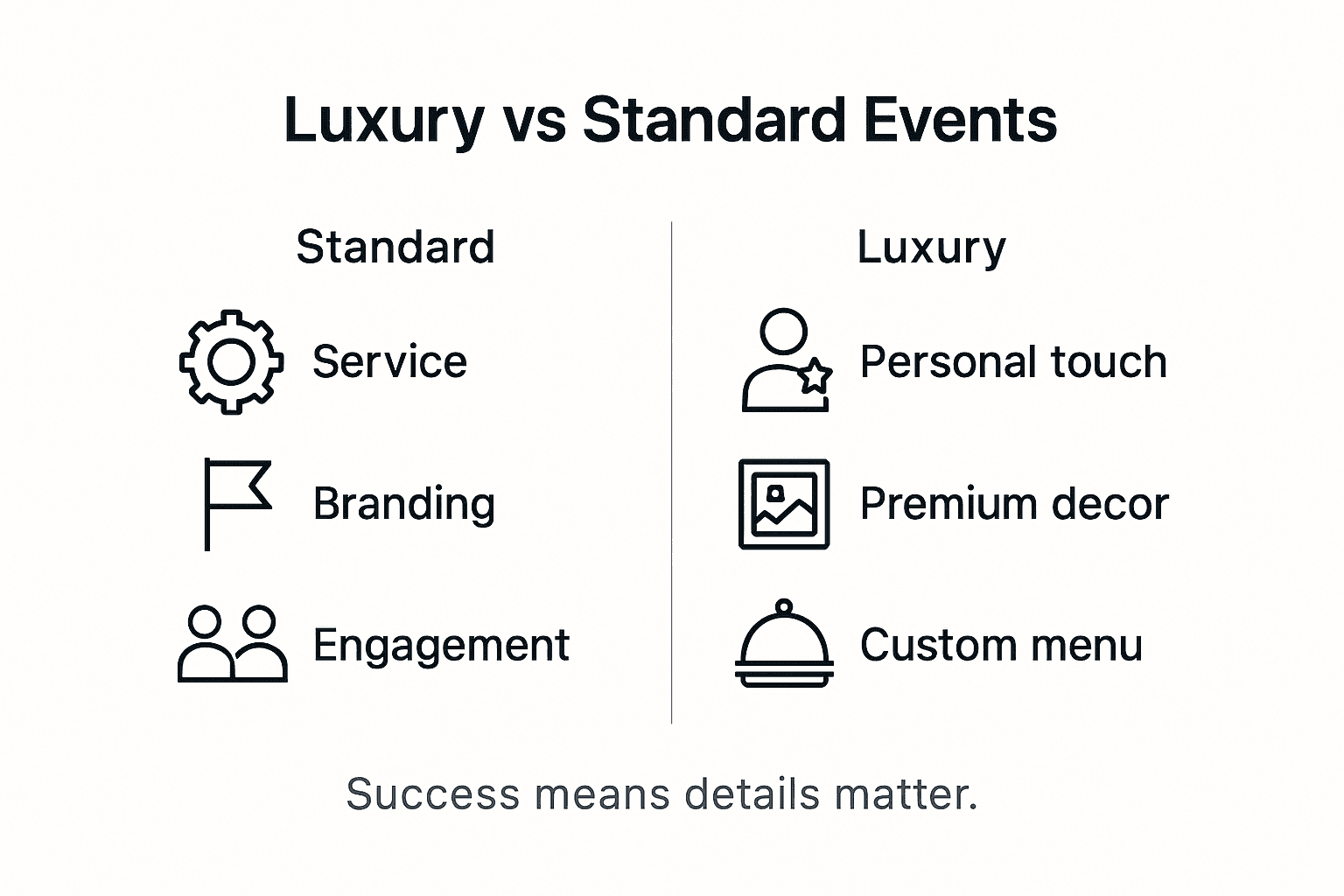
Compare luxury event planning and standard corporate event management at a glance:
| Aspect | Standard Corporate Events | Luxury Corporate Events |
|---|---|---|
| Personalisation | Minimal, template-led | Bespoke experiences |
| Quality Standards | Adequate, functional | Exceptional, uncompromising |
| Participant Engagement | Functional interactions | Immersive sensory engagement |
| Technology Integration | Essential digital tools | Latest cutting-edge innovations |
| Logistics Approach | Efficient coordination | Seamless, invisible execution |
Pro Tip – Anticipatory Design: Design your event experiences by systematically anticipating and addressing potential participant needs before they arise, creating a sense of intuitive, personalised service.
Pro Tip – Holistic Storytelling: Ensure every element of your event contributes to a cohesive narrative that reflects your brand’s unique identity and strategic objectives.
Legal Compliance and Safety in Corporate Events
Corporate event management demands rigorous attention to legal frameworks and safety protocols. Comprehensive research demonstrates that integrating regulatory compliance is crucial throughout all stages of event planning and execution, transforming risk management from a procedural requirement into a strategic organisational imperative.
Critical Compliance Dimensions include:
- Regulatory Documentation: Securing appropriate permits, licences, and insurance coverages specific to event type and location
- Participant Safety Protocols: Implementing comprehensive health and security measures
- Risk Assessment: Conducting thorough pre-event evaluations of potential hazards
- Health Standard Adherence: Meeting current public health guidelines and hygiene requirements
- Emergency Response Planning: Developing robust contingency strategies for potential incidents
Modern corporate events operate within increasingly complex legal landscapes that demand proactive risk management. Event organisers must navigate intricate regulatory environments, balancing creative vision with statutory requirements, ensuring participant safety while maintaining the event’s strategic objectives.
Pro Tip – Preventative Planning: Develop a comprehensive risk management document that systematically identifies potential legal and safety challenges, creating clear mitigation strategies before event implementation.
Pro Tip – Continuous Compliance: Regularly review and update your event safety protocols to reflect the most current legal standards and best practices in risk management.
Risk Factors and Common Planning Mistakes
Corporate event management requires meticulous strategic planning and risk awareness. Empirical research reveals systematic patterns of planning errors that can significantly compromise event success, underscoring the importance of proactive risk mitigation strategies.
Critical Risk Factors and Planning Mistakes include:
- Inadequate Budget Contingency: Failing to allocate sufficient financial reserves for unexpected expenses
- Insufficient Stakeholder Communication: Neglecting clear, consistent communication channels with key participants
- Technology Infrastructure Gaps: Overlooking potential technical failures or connectivity issues
- Inflexible Event Design: Creating rigid event structures that cannot adapt to changing circumstances
- Poor Vendor Management: Inadequate screening or contingency planning with external service providers
- Incomplete Risk Assessment: Overlooking potential operational, reputational, or legal risks
Successful event management demands a holistic approach that anticipates potential challenges and develops robust mitigation strategies. Professional event planners must balance creative vision with strategic risk management, understanding that every potential vulnerability represents an opportunity for enhanced preparedness.
Pro Tip – Risk Mapping: Develop a comprehensive risk matrix that systematically identifies, evaluates, and prioritises potential event challenges before implementation.
Pro Tip – Continuous Learning: Conduct thorough post-event reviews to document and analyse any encountered challenges, transforming each experience into an opportunity for strategic improvement.
Elevate Your Corporate Brand with Expert Event Management
Navigating the complexities of corporate event management requires more than just basic planning. You deserve a partner who understands the importance of luxury personalisation, seamless logistics, and technology integration to create truly immersive brand experiences. At Winelands Function, we specialise in transforming your strategic event objectives into sophisticated gatherings that resonate with your audience and elevate your corporate identity.
Discover how our expertise aligns with your goals by visiting Winelands Function. Let us help you avoid common pitfalls like inadequate risk assessment and inflexible event design, ensuring your events are executed flawlessly. Start crafting unforgettable corporate events today by exploring our curated services at Winelands Function and take the first step towards an exceptional branded experience. Your next luxury corporate event awaits.
Frequently Asked Questions
What is corporate event management?
Corporate event management is a strategic discipline that transforms organisational gatherings into powerful platforms for brand communication. It goes beyond simple planning to incorporate communication strategies, technology, and execution for engaging professional experiences.
What types of corporate events are typically organised?
Typical types of corporate events include conferences, product launches, team building retreats, stakeholder engagement meetings, training workshops, and incentive events, each serving unique organisational objectives and audiences.
How does luxury event planning differ from standard corporate event management?
Luxury event planning focuses on exceptional personalisation, uncompromising quality, and immersive sensory engagement, whereas standard corporate events may prioritise functional elements and are often less tailored to individual expectations.
What are some common mistakes to avoid in corporate event planning?
Common planning mistakes include inadequate budget contingencies, insufficient communication with stakeholders, overlooking technology infrastructure, inflexible event designs, poor vendor management, and incomplete risk assessments.
Recommended
- Corporate Event Branding – Shaping Memorable Experiences – Winelands Function – For Every Occasion, Your Celebration
- Corporate Event Strategy: Impacting Brand Success – Winelands Function – For Every Occasion, Your Celebration
- 7 Inspiring Corporate Event Ideas 2025 for Elite Gatherings – Winelands Function – For Every Occasion, Your Celebration
- 7 Inspiring Corporate Event Ideas 2025 for Elite Gatherings – Winelands Function – For Every Occasion, Your Celebration