
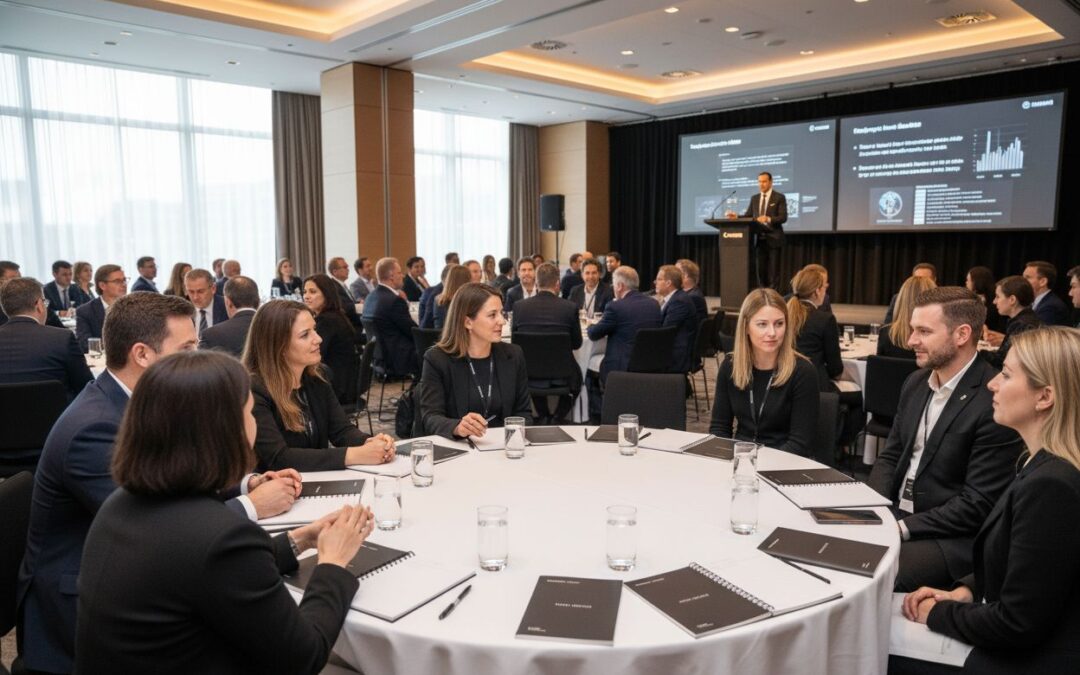
Did you know that companies hosting well-planned corporate events see up to 65 percent higher employee engagement than those that do not? Businesses rely on these gatherings because they shape team culture, boost morale, and help communicate vision both inside and outside the organisation. From large conferences to intimate awards nights, each event brings specific value that can spark real growth and connection, turning routine business moments into standout professional experiences.
Key Takeaways
| Point | Details |
|---|---|
| Strategic Purpose of Corporate Events | Corporate events serve specific organizational goals such as team building, brand communication, and stakeholder engagement, extending beyond mere social interactions. |
| Major Event Categories | Key types include informational (e.g., conferences), motivational (e.g., team retreats), and promotional events (e.g., product launches), each tailored for distinct business objectives. |
| Planning Process | Effective corporate event planning involves a structured approach, including defining objectives, budgeting, logistics selection, and marketing to ensure successful execution. |
| Risk Management and Compliance | Implementing safety, compliance, and risk mitigation strategies is essential to protect all participants while ensuring a smooth operational process during events. |
Table of Contents
- Defining Corporate Events And Their Purpose
- Major Types Of Corporate Events Explained
- Step-By-Step Corporate Event Planning Process
- Budgeting, Logistics, And Vendor Management
- Ensuring Safety, Compliance, And Risk Mitigation
- Maximizing ROI And Avoiding Common Pitfalls
Defining Corporate Events and Their Purpose
A corporate event is a strategic gathering organised by a business to achieve specific professional objectives, ranging from internal team building to external brand communication. These meticulously planned occasions serve multiple purposes beyond simple social interactions, functioning as powerful tools for organisational growth, communication, and relationship management.
Corporate events encompass a wide spectrum of formats, each designed with unique goals in mind. Some primary categories include:
- Conferences and Summits: Knowledge sharing and industry networking platforms
- Team Building Retreats: Strengthening interpersonal relationships and organisational culture
- Product Launch Events: Introducing new offerings to stakeholders and media
- Awards and Recognition Ceremonies: Celebrating employee achievements
- Annual General Meetings (AGMs): Formal strategic communication with shareholders
The core purpose of corporate events extends far beyond mere social gatherings. These strategic meetings provide critical opportunities for organisations to align teams, communicate vision, build morale, and create meaningful connections both internally and externally. Explore our comprehensive guide on corporate event types to understand the nuanced strategies behind successful corporate event planning.
Ultimately, well-executed corporate events represent sophisticated communication platforms that transform traditional business interactions into engaging, memorable experiences. They are not just events, but carefully crafted opportunities to strengthen organisational narratives, inspire teams, and create lasting professional impressions.
Major Types of Corporate Events Explained
Corporate events are diverse strategic gatherings designed to achieve specific organisational objectives, each serving a unique purpose in business communication and relationship management. Understanding these different event types allows companies to select the most appropriate format for their specific goals, ensuring maximum impact and engagement.
Key Corporate Event Categories
Here’s a comparison of major corporate event categories and their primary objectives:
| Event Category | Typical Formats | Core Purpose |
|---|---|---|
| Informational | Conferences Seminars Workshops AGMs |
Knowledge sharing Strategic communication |
| Motivational | Team Building Retreats Recognition Ceremonies Milestone Celebrations |
Morale boosting Culture building |
| Marketing & Promotional | Product Launches Trade Shows Brand Activations |
Brand visibility Stakeholder engagement |
Informational Events focus on knowledge sharing and strategic communication:
- Conferences: Large-scale industry knowledge exchange platforms
- Seminars: Targeted learning and professional development sessions
- Workshops: Interactive skill-building and collaborative learning experiences
- Annual General Meetings (AGMs): Formal shareholder communication and strategic reporting
Motivational Events are designed to boost team morale and organisational culture:
- Team Building Retreats: Strengthening interpersonal relationships
- Recognition Ceremonies: Celebrating employee achievements
- Corporate Milestone Celebrations: Marking significant company achievements
Marketing and Promotional Events serve external communication objectives:
- Product Launches: Introducing new offerings to stakeholders
- Trade Shows: Networking and industry visibility platforms
- Brand Activation Events: Direct engagement with target audiences
Learn more about crafting exceptional corporate entertainment experiences that transform standard business interactions into memorable engagements. These meticulously planned events are not merely gatherings, but strategic tools that communicate organisational vision, build relationships, and drive business success.
Step-by-Step Corporate Event Planning Process
Successful corporate event planning is a structured, strategic process that transforms initial concepts into memorable professional experiences. This systematic approach ensures every detail is meticulously considered, minimising potential challenges and maximising event impact.
Initial Planning Stage
- Define Event Objectives
- Clarify specific business goals
- Identify target audience
- Establish key performance indicators
- Budget Development
- Calculate comprehensive event expenses
- Allocate funds across different event elements
- Include contingency reserves
Detailed Execution Strategy
- Venue and Logistics Selection
- Research appropriate event locations
- Evaluate technical requirements
- Confirm availability and negotiate contracts
- Vendor and Partner Coordination
- Source reliable catering services
- Select appropriate entertainment
- Confirm audiovisual and technical support
Final Preparation and Implementation
- Marketing and Communication
- Design event invitations
- Create comprehensive guest communication strategy
- Manage RSVPs and attendee tracking
- On-Site Management
- Develop detailed event run-of-show
- Train event staff
- Prepare contingency protocols
Learn more about our full-service event planning approach to transform your corporate gatherings into extraordinary experiences. Each step is crucial in crafting events that not only meet but exceed organisational expectations.

Budgeting, Logistics, and Vendor Management
Effective corporate event planning hinges on three critical pillars: strategic budgeting, seamless logistics, and intelligent vendor management. These interconnected elements form the foundation of a successful event, transforming potential challenges into smooth, professionally executed experiences.
Financial Planning and Budget Allocation
Budget development is more than simple number crunching. Successful financial planning involves:
- Comprehensive Cost Mapping: Detailed tracking of all potential expenses
- Strategic Contingency Allocation: Reserving 10-15% for unexpected costs
- Prioritised Spending: Allocating resources to maximum impact areas
Logistics and Vendor Selection Strategy
Choosing the right vendors and managing logistics requires a systematic approach:
-
Vendor Evaluation Criteria
- Proven track record
- Technical capabilities
- Price competitiveness
- Flexibility and reliability
-
Logistical Considerations
- Venue compatibility
- Technical infrastructure requirements
- Transportation and accessibility
- Safety and compliance standards
Risk Mitigation and Contract Management
Successful event planning demands proactive risk management:
- Develop clear, comprehensive vendor contracts
- Establish precise deliverable expectations
- Include contingency clauses
- Maintain open communication channels
Discover our comprehensive approach to bespoke event setup that transforms logistical complexity into seamless, memorable corporate experiences. Our strategic framework ensures every detail is meticulously planned and executed.
Ensuring Safety, Compliance, and Risk Mitigation
In the complex landscape of corporate event planning, safety, compliance, and risk mitigation are not optional extras but fundamental requirements. These critical considerations protect organisations, participants, and stakeholders from potential legal, financial, and reputational risks.
Comprehensive Risk Assessment Framework
A robust risk management strategy encompasses multiple dimensions:
Legal and Regulatory Compliance
- Verify venue safety certifications
- Ensure adherence to local health and safety regulations
- Obtain necessary event permits and insurance
- Conduct thorough background checks on vendors
Health and Safety Protocols
- Develop detailed emergency response plans
- Implement crowd management strategies
- Provide clear medical and first aid provisions
- Design accessible event layouts
Strategic Risk Mitigation Techniques
Key Risk Management Elements
- Comprehensive insurance coverage
- Detailed incident reporting mechanisms
- Real-time communication systems
- Continuous staff training
Technology and Monitoring Strategies
- Use digital tracking and management platforms
- Implement real-time monitoring technologies
- Create redundant communication channels
- Develop flexible contingency protocols
Learn how to convince decision-makers about professional event planning’s critical importance in mitigating organisational risks. Proactive planning transforms potential challenges into opportunities for seamless, secure event experiences.
Maximizing ROI and Avoiding Common Pitfalls
Successful corporate event planning transcends mere execution, focusing strategically on delivering measurable value and minimising potential organisational risks. Understanding how to maximise return on investment (ROI) while navigating potential challenges is crucial for creating impactful professional experiences.
Strategic ROI Measurement Techniques
Key Performance Indicators (KPIs) for Event Success
-
Quantitative Metrics
- Attendee engagement rates
- Networking connections generated
- Direct business leads acquired
- Post-event survey satisfaction scores
-
Qualitative Measurements
- Brand perception improvement
- Team morale enhancement
- Knowledge transfer effectiveness
- Long-term relationship development
Common Corporate Event Pitfalls to Avoid
Critical Risk Areas
- Budget Overruns: Implement strict financial tracking
- Logistical Complications: Develop comprehensive contingency plans
- Poor Communication: Establish clear stakeholder engagement protocols
- Inadequate Technology: Ensure robust technical infrastructure
Proactive Mitigation Strategies
- Conduct thorough pre-event planning workshops
- Create detailed event scenario analyses
- Develop flexible budgeting approaches
- Implement continuous feedback mechanisms
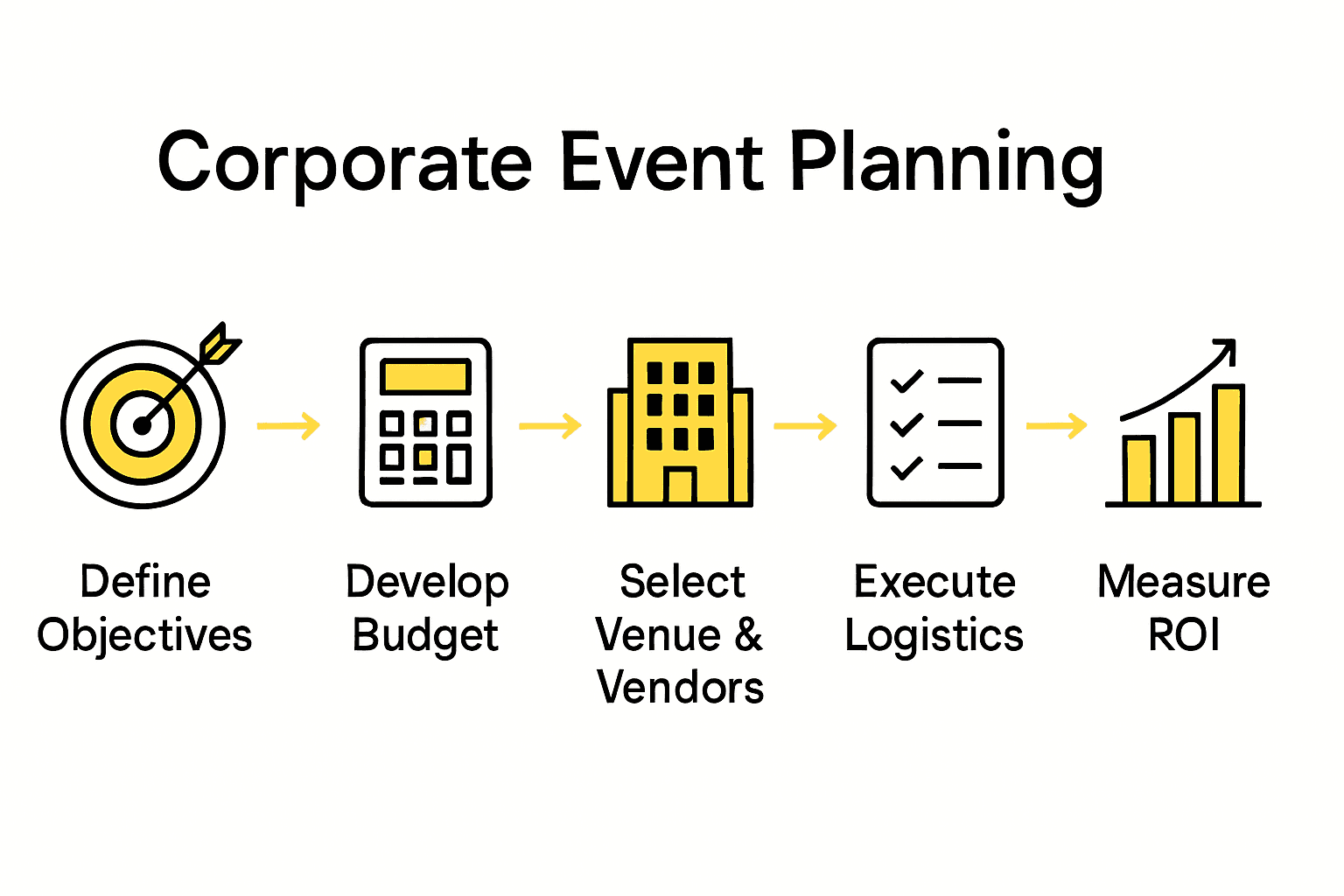
Discover professional strategies for transforming your corporate events into strategic business opportunities that deliver genuine, measurable value. Smart planning turns potential challenges into powerful organisational advantages.
Elevate Your Corporate Event with Tailored Expertise
Planning corporate events demands more than just attention to budgeting and logistics. The article highlighted how complex event objectives, risk management and ROI measurement can pose real challenges for busy professionals. If you want your next conference, product launch or recognition ceremony to deliver measurable business impact while minimising stress, you need a partner who masters every step of the process and brings creative vision to each detail.
Winelands Function offers a comprehensive approach, transforming your ambitions into seamless reality. At Winelands Function, our team handles everything from meticulous vendor coordination to bespoke event setup, ensuring you enjoy both sophistication and peace of mind. Discover how our full-service event planning can bring clarity and excellence to your next corporate gathering. Act today and let us help you turn potential challenges into exceptional experiences.
Frequently Asked Questions
What are the main types of corporate events?
Corporate events include conferences, team building retreats, product launches, recognition ceremonies, and annual general meetings (AGMs), each serving different professional objectives.
How can I effectively budget for a corporate event?
To budget effectively, calculate comprehensive event expenses, allocate funds across different elements, and reserve 10-15% for unexpected costs.
What are the key steps in the corporate event planning process?
The key steps include defining event objectives, developing a budget, selecting a venue, coordinating with vendors, managing marketing communications, and overseeing on-site management.
How can I measure the success of a corporate event?
Success can be measured using key performance indicators (KPIs) such as attendee engagement rates, networking connections generated, and post-event satisfaction scores.
Recommended
- How to Convince Your Boss to Use an Event Planner for This Year’s Year-End Function – Winelands Function – For Every Occasion, Your Celebration
- 8 Types of Corporate Events and Their Benefits – Winelands Function – For Every Occasion, Your Celebration
- Corporate Entertainment for Your Year – End Function That Wows – Winelands Function – For Every Occasion, Your Celebration
- Understanding What is Full-Service Event Planning – Winelands Function – For Every Occasion, Your Celebration