
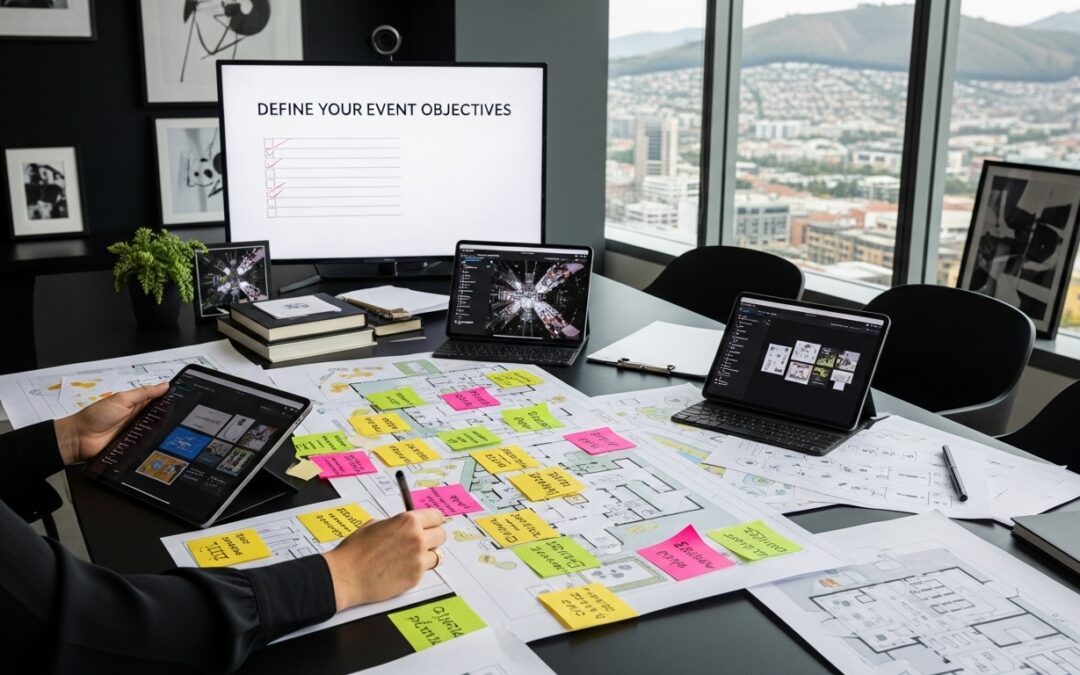
Planning a bespoke event in Cape Town can feel overwhelming, no matter if you’re preparing for a milestone birthday or a high-profile corporate launch. Yet, about 90 percent of event success actually hinges on how you approach the earliest planning steps rather than the final touches. Most people believe the magic happens in the decorations or fancy themes but the real transformation begins long before anyone chooses a colour scheme or a wine list.
Table of Contents
- Step 1: Define Your Event Objectives And Vision
- Step 2: Identify And Select Suitable Venues
- Step 3: Curate Tailored Vendor Partnerships
- Step 4: Plan Detailed Logistics And Timelines
- Step 5: Execute Setup And Coordination On Event Day
- Step 6: Verify Success And Gather Feedback
Quick Summary
| Key Point | Explanation |
|---|---|
| 1. Define Your Event Objectives Clearly | Establishing specific objectives helps guide all planning aspects, ensuring the event resonates with the intended audience. |
| 2. Select Venues that Align with Goals | Evaluate venues based on functional requirements and aesthetics to enhance the overall event experience. |
| 3. Foster Collaborative Vendor Partnerships | Choose vendors who share your vision and can creatively address the unique needs of your event. |
| 4. Develop Detailed Logistics and Timelines | Comprehensive planning of logistics ensures all elements are coordinated, enhancing operational effectiveness. |
| 5. Collect and Analyse Feedback Post-Event | Systematic feedback collection provides insights that inform future events and improve overall execution. |
Step 1: Define Your Event Objectives and Vision
Defining your event objectives and vision is the foundational cornerstone of the bespoke event setup process in Cape Town. This critical first step transforms a vague concept into a strategic blueprint that guides every subsequent decision. Successful event planning begins with crystal clear understanding of why you are creating this experience.
Your initial task involves conducting a comprehensive strategic assessment of your event’s core purpose. Are you celebrating a milestone birthday, launching a corporate product, hosting a wedding, or coordinating an end-of-year function for a prominent Western Cape business? Each objective demands a distinct approach. Understanding the specific motivation allows you to craft an event that resonates authentically with your intended audience.
Below is a table summarising the main steps of the bespoke event setup process in Cape Town, including the key focus of each stage and its intended outcome for clarity.
| Step | Main Focus | Intended Outcome |
|---|---|---|
| 1. Define Objectives and Vision | Establish event purpose and emotional goals | Create a strategic blueprint and shared understanding |
| 2. Select Suitable Venues | Match venue features to event needs | Secure a location that enhances the event experience |
| 3. Curate Vendor Partnerships | Build a collaborative, creative team | Ensure effective, vision-aligned event delivery |
| 4. Plan Logistics and Timelines | Detail operational requirements and scheduling | Enable precise, coordinated execution |
| 5. Execute Setup and Coordination | Operationalise plans and manage on-the-day flow | Deliver a seamless, memorable guest experience |
| 6. Verify Success and Gather Feedback | Assess results and collect insights | Drive continuous improvement and future planning |
Crafting Your Event Vision
Establishing a compelling vision requires deep introspection about the emotional and practical outcomes you desire. According to University of Oxford’s Event Management Toolkit, effective objectives should be specific, measurable, and aligned with broader strategic goals. This means moving beyond surface-level descriptions and exploring the nuanced experience you want to create.
Consider elements like guest experience, emotional impact, logistical requirements, and long-term impressions. A corporate product launch, for instance, might prioritize creating a professional yet innovative atmosphere that showcases your brand’s cutting-edge capabilities. A wedding, conversely, would focus on generating intimate, memorable moments that celebrate personal love and commitment.
Practical Vision Development Strategy
To crystallize your event vision, engage in a structured brainstorming process. Gather key stakeholders and discuss these critical questions:
- What specific emotions do you want guests to experience?
- What unique elements will distinguish this event from others?
- What measurable outcomes define success for this particular occasion?
Document these insights meticulously. Your written vision becomes a reference point that ensures consistent decision making throughout the bespoke event setup process.
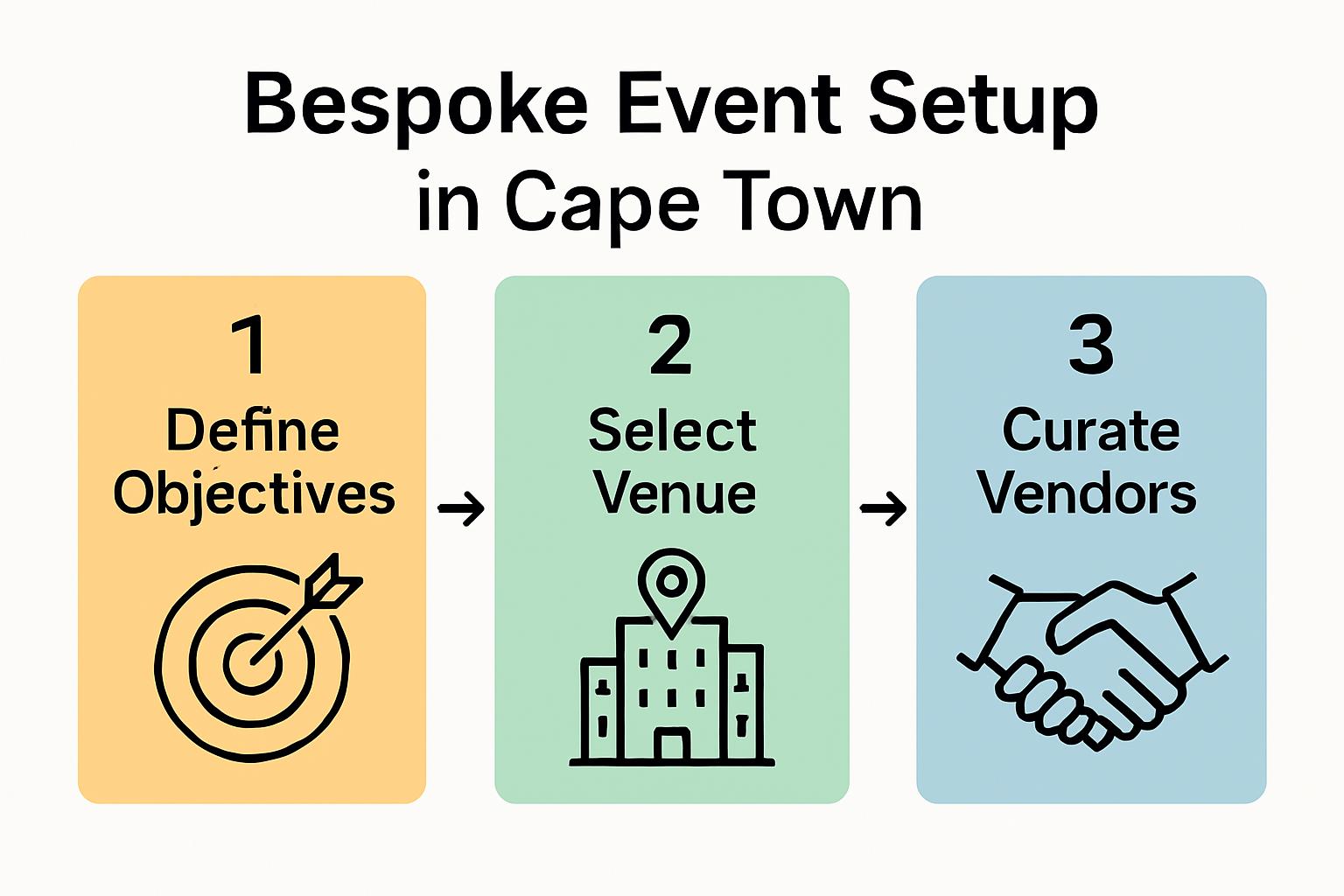 By investing time in this foundational stage, you create a robust framework that transforms abstract ideas into extraordinary, tailored experiences that capture the essence of your celebration in Cape Town’s vibrant event landscape.
Step 2: Identify and Select Suitable Venues
Selecting the perfect venue represents a pivotal moment in the bespoke event setup process, transforming your conceptual vision into a tangible reality. The right location serves as more than a physical space – it becomes the canvas upon which your entire event narrative will unfold. Understanding how to navigate Cape Town’s diverse venue landscape requires strategic thinking and meticulous evaluation.
Your venue selection journey begins with comprehensive alignment between your event objectives and potential spaces. This means moving beyond aesthetic appeal and diving deep into functional requirements. Space configuration, technical capabilities, accessibility, and atmospheric resonance become your primary assessment criteria.
This table presents the essential venue evaluation criteria discussed in the article, helping you systematically assess potential locations for your Cape Town event.
| Venue Criteria | Explanation |
|---|---|
| Space Configuration | Determines suitability for guest numbers and event flow |
| Technical Capabilities | Availability of audiovisual and lighting systems |
| Accessibility | Ease of access for guests and vendors |
| Atmospheric Resonance | Alignment with event ambience and vision |
| Parking Availability | On-site or nearby options for attendees |
| Catering Infrastructure | Kitchen and serving facilities for food service |
| Backup Power | Ability to maintain operations during outages |
Strategic Venue Exploration Approach
Cape Town presents an extraordinary range of venue options – from sophisticated vineyard estates in Stellenbosch to contemporary urban spaces in the city centre. Your selection process should involve systematic reconnaissance. Start by creating a detailed venue specification sheet that outlines non-negotiable requirements. Capacity limits, parking availability, catering infrastructure, and technological provisions become critical evaluation points. According to National Institutes of Health research, venue selection significantly impacts event outcomes, making this step far more than a mere logistical decision.
Practical Venue Evaluation Framework
Develop a structured approach to venue assessment that goes beyond surface impressions. Schedule site visits that allow you to experience the space personally. Photograph potential locations, noting natural lighting, architectural features, and potential layout configurations. Ask detailed questions about:
- Exclusive use agreements
- Backup power capabilities
- Sound and lighting equipment
- Flexible space transformation options
Remember that the ideal venue should not just accommodate your event but enhance its overall experience. By approaching venue selection as a strategic decision-making process, you ensure that your chosen location becomes an integral part of your event’s storytelling, creating an immersive environment that resonates with your guests and amplifies your original vision.
Step 3: Curate Tailored Vendor Partnerships
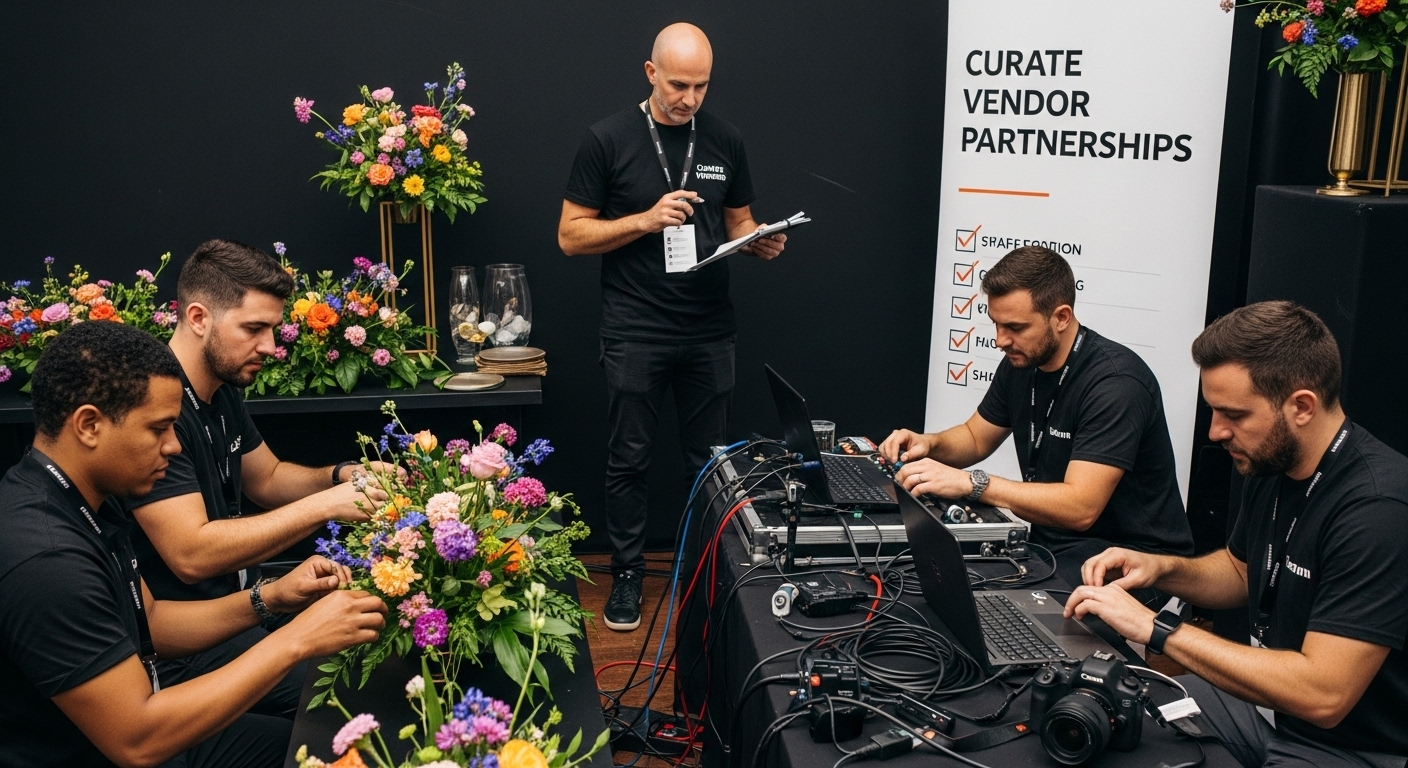
Curating tailored vendor partnerships represents a sophisticated dance of strategic alignment and creative synergy within the bespoke event setup process. This critical step transforms your conceptual vision into a meticulously orchestrated experience by selecting professionals who not only possess exceptional technical skills but also deeply understand the unique narrative of your event.
Successful vendor partnerships begin with recognizing that each professional engagement represents more than a transactional relationship. You are assembling a collaborative team dedicated to bringing your event vision to life. This means moving beyond standard procurement processes and seeking vendors who demonstrate genuine passion, flexibility, and innovative problem-solving capabilities specific to Cape Town’s dynamic event landscape.
Strategic Vendor Selection Framework
Navigate the vendor selection process by developing a comprehensive evaluation matrix that goes beyond surface-level credentials. Look for professionals who showcase portfolios demonstrating adaptability, creativity, and a track record of executing events similar to your vision. Technical competence matters, but cultural and creative alignment matters exponentially more. Pay close attention to communication styles, responsiveness, and their ability to translate your conceptual ideas into tangible execution strategies.
Collaborative Partnership Development
According to research from the Journal of Travel Research, successful event partnerships are built on trust, clear communication, and shared value creation. This means engaging potential vendors in deep, exploratory conversations that reveal their collaborative spirit. Schedule detailed consultation meetings where you can articulate your event’s unique requirements and assess their genuine enthusiasm and capacity to deliver.
Consider the following critical evaluation points during vendor interactions:
- Demonstrated flexibility in design and execution
- Proven ability to work within specified budget constraints
- Strong references from previous clients
- Transparent pricing and contract structures
- Creative problem-solving capabilities
Remember that vendor partnerships are ultimately about creating a harmonious team capable of transforming your event from a concept into an extraordinary, memorable experience. By investing time in thoughtful, strategic vendor curation, you establish a robust foundation that ensures every professional involved is not just a service provider, but a committed creative collaborator in your bespoke event vision.
Step 4: Plan Detailed Logistics and Timelines
Detailed logistics and timeline planning represent the intricate mechanical heart of the bespoke event setup process.
This crucial stage transforms your conceptual vision into a precisely choreographed operational blueprint that anticipates every potential scenario and ensures seamless execution across all event dimensions.
Comprehensive logistics planning transcends simple scheduling – it involves creating a holistic framework that coordinates human resources, technical requirements, spatial configurations, and temporal sequencing. Your timeline becomes a living document that guides every stakeholder, ensuring synchronized movement toward your event’s ultimate vision.
Strategic Timeline Architecture
Constructing your event timeline requires meticulous attention to granular details while maintaining flexibility for unexpected developments. Begin by establishing a master chronology that breaks down the entire event experience into discrete, manageable segments. According to City of Cape Town’s Events By-law, different event scales require specific planning timelines, with larger events demanding more extensive preparation windows.
Your timeline should encompass pre-event, event-day, and post-event phases. For each phase, develop a minute-by-minute breakdown that includes setup requirements, vendor arrival windows, guest management protocols, technical transitions, and potential contingency interventions. Professional event managers recommend creating parallel timelines that allow simultaneous tracking of logistical, creative, and operational streams.
Comprehensive Logistics Coordination
Effective logistics management demands proactive communication and robust documentation. Develop a centralized project management system that provides real-time visibility for all event stakeholders. This might involve digital collaboration platforms where vendors, coordinators, and key decision makers can track progress, share updates, and quickly resolve potential challenges.
Consider these critical logistics coordination elements:
- Precise vendor arrival and setup schedules
- Detailed equipment and resource allocation plans
- Emergency response and contingency protocols
- Communication cascades for rapid information sharing
- Comprehensive safety and compliance checkpoints
Remember that a well-constructed logistics plan is your event’s invisible infrastructure. By investing significant energy into creating a robust, adaptable timeline, you transform potential chaos into a harmonious, expertly choreographed experience that appears effortless to your guests while providing you with a sense of confident control.
Step 5: Execute Setup and Coordination on Event Day
Event day execution represents the ultimate culmination of your meticulous planning, transforming carefully crafted strategies into a live, dynamic experience. This critical stage demands military-like precision, unwavering composure, and the ability to manage multiple moving parts simultaneously while maintaining an atmosphere of seamless elegance.
Professional event coordination is fundamentally about creating controlled spontaneity. Your preparatory work becomes the invisible scaffolding that supports what appears to guests as a magically unfolding experience. Every team member must understand their precise role, with crystal clear communication channels and predefined response protocols for potential contingencies.
Operational Coordination Strategy
Implement a centralized command structure where one lead coordinator serves as the primary communication hub. This individual maintains an overarching perspective, quickly resolving unexpected challenges and ensuring smooth transitions between event segments. Equip your coordination team with real-time communication devices – walkie-talkies or dedicated event management apps that enable instant information sharing and rapid problem resolution.
According to U.S. Department of Justice’s Community Relations Service, effective event management hinges on proactive planning and adaptive response capabilities. This means having comprehensive backup plans for potential disruptions, from technical equipment failures to unexpected guest flow challenges.
Moment-by-Moment Execution Protocol
Develop a dynamic, real-time tracking system that allows instantaneous verification of each planned event element. Your coordination team should conduct rapid, successive check-ins at critical transition points, confirming that each scheduled component unfolds precisely as intended. This requires a blend of technological tools and human oversight.
Consider these essential execution checkpoints:
- Vendor arrival and setup verification
- Technical equipment functionality tests
- Guest registration and welcome protocols
- Meal and entertainment timing synchronization
- Emergency response readiness
Remember that flawless event execution is an art form that combines meticulous preparation with graceful adaptability. Your goal is to create an experience so smooth that guests perceive only magic, while behind the scenes, your team orchestrates a complex symphony of perfectly timed movements and strategic interventions.
Step 6: Verify Success and Gather Feedback
Verifying event success and gathering comprehensive feedback represents the critical final phase of the bespoke event setup process, transforming your experience from a singular moment into a strategic learning opportunity. This stage is not merely about retrospective analysis but about cultivating continuous improvement and maintaining long-term professional relationships with clients and vendors.
Systematic feedback collection goes far beyond simple satisfaction surveys – it is a nuanced process of extracting actionable insights that will inform and elevate future event experiences. Your approach should blend quantitative metrics with qualitative narrative gathering, creating a holistic understanding of the event’s true impact and perceived value.
Strategic Feedback Collection Framework
Immediately following the event, initiate a multi-channel feedback collection strategy that captures perspectives from diverse stakeholder groups. This means designing differentiated feedback mechanisms for guests, vendors, internal team members, and key organizational representatives. Utilize a combination of digital survey tools, personalized email communications, and structured follow-up interviews to capture comprehensive perspectives.
According to Harvard University’s Event Assessment Guidelines, effective event evaluation requires a structured approach that captures both empirical data and emotional resonance. Your feedback instruments should include a mix of numerical rating scales and open-ended qualitative questions that allow respondents to provide rich, contextual insights.
Comprehensive Performance Analysis
Develop a systematic method for aggregating and analyzing collected feedback. Create a standardized evaluation matrix that allows you to quantify responses across multiple dimensions such as guest experience, logistical efficiency, vendor performance, and alignment with original event objectives. This analytical approach transforms raw feedback into actionable intelligence that can drive future event strategy.
Consider these critical feedback collection elements:
- Immediate post-event digital survey distribution
- Personalized follow-up communications
- Detailed vendor and team performance reviews
- Comparative analysis against initial event objectives
- Documentation of lessons learned and improvement opportunities
Remember that truly exceptional event management is an iterative process. By approaching feedback collection as a strategic tool for continuous refinement, you transform each event from a standalone experience into a stepping stone for future excellence, consistently elevating your professional capabilities and client satisfaction.
Elevate Your Cape Town Event With Precision and Style
Are you feeling overwhelmed by the intricate logistics and critical decision points highlighted in our bespoke event setup guide? Many discerning hosts in Cape Town struggle to translate a creative vision into a flawlessly executed reality, whether finding the perfect venue or aligning trusted vendors. At Winelands Function we specialise in turning every step of the planning journey – from defining your unique objectives to on-the-day coordination – into a seamless and memorable experience.
Take the stress out of event planning and experience true peace of mind. Partner with our award-winning team to personalise every detail of your wedding, corporate gathering or celebration. Visit Winelands Function to discover our curated portfolio, review genuine client stories, and start building your extraordinary Cape Town event. Contact us today to secure your date and ensure every element is managed with elegance and care.
Frequently Asked Questions
What are the key steps in the bespoke event setup process?
The key steps include defining event objectives and vision, selecting suitable venues, curating tailored vendor partnerships, planning detailed logistics and timelines, executing setup and coordination on event day, and verifying success while gathering feedback.
How can I ensure that my event resonates with the intended audience?
To ensure your event resonates, conduct a thorough assessment of its core purpose, engage in brainstorming sessions with stakeholders, and outline clear emotional and practical outcomes you wish to achieve.
What factors should I consider when selecting a venue for my event?
When selecting a venue, consider space configuration, technical capabilities, accessibility, atmospheric resonance, and specific limitations like capacity, parking availability, and catering infrastructure.
How important is feedback collection after the event?
Feedback collection is vital as it transforms the event experience into a learning opportunity, helping you extract actionable insights for continuous improvement and fostering long-term relationships with clients and vendors.
Recommended
- Why Hire a Wedding Coordinator vs. Doing It Yourself? – Winelands Function – For Every Occasion, Your Celebration
- How to Convince Your Boss to Use an Event Planner for This Year’s Year-End Function – Winelands Function – For Every Occasion, Your Celebration
- What to Expect When You Book Winelands Function – Winelands Function – For Every Occasion, Your Celebration
- Winelands Function Wedding Budget Tips: Where to Save and Where to Splurge – Winelands Function – For Every Occasion, Your Celebration
- TECHTRON Cycle Tour team fund raising initiative | TECHTRON