

Over 80 percent of people say the most memorable events are the ones tailored just for them. In a world where many celebrations blur together, truly personalised planning stands apart by creating experiences that capture your individual story. If you want your next event to shine with meaning, understanding bespoke celebration planning opens the door to thoughtfully crafted moments no one will forget.
Table of Contents
- Defining Bespoke Celebration Planning
- Types of Bespoke Events and Occasions
- Personalization and Tailored Experience Essentials
- Step-by-Step Event Planning Process
- Cost Considerations and Budget Strategies
- Common Pitfalls and How to Avoid Them
Key Takeaways
| Point | Details |
|---|---|
| Bespoke Celebration Planning | Transforms ordinary events into personalized experiences, focusing on a client’s unique vision and desires. |
| Core Processes | Involves deep client understanding, collaborative design, and meticulous attention to detail throughout the planning stages. |
| Budget Management | Effective budget strategies are crucial for success, ensuring resources align with event objectives while maintaining quality. |
| Common Pitfalls | Clear communication, expectation management, and contingency planning are essential to avoid challenges that may compromise event success. |
Defining Bespoke Celebration Planning
At its essence, bespoke celebration planning transforms ordinary events into extraordinary, personalised experiences. According to Wikipedia, the term ‘bespoke’ fundamentally refers to items meticulously crafted to order, tailored precisely to an individual’s specific requirements. In the realm of event planning, this translates to creating celebrations that are not just events, but unique narratives carefully woven around a client’s distinct vision and desires.
Bespoke celebration planning goes far beyond standard event management. As Ortus Club explains, these events are highly customised experiences that prioritise the client’s individual goals and objectives. The core philosophy is encouraging creativity and innovation to craft memorable moments that resonate deeply with the participants. This approach means every detail – from venue selection to thematic elements, from culinary experiences to entertainment – is carefully considered and personalised.
Key characteristics of bespoke celebration planning include:
- Complete customisation of event elements
- Intimate understanding of client’s personal style and preferences
- Innovative design and execution
- Attention to minute details
- Creating unique, unforgettable experiences
By embracing bespoke celebration planning, you transform events from generic gatherings into meaningful, personalised stories that reflect individual personalities, aspirations, and emotions. Learn more about our bespoke celebration design approach to understand how we turn your vision into an extraordinary reality.
Types of Bespoke Events and Occasions
Bespoke events encompass a wide spectrum of celebrations, each uniquely tailored to reflect individual personalities, objectives, and memorable moments. From intimate gatherings to grand corporate milestones, these personalised experiences transcend traditional event planning by creating extraordinary narratives that resonate deeply with participants.
Personal Celebration Occasions
Personal bespoke events represent deeply individual experiences that capture life’s most significant moments. These include:
- Wedding Celebrations: Completely customised weddings that reflect the couple’s unique love story
- Birthday Milestones: Personalised events for 21st, 30th, 40th, 50th, and milestone birthdays
- Anniversary Parties: Intimate gatherings celebrating personal relationship journeys
- Retirement Celebrations: Customised events honouring professional achievements
- Engagement Parties: Tailored experiences capturing the couple’s essence
Professional and Corporate Bespoke Events
Corporate bespoke events transform standard professional gatherings into memorable, strategic experiences. These might include:
- Year-end corporate functions
- Product launch celebrations
- Executive milestone recognitions
- Team building experiences
- Awards and recognition ceremonies
Each event is meticulously designed to align with organisational culture, objectives, and team dynamics. Explore inspiring examples of bespoke events that demonstrate the transformative power of personalised event planning.
Beyond categorisation, bespoke events are ultimately about creating meaningful connections. Whether celebrating personal achievements or corporate milestones, these events tell stories, evoke emotions, and craft unforgettable memories that extend far beyond traditional event experiences.
Personalization and Tailored Experience Essentials
Personalization is the heartbeat of bespoke event planning, transforming ordinary gatherings into extraordinary, meaningful experiences. According to Event Industry News, bespoke events are fundamentally built on partnership, involving clients at every stage to ensure the event authentically represents their unique identity or brand.
Key Elements of Personalization
The art of creating truly tailored experiences revolves around several critical components:
- Deep Client Understanding: Comprehensive exploration of personal preferences, cultural nuances, and individual objectives
- Collaborative Design Process: Continuous dialogue and co-creation with clients
- Unique Narrative Development: Crafting events that tell a specific, meaningful story
- Attention to Minute Details: Customizing every aspect, from decor to menu selections
- Emotional Resonance: Designing experiences that evoke genuine feelings and memories
Redefining Luxury Through Personalization
As Elisa Events highlights, personalization in events ensures that every detail reflects the client’s unique style, culture, and objectives, ultimately redefining luxury and class in event planning. This approach goes beyond mere aesthetic customization – it’s about creating an immersive experience that feels intimately connected to the individual or organization.

Learn more about our comprehensive guide to bespoke celebration advantages to understand how personalization can transform your next event into an unforgettable journey of self-expression and connection.
Step-by-Step Event Planning Process
Event planning is a meticulous journey that transforms initial concepts into extraordinary experiences. The process requires strategic thinking, creative problem-solving, and exceptional attention to detail, ensuring every element contributes to a cohesive and memorable celebration.
Initial Consultation and Conceptualization
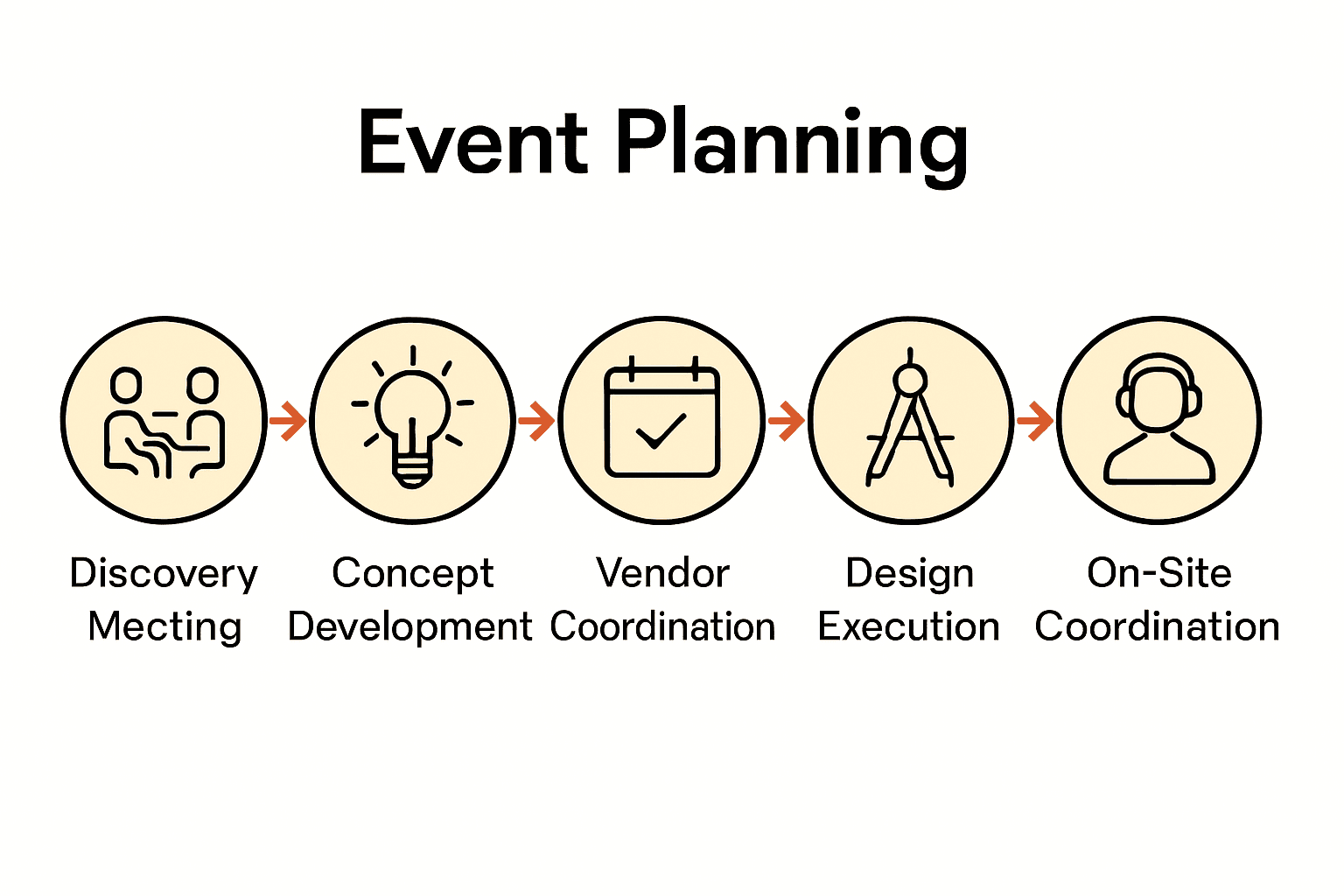
- Discovery Meeting: In-depth consultation to understand client’s vision, preferences, and objectives
- Concept Development: Crafting a unique event narrative that reflects the client’s personality
- Budget Alignment: Establishing financial parameters and exploring creative solutions
Comprehensive Planning Stages
- Venue Selection: Identifying and securing the perfect location
- Vendor Coordination: Curating a team of top-tier professionals
- Design and Styling: Creating a cohesive aesthetic vision
- Logistical Management: Detailed planning of technical and operational requirements
- Timeline Development: Precise scheduling of event elements
Execution and Final Touches
The final stages involve rigorous preparation, including:
- Final vendor confirmations
- Detailed rehearsals and walkthroughs
- Contingency planning
- On-site coordination
- Real-time problem resolution
Explore our comprehensive guide to full-service event planning to understand how we transform complex planning into seamless, extraordinary experiences. Each step is carefully choreographed to ensure your event exceeds expectations, creating memories that last a lifetime.
Cost Considerations and Budget Strategies
Budget management is the critical backbone of successful bespoke event planning, transforming creative visions into realistic, achievable celebrations. Understanding how to strategically allocate resources while maintaining the event’s core essence requires sophisticated financial planning and creative problem-solving.
Budget Allocation Strategies
Effective budget management involves multiple strategic approaches:
- Prioritization: Identifying key elements that define the event’s character
- Flexible Spending: Creating room for unexpected opportunities
- Value Engineering: Maximizing impact while controlling costs
- Transparent Pricing: Clear understanding of potential expenses
- Contingency Funding: Allocating 10-15% for unexpected requirements
Cost Breakdown Categories
Typical budget considerations include:
- Venue Expenses: 30-40% of total budget
- Catering and Beverages: 20-25% of total budget
- Decor and Styling: 15-20% of total budget
- Entertainment: 10-15% of total budget
- Miscellaneous Costs: 5-10% of total budget
Strategic Cost Management Techniques
Smart budgeting isn’t about reducing expenses, but optimizing value. This means carefully selecting vendors, negotiating packages, and finding innovative solutions that deliver maximum impact without compromising quality. Explore our comprehensive guide to full-service event planning to understand how professional management can actually save you money while creating extraordinary experiences.
Common Pitfalls and How to Avoid Them
Event planning is a complex landscape fraught with potential challenges that can derail even the most meticulously designed celebrations. According to Event Industry News, maintaining clear communication and collaboration between the client and planner is crucial to ensuring the event aligns perfectly with the client’s vision and objectives.
Communication and Expectation Management
Common pitfalls that can compromise event success include:
- Miscommunication: Unclear expectations between client and planner
- Scope Creep: Allowing event details to expand uncontrollably
- Vendor Misalignment: Selecting professionals who don’t understand the event’s unique vision
- Insufficient Contingency Planning: Failing to prepare for potential disruptions
- Budget Overruns: Losing financial control during planning
Strategic Avoidance Techniques
As Ortus Club emphasizes, bespoke events require a laser focus on the client’s goals, encouraging creativity while avoiding generic, uninspired approaches. Key strategies include:
- Establishing crystal-clear communication channels
- Creating detailed, flexible event blueprints
- Regular check-ins and progress updates
- Building robust contingency plans
- Maintaining transparent budget tracking
Explore our comprehensive guide to full-service event planning to discover how professional management can help you navigate potential pitfalls and create truly extraordinary experiences.
Transform Your Vision into an Unforgettable Bespoke Celebration
Planning a bespoke event can feel overwhelming with so many intricate details and personal touches needed to truly capture your unique story. Whether you are aiming for complete customisation or navigating budget strategies, the challenge is to turn your vision into an elegant and seamless experience without compromise. At Winelands Function, we understand these key pain points like client collaboration, attention to minute details and emotional resonance — all essential elements highlighted in the Complete Guide to Bespoke Celebration Planning.
Elevate your next celebration by partnering with experts who specialise in luxury, personalised events tailored to your style and aspirations. Discover how our full-service event planning can simplify your journey from concept to execution while ensuring every element embodies sophistication and creativity. Visit Winelands Function today and take the first step towards crafting your extraordinary bespoke event with confidence and ease.
Frequently Asked Questions
What is bespoke celebration planning?
Bespoke celebration planning involves creating personalised events tailored specifically to an individual’s unique vision and desires, transforming ordinary gatherings into extraordinary experiences.
What types of events can be planned using a bespoke approach?
Bespoke event planning can encompass a wide range of occasions, including weddings, birthday milestones, anniversary parties, retirement celebrations, engagement parties, corporate functions, product launches, and team-building experiences.
How does personalization play a role in bespoke events?
Personalization is central to bespoke events, focusing on deep client understanding, collaborative design processes, unique narrative development, and emotional resonance to create meaningful experiences that reflect individual style and objectives.
What are some common pitfalls in event planning and how can they be avoided?
Common pitfalls include miscommunication, scope creep, vendor misalignment, and budget overruns. To avoid them, establish clear communication, create flexible event plans, hold regular updates, and maintain transparent budget tracking.
Recommended
- Complete Guide to Advantages of Bespoke Celebrations – Winelands Function – For Every Occasion, Your Celebration
- Complete Guide to Bespoke Celebration Design – Winelands Function – For Every Occasion, Your Celebration
- How to Create Bespoke Celebration for Luxury Events – Winelands Function – For Every Occasion, Your Celebration
- How to Host Bespoke Celebration for Elegant Occasions – Winelands Function – For Every Occasion, Your Celebration
- Choosing The Right Glass For Your Champagne Tower Hire – Champagne Tower Hire