

Over 80 percent of british event professionals agree that the difference between a forgettable gathering and an unforgettable experience lies in the power of event design. This field does far more than decorate a room, shaping emotions and memories through each detail. As modern events push creative boundaries, understanding what truly defines great event design empowers organisers to craft moments that leave a lasting impact.
Table of Contents
- Defining Event Design And Core Principles
- Types Of Event Design In Modern Events
- The Event Design Process Step-By-Step
- Key Elements: Décor, Layout And Ambiance
- Common Pitfalls And How To Avoid Them
Key Takeaways
| Point | Details |
|---|---|
| Holistic Event Design | Event design encompasses purposeful storytelling, spatial intelligence, sensorial design, and emotional mapping to create meaningful experiences. |
| Types of Event Design | Various specialised types exist, including corporate, social, cultural, and experiential design, each tailored to specific objectives. |
| Structured Process | The event design process involves stages like conceptualisation, research, spatial planning, sensory design, technical coordination, and emotional mapping. |
| Common Pitfalls | Key challenges include inadequate audience understanding, poor spatial planning, and budget misallocation, which can hinder event success. |
Defining Event Design and Core Principles
Event design is a sophisticated strategic discipline that transforms conceptual ideas into immersive, memorable experiences through intentional spatial, aesthetic, and emotional planning. At its core, event design represents the thoughtful orchestration of visual, sensorial, and interactive elements that create meaningful connections between participants and the event’s fundamental purpose.
According to research from MDPI, event design extends far beyond mere aesthetic considerations, profoundly influencing cultural emotions, travel motivations, and subsequent behavioural intentions. The discipline requires a holistic understanding of how physical environments, sensory stimulations, and narrative structures interact to craft compelling experiences.
The core principles of event design encompass several critical dimensions:
- Purposeful Storytelling: Creating a cohesive narrative that guides participants through an intentional emotional journey
- Spatial Intelligence: Strategically utilising physical spaces to enhance interaction, flow, and participant engagement
- Sensorial Design: Integrating visual, auditory, tactile, and olfactory elements to create multi-dimensional experiences
- Emotional Mapping: Understanding and deliberately designing emotional trajectories throughout the event
Research from Westminster Research further emphasises that effective event design requires nuanced understanding of spatial dynamics, highlighting how different environments fundamentally shape participant experiences. Whether designing an intimate corporate gathering or an expansive public celebration, event designers must masterfully balance technical logistics with creative vision.
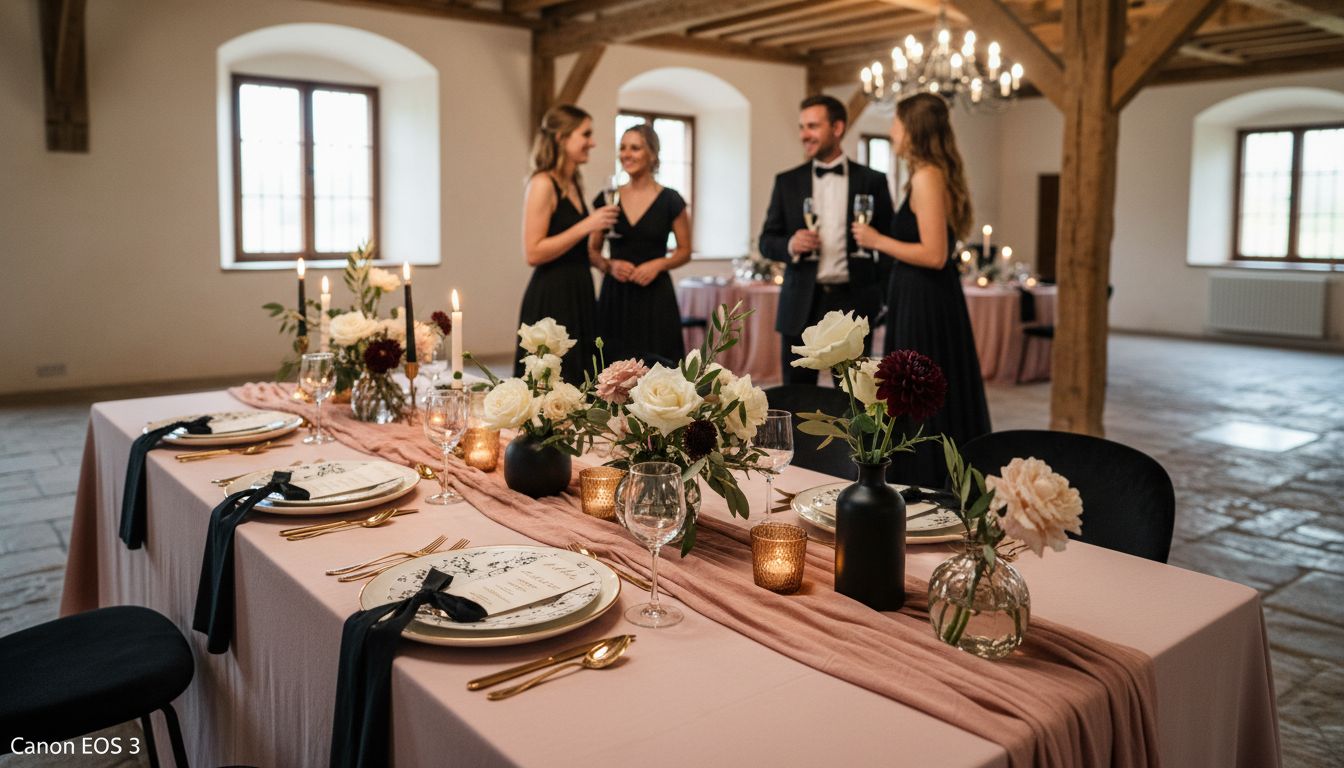
Ultimately, event design is an intricate art form that transforms abstract concepts into tangible, unforgettable moments. Understanding the Event Design Workflow for Stunning Events requires not just technical skill, but a profound appreciation for human connection, emotional resonance, and the power of thoughtfully curated experiences.
Types of Event Design in Modern Events
Event design has evolved into a complex discipline with multiple specialised types, each tailored to specific contexts and objectives. Modern event design encompasses a range of approaches that go beyond traditional planning, focusing on creating immersive, purposeful experiences across various sectors and formats.
According to research on Wikipedia, ephemeral architecture represents a cutting-edge approach in event design, characterised by temporary structures that emphasise flexibility and adaptability. These dynamic design solutions allow event creators to transform spaces rapidly, meeting the ever-changing requirements of contemporary events.
The primary types of event design include:
- Corporate Event Design: Focusing on brand representation, professional networking, and strategic communication
- Social Event Design: Creating personalised experiences for weddings, birthday celebrations, and private gatherings
- Cultural Event Design: Developing immersive environments for exhibitions, festivals, and artistic performances
- Experiential Event Design: Crafting interactive spaces that engage participants through multisensory experiences
Research from Wikipedia highlights the growing importance of experiential interior design, which prioritises creating environments that deeply engage attendees. This approach transforms events from passive experiences into interactive journeys, where participants become active contributors rather than mere observers.
Modern event design continues to push boundaries, integrating innovative design tips that transform ordinary gatherings into extraordinary experiences. By understanding these diverse design approaches, event professionals can craft memorable moments that resonate long after the event concludes.
The Event Design Process Step-by-Step
Event design is a meticulously structured process that transforms abstract concepts into tangible, memorable experiences. Unlike traditional event planning, this approach requires strategic thinking, creative vision, and systematic implementation to craft truly exceptional moments.
Research from Global Research Network highlights the importance of understanding conceptual models that guide event designers through a comprehensive approach. These models emphasise the need for a structured yet flexible methodology that adapts to each unique event’s specific requirements.
The event design process typically involves the following critical stages:
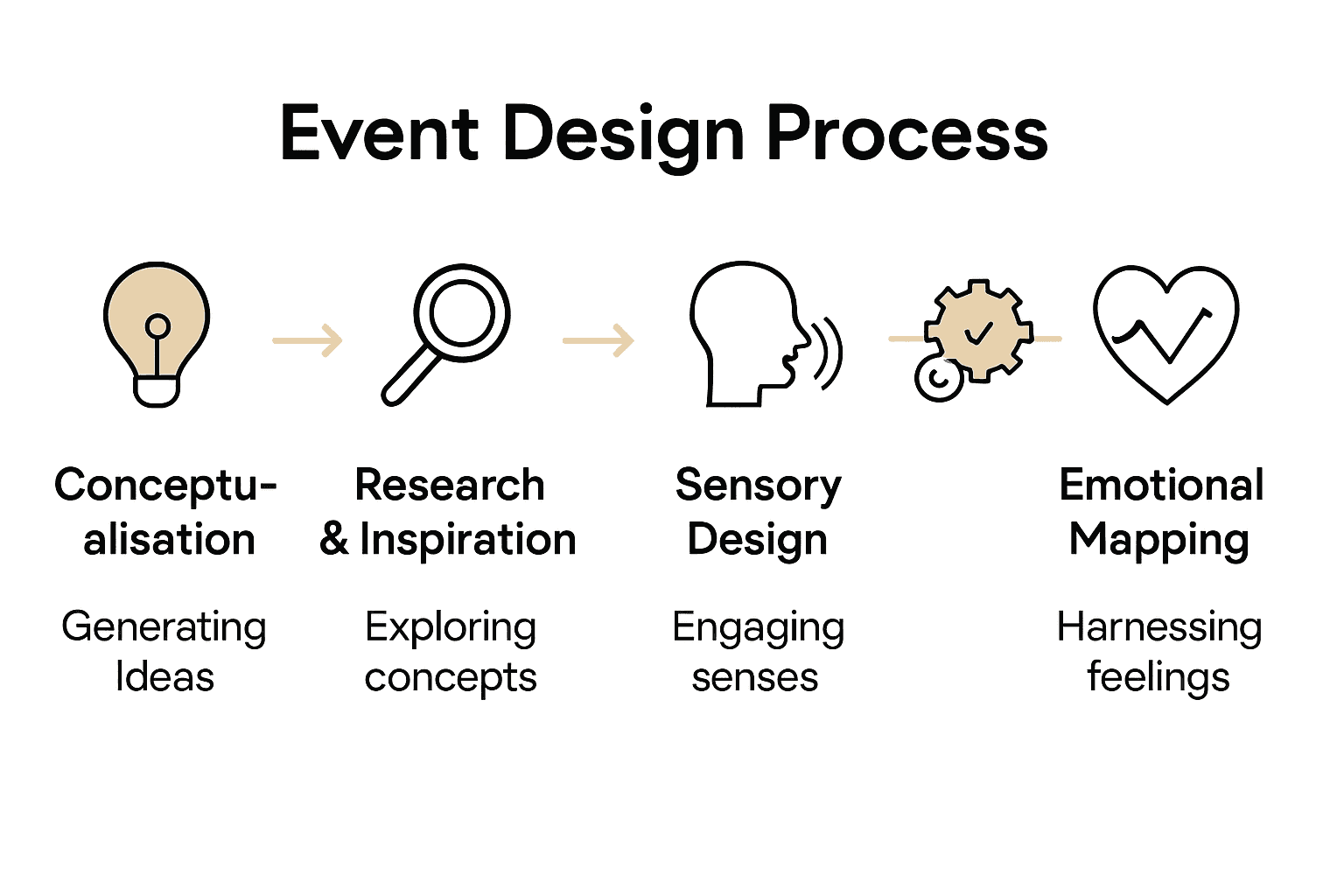
- Conceptualisation: Defining event objectives, target audience, and core narrative
- Research and Inspiration: Gathering insights, exploring thematic references, and understanding participant expectations
- Spatial Planning: Developing spatial layouts, flow strategies, and interaction zones
- Sensory Design: Crafting multi-dimensional experiences through visual, auditory, and tactile elements
- Technical Coordination: Integrating logistical requirements, technological infrastructure, and practical considerations
- Emotional Mapping: Designing participant journey and emotional progression throughout the event
According to AMH International, strategic event management frameworks like EMBOK provide crucial guidance in navigating the complex landscape of event design. These frameworks ensure a holistic approach that balances creative expression with operational excellence.
For those seeking a deeper understanding of crafting luxurious, seamless events, our event design process guide for luxury events offers comprehensive insights into transforming ordinary gatherings into extraordinary experiences. By mastering these systematic approaches, event designers can consistently deliver exceptional, memorable moments that resonate deeply with participants.
Key Elements: Décor, Layout and Ambiance
Event design transforms spaces through three fundamental elements: décor, layout, and ambiance. These interconnected components work synergistically to create immersive experiences that engage participants on multiple sensory and emotional levels.
Décor serves as the visual language of an event, communicating narrative, mood, and aesthetic intention through carefully selected elements. It encompasses everything from colour palettes and textural choices to intricate styling details that reflect the event’s core identity. Strategic décor goes beyond mere decoration, becoming a powerful communication tool that guides participant perception and emotional journey.
The critical components of event design elements include:
- Colour Psychology: Utilising colour schemes that evoke specific emotional responses
- Spatial Dynamics: Creating intuitive movement patterns and interaction zones
- Textural Complexity: Layering different materials to add depth and sensory richness
- Lighting Design: Manipulating illumination to shape mood and focal points
- Architectural Integration: Harmonising event design with existing spatial characteristics
Layout determines the functional and emotional flow of an event, choreographing participant interactions and experiences. Thoughtful spatial planning ensures seamless movement, facilitates desired interactions, and creates natural progression through different event stages.
For those seeking to elevate their event design approach, our guide to luxury event decor offers sophisticated insights into creating truly memorable environments. By understanding these nuanced design principles, event professionals can transform ordinary spaces into extraordinary experiences that resonate deeply with participants.
Common Pitfalls and How to Avoid Them
Event design presents numerous potential challenges that can derail even the most meticulously planned experiences. Understanding these common pitfalls is crucial for event professionals seeking to create seamless, memorable occasions that exceed participant expectations.
Research from the European Scientific Journal highlights the complex landscape of event challenges, identifying critical areas where mistakes frequently occur. These challenges range from strategic planning failures to operational execution breakdowns that can compromise the entire event experience.
The most significant pitfalls in event design include:
- Inadequate Audience Understanding: Failing to deeply research and comprehend participant expectations and preferences
- Poor Spatial Planning: Creating layouts that hinder natural movement and participant interaction
- Inconsistent Thematic Execution: Developing design elements that lack cohesive narrative and emotional resonance
- Budget Misallocation: Investing resources inefficiently, neglecting critical experiential components
- Technological Integration Failures: Implementing technology without considering participant comfort and accessibility
According to HRMARS Research, successful event design requires a proactive approach to identifying and mitigating potential challenges before they emerge. This involves comprehensive planning, continuous stakeholder communication, and flexible strategic frameworks.
For event designers seeking to elevate their approach and navigate potential challenges, our guide to understanding the role of event design provides invaluable insights into creating robust, resilient event experiences that consistently deliver exceptional outcomes.
Elevate Your Event Design Vision with Expert Luxury Planning
The journey through the complete guide on event design reveals how crucial purposeful storytelling, spatial intelligence, and emotional mapping are to creating unforgettable experiences. If you find yourself challenged by complex event workflows or seeking to avoid common pitfalls such as inconsistent thematic execution or poor spatial planning, Winelands Function offers the refined expertise to transform your vision into reality. With a focus on elegance and attention to detail, we specialise in bespoke luxury events in Cape Town that resonate emotionally and leave lasting impressions.
Explore tailored solutions that blend creativity with seamless execution by visiting our luxury event decor guide and reviewing our insightful event design process guide for luxury events. Discover how our team can craft immersive, sophisticated gatherings that truly embody your story. Begin your journey to a stunning event today at Winelands Function and let us bring your dream to life with unparalleled style and precision.
Frequently Asked Questions
What is the definition of event design?
Event design is a strategic discipline that transforms conceptual ideas into immersive experiences through intentional spatial, aesthetic, and emotional planning, creating meaningful connections between participants and the event’s purpose.
What are the core principles of event design?
The core principles of event design include purposeful storytelling, spatial intelligence, sensorial design, and emotional mapping, which work together to create immersive and memorable experiences.
How does spatial planning influence an event?
Spatial planning determines the layout and flow of an event, influencing participant interactions and experiences by ensuring seamless movement and natural progression through different stages of the event.
What common pitfalls should be avoided in event design?
Common pitfalls in event design include inadequate audience understanding, poor spatial planning, inconsistent thematic execution, budget misallocation, and technological integration failures, all of which can compromise the event experience.
Recommended
- Complete Guide to the Role of Event Design – Winelands Function – For Every Occasion, Your Celebration
- Complete Guide to Why Use Event Designers – Winelands Function – For Every Occasion, Your Celebration
- Understanding the Role of Event Designers in Success – Winelands Function – For Every Occasion, Your Celebration
- Understanding Event Design Terminology Explained